Space-based detection of missing sulfur dioxide sources of global air pollution (original) (raw)
- Letter
- Published: 30 May 2016
- Vitali Fioletov1,
- Mark W. Shephard1,
- Nick Krotkov2,
- Can Li2,3,
- Randall V. Martin4,5,
- Michael D. Moran1 &
- …
- Joanna Joiner2
Nature Geoscience volume 9, pages 496–500 (2016) Cite this article
- 5756 Accesses
- 201 Citations
- 347 Altmetric
- Metrics details
Subjects
Abstract
Sulfur dioxide is designated a criteria air contaminant (or equivalent) by virtually all developed nations. When released into the atmosphere, sulfur dioxide forms sulfuric acid and fine particulate matter, secondary pollutants1 that have significant adverse effects on human health2,3,[4](/articles/ngeo2724#ref-CR4 "Prüss-Ustün, A. et al. Preventing Disease through Healthy Environments: A Global Assessment of the Burden of Disease from Environmental Risks (World Health Organization, 2016); http://www.who.int/quantifying_ehimpacts/publications/preventing-disease/en
"),[5](/articles/ngeo2724#ref-CR5 "The Cost of Air Pollution: Health Impacts of Road Transport (OECD, 2014)."), the environment[1](/articles/ngeo2724#ref-CR1 "Seinfeld, J. H. & Pandis, S. N. Atmospheric Chemistry and Physics 2nd edn (Wiley, 2006).") and the economy[5](/articles/ngeo2724#ref-CR5 "The Cost of Air Pollution: Health Impacts of Road Transport (OECD, 2014)."). The conventional, bottom-up emissions inventories used to assess impacts, however, are often incomplete or outdated, particularly for developing nations that lack comprehensive emission reporting requirements and infrastructure. Here we present a satellite-based, global emission inventory for SO2 that is derived through a simultaneous detection, mapping and emission-quantifying procedure, and thereby independent of conventional information sources. We find that of the 500 or so large sources in our inventory, nearly 40 are not captured in leading conventional inventories. These missing sources are scattered throughout the developing world—over a third are clustered around the Persian Gulf—and add up to 7 to 14 Tg of SO2 yr−1, or roughly 6–12% of the global anthropogenic source. Our estimates of national total emissions are generally in line with conventional numbers, but for some regions, and for SO2 emissions from volcanoes, discrepancies can be as large as a factor of three or more. We anticipate that our inventory will help eliminate gaps in bottom-up inventories, independent of geopolitical borders and source types.This is a preview of subscription content, access via your institution
Access options
Subscribe to this journal
Receive 12 print issues and online access
$259.00 per year
only $21.58 per issue
Buy this article
- Purchase on SpringerLink
- Instant access to the full article PDF.
USD 39.95
Prices may be subject to local taxes which are calculated during checkout
Additional access options:
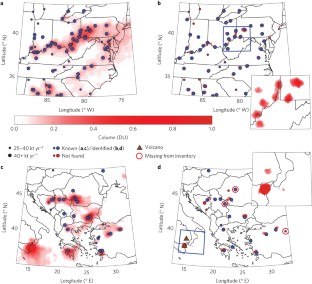
Figure 1: Demonstration of source-detection method over selected regions.
The alternative text for this image may have been generated using AI.
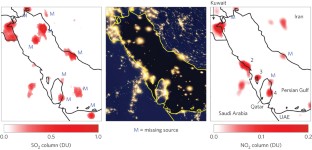
Figure 2: Satellite detection of emission sources in the Persian Gulf.
The alternative text for this image may have been generated using AI.
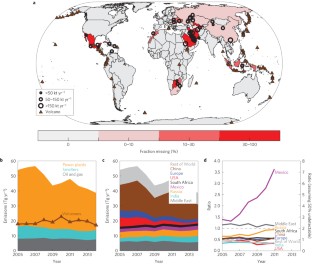
Figure 3: Summary of satellite-derived missing sources and inventory totals.
The alternative text for this image may have been generated using AI.
References
- Seinfeld, J. H. & Pandis, S. N. Atmospheric Chemistry and Physics 2nd edn (Wiley, 2006).
Google Scholar - Lelieveld, J. et al. The contribution of outdoor air pollution sources to premature mortality on a global scale. Nature 525, 367–371 (2015).
Article Google Scholar - Lim, S. S. et al. A comparative risk assessment of burden of disease and injury attributable to 67 risk factors and risk factor clusters in 21 regions, 1990–2010: a systematic analysis for the Global Burden of Disease Study 2010. Lancet 380, 2224–2260 (2012); correction 381, 628 (2013).
Article Google Scholar - Prüss-Ustün, A. et al. Preventing Disease through Healthy Environments: A Global Assessment of the Burden of Disease from Environmental Risks (World Health Organization, 2016); http://www.who.int/quantifying_ehimpacts/publications/preventing-disease/en
Google Scholar - The Cost of Air Pollution: Health Impacts of Road Transport (OECD, 2014).
- Lamsal, L. N. et al. Application of satellite observations for timely updates to global anthropogenic NO_x_ emission inventories. Geophys. Res. Lett. 38, L05810 (2011).
Article Google Scholar - Martin, R. V. Satellite remote sensing of surface air quality. Atmos. Environ. 42, 7823–7843 (2008).
Article Google Scholar - Streets, D. G. et al. Emissions estimation from satellite retrievals: a review of current capability. Atmos. Environ. 77, 1011–1042 (2013).
Article Google Scholar - Beirle, S. et al. Megacity emissions and lifetimes of nitrogen oxides probed from space. Science 333, 1737–1739 (2011).
Article Google Scholar - Fioletov, V. E., McLinden, C. A., Krotkov, N. & Li, C. Lifetimes and emissions of SO2 from point sources estimated from OMI. Geophys. Res. Lett. 42, 1969–1976 (2015).
Article Google Scholar - de Foy, B. et al. Estimates of power plant NO_x_ emissions and lifetimes from OMI NO2 satellite retrievals. Atmos. Environ. 116, 1–11 (2015).
Article Google Scholar - Li, C., Joiner, J., Krotkov, N. A. & Bhartia, P. K. A fast and sensitive new satellite SO2 retrieval algorithm based on principal component analysis: application to the ozone monitoring instrument. Geophys. Res. Lett. 40, 6314–6318 (2013).
Article Google Scholar - Levelt, P. F. et al. The ozone monitoring instrument. IEEE Trans. Geosci. Remote 44, 1093–1101 (2006).
Article Google Scholar - Dee, D. P. et al. The ERA-Interim reanalysis: configuration and performance of the data assimilation system. Q. J. R. Meteorol. Soc. 137, 553–597 (2011).
Article Google Scholar - Pommier, M., McLinden, C. A. & Deeter, M. Relative changes in CO emissions over megacities based on observations from space. Geophys. Res. Lett. 40, 3766–3771 (2013).
Article Google Scholar - Janssens-Maenhout, G. et al. HTAP_v2: a mosaic of regional and global emission gridmaps for 2008 and 2010 to study hemispheric transport of air pollution. Atmos. Chem. Phys. 15, 11411–11432 (2015).
Article Google Scholar - Granier, C. et al. Evolution of anthropogenic and biomass burning emissions of air pollutants at global and regional scales during the 1980–2010 period. Climatic Change 109, 163–190 (2011).
Article Google Scholar - Janssens-Maenhout, G., Pagliari, V., Guizzardi, D. & Muntean, M. Global Emission Inventories in the Emission Database for Global Atmospheric Research (EDGAR) Manual (I): Gridding: EDGAR Emissions Distribution on Global Gridmaps JRC Report EUR 25785 EN (2013); http://dx.doi.org/10.2788/81454
- Night Lights 2012—The Black Marble (NASA Earth Observatory, 2012); http://earthobservatory.nasa.gov/IOTD/view.php?id=79803
- Davis, C. B. et al. Enipedia & Energy Industry Group, Faculty of Technology, Policy and Management (TU Delft, 2015); http://enipedia.tudelft.nl
Google Scholar - Bucsela, E. J. et al. A new stratospheric and tropospheric NO2 retrieval algorithm for nadir-viewing satellite instruments: applications to OMI. Atmos. Meas. Tech. 6, 2607–2626 (2013).
Article Google Scholar - Reuter, M. et al. Decreasing emissions of NO_x_ relative to CO2 in East Asia inferred from satellite observations. Nature Geosci. 7, 792–795 (2013).
Article Google Scholar - Oda, T. & Maksyutov, S. A very high-resolution (1 km × 1 km) global fossil fuel CO2 emission inventory derived using a point source database and satellite observations of nighttime lights. Atmos. Chem. Phys. 11, 543–556 (2011).
Article Google Scholar - Zhao, Y., Zhang, J. & Nielse, C. P. The effects of energy paths and emission controls and standards on future trends in China’s emissions of primary air pollutants. Atmos. Chem. Phys. 14, 8849–8868 (2014).
Article Google Scholar - Klimont, Z., Smith, S. J. & Cofala, J. The last decade of global anthropogenic sulfur dioxide: 2000–2011 emissions. Environ. Res. Lett. 8, 014003 (2013).
Article Google Scholar - Sparks, R. S. J., Biggs, J. & Neuberg, J. W. Monitoring volcanoes. Science 335, 1310–1311 (2012).
Article Google Scholar - Diehl, T. et al. Anthropogenic, biomass burning, and volcanic emissions of black carbon, organic carbon, and SO2 from 1980 to 2010 for hindcast model experiments. Atmos. Chem. Phys. Discuss. 12, 24895–24954 (2012).
Article Google Scholar - Keller, C. A. et al. HEMCO v1.0: a versatile, ESMF-compliant component for calculating emissions in atmospheric models. Geosci. Model Dev. 7, 1409–1417 (2014).
Article Google Scholar - Global Sources of Local Pollution: An Assessment of Long-Range Transport of Key Air Pollutants to and from the United States (National Academies, 2010).
- Chance, K. et al. in Proc. SPIE 8866, Earth Observing Systems XVIII (eds Butler, J. J., Xiong, X. & Gu, X.) (SPIE, 2013).
Google Scholar - Krotkov, N. A. et al. Aura OMI observations of regional SO2 and NO2 pollution changes from 2005 to 2015. Atmos. Chem. Phys. 16, 4605–4629 (2016).
Article Google Scholar - Background Information about the Row Anomaly in OMI (OMI, 2012); http://projects.knmi.nl/omi/research/product/rowanomaly-background.php
- McLinden, C. A. et al. Improved satellite retrievals of NO2 and SO2 over the Canadian oil sands and comparisons with surface measurements. Atmos. Chem. Phys. 14, 3637–3656 (2014).
Article Google Scholar - von Engeln, A. & Teixeira, J. A planetary boundary layer height climatology derived from ECMWF Re-analysis data. J. Clim. 26, 6575–6590 (2013).
Article Google Scholar - Hsu, N. C. et al. Global and regional trends of aerosol optical depth over land and ocean using SeaWiFS measurements from 1997 to 2010. Atmos. Chem. Phys. 12, 8037–8053 (2012).
Article Google Scholar - Halmer, M. M. et al. The annual volcanic gas input into the atmosphere, in particular into the stratosphere: a global data set for the past 100 years. J. Volcanol. Geotherm. Res. 115, 511–528 (2002).
Article Google Scholar - Stuefer, M. et al. Inclusion of ash and SO2 emissions from volcanic eruptions in WRF-Chem: development and some applications. Geosci. Model Dev. 6, 457–468 (2013).
Article Google Scholar
Acknowledgements
R.V.M. was supported by Environment and Climate Change Canada. N.K., C.L. and J.J. acknowledge NASA funding through the Aura science team programme for OMI SO2 product development and analysis. The Dutch–Finnish-built OMI instrument is part of the NASA’s EOS Aura satellite payload. The OMI project is managed by KNMI and the Netherlands Space Office (NSO). The authors acknowledge ECMWF for the provision of their ERA-interim reanalysis data. C.A.M. thanks H. Morrison for commenting on earlier versions of the manuscript.
Author information
Authors and Affiliations
- Air Quality Research Division, Environment and Climate Change Canada, Toronto M3H 5T4, Canada
Chris A. McLinden, Vitali Fioletov, Mark W. Shephard & Michael D. Moran - Atmospheric Chemistry and Dynamics Laboratory, NASA Goddard Space Flight Center, Greenbelt, Maryland 20771, USA
Nick Krotkov, Can Li & Joanna Joiner - Earth System Science Interdisciplinary Center, University of Maryland, College Park, Maryland 20742, USA
Can Li - Department of Physics and Atmospheric Science, Dalhousie University, Halifax, Nova Scotia B3H 4R2, Canada
Randall V. Martin - Harvard-Smithsonian Center for Astrophysics, Cambridge, Massachusetts 02138, USA
Randall V. Martin
Authors
- Chris A. McLinden
- Vitali Fioletov
- Mark W. Shephard
- Nick Krotkov
- Can Li
- Randall V. Martin
- Michael D. Moran
- Joanna Joiner
Contributions
C.A.M., V.F. and M.W.S. planned the research and developed the algorithm, C.A.M. and V.F. performed the computations and analysis, N.K., C.L. and J.J. provided the satellite data, C.A.M. wrote the paper, and all authors discussed the results and commented on the manuscript.
Corresponding author
Correspondence toChris A. McLinden.
Ethics declarations
Competing interests
The authors declare no competing financial interests.
Supplementary information
Rights and permissions
About this article
Cite this article
McLinden, C., Fioletov, V., Shephard, M. et al. Space-based detection of missing sulfur dioxide sources of global air pollution.Nature Geosci 9, 496–500 (2016). https://doi.org/10.1038/ngeo2724
- Received: 24 January 2016
- Accepted: 27 April 2016
- Published: 30 May 2016
- Issue date: July 2016
- DOI: https://doi.org/10.1038/ngeo2724
This article is cited by
Absorption mechanism and thermodynamics of SO2 using pH-buffered ionic liquid aqueous solution
- X. Li
- T. Zhang
- D. Sun
International Journal of Environmental Science and Technology (2024)
Propane gas-sensing properties of pure and Pd-doped tin oxide nanostructures
- T. V. K. Karthik
- M. de la L. Olvera-Amador
- Heberto Gómez-Pozos
Journal of Materials Science: Materials in Electronics (2023)
Ethylene industrial emitters seen from space
- Bruno Franco
- Lieven Clarisse
- Pierre-François Coheur
Nature Communications (2022)
Persistence of Sulfur Dioxide Emissions in OECD Countries Between 1750–2014: A Fractional Integration Approach
- Sakiru Adebola Solarin
- Luis A. Gil-Alana
- Maria Jesus Gonzalez-Blanch
International Journal of Environmental Research (2021)
Global nitrous acid emissions and levels of regional oxidants enhanced by wildfires
- N. Theys
- R. Volkamer
- M. Van Roozendael
Nature Geoscience (2020)