Correction of junctional epidermolysis bullosa by transplantation of genetically modified epidermal stem cells (original) (raw)
- Letter
- Published: 19 November 2006
- Graziella Pellegrini1,2,
- Stefano Ferrari2,
- Francesca Di Nunzio1,
- Enzo Di Iorio2,
- Alessandra Recchia1,
- Giulietta Maruggi1,
- Giuliana Ferrari3,
- Elena Provasi4,
- Chiara Bonini4,
- Sergio Capurro5,
- Andrea Conti6,
- Cristina Magnoni6,
- Alberto Giannetti6 &
- …
- Michele De Luca1,2
Nature Medicine volume 12, pages 1397–1402 (2006)Cite this article
- 9231 Accesses
- 599 Citations
- 155 Altmetric
- Metrics details
Abstract
The continuous renewal of human epidermis is sustained by stem cells contained in the epidermal basal layer and in hair follicles1,2. Cultured keratinocyte stem cells, known as holoclones3,4,5,6, generate sheets of epithelium used to restore severe skin, mucosal and corneal defects7,8,9. Mutations in genes encoding the basement membrane component laminin 5 (LAM5) cause junctional epidermolysis bullosa (JEB), a devastating and often fatal skin adhesion disorder10. Epidermal stem cells from an adult patient affected by LAM5-β3–deficient JEB were transduced with a retroviral vector expressing LAMB3 cDNA (encoding LAM5-β3), and used to prepare genetically corrected cultured epidermal grafts. Nine grafts were transplanted onto surgically prepared regions of the patient's legs. Engraftment was complete after 8 d. Synthesis and proper assembly of normal levels of functional LAM5 were observed, together with the development of a firmly adherent epidermis that remained stable for the duration of the follow-up (1 year) in the absence of blisters, infections, inflammation or immune response. Retroviral integration site analysis indicated that the regenerated epidermis is maintained by a defined repertoire of transduced stem cells. These data show that ex vivo gene therapy of JEB is feasible and leads to full functional correction of the disease.
This is a preview of subscription content, access via your institution
Access options
Subscribe to this journal
Receive 12 print issues and online access
$259.00 per year
only $21.58 per issue
Buy this article
- Purchase on SpringerLink
- Instant access to the full article PDF.
USD 39.95
Prices may be subject to local taxes which are calculated during checkout
Additional access options:
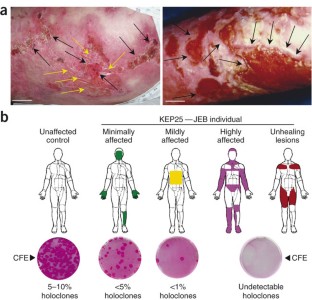
Figure 1: Analysis of the skin of patient KEP25.
The alternative text for this image may have been generated using AI.
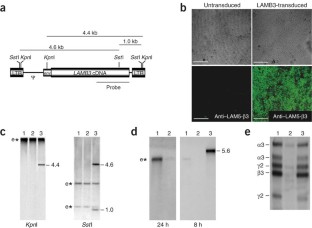
Figure 2: Correction of LAM5-β3 deficiency in epidermal cells of KEP25.
The alternative text for this image may have been generated using AI.
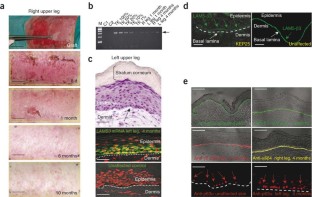
Figure 3: Regeneration of a genetically corrected, functional epidermis.
The alternative text for this image may have been generated using AI.
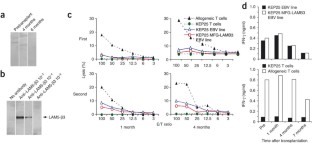
Figure 4: Absence of humoral or cytotoxic immune response to LAM5-β3.
The alternative text for this image may have been generated using AI.
References
- Watt, F.M. Stem cell fate and patterning in mammalian epidermis. Curr. Opin. Genet. Dev. 11, 410–417 (2001).
Article CAS Google Scholar - Alonso, L. & Fuchs, E. Stem cells of the skin epithelium. Proc. Natl. Acad. Sci. USA 100 (suppl. 1), 11830–11835 (2003).
Article CAS Google Scholar - Barrandon, Y. & Green, H. Three clonal types of keratinocyte with different capacities for multiplication. Proc. Natl. Acad. Sci. USA 84, 2302–2306 (1987).
Article CAS Google Scholar - Rochat, A., Kobayashi, K. & Barrandon, Y. Location of stem cells of human hair follicles by clonal analysis. Cell 76, 1063–1073 (1994).
Article CAS Google Scholar - Pellegrini, G. et al. Location and clonal analysis of stem cells and their differentiated progeny in the human ocular surface. J. Cell Biol. 145, 769–782 (1999).
Article CAS Google Scholar - Blanpain, C., Lowry, W.E., Geoghegan, A., Polak, L. & Fuchs, E. Self-renewal, multipotency, and the existence of two cell populations within an epithelial stem cell niche. Cell 118, 635–648 (2004).
Article CAS Google Scholar - Gallico, G.G., III, O'Connor, N.E., Compton, C.C., Kehinde, O. & Green, H. Permanent coverage of large burn wounds with autologous cultured human epithelium. N. Engl. J. Med. 311, 448–451 (1984).
Article Google Scholar - Romagnoli, G. et al. Treatment of posterior hypospadias by the autologous graft of cultured urethral epithelium. N. Engl. J. Med. 323, 527–530 (1990).
Article CAS Google Scholar - Pellegrini, G. et al. Long-term restoration of damaged corneal surfaces with autologous cultivated corneal epithelium. Lancet 349, 990–993 (1997).
Article CAS Google Scholar - Christiano, A.M. & Uitto, J. Molecular complexity of the cutaneous basement membrane zone. Revelations from the paradigms of epidermolysis bullosa. Exp. Dermatol. 5, 1–11 (1996).
Article CAS Google Scholar - Posteraro, P. et al. Compound heterozygosity for an out-of-frame deletion and a splice site mutation in the LAMB3 gene causes nonlethal junctional epidermolysis bullosa. Biochem. Biophys. Res. Commun. 243, 758–764 (1998).
Article CAS Google Scholar - Guerra, L. et al. Treatment of “stable” vitiligo by Timedsurgery and transplantation of cultured epidermal autografts. Arch. Dermatol. 136, 1380–1389 (2000).
Article CAS Google Scholar - Mills, A.A. et al. p63 is a p53 homologue required for limb and epidermal morphogenesis. Nature 398, 708–713 (1999).
Article CAS Google Scholar - Yang, A. et al. p63 is essential for regenerative proliferation in limb, craniofacial and epithelial development. Nature 398, 714–718 (1999).
Article CAS Google Scholar - Parsa, R., Yang, A., McKeon, F. & Green, H. Association of p63 with proliferative potential in normal and neoplastic human keratinocytes. J. Invest. Dermatol. 113, 1099–1105 (1999).
Article CAS Google Scholar - Pellegrini, G. et al. p63 identifies keratinocyte stem cells. Proc. Natl. Acad. Sci. USA 98, 3156–3161 (2001).
Article CAS Google Scholar - Di Iorio, E. et al. Isoforms of DeltaNp63 and the migration of ocular limbal cells in human corneal regeneration. Proc. Natl. Acad. Sci. USA 102, 9523–9528 (2005).
Article CAS Google Scholar - Parker, K.C., Bednarek, M.A. & Coligan, J.E. Scheme for ranking potential HLA-A2 binding peptides based on independent binding of individual peptide side-chains. J. Immunol. 152, 163–175 (1994).
CAS PubMed Google Scholar - Manici, S. et al. Melanoma cells present a MAGE-3 epitope to CD4+ cytotoxic T cells in association with histocompatibility leukocyte antigen DR11. J. Exp. Med. 189, 871–876 (1999).
Article CAS Google Scholar - Pellegrini, G. et al. The control of epidermal stem cells (holoclones) in the treatment of massive full-thickness burns with autologous keratinocytes cultured on fibrin. Transplantation 68, 868–879 (1999).
Article CAS Google Scholar - Bushman, F. et al. Genome-wide analysis of retroviral DNA integration. Nat. Rev. Microbiol. 3, 848–858 (2005).
Article CAS Google Scholar - De Luca, M., Pellegrini, G. & Green, H. Regeneration of squamous epithelia from stem cells of cultured grafts. Regenerative Med. 1, 45–57 (2006).
Article CAS Google Scholar - Hacein-Bey-Abina, S. et al. LMO2-associated clonal T cell proliferation in two patients after gene therapy for SCID-X1. Science 302, 415–419 (2003).
Article CAS Google Scholar - Gaspar, H.B. et al. Gene therapy of X-linked severe combined immunodeficiency by use of a pseudotyped gammaretroviral vector. Lancet 364, 2181–2187 (2004).
Article CAS Google Scholar - Aiuti, A. et al. Correction of ADA-SCID by stem cell gene therapy combined with nonmyeloablative conditioning. Science 296, 2410–2413 (2002).
Article CAS Google Scholar - Recchia, A. et al. Retroviral vector integration deregulates gene expression but has no consequence on the biology and function of transplanted T cells. Proc. Natl. Acad. Sci. USA 103, 1457–1462 (2006).
Article CAS Google Scholar - Ott, M.G. et al. Correction of X-linked chronic granulomatous disease by gene therapy, augmented by insertional activation of MDS1–EVI1, PRDM16 or SETBP1. Nat. Med. 12, 401–409 (2006).
Article CAS Google Scholar - Dellambra, E. et al. Corrective transduction of human epidermal stem cells in laminin-5-dependent junctional epidermolysis bullosa. Hum. Gene Ther. 9, 1359–1370 (1998).
Article CAS Google Scholar - Mathor, M.B. et al. Clonal analysis of stably transduced human epidermal stem cells in culture. Proc. Natl. Acad. Sci. USA 93, 10371–10376 (1996).
Article CAS Google Scholar - Krall, W.J. et al. Increased levels of spliced RNA account for augmented expression from the MFG retroviral vector in hematopoietic cells. Gene Ther. 3, 37–48 (1996).
CAS PubMed Google Scholar
Acknowledgements
We thank S. Bondanza for the clonal analysis of KEP25 keratinocytes shown in Figure 1b, K. Fleishauer for the HLA genotyping, and C. Rossi and D. Sartori for technical assistance. We also thank H. Green (Harvard Medical School) for providing the 3T3-J2 cells and G. Meneguzzi (Institut National de la Santé et de la Recherche Médicale (INSERM) U 634) for providing the K140 antibody to LAM5-β3 and performing the immunofluorescence shown in Figure 3d. This work was supported by grants from Telethon, AFM-Telethon and the European Commission (VI Framework Program, SKINTHERAPY).
Author information
Authors and Affiliations
- Department of Biomedical Sciences, University of Modena and Reggio Emilia, Via Campi 287, Modena, 41100, Italy
Fulvio Mavilio, Graziella Pellegrini, Francesca Di Nunzio, Alessandra Recchia, Giulietta Maruggi & Michele De Luca - Epithelial Stem Cell Research Center, Veneto Eye Bank Foundation, H. SS Giovanni and Paolo, Castello 6777, 30100, Venice, Italy
Graziella Pellegrini, Stefano Ferrari, Enzo Di Iorio & Michele De Luca - Istituto Scientifico H. San Raffaele-Telethon Institute for Gene Therapy (HSR-TIGET) and Vita-Salute University Istituto Scientifico H. San Raffaele, Via Olgettina 58, 20132, Milano, Italy
Giuliana Ferrari - Cancer Immunotherapy and Gene Therapy Program, Istituto Scientifico H. San Raffaele, Via Olgettina 58, 20132, Milano, Italy
Elena Provasi & Chiara Bonini - Division of Plastic Surgery, H. San Martino, Largo Rosanna Benzi 10, 16132, Genova, Italy
Sergio Capurro - Department of Internal Medicine, University of Modena and Reggio Emilia, Via del Pozzo 71, 41100, Modena, Italy
Andrea Conti, Cristina Magnoni & Alberto Giannetti
Authors
- Fulvio Mavilio
- Graziella Pellegrini
- Stefano Ferrari
- Francesca Di Nunzio
- Enzo Di Iorio
- Alessandra Recchia
- Giulietta Maruggi
- Giuliana Ferrari
- Elena Provasi
- Chiara Bonini
- Sergio Capurro
- Andrea Conti
- Cristina Magnoni
- Alberto Giannetti
- Michele De Luca
Contributions
F.M., G.P. and M.D.L. designed and directed the study. G.P carried out the clonal analysis, transduced the patient's cells and prepared the skin implants. S.F, F.D.N., E.D.I. and G.M. carried out the hystological and molecular follow-up, G.F. and F.M. constructed the retroviral vectors and the packaging cell line, E.P. and C.B. performed the immunological analysis, S.C., A.C., C.M. and A.G. carried out the transplantation and were responsible for the clinical management of the patient.
Corresponding authors
Correspondence toFulvio Mavilio or Michele De Luca.
Ethics declarations
Competing interests
The authors declare no competing financial interests.
Supplementary information
Rights and permissions
About this article
Cite this article
Mavilio, F., Pellegrini, G., Ferrari, S. et al. Correction of junctional epidermolysis bullosa by transplantation of genetically modified epidermal stem cells.Nat Med 12, 1397–1402 (2006). https://doi.org/10.1038/nm1504
- Received: 08 June 2006
- Accepted: 11 October 2006
- Published: 19 November 2006
- Issue date: 01 December 2006
- DOI: https://doi.org/10.1038/nm1504
This article is cited by
Netherton syndrome in a Bulgarian patient
- Simona Atanasova Kordeva
- Ilia Batashki
- Georgi Tchernev
Wiener Medizinische Wochenschrift (2023)
New developments in the molecular treatment of ichthyosis: review of the literature
- M. D. W. Joosten
- J. M. K. Clabbers
- A. H. Gostyński
Orphanet Journal of Rare Diseases (2022)
Mesenchymal Stem Cells From Mouse Hair Follicles Reduce Hypertrophic Scarring in a Murine Wound Healing Model
- Hanluo Li
- Mirjana Ziemer
- Vuk Savkovic
Stem Cell Reviews and Reports (2022)
Eye Involvement and Management in Inherited Epidermolysis Bullosa
- Yasmine Bachir
- Alejandra Daruich
- Dominique Bremond-Gignac
Drugs (2022)
Epidermolysis Bullosa: A Review of the Tissue-Engineered Skin Substitutes Used to Treat Wounds
- Alex du Rand
- John M. T. Hunt
- Hilary M. Sheppard
Molecular Diagnosis & Therapy (2022)