Terahertz time-domain spectroscopy and the quantitative monitoring of mechanochemical cocrystal formation (original) (raw)
- Letter
- Published: 25 February 2007
Nature Materials volume 6, pages 206–209 (2007) Cite this article
- 2799 Accesses
- 279 Citations
- 3 Altmetric
- Metrics details
Abstract
Terahertz (THz) radiation probes intermolecular interactions through crystal lattice vibrations, allowing the characterization of solid materials1,2. Thus, THz spectroscopy is a promising alternative to mainstream solid-state analytical tools such as X-ray diffraction or thermal analysis3. The method provides the benefits of online measurement4, remote sampling5 and three-dimensional imaging6, all of which are attractive for quality control and security applications. In the context of pharmaceutical solids, THz spectroscopy can differentiate and quantify different forms of active pharmaceutical ingredients7,8. Here, we apply this technique to monitor a dynamic process involving two molecular crystals9. In particular, we follow the mechanochemical construction of a two-component cocrystal10,11,12 by grinding together phenazine (phen) and mesaconic acid (mes)13. To rationalize the observed changes in the spectra, we conduct lattice dynamics calculations that lead to the tentative assignment of at least one feature in the cocrystal THz spectrum.
This is a preview of subscription content, access via your institution
Access options
Subscribe to this journal
Receive 12 print issues and online access
$259.00 per year
only $21.58 per issue
Buy this article
- Purchase on SpringerLink
- Instant access to the full article PDF.
USD 39.95
Prices may be subject to local taxes which are calculated during checkout
Additional access options:
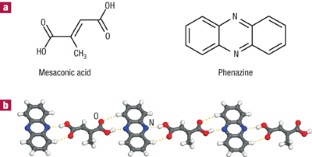
Figure 1: Representations of involved molecules.
The alternative text for this image may have been generated using AI.
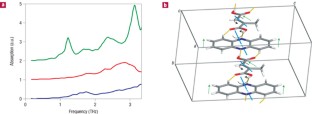
Figure 2: THz spectra and representation of the chain distortion leading to a THz absorption peak.
The alternative text for this image may have been generated using AI.
Figure 3: Results of quantification experiments.

The alternative text for this image may have been generated using AI.
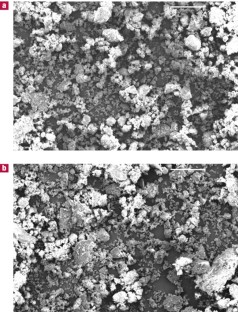
Figure 4: SEM images of ground samples of (phen).(mes).
The alternative text for this image may have been generated using AI.
References
- Chamberlain, J. M. Where optics meets electronics: Recent progress in decreasing the terahertz gap. Phil. Trans. R. Soc. Lond. A 362, 199–213 (2004).
Article CAS Google Scholar - Han, J., Xu, H., Zhu, Z., Yu, X. & Li, W. Terahertz spectroscopy of naphthalene, alpha-naphthol, beta-naphthol, biphenyl and anthracene. Chem. Phys. Lett. 392, 348–351 (2004).
Article CAS Google Scholar - Shah, B., Kakumanu, V. K. & Bansal, A. K. Analytical techniques for quantification of amorphous/crystalline phases in pharmaceutical solids. J. Pharm. Sci. 95, 1641–1665 (2006).
Article CAS Google Scholar - Fischer, B., Hoffmann, M., Helm, H., Modjesch, G. & Jepsen, P. U. Chemical recognition in terahertz time-domain spectroscopy and imaging. Semicond. Sci. Technol. 20, S246–S253 (2005).
Article CAS Google Scholar - Deibel, J. A., Wang, K., Escarra, M. D. & Mittleman, D. M. Enhanced coupling of terahertz radiation to cylindrical wire waveguides. Opt. Express 14, 279–290 (2006).
Article Google Scholar - Nguyen, K. L. et al. Three-dimensional imaging with a terahertz quantum cascade laser. Opt. Express 14, 2123–2129 (2006).
Article Google Scholar - Strachan, C. J. et al. Using terahertz pulsed spectroscopy to quantify pharmaceutical polymorphism and crystallinity. J. Pharm. Sci. 94, 837–846 (2005).
Article CAS Google Scholar - Upadhya, P. C. et al. Characterisation of crystalline phase transformations in theophylline by time domain terahertz spectroscopy. Spectrosc. Lett. 39, 215–224 (2006).
Article CAS Google Scholar - Liu, H.-B. & Zhang, X.-C. Dehydration kinetics of D-glucose monohydrate studied using THz time-domain spectroscopy. Chem. Phys. Lett. 429, 229–333 (2006).
Article CAS Google Scholar - Vishweshwar, P., McMahon, J. A., Bis, J. A. & Zaworotko, M. J. Pharmaceutical co-crystals. J. Pharm. Sci. 95, 499–516 (2006).
Article CAS Google Scholar - Sokolov, A. N., Friščić, T. & MacGillivray, L. R. Enforced face-to-face stacking of organic semiconductor building blocks within hydrogen-bonded molecular cocrystals. J. Am. Chem. Soc. 128, 2806–2807 (2006).
Article CAS Google Scholar - Smolka, T., Schaller, T., Sustmann, R., Bläser, D. & Boese, R. Structure and properties of cocrystals of phenazine and fumaric, 2,3-dihydroxyfumaric and oxalic acid. J. Prakt. Chem. 342, 465–472 (2000).
Article CAS Google Scholar - Batchelor, E., Klinowski, J. & Jones, W. Crystal engineering using co-crystallisation of phenazine with dicarboxylic acids. J. Mater. Chem. 10, 839–848 (2000).
Article CAS Google Scholar - Steiner, T. The hydrogen bond in the solid state. Angew. Chem. Int. Edn 41, 48–76 (2002).
Article CAS Google Scholar - Walmsley, S. H. Lattice vibrations and elastic constants of molecular crystals in the pair potential approximation. J. Chem. Phys. 48, 1438–1444 (1968).
Article CAS Google Scholar - Day, G. M., Zeitler, J. A., Jones, W., Rades, T. & Taday, P. F. Understanding the influence of polymorphism on phonon spectra: Lattice dynamics calculations and terahertz spectroscopy of carbamazepine. J. Phys. Chem. B 110, 447–456 (2006).
Article CAS Google Scholar - Luty, T. & Munn, R. W. Infrared intensities of lattice vibrations in molecular crystals. Chem. Phys. 43, 295–302 (1979).
Article CAS Google Scholar - Trask, A. V. & Jones, W. Crystal engineering of organic cocrystals by the solid-state grinding approach. Top. Curr. Chem. 254, 41–70 (2005).
Article CAS Google Scholar - Allis, D. G., Prokhorova, D. A. & Korter, T. M. Solid-state modeling of the terahertz spectrum of the high explosive HMX. J. Phys. Chem. A 110, 1951–1959 (2006).
Article CAS Google Scholar
Acknowledgements
We are grateful to the Research Councils UK ‘Basic Technology Programme’ for funding aspects of this work. K.L.N. thanks the Gates Cambridge Trust for financial support. T.F. acknowledges the Pfizer Institute for Pharmaceutical Materials Science for funding. G.M.D. thanks the Royal Society for funding.
Author information
Authors and Affiliations
- Department of Chemical Engineering, University of Cambridge, Pembroke Street, Cambridge CB2 3RA, UK
K. Lien Nguyen & Lynn F. Gladden - Department of Chemistry, University of Cambridge, Lensfield Road, Cambridge CB2 1EW, UK
Tomislav Friščić, Graeme M. Day & William Jones
Authors
- K. Lien Nguyen
- Tomislav Friščić
- Graeme M. Day
- Lynn F. Gladden
- William Jones
Contributions
All authors contributed to the analysis and interpretation of the results. Sample preparation and measurements were carried out by K.L.N. and T.F. The computational work of predicting and interpreting the form of the spectra was done by G.M.D.
Corresponding authors
Correspondence toLynn F. Gladden or William Jones.
Ethics declarations
Competing interests
The authors declare no competing financial interests.
Supplementary information
Rights and permissions
About this article
Cite this article
Lien Nguyen, K., Friščić, T., Day, G. et al. Terahertz time-domain spectroscopy and the quantitative monitoring of mechanochemical cocrystal formation.Nature Mater 6, 206–209 (2007). https://doi.org/10.1038/nmat1848
- Received: 07 September 2006
- Accepted: 05 January 2007
- Published: 25 February 2007
- Issue date: March 2007
- DOI: https://doi.org/10.1038/nmat1848