Single-cell molecular biology (original) (raw)
- Emerging Techniques
- Published: November 2001
Nature Neuroscience volume 4, pages 1155–1156 (2001)Cite this article
- 353 Accesses
- 51 Citations
- 6 Altmetric
- Metrics details
The need for single-cell mRNA analysis is evident given the vast cellular heterogeneity of the CNS and the inability of conventional methodologies such as northern blotting or RNAse protection to distinguish individual cellular contributions to mRNA abundance differences. The history of single-cell molecular biology is relatively new when compared to many areas of neuroscience investigation. The first single-cell analysis involved the characterization of mitochondrial DNA1. Single-cell DNA analysis (particularly genomic DNA) is important and may be informative in the analysis of genetics of cell clonality, genetic anticipation and single-cell DNA polymorphisms. However, the more important area of analysis for most neuroscientists is mRNA expression analysis. It is the relative abundances of mRNAs and their regulation that give rise to a cell's identity, potential for synaptic responsiveness and ability to undergo cellular plasticity.
In situ hybridization (ISH) was the first example of single-cell mRNA analysis. This procedure allowed the detection and precise localization of mRNAs in cells and subcellular domains. Initially, ISH lacked sensitivity and could not simultaneously detect more than a handful of mRNAs on the same tissue section. (There are not enough distinguishable probes to permit more than 5–10 different mRNAs to be detected simultaneously on a single tissue section.) Although the sensitivity issue has largely been overcome with various signal enhancement strategies, the latter difficulty still remains.
This is a preview of subscription content, access via your institution
Relevant articles
Open Access articles citing this article.
Access options
Subscribe to this journal
Receive 12 print issues and online access
$259.00 per year
only $21.58 per issue
Buy this article
- Purchase on SpringerLink
- Instant access to the full article PDF.
USD 39.95
Prices may be subject to local taxes which are calculated during checkout
Additional access options:
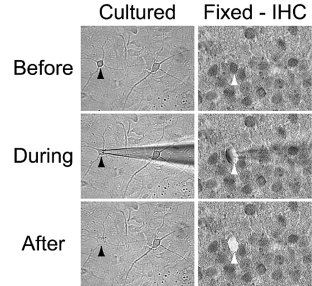
Figure 1: Harvesting of mRNA from single live and fixed cells.
References
- Li, H. et al. Nature 335, 414–417 (1988).
CAS PubMed Google Scholar - VanGelder, R. et al. Proc. Natl. Acad. Sci. USA 87, 1663–1667 (1990).
CAS Google Scholar - Eberwine, J. et al. Proc. Natl. Acad. Sci. USA 89, 3010–3014 (1992).
CAS PubMed Google Scholar - Lambolez, B., Audinat, E., Bochet, P., Crepel, F. & Rossier, J. Neuron 9, 247–258 (1992).
CAS PubMed Google Scholar - Mackler, S. & Eberwine, J. Mol. Pharmacol. 44, 308–315 (1993).
CAS PubMed Google Scholar - Mermelstein, P., Song, W., Tkatch, T., Yan, Z. & Surmeier, D. J. Neurosci. 18, 6650–6661 (1998).
CAS PubMed Google Scholar - Miyashiro, K., Dichter, M. & Eberwine, J. Proc. Natl. Acad. Sci. USA 91, 10800–10804 (1994).
CAS PubMed Google Scholar - Dulac, C. & Axel, R. Cell 83, 195–206 (1995).
CAS PubMed Google Scholar - Jonas, P., Racca, C., Sakmann, B., Seeburg, P. & Monyer, H. Neuron 12, 1281–1289 (1994).
CAS PubMed Google Scholar - Crino, P., Dichter, M., Trojanowski, J. & Eberwine, J. Proc. Natl. Acad. Sci. USA 93, 14152–14157 (1996).
CAS PubMed Google Scholar - Tecott, L., Barchas, J. & Eberwine, J. Science 240, 1661–1664 (1988).
CAS PubMed Google Scholar - Chow, N. et al. Proc. Natl. Acad. Sci. USA 95, 9620–9625 (1998).
CAS PubMed Google Scholar
Author information
Authors and Affiliations
- the Departments of Pharmacology and Psychiatry, University of Pennsylvania Medical Center, 36th Street and Hamilton Walk, Philadelphia, 19104, Pennsylvania, USA
James Eberwine
Rights and permissions
About this article
Cite this article
Eberwine, J. Single-cell molecular biology.Nat Neurosci 4 (Suppl 11), 1155–1156 (2001). https://doi.org/10.1038/nn1101-1155
- Issue date: November 2001
- DOI: https://doi.org/10.1038/nn1101-1155