Homing in on vertebrates (original) (raw)
- News & Views
- Published: 27 November 1997
Magnetoreception
Nature volume 390, pages 339–340 (1997) Cite this article
- 1164 Accesses
- 67 Citations
- 4 Altmetric
- Metrics details
Imagine being set adrift in a canoe in the middle of an ocean. Which way would you paddle? Most humans would be as lost as lost can be, but creatures such as pigeons, turtles and whales have no difficulty navigating in such circumstances. How they do so remains one of the biggest mysteries in the behavioural sciences, at the centre of which is the question of how organisms might sense the Earth's magnetic field and use it for navigation and homing (a topic with a chequered history — see box, overleaf). The mystery, however, is gradually being solved, and the latest instalment in the story comes in Walker and colleagues' study of rainbow trout (page 371of this issue1).
All known sensory systems have specialized receptor cells designed to respond to the external stimulus, and these are always coupled to neurons to bring this information to the brain. In modern times the main objection to claims that magnetoreception is genuine was biophysical2 — that there was no evidence of appropriate receptors.
This is a preview of subscription content, access via your institution
Access options
Subscribe to this journal
Receive 51 print issues and online access
$199.00 per year
only $3.90 per issue
Buy this article
- Purchase on SpringerLink
- Instant access to the full article PDF.
USD 39.95
Prices may be subject to local taxes which are calculated during checkout
Additional access options:
Figure 1: Magnetite-bearing teeth of the mollusc Cryptochiton stelleri .

The alternative text for this image may have been generated using AI.
Figure 2: A freshwater magnetotactic bacterium.
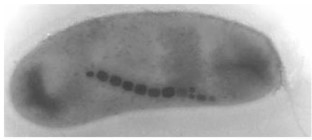
The alternative text for this image may have been generated using AI.
Figure 3: A linear chain of biogenic magnetite crystals, extracted from tissues in the frontal region of the sockeye salmon8, Oncorhynchus nerka, a close relative of the rainbow trout, O. mykiss .

The alternative text for this image may have been generated using AI.
References
- Walker, M. M. et al. Nature 390, 371–376 (1997).
Article ADS CAS Google Scholar - Griffin, D. R. Q. Rev. Biol. 19, 15–31 (1944).
Google Scholar - Kirschvink, J. L., Jones, D. S. & McFadden, B. J. Magnetite Biomineralization and Magnetoreception in Organisms: A New Biomagnetism (Plenum, New York, 1985).
- Kirschvink, J. L., Kobayashi-Kirschvink, A. & Woodford, B. J. Proc. Natl Acad. Sci. USA 89, 7683–7687 (1992).
Google Scholar - Wiltschko, R. & Wiltschko, W. Magnetic Orientation in Animals (Springer, Berlin, 1995).
- Kirschvink, J. L., Padmanabha, S., Boyce, C. K. & Oglesby, J. J. Exp. Biol. 200, 1363–1368 (1997).
Google Scholar - Beason, R. C. & Semm, P. J. Exp. Biol. 199, 1241–1244 (1996).
Google Scholar - Mann, S., Sparks, N. H. C., Walker, M. M. & Kirschvink, J. L. J. Exp. Biol. 140, 35–49 (1988).
Google Scholar - Berliner, D. L., Monti-Bloch, L., Jennings-White, C. & Diaz-Sanchez, V. J. Steroid Biochem. Mol. Biol. 58, 259–265 (1996).
Google Scholar - Fuller, M., Dobson, J., Gregor-Wieser, H. & Moser, S. Brain Res. Bull. 36, 155–159 (1995).
Google Scholar - Finny, B. Curr. Anthropol. 36, 500–505 (1995).
Google Scholar
Author information
Authors and Affiliations
- the Division of Geological and Planetary Sciences, California Institute of Technology, Pasadena, 91125, California, USA
Joseph L. Kirschvink
Authors
- Joseph L. Kirschvink
Rights and permissions
About this article
Cite this article
Kirschvink, J. Homing in on vertebrates.Nature 390, 339–340 (1997). https://doi.org/10.1038/36986
- Issue date: 27 November 1997
- DOI: https://doi.org/10.1038/36986