Designer cancer vaccines are still in fashion (original) (raw)
- News & Views
- Published: September 2000
Nature Medicine volume 6, pages 966–968 (2000)Cite this article
- 163 Accesses
- 20 Citations
- Metrics details
The use of dendritic cells to immunize against tumor antigens is improving the prospects for cancer vaccines. However, caution must be taken to avoid activating autoimmunity against normal cells (pages 1011–1017).
This is a preview of subscription content, access via your institution
Relevant articles
Open Access articles citing this article.
In vitro migration of cytotoxic T lymphocyte derived from a colon carcinoma patient is dependent on CCL2 and CCR2
- Klara Berencsi
- , Pyapalli Rani
- … Rajasekharan Somasundaram
Journal of Translational Medicine Open Access 30 March 2011
Access options
Subscribe to this journal
Receive 12 print issues and online access
$259.00 per year
only $21.58 per issue
Buy this article
- Purchase on SpringerLink
- Instant access to the full article PDF.
USD 39.95
Prices may be subject to local taxes which are calculated during checkout
Additional access options:
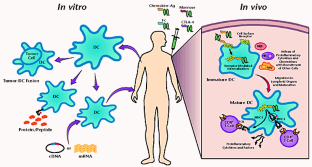
Figure 1: Two strategies for harnessing DCs in tumor vaccine therapy.
References
- Kugler, A. et al. Regression of human metastatic renal cell carcinoma after vaccination with tumor cell-dendritic cell hybrids. Nature Med. 6, 332–336 (2000).
Article CAS Google Scholar - Nair, S.K. et al. Induction of cytotoxic responses and tumor immunity against unrelated tumors using telomerase reverse transcriptase RNA transfected dendritic cells . Nature Med. 6, 1011–1017 (2000).
Article CAS Google Scholar - Brocker, T. et al. Targeted expression of major histocompatibility complex class II molecules demonstrates that dendritic cells can induce negative but not positive selection of thymocytes in vivo. J. Exp. Med. 185, 541–550 (1997).
Article CAS Google Scholar - Ludewig, B. et al. Immunotherapy with dendritic cells directed against tumor antigens shared with normal host cells results in severe autoimmune disease . J. Exp. Med. 191, 795– 803 (2000).
Article CAS Google Scholar - Siegal, F.P. et al. The nature of the principal type 1 interferon-producing cells in human blood. Science 284, 1835– 1837 (1999).
Article CAS Google Scholar - Rissoan, M.C. et al. Reciprocal control of T helper cell and dendritic cell differentiation . Science 283, 1183–11186 (1999).
Article CAS Google Scholar - Biragyn, A., Tani, K., Grimm, M.C., Weeks, S. & Kwak, L.W. Genetic fusion of chemokines to a self tumor antigen induces protective, T-cell dependent antitumor immunity. Nature Biotech. 17, 253–258 ( 1999).
Article CAS Google Scholar - Kim, N.W. et al. Specific association of human telomerase activity with immortal cells and cancer. Science 266, 2011– 2013 (1994).
Article CAS Google Scholar - Weng, N.P. et al. Regulated expression of telomerase activity in human T lymphocyte development and activity. J. Exp. Med. 183, 2471–2479 (1996).
Article CAS Google Scholar - Vonderheide, R.H. et al. The telomerase catalitic subunit is a widely expressed tumor-associated antigen recognized by cytotoxic T lymphocytes. Immunity 10, 673–679 (1999).
Article CAS Google Scholar - Minev, B. et al. Cytotoxic T cell immunity against telomerase reverse transcriptase in humans. Proc. Natl. Acad. Sci. USA 97, 4796–4801 (2000).
Article CAS Google Scholar - Bendandi, M. et al. Complete molecular remission induced by patient-specific vaccination plus granulocyte-monocyte colony-stimulating factor against lymphoma. Nature Med. 5, 1171–1177 (1999).
Article CAS Google Scholar
Author information
Authors and Affiliations
- Department of Experimental Transplantation & Immunology Medicine Branch, Division of Clinical Sciences National Cancer Institute Bethesda, Maryland, 20892, USA
Arya Biragyn & Larry W. Kwak
Authors
- Arya Biragyn
- Larry W. Kwak
Rights and permissions
About this article
Cite this article
Biragyn, A., Kwak, L. Designer cancer vaccines are still in fashion.Nat Med 6, 966–968 (2000). https://doi.org/10.1038/79649
- Issue date: September 2000
- DOI: https://doi.org/10.1038/79649