A new moon for Neptune (original) (raw)
- NEWS AND VIEWS
- 20 February 2019
Hippocamp, a previously undetected moon of Neptune, has a peculiar location and a tiny size relative to the planet’s other inner moons, which suggests a violent history for the region within 100,000 kilometres of the planet.
By
- Anne J. Verbiscer
- Anne J. Verbiscer is in the Department of Astronomy, University of Virginia, Charlottesville, Virginia 22904, USA.
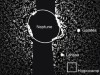
In 1989, the NASA spacecraft Voyager 2 detected six moons of Neptune that are interior to the orbit of the planet’s largest moon, Triton1. In a paper in Nature, Showalter et al.2 report the discovery of a seventh inner moon, Hippocamp. Originally designated as S/2004 N 1 and Neptune XIV, this moon was found in images taken by NASA’s Hubble Space Telescope in 2004–05 and 2009, and then confirmed in further images captured in 2016. Hippocamp is only 34 kilometres wide, which makes it diminutive compared with its larger siblings, and it orbits Neptune just inside the orbit of Proteus — the planet’s second largest moon.
Access options
Access Nature and 54 other Nature Portfolio journals
Get Nature+, our best-value online-access subscription
$32.99 / 30 days
cancel any time
Subscribe to this journal
Receive 51 print issues and online access
$199.00 per year
only $3.90 per issue
Rent or buy this article
Prices vary by article type
from$1.95
to$39.95
Prices may be subject to local taxes which are calculated during checkout
Additional access options:
Nature 566, 328-329 (2019)
doi: https://doi.org/10.1038/d41586-019-00576-1
References
- Smith, B. A. et al. Science 246, 1422–1449 (1989).
Article PubMed Google Scholar - Showalter, M. R., de Pater, I., Lissauer, J. J. & French, R. S. Nature 566, 350–353 (2019).
Article Google Scholar - Parker, A. H. et al. Astron. J. 145, 96 (2013).
Article Google Scholar - Brown, M. E. & Batygin, K. Astrophys. J. Lett. 824, L23 (2016).
Article Google Scholar - Showalter, M. R. Nature 351, 709–713 (1991).
Article Google Scholar - Showalter, M. R. & Lissauer, J. J. IAU Circ. 8209 (2003).
- Showalter, M. R. et al. IAU Circ. 9221 (2011).
- Showalter, M. R. et al. IAU Circ. 9253 (2012).
- Showalter, M. R. & Hamilton, D. P. Nature 522, 45–49 (2015).
Article PubMed Google Scholar - Spencer, J. R. et al. EPSC Abstr. 10, EPSC2015-417 (2015).
Article Google Scholar - Burns, J. A. et al. Science 284, 1146–1150 (1999).
Article PubMed Google Scholar - Verbiscer, A. J., Skrutskie, M. F. & Hamilton, D. P. Nature 461, 1098–1100 (2009).
Article PubMed Google Scholar - Giese, B., Neukum, G., Roatsch, T., Denk, T. & Porco, C. C. Planet. Space Sci. 54, 1156–1166 (2006).
Article Google Scholar
Related Articles
-
 Read the paper: The seventh inner moon of Neptune
 -
 Ring detected around a dwarf planet
 -
 Signs of a wandering Moon
 - See all News & Views
Subjects
Latest on:
 A wispy wrapper for a chilly, Pluto-like world Research Highlight 04 MAY 26
  ‘Make Pluto a planet again’? NASA chief revives debate that divides astronomers News 30 APR 26
  Non-equilibrium condensation of the first Solar System solids Article 22 APR 26
  Extreme galaxy-scale outflows are frequent among luminous early quasars Article 06 MAY 26
 - ‘Make Pluto a planet again’? NASA chief revives debate that divides astronomers News 30 APR 26
 Charge-dependent spectral softenings of primary cosmic rays below the knee Article 29 APR 26