An ancient nova shell around the dwarf nova Z Camelopardalis (original) (raw)
- Letter
- Published: 08 March 2007
- Christopher D. Martin2,
- Mark Seibert3,
- R. Michael Rich4,
- Samir Salim4,
- David Reitzel4,
- David Schiminovich5,
- Constantine P. Deliyannis6,
- Angela R. Sarrazine6,
- Shri R. Kulkarni2,
- Eran O. Ofek2,
- Noah Brosch7,
- Sebastien Lépine1,
- David Zurek1,
- Orsola De Marco1 &
- …
- George Jacoby8
Nature volume 446, pages 159–162 (2007) Cite this article
- 829 Accesses
- 76 Citations
- 3 Altmetric
- Metrics details
Abstract
Cataclysmic variables (classical novae and dwarf novae) are binary star systems in which a red dwarf transfers hydrogen-rich matter, by way of an accretion disk, to its white dwarf companion1. In dwarf novae, an instability2 is believed to episodically dump much of the accretion disk onto the white dwarf. The liberation of gravitational potential energy then brightens these systems by up to 100-fold every few weeks or months2. Thermonuclear-powered eruptions thousands of times more luminous3,4 occur in classical novae5, accompanied by significant mass ejection6 and formation of clearly visible shells7,8 from the ejected material. Theory predicts that the white dwarfs in all dwarf novae must eventually accrete enough mass to undergo classical nova eruptions9. Here we report a shell, an order of magnitude more extended than those detected around many classical novae, surrounding the prototypical dwarf nova Z Camelopardalis. The derived shell mass matches that of classical novae, and is inconsistent with the mass expected from a dwarf nova wind or a planetary nebula. The shell observationally links the prototypical dwarf nova Z Camelopardalis with an ancient nova eruption and the classical nova process.
This is a preview of subscription content, access via your institution
Access options
Subscribe to this journal
Receive 51 print issues and online access
$199.00 per year
only $3.90 per issue
Buy this article
- Purchase on SpringerLink
- Instant access to the full article PDF.
USD 39.95
Prices may be subject to local taxes which are calculated during checkout
Additional access options:
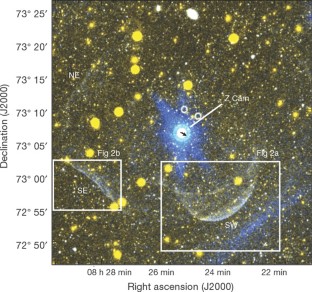
Figure 1: GALEX satellite image of the field of the dwarf nova Z Camelopardalis on 25 January 2004.
The alternative text for this image may have been generated using AI.
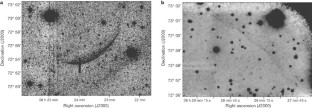
Figure 2: Features around Z Cam.
The alternative text for this image may have been generated using AI.
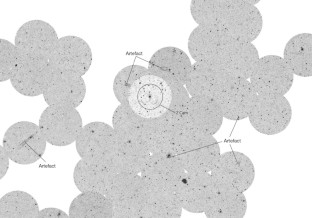
Figure 3: All fields imaged by GALEX before July 2006, with centres within 200 arcmin of Z Cam.
The alternative text for this image may have been generated using AI.
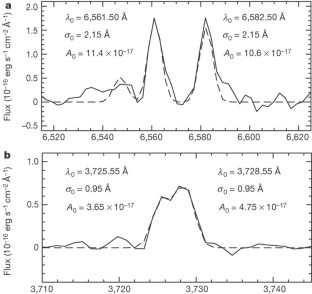
Figure 4: Emission lines from the Z Cam nebulosity.
The alternative text for this image may have been generated using AI.
References
- Warner, B. Cataclysmic Variable Stars 7–11 269 (Cambridge Univ. Press, Cambridge, UK, 1995)
Book Google Scholar - Osaki, Y. An accretion model for the outbursts of U Geminorum stars. Publ. Astron. Soc. Jpn 26, 429–436 (1974)
ADS Google Scholar - Lundmark, K. Some facts and suggestions concerning novæ. Publ. Astron. Soc. Pacif. 35, 95–117 (1923)
Article ADS Google Scholar - Hubble, E. P. A spiral nebula as a stellar system, Messier 31. Astrophys. J. 69, 103–158 (1929)
Article ADS Google Scholar - Yaron, O., Prialnik, D., Shara, M. & Kovetz, A. An extended grid of nova models. II. The parameter space of nova outbursts. Astrophys. J. 623, 398–410 (2005)
Article ADS CAS Google Scholar - Payne-Gaposhkin, C. The Galactic Novae 53–70 (Interscience Publishers, New York, 1957)
Google Scholar - Wade, R. A. in Physics of Classical Novae (eds Cassatella, A. & Viotti, R.) 179–187 (Proc. IAU Coll. 122, Springer, Berlin, 1990)
Book Google Scholar - Downes, R. A. & Duerbeck, H. W. Optical imaging of nova shells and the maximum magnitude-rate of decline relationship. Astron. J. 120, 2007–2037 (2000)
Article ADS CAS Google Scholar - Shara, M., Livio, M., Moffat, A. & Orio, M. Do novae hibernate during most of the millennia between eruptions? Links between dwarf and classical novae, and implications for the space densities and evolution of cataclysmic binaries. Astrophys. J. 311, 163–171 (1986)
Article ADS CAS Google Scholar - Thorstensten, J. R. Parallaxes and distance estimates for 14 cataclysmic variable stars. Astron. J. 126, 3017–3029 (2003)
Article ADS Google Scholar - Mattei, J. A., Waagen, E. O., Oppenheimer, B. D. & Foster, E. G. Z Camelopardalis Light Curves 1927–1995 (Am. Assoc. Var. Star Observers Monograph, Cambridge, Massachusetts, 1996)
Google Scholar - Robinson, E. L. Detection of mass loss from the dwarf nova Z Camelopardalis. Astrophys. J. 186, 347–356 (1973)
Article ADS CAS Google Scholar - Szkody, P. & Mateo, M. Z. Camelopardalis: Outburst P Cygni profiles and quiescent continuum. Astrophys. J. 301, 286–296 (1986)
Article ADS CAS Google Scholar - Baskill, D. S., Wheatley, P. J. & Osborne, J. P. ASCA X-ray observations of the disc wind in the dwarf nova Z Camelopardalis. Mon. Not. R. Astron. Soc. 328, 71–78 (2001)
Article ADS CAS Google Scholar - Martin, D. C. et al. The Galaxy Evolution Explorer: A space ultraviolet survey mission. Astrophys. J. 619, L1–L4 (2005)
Article ADS CAS Google Scholar - Bode, M. F., O’Brien, T. J. & Simpson, M. Echoes of an explosive past: Solving the mystery of the first superluminal source. Astrophys. J. 600, L63–L66 (2004)
Article ADS CAS Google Scholar - Sabbadin, F. & D’Odorico, S. Spectroscopic observations of the supernova remnant candidates 3C 400.2 and S91. Astron. Astrophys. 49, 443–445 (1976)
Google Scholar - Dopita, M. Optical emission from shock waves. Astrophys. J. Suppl. Ser. 33, 437–449 (1977)
Article ADS CAS Google Scholar - Knigge, C., Long, K. S., Blair, W. P. & Wade, R. A. Disks, winds, and veiling curtains: Dissecting the ultraviolet spectrum of the dwarf nova Z Camelopardalis in outburst. Astrophys. J. 476, 291–310 (1997)
Article ADS CAS Google Scholar - Blocker, T. Stellar evolution of low- and intermediate-mass stars II. Post-AGB evolution. Astron. Astrophys. 299, 755–769 (1995)
ADS Google Scholar - Høg, E. et al. The Tycho-2 catalogue of the 2.5 million brightest stars. Astron. Astrophys. 355, L27–L30 (2000)
ADS Google Scholar - The Vela supernova remnant. 〈http://www.aao.gov.au/images/captions/uks002.html〉 (2002)
- Shara, M. M. A theoretical explanation of the absolute magnitude-decline time MB -t3 relationship for classical novae. Astrophys. J. 243, 926–934 (1981)
Article ADS Google Scholar - Simon, V. Dramatic change of the recurrence time and outburst parameters of the intermediate polar GK Persei. Astron. Astrophys. 382, 910–920 (2002)
Article ADS Google Scholar - Osterbrock, D. E. et al. Night-sky high-resolution spectral atlas of OH and O2 emission lines for echelle spectrograph wavelength calibration. Publ. Astron. Soc. Pacif. 108, 277–308 (1996)
Article ADS Google Scholar
Acknowledgements
This work was supported by the National Aeronautics and Space Administration. Telescope time at the Kitt Peak National Observatory, Lick Observatory and the Palomar Observatory is gratefully acknowledged. Kitt Peak National Observatory of the National Optical Astronomy Observatory is operated by the Association of Universities for Research in Astronomy, Inc. (AURA) under cooperative agreement with the National Science Foundation.
Author information
Authors and Affiliations
- Department of Astrophysics, American Museum of Natural History, 79th Street and Central Park West, New York, New York 10024-5192, USA,
Michael M. Shara, Sebastien Lépine, David Zurek & Orsola De Marco - Department of Physics, Math and Astronomy, California Institute of Technology, 1200 East California Boulevard, Mail Code 405-47, Pasadena, California 91125, USA,
Christopher D. Martin, Shri R. Kulkarni & Eran O. Ofek - Observatories of the Carnegie Institution of Washington, 813 Santa Barbara Street, Pasadena, California 91101, USA,
Mark Seibert - Department of Physics and Astronomy, 430 Portola Plaza, UCLA, Los Angeles, California 90095-1547, USA,
R. Michael Rich, Samir Salim & David Reitzel - Department of Astronomy, Columbia University, New York, New York 10027, USA,
David Schiminovich - Astronomy Department, Indiana University, Bloomington, Indiana 47405-7105, USA,
Constantine P. Deliyannis & Angela R. Sarrazine - Department of Astronomy & Astrophysics, Wise Observatory, Tel-Aviv University, Ramat-Aviv 69978, Israel,
Noah Brosch - WIYN Observatory, PO Box 26732, Tucson, Arizona 85726, USA,
George Jacoby
Authors
- Michael M. Shara
- Christopher D. Martin
- Mark Seibert
- R. Michael Rich
- Samir Salim
- David Reitzel
- David Schiminovich
- Constantine P. Deliyannis
- Angela R. Sarrazine
- Shri R. Kulkarni
- Eran O. Ofek
- Noah Brosch
- Sebastien Lépine
- David Zurek
- Orsola De Marco
- George Jacoby
Corresponding author
Correspondence toMichael M. Shara.
Ethics declarations
Competing interests
Reprints and permissions information is available at www.nature.com/reprints. The authors declare no competing financial interests.
Rights and permissions
About this article
Cite this article
Shara, M., Martin, C., Seibert, M. et al. An ancient nova shell around the dwarf nova Z Camelopardalis.Nature 446, 159–162 (2007). https://doi.org/10.1038/nature05576
- Received: 01 September 2006
- Accepted: 02 January 2007
- Issue date: 08 March 2007
- DOI: https://doi.org/10.1038/nature05576
This article is cited by
Editorial Summary
The bright and distant past
A dwarf nova is a type of cataclysmic variable containing a collapsed white dwarf star that accretes matter from its close companion in a binary system, a red dwarf. An instability periodically dumps material onto the white dwarf, increasing the luminosity by up to a hundredfold. Classical novae are thousands of times brighter than dwarf novae, and are accompanied by the formation of shells around the system. Theory predicts that dwarf novae will eventually gain sufficient mass to undergo classical nova eruptions. This suspected link between dwarf and classical novae now has an observational basis with the discovery of an ancient nova shell around the dwarf nova Z Camelopardalis. The nature of the shell suggests that a few thousand years ago, Z Cam underwent a classical nova eruption and for some days was one of the brightest stars in the sky.