Risk maps for Antarctic krill under projected Southern Ocean acidification (original) (raw)
- Letter
- Published: 07 July 2013
- A. Ishida3,4,
- R. King1,
- B. Raymond1,2,
- N. Waller1,
- A. Constable1,2,
- S. Nicol5,
- M. Wakita4,6 &
- …
- A. Ishimatsu7
Nature Climate Change volume 3, pages 843–847 (2013) Cite this article
- 6800 Accesses
- 181 Citations
- 135 Altmetric
- Metrics details
Subjects
Abstract
Marine ecosystems of the Southern Ocean are particularly vulnerable to ocean acidification1. Antarctic krill (Euphausia superba; hereafter krill) is the key pelagic species of the region and its largest fishery resource2. There is therefore concern about the combined effects of climate change, ocean acidification and an expanding fishery on krill and ultimately, their dependent predators—whales, seals and penguins3,4. However, little is known about the sensitivity of krill to ocean acidification. Juvenile and adult krill are already exposed to variable seawater carbonate chemistry because they occupy a range of habitats and migrate both vertically and horizontally on a daily and seasonal basis5. Moreover, krill eggs sink from the surface to hatch at 700–1,000 m (ref. 6), where the carbon dioxide partial pressure ( p CO 2 ) in sea water is already greater than it is in the atmosphere7. Krill eggs sink passively and so cannot avoid these conditions. Here we describe the sensitivity of krill egg hatch rates to increased CO2, and present a circumpolar risk map of krill hatching success under projected p CO 2 levels. We find that important krill habitats of the Weddell Sea and the Haakon VII Sea to the east are likely to become high-risk areas for krill recruitment within a century. Furthermore, unless CO2 emissions are mitigated, the Southern Ocean krill population could collapse by 2300 with dire consequences for the entire ecosystem.
This is a preview of subscription content, access via your institution
Access options
Subscribe to this journal
Receive 12 print issues and online access
$259.00 per year
only $21.58 per issue
Buy this article
- Purchase on SpringerLink
- Instant access to the full article PDF.
USD 39.95
Prices may be subject to local taxes which are calculated during checkout
Additional access options:
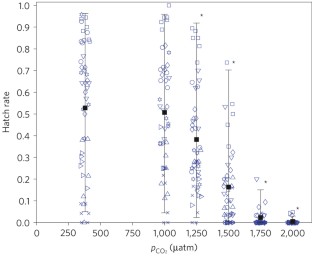
Figure 1: Observed (open symbols) and modelled mean (black squares) krill egg hatch rates at six experimental p CO 2 levels.
The alternative text for this image may have been generated using AI.
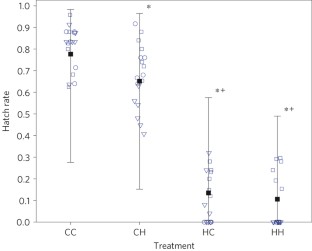
Figure 2: Egg hatching success under different CO2 treatments.
The alternative text for this image may have been generated using AI.
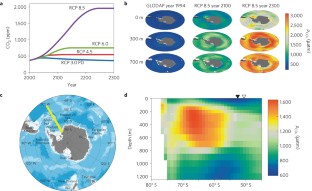
Figure 3: Future projection of p CO 2 in the Southern Ocean.
The alternative text for this image may have been generated using AI.
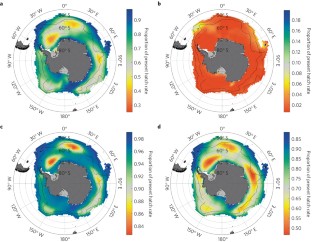
Figure 4: Circumpolar risk maps of krill hatching success under projected future p CO 2 levels.
The alternative text for this image may have been generated using AI.
References
- Doney, S. C., Fabry, V. J., Feely, R. A. & Kleypas, J. A. Ocean acidification: The other CO2 problem. Ann. Rev. Mar. Sci. 1, 169–192 (2009).
Article Google Scholar - Nicol, S., Foster, J. & Kawaguchi, S. The fishery for Antarctic krill– recent developments. Fish Fish. 13, 30–40 (2012).
Article Google Scholar - Schiermeier, Q. Ecologists fear Antarctic krill crisis. Nature 467, 15 (2010).
Article CAS Google Scholar - Flores, H. et al. Impact of climate change on Antarctic krill. Mar. Ecol. Prog. Ser. 458, 1–19 (2012).
Article Google Scholar - Nicol, S. Krill, currents, and sea ice: Euphausia superba and its changing environment. BioScience 56, 111–120 (2006).
Article Google Scholar - Quetin, L. B. & Ross, R. M. Depth distribution of developing Euphausia superba embryos, predicted from sinking rates. Mar. Biol. 79, 47–53 (1984).
Article Google Scholar - Kawaguchi, S. et al. Will krill fare well under Southern Ocean acidification? Biol. Lett. 7, 288–291 (2011).
Article Google Scholar - George, R. Y. Ontogenetic adaptation in growth and respiration of Euphausia superba in relation to temperature and pressure. J. Crustacean Biol. 4, 252–262 (1984).
Article Google Scholar - Burggren, W. & Warburton, S. Comparative developmental physiology: An interdisciplinary convergence. Ann. Rev. Physiol. 67, 203–223 (2005).
Article CAS Google Scholar - Kurihara, H. Effects of CO2-driven ocean acidification on the early developmental stages of invertebrates. Mar. Ecol. Prog. Ser. 373, 275–284 (2008).
Article CAS Google Scholar - Meinshausen, M. et al. The RCP greenhouse gas concentrations and their extensions from 1765 to 2300. Climatic Change 109, 213–241 (2011).
Article CAS Google Scholar - Marr, J. S. W. The natural history and geography of the Antarctic krill (Euphausia superba Dana). Discov. Rep. 32, 33–464 (1962).
Google Scholar - Wiedenmann, J., Cresswell, K. & Mangel, M. Temperature-dependent growth of Antarctic krill: Predictions for a changing climate from a cohort model. Mar. Ecol. Prog. Ser. 358, 191–202 (2008).
Article Google Scholar - Whiteley, N. M. Physiological and ecological responses of crustaceans to ocean acidification. Mar. Ecol. Prog. Ser. 430, 257–271 (2011).
Article CAS Google Scholar - Egilsdottir, H., Spicer, J. I. & Rundle, S. D. The effect of CO2 acidified seawater and reduced salinity on aspects of the embryonic development of the amphipod Echinogammarus marinus (Leach). Mar. Poll. Bull. 58, 1187–1191 (2009).
Article CAS Google Scholar - Meyer, B. The overwintering of Antarctic krill, Euphausia superba, from an ecophysiological perspective. Polar Biol. 35, 15–37 (2012).
Article Google Scholar - Saba, G. K., Schofield, O., Torres, J. J., Ombres, E. H. & Steinberg, D. K. Increased feeding and nutrient excretion of adult Antarctic krill, Euphausia superba, exposed to enhanced carbon dioxide (CO2). PLoS One 7, e52224 (2012).
Article CAS Google Scholar - Aarset, A. V. & Torres, J. J. Cold resistance and metabolic responses to salinity variations in the amphipod Eusirus antarcticus and the krill Euphausia superba. Polar Biol. 9, 491–497 (1989).
Article Google Scholar - Bortolotto, E., Bucklin, A., Mezzavilla, M., Zane, L. & Patarnello, T. Gone with the currents: Lack of genetic differentiation at the circum-continental scale in the Antarctic krill Euphausia superba. BMC Genetics 12, 32 (2011).
Article Google Scholar - Meredith, M. P. & King, J. C. Rapid climate change in the ocean west of the Antarctic Peninsula during the second half of the 20th century. Geophys. Res. Lett. 32, L19604 (2005).
Google Scholar - Atkinson, A., Siegel, V., Pakhomov, E. & Rothery, P. Long-term decline in krill stock and increase in salps within the Southern Ocean. Nature 432, 100–103 (2004).
Article CAS Google Scholar - Kawaguchi, S., Nicol, S. & Press, A. J. Direct effects of climate change on the Antarctic krill fishery. Fish. Manage. Ecol. 16, 424–427 (2009).
Article Google Scholar - Kawaguchi, S. et al. An experimental aquarium for observing the schooling behaviour of Antarctic krill (Euphausia superba). Deep-Sea Res. II 57, 683–692 (2010).
Article Google Scholar - Orr, J. C. et al. Anthropogenic ocean acidification over the twenty-first century and its impact on calcifying organisms. Nature 437, 681–686 (2005).
Article CAS Google Scholar - Cao, L. et al. The role of ocean transport in the uptake of anthropogenic CO2 . Biogeosciences 6, 375–390 (2009).
Article CAS Google Scholar - Yamanaka, Y. & Tajika, E. The role of the vertical fluxes of particulate organic matter and calcite in the oceanic carbon cycle: Studies using an ocean biogeochemical general circulation model. Glob. Biogeochem. Cycles 10, 361–382 (1996).
Article CAS Google Scholar - Key, R. M. et al. A global ocean carbon climatology: Results from Global Data Analysis Project (GLODAP). Glob. Biogeochem. Cycles 18, GB4031 (2004).
Article Google Scholar - Conkright, M. E. et al. World Ocean Atlas 2001: Objective Analyses, Data Statistics, and Figures CD-ROM Documentation (National Oceanographic Data Center, 2002).
- Lunn, D. J., Thomas, A., Best, N. & Spiegelhalter, D. WinBUGS– a Bayesian modelling framework: Concepts, structure, and extensibility. Stat. Comput. 10, 325–337 (2000).
Article Google Scholar - Atkinson, A. et al. Oceanic circumpolar habitats of Antarctic krill. Mar. Ecol. Prog. Ser. 362, 1–23 (2008).
Article CAS Google Scholar
Acknowledgements
The authors thank S. Wotherspoon for advice on statistical analyses, B. Smith and Z. Jia for assisting with the experiments, J. Robinson for assistance in assembling the experimental system, and C. Wynn-Edwards for assisting with krill maintenance. The model projections were performed on the super computer at JAMSTEC. This study was supported by Australian Antarctic Science Program Project No. 4037.
Author information
Authors and Affiliations
- Australian Antarctic Division, Kingston Tasmania, 7050, Australia
S. Kawaguchi, R. King, B. Raymond, N. Waller & A. Constable - Antarctic Climate and Ecosystems Cooperative Research Centre, Hobart, Tasmania, 7001, Australia
S. Kawaguchi, B. Raymond & A. Constable - Department of Social Environment, Tokoha University, Fuji, Shizuoka, 417-0801, Japan
A. Ishida - Research Institute for Global Change, Japan Agency for Marine-Earth Science and Technology, Yokohama, 236-0001, Japan
A. Ishida & M. Wakita - Institute for Antarctic and Marine Studies, University of Tasmania, Sandy Bay, Tasmania, 7005, Australia
S. Nicol - Mutsu Institute for Oceanography, Japan Agency for Marine-Earth Science and Technology, Mutsu, 035-0022, Japan
M. Wakita - Institute for East China Sea Research, Nagasaki University, Nagasaki, 851-2213, Japan
A. Ishimatsu
Authors
- S. Kawaguchi
- A. Ishida
- R. King
- B. Raymond
- N. Waller
- A. Constable
- S. Nicol
- M. Wakita
- A. Ishimatsu
Contributions
This study was initiated, designed, coordinated and analysed by S.K. Ocean carbon model projection was undertaken by A. Ishida. Experimental system was designed and assembled by R.K. Statistical modelling and analyses were undertaken by B.R. Experiments were undertaken by N.W. All authors made intellectual contribution. The manuscript was written by S.K. and edited by A. Ishida, R.K., B.R., A.C., S.N., M.W. and A. Ishimatsu.
Corresponding author
Correspondence toS. Kawaguchi.
Ethics declarations
Competing interests
The authors declare no competing financial interests.
Supplementary information
Rights and permissions
About this article
Cite this article
Kawaguchi, S., Ishida, A., King, R. et al. Risk maps for Antarctic krill under projected Southern Ocean acidification.Nature Clim Change 3, 843–847 (2013). https://doi.org/10.1038/nclimate1937
- Received: 20 March 2013
- Accepted: 28 May 2013
- Published: 07 July 2013
- Issue date: September 2013
- DOI: https://doi.org/10.1038/nclimate1937