Databasing fMRI studies — towards a 'discovery science' of brain function (original) (raw)
- Opinion
- Published: 01 April 2002
Nature Reviews Neuroscience volume 3, pages 314–318 (2002) Cite this article
- 580 Accesses
- 55 Citations
- 6 Altmetric
- Metrics details
Abstract
Enormous progress has been made over the past decade in the development of neuroimaging technology to study in vivo brain function. But as was once the case in genomics, much of the raw functional imaging data that are collected and described in the literature have not been made available to other researchers. The fMRI Data Center aims to archive raw functional imaging data from peer-reviewed publications, making it freely available to researchers from all disciplines to confirm conclusions, test new methods and generate new hypotheses. This bold project hopes to open up new vistas of understanding of complex cognitive processes and usher in the study of 'neuronomics'.
This is a preview of subscription content, access via your institution
Access options
Subscribe to this journal
Receive 12 print issues and online access
$209.00 per year
only $17.42 per issue
Buy this article
- Purchase on SpringerLink
- Instant access to the full article PDF.
USD 39.95
Prices may be subject to local taxes which are calculated during checkout
Additional access options:
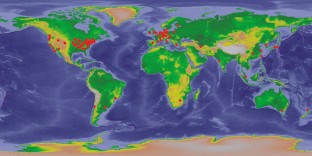
Figure 1: Response to the fMRI Data Center.
The alternative text for this image may have been generated using AI.
Figure 2: Basic fMRI study information collected for the fMRI Data Center archive.

The alternative text for this image may have been generated using AI.
Figure 3: Descriptive statistical images.

The alternative text for this image may have been generated using AI.
References
- Collins, F. S. & McKusick, V. A. Implications of the Human Genome Project for medical science. JAMA 285, 540–544 (2001).
Article CAS Google Scholar - Magee, J., Gordon, J. I. & Whelan, A. Bringing the human genome and the revolution in bioinformatics to the medical school classroom: a case report from Washington University School of Medicine. Acad. Med. 76, 852–855 (2001).
Article CAS Google Scholar - Lind, D. R. (ed.) CRC Handbook of Chemistry and Physics (CRC, New York, 2001).
Google Scholar - Collins, F. S. The Human Genome Project and the future of medicine. Ann. NY Acad. Sci. 882, 42–55; discussion 56–65 (1999).
Article CAS Google Scholar - Interview with L. Hood in Technology Review [online] (cited 18 Feb 2002) (2001).
- Mazziotta, J. C., Toga, A. W., Evans, A. C., Fox, P. T. & Lancaster, J. L. Digital brain atlases. Trends Neurosci. 18, 210–211 (1995).
Article CAS Google Scholar - Toga, A. W. & Thompson, P. M. Maps of the brain. Anat. Rec. 265, 37–53 (2001).
Article CAS Google Scholar - Van Horn, J. D. et al. The Functional Magnetic Resonance Imaging Data Center (fMRIDC): the challenges and rewards of large-scale databasing of neuroimaging studies. Phil. Trans. R. Soc. Lond. B 356, 1323–1339 (2001).
Article CAS Google Scholar - Governing Council of the Organization for Human Brain Mapping. Neuroimaging databases. Science 292, 1673–1676 (2001).
- Chicurel, M. Databasing the brain. Nature 406, 822–825 (2000).
Article CAS Google Scholar - Editorial. Whose scans are they, anyway? Nature 406, 443 (2000).
- Goutte, C., Hansen, L. K., Liptrot, M. G. & Rostrup, E. Feature-space clustering for fMRI meta-analysis. Hum. Brain Mapp. 13, 165–183 (2001).
Article CAS Google Scholar - Van Horn, J. D. & McManus, I. C. Ventricular enlargement in schizophrenia. A meta-analysis of studies of the ventricle:brain ratio (VBR). Br. J. Psychiatry 160, 687–697 (1992).
Article CAS Google Scholar - Hopfinger, J. B., Buchel, C., Holmes, A. P. & Friston, K. J. A study of analysis parameters that influence the sensitivity of event-related fMRI analyses. Neuroimage 11, 326–333 (2000).
Article CAS Google Scholar - Ghandeharizadeh, S., Ierari, D. J. & Zimmerman, R. in Computing the Brain (eds Arbib, M. A. & Grethe, J. S.) 265–284 (Academic, San Diego, 2001).
Book Google Scholar - Szalay, A. & Gray, J. The world-wide telescope. Science 293, 2037–2040 (2001).
Article CAS Google Scholar - Berman, H. M. et al. The Protein Data Bank. Nucleic Acids Res. 28, 235–242 (2000).
Article CAS Google Scholar - Bloom, F. E. The multidimensional database and neuroinformatics requirements for molecular and cellular neuroscience. Neuroimage 4, S12–S13 (1996).
Article CAS Google Scholar - Miller, P. L. et al. Integration of multidisciplinary sensory data: a pilot model of the human brain project approach. J. Am. Med. Inform. Assoc. 8, 34–48 (2001).
Article CAS Google Scholar - Kotter, R. Neuroscience databases: tools for exploring brain structure–function relationships. Phil. Trans. R. Soc. Lond. B 356, 1111–1120 (2001).
Article CAS Google Scholar - Koslow, S. H. Should the neuroscience community make a paradigm shift to sharing primary data? Nature Neurosci. 3, 863–865 (2000).
Article CAS Google Scholar
Acknowledgements
The fMRI Data Center represents the work of several outstanding personnel. We would like to recognize the contributions of D. Rockmore, J. Aslam, P. Kostelec, D. Rus, J. Grethe, J. Woodward, W. Starr and A. Tilden. We would also like to thank D. Smith, B. Donald, and S. Grafton for their helpful comments on this article. This work is supported by the National Science Foundation, the William M. Keck Foundation and the National Institute of Mental Health.
Author information
Authors and Affiliations
- the Center for Cognitive Neuroscience, Dartmouth College, 6162 Moore Hall, Hanover, 03755, New Hampshire, USA
John D. Van Horn & Michael S. Gazzaniga
Authors
- John D. Van Horn
- Michael S. Gazzaniga
Corresponding author
Correspondence toJohn D. Van Horn.
Related links
Rights and permissions
About this article
Cite this article
Van Horn, J., Gazzaniga, M. Databasing fMRI studies — towards a 'discovery science' of brain function.Nat Rev Neurosci 3, 314–318 (2002). https://doi.org/10.1038/nrn788
- Issue date: 01 April 2002
- DOI: https://doi.org/10.1038/nrn788