Resistance of rice to insect pests mediated by suppression of serotonin biosynthesis (original) (raw)
- Letter
- Published: 07 May 2018
Nature Plants volume 4, pages 338–344 (2018)Cite this article
- 9072 Accesses
- 249 Citations
- 101 Altmetric
- Metrics details
Subjects
Abstract
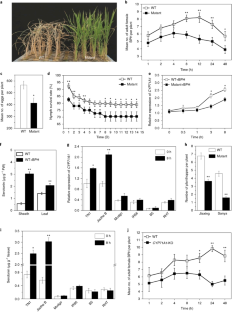
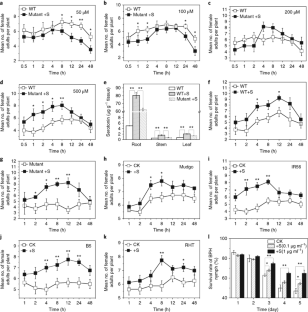
Rice is one of the world’s most important foods, but its production suffers from insect pests, causing losses of billions of dollars, and extensive use of environmentally damaging pesticides for their control1,2. However, the molecular mechanisms of insect resistance remain elusive. Although a few resistance genes for planthopper have been cloned, no rice germplasm is resistant to stem borers. Here, we report that biosynthesis of serotonin, a neurotransmitter in mammals3, is induced by insect infestation in rice, and its suppression confers resistance to planthoppers and stem borers, the two most destructive pests of rice2. Serotonin and salicylic acid derive from chorismate4. In rice, the cytochrome P450 gene CYP71A1 encodes tryptamine 5-hydroxylase, which catalyses conversion of tryptamine to serotonin5. In susceptible wild-type rice, planthopper feeding induces biosynthesis of serotonin and salicylic acid, whereas in mutants with an inactivated CYP71A1 gene, no serotonin is produced, salicylic acid levels are higher and plants are more insect resistant. The addition of serotonin to the resistant rice mutant and other brown planthopper-resistant genotypes results in a loss of insect resistance. Similarly, serotonin supplementation in artificial diet enhances the performance of both insects. These insights demonstrate that regulation of serotonin biosynthesis plays an important role in defence, and may prove valuable for breeding insect-resistant cultivars of rice and other cereal crops.
This is a preview of subscription content, access via your institution
Access options
Access Nature and 54 other Nature Portfolio journals
Get Nature+, our best-value online-access subscription
$32.99 / 30 days
cancel any time
Subscribe to this journal
Receive 12 digital issues and online access to articles
$119.00 per year
only $9.92 per issue
Buy this article
- Purchase on SpringerLink
- Instant access to the full article PDF.
USD 39.95
Prices may be subject to local taxes which are calculated during checkout
Additional access options:
Fig. 1: Mutation in CYP71A1 resulting in the suppression of serotonin synthesis confers resistance to BPH.
The alternative text for this image may have been generated using AI.
Fig. 2: Addition of exogenous serotonin abolishes BPH resistance in rice.
The alternative text for this image may have been generated using AI.
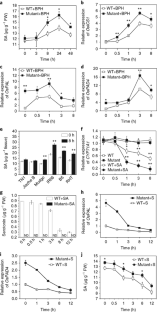
Fig. 3: BPH infestation induces biosynthesis of salicylic acid, but salicylic acid and serotonin suppress each other, suggesting mutual negative feedback.
The alternative text for this image may have been generated using AI.
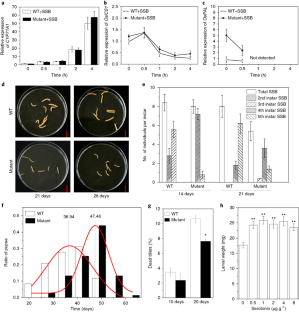
Fig. 4: SSB infestation induces expression of CYP71A1 but mutation in this gene enhances resistance to SSB.
The alternative text for this image may have been generated using AI.
References
- Fahad, S. et al. Rice pest management and biological control. Sustain. Agric. Rev. 16, 85–106 (2015).
Article Google Scholar - Chen, M., Shelton, A. & Ye, G. Y. Insect-resistant genetically modified rice in China: from research to commercialization. Annu. Rev. Entomol. 56, 81–101 (2011).
Article PubMed CAS Google Scholar - Berger, M., Gray, J. A. & Roth, B. L. The expanded biology of serotonin. Ann. Rev. Med. 60, 355–366 (2009).
Article PubMed CAS Google Scholar - Maeda, S. & Dudareva, N. The shikimate pathway and aromatic amino acid biosynthesis in plants. Annu. Rev. Plant Biol. 63, 73–105 (2012).
Article PubMed CAS Google Scholar - Fujiwara, T. et al. Sekiguchi lesion gene encodes a cytochrome P450 monooxygenase that catalyzes conversion of tryptamine to serotonin in rice. J. Biol. Chem. 285, 11308–11313 (2010).
Article PubMed PubMed Central CAS Google Scholar - Cheng, X., Zhu, L. & He, G. Towards understanding of molecular interactions between rice and the brown planthopper. Mol. Plant. 6, 621–634 (2013).
Article PubMed CAS Google Scholar - Du, B. et al. Identification and characterization of Bph14, a gene conferring resistance to brown planthopper in rice. Proc. Natl Acad. Sci. USA 106, 22163–22168 (2009).
Article PubMed Google Scholar - Liu, Y. Q. et al. A gene cluster encoding lectin receptor kinases confers broad-spectrum and durable insect resistance in rice. Nat. Biotechnol. 33, 301–307 (2014).
Article PubMed CAS Google Scholar - Zhao, Y. et al. Allelic diversity in an NLR gene BPH9 enables rice to combat planthopper variation. Proc. Natl Acad. Sci. USA 113, 12850–12855 (2016).
Article CAS PubMed Google Scholar - Li, C. et al. Gene expression and plant hormone levels in two contrasting rice genotypes responding to brown planthopper infestation. BMC Plant Biol. 17, 57 (2017).
Article PubMed PubMed Central CAS Google Scholar - Qi, Y. X. et al. Serotonin modulates insect hemocyte phagocytosis via two different serotonin receptors. eLife 5, e12241 (2016).
Article PubMed PubMed Central Google Scholar - Zhang, X. N. & Gaudry, Q. Functional integration of a serotonergic neuron in the Drosophila antennal lobe. eLife 5, e16836 (2016).
Article PubMed PubMed Central Google Scholar - Erland, L. A. E., Turi, C. E. & Saxena, P. K. Serotonin: An ancient molecule and an important regulator of plant processes. Biotechnol. Adv. 34, 1347–1361 (2016).
Article PubMed CAS Google Scholar - Ueno, M., Imaoka, A., Kihara, J. & Arase, S. Tryptamine pathway-mediated DNA fragmentation is involved in sekiguchi lesion formation for light-emhanced resistance in lesion mimic mutant of rice to Magnaporthe grisea infection. J. Phytopathol. 156, 715–724 (2008).
Article CAS Google Scholar - Ishihara, A. et al. The tryptophan pathway is involved in the defense responses of rice against pathogenic infection via serotonin production. Plant J. 54, 481–495 (2008).
Article PubMed CAS Google Scholar - Ishihara, A., Hashimoto, Y., Miyagawa, H. & Wakasa, K. Induction of serotonin accumulation by feeding of rice striped stem borer in rice leaves. Plant Signal. Behav. 3, 714–716 (2008).
Article PubMed PubMed Central Google Scholar - Xue, J. et al. Genome of rice pest brown planthopper and its endosymbionts reveal complex complementary contributions for host adaption. Genome Biol. 15, 521 (2014).
Article PubMed PubMed Central Google Scholar - Arase, S. et al. Light-dependent accumulation of tryptamine in the rice sekiguchi lesion mutant infected with Magnaporthe grisea. J. Phytopathol. 149, 409–413 (2001).
Article CAS Google Scholar - Park, S., Lee, K., Kim, Y. S. & Back, K. Tryptamine 5-hydroxylase-deficient sekiguchi rice induces synthesis of 5-hydroxytryptophan and _N_- acetyltryptamine but decreases melatonin biosynthesis during senescence process of detached leaves. J. Pineal Res. 52, 211–216 (2012).
Article PubMed CAS Google Scholar - Tabashnik, B.E. & CarriŠre, Y. Surge in insect resistance to transgenic crops and prospects for sustainability. Nat. Biotechnol. 35, 926–935 (2017).
Article PubMed CAS Google Scholar - Lu, H. P. et al. Identification and characterization of a novel lesion mimic mutant in rice. J. Nucl. Agr. Sci. (Chin.) 30, 1037–1044 (2016).
Google Scholar - Xu, R. F. et al. Gene targeting using the _Agrobacterium tumefaciens_-mediated CRISPR-Cas system in rice. Rice 7, 5 (2014).
Article PubMed PubMed Central Google Scholar - Xu, G. et al. Identification and expression profiles of neuropeptides and their G protein-coupled receptors in the rice stem borer Chilo suppressalis. Sci. Rep. 6, 28976 (2016).
Article PubMed PubMed Central CAS Google Scholar - Pathak, P. K., Saxena, R. C. & Heinrichs, E. A. Parafilm sachet for measuring honeydew excretion by Nilaparvata lugens on Rice. J. Econ. Entomol. 75, 2 (1982).
Article Google Scholar - Lou, Y. G. & Balswin, I. T. Manduca sexta recognition and resistance among allopolyploid Nicotiana host plants. Proc. Natl Acad. Sci. USA 100, 14581–14586 (2003).
Article PubMed CAS Google Scholar - Kang, S., Kang, K., Lee, K. & Back, K. Characterization of tryptamine 5-hydroxylase and serotonin synthesis in rice plants. Plant Cell Rep. 26, 2009–2015 (2007).
Article PubMed CAS Google Scholar - Ma, Z. Y., Guo, W., Guo, X. J., Wang, X. H. & Kang, L. Modulation of behavioral phase changes of the migratory locust by the catecholamine metabolic pathway. Proc. Natl Acad. Sci. USA 108, 3882–3887 (2011).
Article PubMed Google Scholar - Cai, S. Y. et al. HsfA1a upregulates melatonin biosynthesis to confer cadium tolerance in tomato plants. J. Pineal Res. 62, e12387 (2017).
Article CAS Google Scholar - Ji, R. et al. A salivary endo-β-1,4-glucanase acts as an effector that enables the brown planthopper to feed on rice. Plant Physiol. 173, 1920–1932 (2017).
Article PubMed PubMed Central CAS Google Scholar - Han, L. Z., Li, S. B., Liu, P. L., Peng, Y. F. & Hou, M. L. New artificial diet for continuous rearing of Chilo suppressalis (Lepidoptera: Crambidae). Arthropod Biol. 105, 253–258 (2012).
Google Scholar
Acknowledgements
This study was supported by grants from National Key Research and Development Programme of China (2016YFD0102103), Agro-scientific Research in the Public Interest (201403030), Zhejiang Provincial S & T Project on Breeding of Agricultural (Food) Crops (2016C02050-2), China Postdoctoral Research Project (2017M620248), Dabeinong Funds for Discipline Development and Talent Training in Zhejiang University, China National Key Laboratory of Rice Biology, and the 111 Project. Assistance for melatonin measurement from J. Yu’s group is appreciated. We are grateful to T. Mou and Q. Fu for provision of BPH-resistant genotypes.
Author information
Author notes
- These authors contributed equally: Hai-ping Lu, Ting Luo, Hao-wei Fu.
Authors and Affiliations
- State Key Laboratory of Rice Biology, Zhejiang Provincial Key Laboratory of Crop Genetic Resources, Institute of Crop Science, Zhejiang University, Hangzhou, China
Hai-ping Lu, Yuan-yuan Tan, Jian-zhong Huang & Qing-yao Shu - State Key Laboratory of Rice Biology & Ministry of Agriculture Key Lab of Molecular Biology of Crop Pathogens and Insects, Institute of Insect Sciences, Zhejiang University, Hangzhou, China
Ting Luo, Long Wang, Gong-yin Ye & Yong-gen Lou - Jiaxing Academy of Agricultural Sciences, Zhejiang, China
Hao-wei Fu - Wuxi Hupper Bioseed Ltd., Wuxi, Jiangsu, China
Qing Wang - School of Biology, Newcastle University, Newcastle upon Tyne, UK
Angharad M. R. Gatehouse - Hubei Collaborative Innovation Center for Grain Industry, Jingzhou, Hubei, China
Qing-yao Shu
Authors
- Hai-ping Lu
- Ting Luo
- Hao-wei Fu
- Long Wang
- Yuan-yuan Tan
- Jian-zhong Huang
- Qing Wang
- Gong-yin Ye
- Angharad M. R. Gatehouse
- Yong-gen Lou
- Qing-yao Shu
Contributions
Q.Y.S., Y.G.L., A.M.R.G., G.Y.Y. and J.Z.H. contributed to study design and data analysis, H.L. contributed to overall study and data analysis, T.L. contributed to BPH and WBPH resistance studies, H.W.F. contributed to Jiazhe LM mutant development and field studies, L.W. contributed SSB resistance studies, Q.W. and Y.Y.T. contributed to the development and characterization of knockout mutants, and A.M.R.G. and Q.Y.S. wrote the manuscript. All authors read and approve the paper.
Corresponding authors
Correspondence toAngharad M. R. Gatehouse, Yong-gen Lou or Qing-yao Shu.
Ethics declarations
Competing interests
The authors declare no competing interests.
Additional information
Publisher’s note: Springer Nature remains neutral with regard to jurisdictional claims in published maps and institutional affiliations.
Supplementary information
Rights and permissions
About this article
Cite this article
Lu, Hp., Luo, T., Fu, Hw. et al. Resistance of rice to insect pests mediated by suppression of serotonin biosynthesis.Nature Plants 4, 338–344 (2018). https://doi.org/10.1038/s41477-018-0152-7
- Received: 31 October 2017
- Accepted: 13 April 2018
- Published: 07 May 2018
- Version of record: 07 May 2018
- Issue date: June 2018
- DOI: https://doi.org/10.1038/s41477-018-0152-7