The role of external factors versus managerial ability in determining seaports’ relative efficiency: An input-by-input analysis through a multi-step approach on a panel of Southern European ports (original) (raw)
Abstract
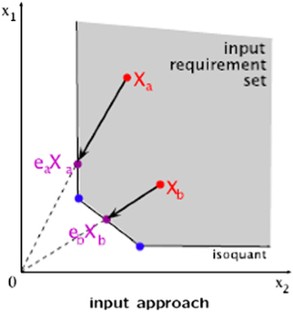
This article provides an analysis of the performance of a panel of Southern European ports. In contrast with previous research, a multi-step approach is followed. This methodology allows distinguishing between the role of both factors that are external and internal to the organisation of the port in determining the relative ranking of ports in terms of efficiency. Furthermore, it enables the identification of the impact on an input-by-input basis. Managerial capacities, port infrastructure endowment and services are tested together with port policies, macroeconomic conditions and other external factors to verify their individual impact. In the first stage, efficiency is measured via the traditional input-oriented Data Envelopment Analysis (DEA). In the second stage a stochastic frontier analysis in carried out through fixed-effect estimators in order to identify the determinants of input-specific efficiency differentials across ports. In general, governance-related factors and macroeconomic conditions predominate the managerial skills for the more flexible factors of production. The outcome of the DEA applied in the third stage shows that netting inputs of the impact of factors considered outside direct port managers’ control, relative to performances, change significantly. This is particularly true for multi-functional ports.
Access this article
Subscribe and save
- Starting from 10 chapters or articles per month
- Access and download chapters and articles from more than 300k books and 2,500 journals
- Cancel anytime View plans
Buy Now
Price excludes VAT (USA)
Tax calculation will be finalised during checkout.
Instant access to the full article PDF.
Figure 1
Notes
- Recently, multi-step procedures have been used to estimate efficiency of a number of sectors, among others, the banking sector (Liu and Tone, 2008), education (Aubyn et al, 2009), local governments (Worthington and Dollery, 2002), public transport services and infrastructure provision and expenditure at local level (Buzzo Margari et al, 2007 and Bergantino and Porcelli, 2011), health service provision (Alfonso and Aubyn, 2006; Porcelli, 2009), and water and sewerage (Erbetta and Cave, 2007).
- For greater details on the reasons for not adopting the Tobit model given the fractional nature of the dependent variable, the reader is referred to the recent paper of Papke and Wooldridge (2008).
- The results of the random effect model are reported in Bergantino and Musso (2010) for a sample of Northern and Southern European ports. The outcome is in line with that of the present study.
- The method used to separate the composed error term into its components has been developed by Jondrow et al (1982).
- For instance, they refer to technological progress, which might induce dramatic changes in any pre-determined relationship between terminal facilities and the absolute number of workers, or to the differences in the use of labour in ports of different sizes, with different clients, or, and this is particularly relevant for this study, for different governance regimes. Some studies approximate labour input with port authorities employees (among these see Tongzon, 2001a, 2001b).
- The first three variables are measured at NUTS III level (provincial), whenever the data are available. For Cyprus and Malta we have used NUTS II level data.
References
- Alfonso, A. and Aubyn, M.S. (2006) Relative efficiency of health provision: A DEA approach with non-discretionary inputs. Unpublished paper.
- Aubyn, M.S., Pina, A., Garcia, F. and Pais, J. (2009) Study on the efficiency and effectiveness of public spending on tertiary education. European Economy, Economic Papers 390, November 2009.
- Avkiran, N.K. and Rowlands, T. (2008) How to better identify the true managerial performance: State of the art using DEA. Omega 36: 317–324.
Article Google Scholar - Banker, R.D., Charnes, A. and Cooper, W.W. (1984) Some models for estimating technical and scale inefficiencies in data envelopment analysis. Management Science 30: 1078–1092.
Article Google Scholar - Banker, R.D. and Morey, R.C. (1986) Efficiency analysis for exogenously fixed inputs and outputs. Operations Research 34: 513–521.
Article Google Scholar - Battese, G.E. and Coelli, T.J. (1992) Frontier production functions, technical efficiency and panel data: With application to paddy farmers in India. Journal of Productivity Analysis 3: 153–169.
Article Google Scholar - Bergantino, A.S. (2002) The European Commission's approach to port policy: Some open issues. International Journal of Transport Economics XXIX (3): 337–379.
Google Scholar - Bergantino, A.S. and Coppejans, L. (2000) Shipowner preferences and user charges: Allocating port infrastructure costs. Transportation Research – Part E: Logistics and Transportation Review 36 (2): 97–113.
Article Google Scholar - Bergantino, A.S. and Musso, E. (2010a) An application of a three stage mixed DEA-SFA methodology to investigate the impact of environmental factors and statistical noise on European ports’ performance. Unpublished manuscript.
- Bergantino, A.S. and Musso, E. (2010b) A multi-step approach to measure European ports' relative efficiency. In: G. Borruso, R. Danielis and E. Musso (eds.). Trasporti, logistica e reti d'imprese. Competitività del sistema e reti di imprese. Milano, Italy: FrancoAngeli, pp. 83–90.
- Bergantino, A.S. and Porcelli, F. (2011) A measure of Italian local government spending efficiency: The case of transport related expenditure. A preliminary analysis. In: E. Mercucci and E. Musso (eds.) Sostenibilita, qualità e sicurezza nei sistemi di trasporto e logistica. Milano, Italy: FrancoAngeli, pp. 24–35.
- Bergantino, A.S. and Musso, E. (2011) A multi-step approach to model the relative efficiency of European ports: The role of regulation and other non discretionary factors. In: K. Cullinane (ed.) The International Handbook of Maritime Economics, Cheltenham, UK: Edward Elgar, pp. 487–503.
- Buzzo Margari, B., Erbetta, F., Petraglia, C. and Piacenza, M. (2007) Regulatory and environmental effects on public transit efficiency: A mixed DEA-SFA approach. Journal of Regulatory Economics 32: 131–151.
Article Google Scholar - Brooks, M.R. and Cullinane, K. (2007) Devolution, Port governance and Performance. London: Elsevier.
Google Scholar - Brooks, M.R. and Pallis, A.A. (2008) Assessing port governance models: Process and performance components. Maritime Policy and Management 35 (4): 411–432.
Article Google Scholar - Castillo-Manzano, J.I., Lopez-Valpuesta, L. and Perez, J.J. (2008) Economic analysis of the Spanish port sector reform during the 1990s. Transportation Research Part A: Policy and Practice 42 (8): 1056–1063.
Google Scholar - Cullinane, K.P.B. and Song, D.-W. (2001) The administrative and ownership structure of Asian container ports. International Journal of Maritime Economics 3 (2): 175–197.
Article Google Scholar - Cullinane, K.P.B., Ji, P. and Wang, T-F. (2005) The relationship between privatization and DEA estimates of efficiency in the container port industry. Journal of Economics and Business 57 (5): 433–462.
Article Google Scholar - Cullinane, K.P.B. and Song, D.-W. (2006) Estimating the relative efficiency of European container ports: A stochastic frontier analysis. In: K.P.B. Cullinane and W.K. Talley (eds.) Port Economics, Research in Transportation Economics, Vol. XVI. Amsterdam: Elsevier, pp. 85–115.
Google Scholar - Cullinane, K.P.B., Song, D.-W. and Gray, R. (2002) A stochastic frontier model of the efficiency of major container terminals in Asia: Assessing the influence of administrative and ownership structures. Transportation Research A: Policy and Practice 36 (8): 743–762.
Google Scholar - Cullinane, K.P.B. and Wang, T-F. (2006) The efficiency of European container terminals: A cross-sectional data envelopment analysis. International Journal of Logistics: Research and Applications 9 (1): 19–31.
Article Google Scholar - Erbetta, F. and Cave, M. (2007) Regulation and efficiency incentives: Evidence from the England and Wales water and sewerage industry. Review of Network Economics 6 (4): 425–452.
Article Google Scholar - Fried, A.O., Lovell, A.K. and Schmidt, S.S. (2008) The Measurement of Productive Efficiency, 2nd edn. New York: Oxford University Press.
Book Google Scholar - Fried, H.O., Lovell, C.A.K., Schmidt, S.S. and Yaisawarng, S. (2002) Accounting for environmental effects and statistical noise in data envelopment analysis. Journal of Productivity Analysis 17 (1/2): 157–174.
Article Google Scholar - Fried, H.O., Schmidt, S.S. and Yaisawarng, S. (1999) Incorporating the operating environment into a nonparametric measure of technical efficiency. Journal of Productivity Analysis 12 (3): 249–267.
Article Google Scholar - Gonzalez, M.M. and Trujillo, L. (2008) Reforms and infrastructure efficiency in Spain's container ports. Transportation Research A: Policy and Practice 42: 243–257.
Article Google Scholar - Gonzalez, M.M. and Trujillo, L. (2009) Efficiency measurement in the port industry: A survey of the empirical evidence. Journal of Transport Economics and Policy 43 (2): 157–192.
Google Scholar - Heaver, T.D. (2006) The evolution and challenges of port economics. In: K. Cullinane and W. Talley (eds.) Port Economics. London: Elsevier, pp. 11–41.
Google Scholar - Jara-Díaz, S.R., Martínez-Budría, E. and Díaz-Hernández, J.J. (2006) Multiple outputs in port cost functions. In: K.P.B. Cullinane and W.K. Talley (eds.) Port Economics, Research in Transportation Economics, Vol. 16. Amsterdam, The Netherlands: Elsevier, pp. 67–84.
Google Scholar - Jondrow, J., Lovell, C., Materov, I. and Schmidt, P. (1982) On the estimation of technical efficiency in the stochastic frontier production model. Journal of Econometrics 19: 233–238.
Article Google Scholar - Liu, J. and Tone, K. (2008) A multistage method to measure efficiency and its application to Japanese banking industry. Socio-Economic Planning Sciences 42 (2): 75–91.
Article Google Scholar - Lovell, C.K., Walters, L.C. and Wood, L.L. (1993) Stratified models of education production using modified DEA and regression analysis. In: A. Charnes, W.W. Cooper, A.Y. Lewin and L.M. Seiford (eds.) Data Envelopment Analysis: Theory, Methodology and Applications. Boston: Kluwer, pp. 329–251.
Google Scholar - McCarty, T.A. and Yaisawarng, S. (1993) Technical efficiency in New Jersey school districts. In: A.O. Fried, A.K. Lovell and S.S. Schmidt (eds.) The Measurement of Productive Efficiency, (Chapter 10) New York: Oxford University Press, pp. 271–287.
Google Scholar - Murphy, P.R. and Daley, J.M. (1994) A comparative analysis of port selection factors. Transportation Journal 34 (1): 15–21.
Google Scholar - Notteboom, T., Coeck, C. and van den Broeck, J. (2000) Measuring and explaining the relative efficiency of container terminals by means of Bayesian stochastic frontier models. International Journal of Maritime Economics 2 (2): 83–106.
Article Google Scholar - Papke, L.E. and Wooldridge, J.M. (2008) Panel data methods for fractional response variables with an application to test pass rates. Journal of Econometrics 145: 121–133.
Article Google Scholar - Porcelli, F. (2009) Effects of fiscal decentralization and electoral accountability on government efficiency, evidence from the Italian health care sector, Document de treball de l'IEB 2009/29, Barcelona Institute of Economics (IEB) – University of Barcelona.
- Schmidt, P. and Sickles, R.C. (1984) Production frontiers and panel data. Journal of Business and Economic Statistics 2 (4): 367–374.
Google Scholar - Simar, L. and Wilson, P.W. (2007) Estimation and inference in two-stage, semi-parametric models of production processes. Journal of Econometrics 136 (1): 31–64.
Article Google Scholar - Suykens, F. and Van de Voorde, E. (1998) A quarter of a century of port management in Europe: Objectives and tools. Maritime Policy and Management 25 (3): 251–261.
Article Google Scholar - Timmer, C.P. (1971) Using a probabilistic frontier production function to measure technical efficiency. Journal of Political Economy 79 (4): 776–794.
Article Google Scholar - Tone, K. and Tsutsui, M. (2006) Tuning SFA Results for Use in DEA. GRIPS Policy Information Center Research Report: I-2006-0013.
- Tongzon, J. (1995) Determinants of port performance and efficiency. Transportation Research – Part A: Policy and Practice 29 (3): 245–252.
Google Scholar - Tongzon, J. (2001a) Efficiency measurement of selected Australian and other international ports using data envelopment analysis. Transportation Research – Part A: Policy and Practice 35: 107–122.
Article Google Scholar - Tongzon, J. (2001b) Efficiency measurement of selected Australian and other international ports using data envelopment analysis. Transportation Research – Part A: Policy and Practice 35: 113–128.
Google Scholar - Tongzon, J.L. (2008) Port choice and freight forwarders. Transportation Research -Part E: Logistics and Transportation Review 45 (1): 186–195.
Article Google Scholar - Tongzon, J.L. and Heng, W. (2005) Port privatization, efficiency and competitiveness: Some empirical evidence from container ports (terminals). Transportation Research – Part A: Policy and Practice 39: 405–424.
Google Scholar - Trujillo, L. and Tovar, B. (2007) The European port industry: An analysis of its economic efficiency. Maritime Economics & Logistics 9 (2): 148–171.
Article Google Scholar - Turner, H., Windle, R. and Dresner, M. (2004) North American containerport productivity: 1984–1997. Transportation Research – Part E: Logistics and Transportation Review 40 (4): 339–356.
Article Google Scholar - Verhoeven, P. (2010) A review of port authority functions: Towards a renaissance? Maritime Policy & Management 37 (3): 247–270.
Article Google Scholar - Worthington, A.C. and Dollery, B. (2002) Incorporating contextual information in public sector efficiency analysis: A comparative study of NSW local government. Applied Economics 34: 453–464.
Article Google Scholar
Acknowledgements
The authors thank Francesco Porcelli for very helpful comments and suggestions and the participants of the WCTR 2010 and SIE 2010. The usual disclaimer applies.
Author information
Authors and Affiliations
- Department of Economics, Faculty of Economics, University of Bari, Via C. Rosalba, 53, Bari, 70124, Italy
Angela Stefania Bergantino - Department of Economics, Faculty of Economics, University of Genoa, Via Vivaldi 5, Genoa, 16124, Italy
Enrico Musso
Authors
- Angela Stefania Bergantino
- Enrico Musso
Rights and permissions
About this article
Cite this article
Bergantino, A., Musso, E. The role of external factors versus managerial ability in determining seaports’ relative efficiency: An input-by-input analysis through a multi-step approach on a panel of Southern European ports.Marit Econ Logist 13, 121–141 (2011). https://doi.org/10.1057/mel.2011.1
- Published: 12 May 2011
- Issue date: 01 June 2011
- DOI: https://doi.org/10.1057/mel.2011.1