Volunteer Macroinvertebrate Monitoring: Tensions Among Group Goals, Data Quality, and Outcomes (original) (raw)
Abstract
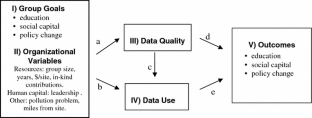
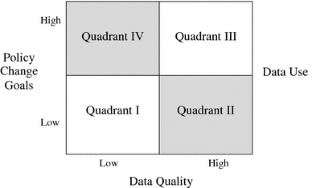
Volunteer monitoring of natural resources is promoted for its ability to increase public awareness, to provide valuable knowledge, and to encourage policy change that promotes ecosystem health. We used the case of volunteer macroinvertebrate monitoring (VMM) in streams to investigate whether the quality of data collected is correlated with data use and organizers’ perception of whether they have achieved these outcomes. We examined the relation between site and group characteristics, data quality, data use, and perceived outcomes (education, social capital, and policy change). We found that group size and the degree to which citizen groups perform tasks on their own (rather than aided by professionals) positively correlated with the quality of data collected. Group size and number of years monitoring positively influenced whether a group used their data. While one might expect that groups committed to collecting good-quality data would be more likely to use it, there was no relation between data quality and data use, and no relation between data quality and perceived outcomes. More data use was, however, correlated with a group’s feeling of connection to a network of engaged citizens and professionals. While VMM may hold promise for bringing citizens and scientists together to work on joint conservation agendas, our data illustrate that data quality does not correlate with a volunteer group’s desire to use their data to promote regulatory change. Therefore, we encourage scientists and citizens alike to recognize this potential disconnect and strive to be explicit about the role of data in conservation efforts.
Access this article
Subscribe and save
- Starting from 10 chapters or articles per month
- Access and download chapters and articles from more than 300k books and 2,500 journals
- Cancel anytime View plans
Buy Now
Price excludes VAT (USA)
Tax calculation will be finalised during checkout.
Instant access to the full article PDF.
Fig. 1
The alternative text for this image may have been generated using AI.
Fig. 2
The alternative text for this image may have been generated using AI.
References
- Analytical Software (1999) Statistix, version 7. Analytical Software. Tallahassee, FL
Google Scholar - Barbour MT, Gerritsen J, Snyder BD, Stribling JB (1999) Rapid bioassessment protocols for use in streams and wadeable rivers: periphyton, benthic macroinvertebrates and fish, 2nd edn. EPA 841-B-99-002. U.S. Environmental Protection Agency, Office of Water, Washington, DC
- Cook RD, Weisberg S (1999) Applied regression including computing and graphics. John Wiley, New York
Google Scholar - Dillman DA (2000) Mail and Internet surveys: the tailored design method. John Wiley and Sons, New York
Google Scholar - Ehrenfeld D (1997) Conservation biology in the 21st century. In: Meffe GK, Carroll CR (eds) Principles of conservation biology. Sinauer Associates, Sunderland, MA, pp 646–647
- Engel SR, Voshell J (2002) Volunteer biological monitoring: Can it accurately assess the ecological condition of streams? American Entomologist 48:164–177
Google Scholar - Firehock K, West J (1995) Brief history of volunteer biological water monitoring using macroinvertebrates. Journal of the North American Benthological Society 14:197–202
Article Google Scholar - Fisher F (2002) Citizens, experts and the environment. Duke University Press, Durham, NC
Google Scholar - Fore L, Paulsen K, O’Laughlin K (2001) Assessing the performance of volunteers in monitoring streams. Freshwater Biology 46:109–123
Article Google Scholar - Jenkins JC (1983) Resource mobilization theory and the study of social movements. Annual Review of Sociology 9:527–553
Article Google Scholar - Karr JR, Chu EW (1999) Restoring life in running waters. Island Press, Washington, DC
Google Scholar - Lathrop JE, Markowitz A (1995) Monitoring water resource quality using volunteers. In: Davis WS, Simon TP (eds) Biological assessment and criteria: tools for water resource planning and decision making. Lewis, Boca Baton, FL, pp 303–315
Google Scholar - Latteier C (2002) Linking citizens with scientists. How Illinois Ecowatch uses volunteers to collect ecological data. Conservation in Practice 2:31–34
Article Google Scholar - Martin J (1997) Adding stewardship to volunteer monitoring: using the data to involve the community. In: Proceedings of the 5th National Volunteer Monitoring Conference. EPA 841-R-97-007. U.S. Environmental Protection Agency, Washington, DC, p 45
- McCarthy JD, Wolfson M (1996) Resource mobilization by local social movement organizations: agency, strategy, and organization in the movement against drinking and driving. American Sociological Review 61:1070–1088
Article Google Scholar - McCarthy JD, Zald MN (1977) Resource mobilization and social movements: a partial theory. American Journal of Sociology 82:1212–1241
Article Google Scholar - Nerbonne JF (2003) Volunteer macroinvertebrate monitoring as a tool for empowering citizen groups in the United States. Doctoral dissertation. Conservation Biology Program, University of Minnesota, Minneapolis
- Nerbonne JF, Nelson KC (2004) Volunteer macroinvertabrate monitoring in the United States: resource mobilization and comparative state structures. Society and Natural Resources 17:817–839
Article Google Scholar - Nerbonne JF, Vondracek BC (2003) Volunteer macroinvertebrate monitoring: Assessing training needs through examining error and bias in untrained volunteers. Journal of the North American Benthological Society 22:152–163
Article Google Scholar - Norton B (2003) Searching for sustainability: interdisciplinary essays in the philosophy of conservation biology. Cambridge University Press, Cambridge, UK
Google Scholar - Ostrom E (2000) Social capital: a fad or fundamental concept? In: Dasgupta P, Serageblin I (eds) Social capital: a multifacited perspective. World Bank, Washington, DC, pp 172–214
Google Scholar - Penrose D, Call D (1995) Volunteer monitoring of benthic macroinvertebrates: Regulatory biologists’ perspective. Journal of the North American Benthological Society 14:203–209
Article Google Scholar - Pretty J (2003) Social capital and the collective management of resources. Science 302:1912–1914
Article CAS Google Scholar - Prysby M (2001) Temporal and geographical variation in monarch egg and larval densities (Danaus plexippus): an ecological application of citizen science. Master’s thesis. Ecology Program, University of Minnesota, Minneapolis
Google Scholar - Putnam RD, Goss KA (2002) Introduction. In: Putnam R (ed) Democracies in flux: the evolution of social capital in contemporary society. Oxford University Press, New York
Google Scholar - Sabatier PA, Focht W, Lubell M, Trachtenberg Z, Vedlitz A, Matlock M (2005) Collaborative approaches to watershed management. In: Sabatier PA, Focht W, Lubell M, Trachtenberg Z, Vedlitz A, Matlock M (eds) Swimming upstream: collaborative approaches to watershed management. MIT Press, Cambridge, MA, pp 3–22
Google Scholar - Salafsky N, Margoluis R, Redford KH, Robinson JG (2002) Improving the practice of conservation: a conceptual framework and research agenda for conservation science. Conservation Biology 16:1469–1479
Article Google Scholar - Savan B, Morgan A, Gore C (2003) Volunteer environmental monitoring and the role of universities: the case of citizens’ environmental watch. Environmental Management 31:561–568
Article Google Scholar - Schoen J (1997) Data presentation strategies. In: Proceedings of the 5th national volunteer monitoring conference. EPA 841-R-97-007.U.S. Environmental Protection Agency, Washington, DC, pp 51–54
- Scholz J, Booth D (2001) Monitoring urban streams: strategies and protocols for humid-region lowland systems. Environmental Monitoring and Assessment 71:143–164
Article CAS Google Scholar - Schusler T, Decker D, Pfeffer M (2003) Social learning for collaborative natural resource management. Society and Natural Resources 15:309–326
Google Scholar - Stancioff E (2001) The Maine shore stewards program. In: Proceedings of the 6th national volunteer monitoring conference. EPA 841-R-01-001. U.S. Environmental Protection Agency, Washington, DC, pp 60–61
- U.S. Environmental Protection Agency (U.S. EPA) (1996) The volunteer monitor’s guide to quality assurance project plans. EPA 841-B-96-003. U.S. EPA, Office of Wetlands, Oceans, and Watersheds, Washington, DC
Google Scholar - U.S. Environmental Protection Agency (U.S. EPA) (1998) Introduction to the national directory of volunteer environmental monitoring programs, 5th ed. U.S. EPA, Washington, DC
Google Scholar - U.S. Environmental Protection Agency (U.S. EPA) (2001) Proceedings of the 6th national volunteer monitoring conference: Moving into the mainstream. EPA 841-R-01-001. U.S. EPA, Washington, DC
Acknowledgments
We thank all the volunteers and volunteer organizers who gave their time, both to complete the survey and to be interviewed. At the University of Minnesota we appreciate the financial support of the Conservation Biology Program, the Department of Fisheries, Wildlife and Conservation Biology and the Undergraduate Research Opportunity Program. We are grateful for the efforts of undergraduate researcher Katherine Phillips and the thoughtful reviews of professionals in the field and Ph.D. committee members David Fulton, Bruce Vondracek, and Leonard Ferrington.
Author information
Authors and Affiliations
- Department of Fisheries, Wildlife and Conservation Biology, University of Minnesota, 200 Hodson Hall, 1980 Folwell Avenue, St. Paul, MN, 55108, USA
Julia Frost Nerbonne & Kristen C. Nelson - Department of Forest Resources, University of Minnesota, 115 Green Hall, 1530 Cleveland Avenue N., St. Paul, MN, 55108, USA
Kristen C. Nelson
Authors
- Julia Frost Nerbonne
- Kristen C. Nelson
Corresponding author
Correspondence toJulia Frost Nerbonne.
Rights and permissions
About this article
Cite this article
Nerbonne, J.F., Nelson, K.C. Volunteer Macroinvertebrate Monitoring: Tensions Among Group Goals, Data Quality, and Outcomes.Environmental Management 42, 470–479 (2008). https://doi.org/10.1007/s00267-008-9103-9
- Received: 22 May 2007
- Revised: 06 February 2008
- Accepted: 26 February 2008
- Published: 22 April 2008
- Issue date: September 2008
- DOI: https://doi.org/10.1007/s00267-008-9103-9