Humans integrate visual and haptic information in a statistically optimal fashion (original) (raw)
- Letter
- Published: 24 January 2002
Nature volume 415, pages 429–433 (2002) Cite this article
- 45k Accesses
- 4319 Citations
- 90 Altmetric
- Metrics details
Abstract
When a person looks at an object while exploring it with their hand, vision and touch both provide information for estimating the properties of the object. Vision frequently dominates the integrated visual–haptic percept, for example when judging size, shape or position1,2,3, but in some circumstances the percept is clearly affected by haptics4,5,6,7. Here we propose that a general principle, which minimizes variance in the final estimate, determines the degree to which vision or haptics dominates. This principle is realized by using maximum-likelihood estimation8,9,10,11,12,13,14,15 to combine the inputs. To investigate cue combination quantitatively, we first measured the variances associated with visual and haptic estimation of height. We then used these measurements to construct a maximum-likelihood integrator. This model behaved very similarly to humans in a visual–haptic task. Thus, the nervous system seems to combine visual and haptic information in a fashion that is similar to a maximum-likelihood integrator. Visual dominance occurs when the variance associated with visual estimation is lower than that associated with haptic estimation.
This is a preview of subscription content, access via your institution
Access options
Subscribe to this journal
Receive 51 print issues and online access
$199.00 per year
only $3.90 per issue
Buy this article
- Purchase on SpringerLink
- Instant access to the full article PDF.
USD 39.95
Prices may be subject to local taxes which are calculated during checkout
Additional access options:
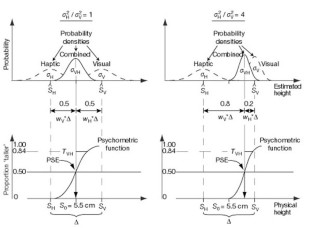
Figure 1: Maximum-likelihood estimation integration: two hypothetical situations.
The alternative text for this image may have been generated using AI.
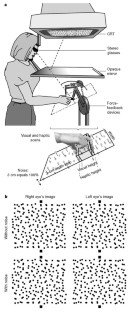
Figure 2: Apparatus and stimuli.
The alternative text for this image may have been generated using AI.
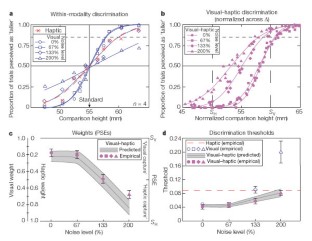
Figure 3: Predictions and experimental data.
The alternative text for this image may have been generated using AI.
References
- Rock, I. & Victor, J. Vision and touch: An experimentally created conflict between the two senses. Science 143, 594–596 (1964).
Article ADS CAS Google Scholar - Hay, J. C., Pick, H. L. Jr & Ikeda, K. Visual capture produced by prism spectacles. Psychonomic Sci. 2, 215–216 (1965).
Article Google Scholar - Warren, D. H. & Rossano, M. J. in The Psychology of Touch (eds Heller, M. A. & Schiff, W.) 119–137 (Erlbaum, Hillsdale, New Jersey, 1991).
Google Scholar - Power, R. P. The dominance of touch by vision: Sometimes incomplete. Perception 9, 457–466 (1980).
Article CAS Google Scholar - Welch, R. B. & Warren, D. H. Immediate perceptual response to intersensory discrepancy. Psychol. Bull. 88, 638–667 (1980).
Article CAS Google Scholar - Lederman, S. J. & Abbott, S. G. Texture perception: Studies of intersensory organization using a discrepancy paradigm, and visual versus tactual psychophysics. J. Exp. Psychol. Hum. Percept. Perform. 7, 902–915 (1981).
Article CAS Google Scholar - Heller, M. A. Haptic dominance in form perception with blurred vision. Perception 12, 607–613 (1983).
Article CAS Google Scholar - Clark, J. J. & Yuille, A. L. Data Fusion for Sensory Information Processing Systems (Kluwer Academic, Boston, 1990).
Book Google Scholar - Blake, A., Bülthoff, H. H. & Sheinberg, D. Shape from texture: Ideal observer and human psychophysics. Vision Res. 33, 1723–1737 (1993).
Article CAS Google Scholar - Landy, M. S., Maloney, L. T., Johnston, E. B. & Young, M. Measurement and modeling of depth cue combination: In defense of weak fusion. Vision Res. 35, 389–412 (1995).
Article CAS Google Scholar - Gharamani, Z., Wolpert, D. M. & Jordan, M. I. in Self-organization, Computational Maps, and Motor Control (eds Morasso, P. G. & Sanguineti, V.) 117–147 (Elsevier, Amsterdam, 1997).
Book Google Scholar - Knill, D. C. Discrimination of planar surface slant from texture: Human and ideal observers compared. Vision Res. 38, 1683–1697 (1998).
Article CAS Google Scholar - Backus, B. T. & Banks, M. S. Estimator reliability and distance scaling in stereoscopic slant perception. Perception 28, 417–442 (1999).
Article Google Scholar - van Beers, R. J., Sittig, A. C. & Denier van der Gon, J. J. Integration of proprioceptive and visual position information: An experimentally supported model. J. Neurophysiol. 81, 1355–1364 (1999).
Article CAS Google Scholar - Schrater, P. R. & Kersten, D. How optimal depth cue integration depends on the task. Int. J. Comp. Vis. 40, 71–89 (2000).
Article Google Scholar - Gibson, J. J. Adaptation, after-effect, and contrast in the perception of curved lines. J. Exp. Psychol. 16, 1–31 (1933).
Article Google Scholar - Festinger, L., Burnham, C. A., Ono, H. & Bamber, D. Efference and the conscious experience of perception. J. Exp. Psychol. 74 (4), 1–36 (1967).
Article Google Scholar - Singer, G. & Day, R. H. Visual capture of haptically judged depth. Percept. Psychophys. 5, 315–316 (1969).
Article Google Scholar - Tastevin, J. En partant de l’experience d’Aristote. L’Encephale 1, 57–84 (1937).
Google Scholar - Mon-Williams, M., Wann, J. P., Jenkinson, M. & Rushton, K. Synaesthesia in the normal limb. Proc. R. Soc. Lond. B 264, 1007–1010 (1997).
Article ADS CAS Google Scholar - Pavani, F., Spence, C. & Driver, J. Visual capture of touch: out-of-the-body experiences with rubber gloves. Psycholog. Sci. 11, 353–359 (2000).
Article CAS Google Scholar - Heller, M. A. Visual and tactual texture perception: Intersensory cooperation. Percept. Psychophys. 31, 339–344 (1982).
Article CAS Google Scholar - Banks, M. S. & Backus, B. T. Extra-retinal and perspective cues cause the small range of the induced effect. Vision Res. 38, 187–194 (1998).
Article CAS Google Scholar - Ernst, M. O., Banks, M. S. & Bülthoff, H. H. Touch can change visual slant perception. Nature Neurosci. 3, 69–73 (2000).
Article CAS Google Scholar - Peña, J. L. & Konishi, M. Auditory spatial receptive fields created by multiplication. Science 292, 249–252 (2001).
Article ADS Google Scholar
Acknowledgements
We thank M. Landy for comments on the manuscript; and H. Ernst, X. Moncada, C. Alderson and S. Kashiwada for participating as observers. This research was supported by research grants from Air Force Office of Scientific Research and the National Institutes of Health, and by an equipment grant from Silicon Graphics.
Author information
Author notes
- Marc O. Ernst
Present address: Max Planck Institute for Biological Cybernetics, Tübingen, 72076, Germany - Marc O. Ernst: Correspondence and requests for materials should be addressed to M.O.E. (e-mail: marc.ernst@tuebingen.mpg.de).
Authors and Affiliations
- Vision Science Program/School of Optometry, University of California, Berkeley, 94720-2020, USA
Marc O. Ernst & Martin S. Banks
Authors
- Marc O. Ernst
- Martin S. Banks
Ethics declarations
Competing interests
The authors declare no competing financial interests.
Rights and permissions
About this article
Cite this article
Ernst, M., Banks, M. Humans integrate visual and haptic information in a statistically optimal fashion.Nature 415, 429–433 (2002). https://doi.org/10.1038/415429a
- Received: 25 July 2001
- Accepted: 15 November 2001
- Issue date: 24 January 2002
- DOI: https://doi.org/10.1038/415429a
This article is cited by
NSF DARE—transforming modeling in neurorehabilitation: a patient-in-the-loop framework
- Joshua G. A. Cashaback
- Jessica L. Allen
- Haylie L. Miller
Journal of NeuroEngineering and Rehabilitation (2024)
Memory reports are biased by all relevant contents of working memory
- Paul Zerr
- Surya Gayet
- Stefan Van der Stigchel
Scientific Reports (2024)
Vibrotactile enhancement of musical engagement
- Kai Siedenburg
- Michel Bürgel
- Stephan Töpken
Scientific Reports (2024)
Humans flexibly use visual priors to optimize their haptic exploratory behavior
- Michaela Jeschke
- Aaron C. Zoeller
- Knut Drewing
Scientific Reports (2024)
A primary sensory cortical interareal feedforward inhibitory circuit for tacto-visual integration
- Simon Weiler
- Vahid Rahmati
- Manuel Teichert
Nature Communications (2024)