The earliest evidence for anatomically modern humans in northwestern Europe (original) (raw)
- Letter
- Published: 02 November 2011
- Tim Compton2,
- Chris Stringer2,
- Roger Jacobi2,3 na1,
- Beth Shapiro4,
- Erik Trinkaus5,
- Barry Chandler6,
- Flora Gröning7,
- Chris Collins2,
- Simon Hillson8,
- Paul O’Higgins9,
- Charles FitzGerald10 &
- …
- Michael Fagan7
Nature volume 479, pages 521–524 (2011) Cite this article
- 12k Accesses
- 276 Citations
- 353 Altmetric
- Metrics details
Subjects
Abstract
The earliest anatomically modern humans in Europe are thought to have appeared around 43,000–42,000 calendar years before present (43–42 kyr cal bp), by association with Aurignacian sites and lithic assemblages assumed to have been made by modern humans rather than by Neanderthals. However, the actual physical evidence for modern humans is extremely rare, and direct dates reach no farther back than about 41–39 kyr cal bp, leaving a gap. Here we show, using stratigraphic, chronological and archaeological data, that a fragment of human maxilla from the Kent’s Cavern site, UK, dates to the earlier period. The maxilla (KC4), which was excavated in 1927, was initially diagnosed as Upper Palaeolithic modern human1. In 1989, it was directly radiocarbon dated by accelerator mass spectrometry to 36.4–34.7 kyr cal bp2. Using a Bayesian analysis of new ultrafiltered bone collagen dates in an ordered stratigraphic sequence at the site, we show that this date is a considerable underestimate. Instead, KC4 dates to 44.2–41.5 kyr cal bp. This makes it older than any other equivalently dated modern human specimen and directly contemporary with the latest European Neanderthals, thus making its taxonomic attribution crucial. We also show that in 13 dental traits KC4 possesses modern human rather than Neanderthal characteristics; three other traits show Neanderthal affinities and a further seven are ambiguous. KC4 therefore represents the oldest known anatomically modern human fossil in northwestern Europe, fills a key gap between the earliest dated Aurignacian remains and the earliest human skeletal remains, and demonstrates the wide and rapid dispersal of early modern humans across Europe more than 40 kyr ago.
This is a preview of subscription content, access via your institution
Access options
Subscribe to this journal
Receive 51 print issues and online access
$199.00 per year
only $3.90 per issue
Buy this article
- Purchase on SpringerLink
- Instant access to the full article PDF.
USD 39.95
Prices may be subject to local taxes which are calculated during checkout
Additional access options:
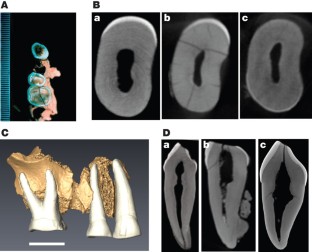
Figure 1: Morphology of the KC4 maxilla.
The alternative text for this image may have been generated using AI.
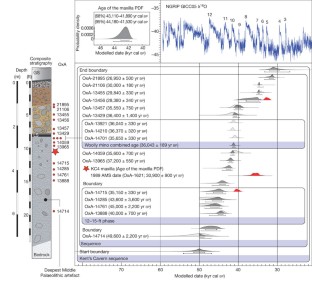
Figure 2: Bayesian age model for Kent’s Cavern.
The alternative text for this image may have been generated using AI.
Figure 3: Comparison of direct radiocarbon determinations of AMH bones from European Palaeolithic sites 3,9,19,20,21,22,23,24,25 with the KC4 model age.

The alternative text for this image may have been generated using AI.
References
- Keith, A. Report on a fragment of a human jaw. Trans. Proc. Torquay Nat. Hist. Soc. 5, 1–2 (1927)
Google Scholar - Hedges, R. E. M., Housley, R. A., Law, I. A. & Bronk, C. R. Radiocarbon dates from the Oxford AMS system: Archaeometry datelist 9. Archaeometry 31, 207–234 (1989)
Article Google Scholar - Trinkaus, E. et al. An early modern human from the Peştera cu Oase, Romania. Proc. Natl Acad. Sci. USA 100, 11231–11236 (2003)
Article ADS CAS Google Scholar - Lundberg, J. & McFarlane, D. A. Pleistocene depositional history in a periglacial terrane: a 500 ky record from Kents Cavern, Devon, United Kingdom. Geosphere 3, 199–219 (2007)
Article ADS Google Scholar - Dowie, H. G. & Ogilvie, A. H. in Report of the Ninety-Fifth Meeting of the British Association for the Advancement of Science 303–306 (Murray, 1927)
Google Scholar - Jacobi, R. M. A collection of Early Upper Palaeolithic artefacts from Beedings, near Pulborough, West Sussex, and the context of similar finds from the British Isles. Proc. Prehist. Soc. 73, 229–325 (2007)
Article Google Scholar - Flas, D. La transition du Paléolithique moyen au supérieur dans la plaine septentrionale de l’Europe. Anthropol. Præhist. 119, 5–254 (2008)
Google Scholar - Jacobi, R. M., Higham, T. F. G. & Bronk Ramsey, C. AMS radiocarbon dating of Middle and Upper Palaeolithic bone in the British Isles: improved reliability using ultrafiltration. J. Quaternary Sci. 21, 557–573 (2006)
Article ADS Google Scholar - Higham, T. F. G., Jacobi, R. M. & Bronk Ramsey, C. AMS radiocarbon dating of ancient bone using ultrafiltration. Radiocarbon 48, 179–195 (2006)
Article CAS Google Scholar - Brown, T. A., Nelson, D. E., Vogel, J. S. & Southon, J. R. Improved collagen extraction by modified Longin method. Radiocarbon 30, 171–177 (1988)
Article CAS Google Scholar - Bronk Ramsey, C. Development of the radiocarbon calibration program OxCal. Radiocarbon 43, 355–363 (2001)
Article Google Scholar - Reimer, P. J. et al. IntCal09 and Marine09 radiocarbon age calibration curves, 0–50,000 years cal BP. Radiocarbon 51, 1111–1150 (2009)
Article CAS Google Scholar - Andersen, K. K. et al. The Greenland ice core chronology 2005, 15–42 ka. Part 1: constructing the time scale. Quat. Sci. Rev. 25, 3246–3257 (2006)
Article ADS Google Scholar - Weninger, B. & Jöris, O. A 14C age calibration curve for the last 60 ka: the Greenland-Hulu U/Th timescale and its impact on understanding the Middle to Upper Paleolithic transition in western Eurasia. J. Hum. Evol. 55, 772–781 (2008)
Article Google Scholar - Zilhão, J. & d’Errico, F. The chronology and taphonomy of the earliest Aurignacian and its implications for the understanding of Neandertal extinction. J. World Prehist. 13, 1–68 (1999)
Article Google Scholar - Trinkaus, E. European early modern humans and the fate of the Neandertals. Proc. Natl Acad. Sci. USA 104, 7367–7372 (2007)
Article ADS CAS Google Scholar - Green, R. E. et al. A draft sequence of the Neandertal genome. Science 328, 710–722 (2010)
Article ADS CAS Google Scholar - Svensson, E. M. et al. Tracing genetic change over time using nuclear SNPs in ancient and modern cattle. Anim. Genet. 38, 378–383 (2007)
Article CAS Google Scholar - Akimova, E. et al. A new direct radiocarbon AMS date for an Upper Palaeolithic human bone from Siberia. Archaeometry 52, 1122–1130 (2010)
CAS Google Scholar - Henry-Gambier, D. & Sacchi, D. La Crouzade V–VI (Aude, France): un des plus anciens fossiles d’anatomie moderne en Europe occidentale. Bull. Mem. Soc. Anthropol. Paris 20, 79–104 (2008)
Google Scholar - Prat, S. et al. The oldest anatomically modern humans from far southeast Europe: direct dating, culture and behavior. PLoS ONE 6, e20834 (2011)
Article ADS CAS Google Scholar - Higham, T. F. G., Bronk Ramsey, C., Brock, F., Baker, D. & Ditchfield, P. Radiocarbon dates from the Oxford AMS system: Archaeometry datelist 32. Archaeometry 49 (suppl. 1). S1–S60 (2007)
Article CAS Google Scholar - Soficaru, A., Petrea, C., Doboş, A. & Trinkaus, E. The human cranium from the Peştera Cioclovina Uscată, Romania. Curr. Anthropol. 48, 611–619 (2007)
Article Google Scholar - Soficaru, A., Doboş, A. & Trinkaus, E. Early modern humans from the Peştera Muierii, Baia de Fier, Romania. Proc. Natl Acad. Sci. USA 103, 17196–17201 (2006)
Article ADS CAS Google Scholar - Wild, E. et al. Direct dating of early Upper Palaeolithic human remains from Mladeč. Nature 435, 332–335 (2005)
Article ADS CAS Google Scholar
Acknowledgements
We thank R. Kruszynski for allowing us access to fossils and casts in his care and for his help. S. Taft performed CT scans of the specimens, N. Curtis created a preliminary CT-based model and R. Abel provided CT scans of comparative specimens. We thank M. Bradtmöller of NESPOS for his assistance. H. Liversidge provided specimens of modern teeth. S. Bello helped with the Alicona microscope. A. Coppa made available dental morphological data for upper canines, and R. L. Tompkins donated X-ray photographs of fossil dentitions. M. Skinner, P. Gunz, M. Richards, A. Olejniczak and J.-J. Hublin advised on investigative approaches to the study of the specimen. H. Taylor photographed KC4. We are grateful to the following people for making available CT scans of fossils from Neanderthal sites for viewing on the NESPOS database: R. Macchiarelli and J. F. Tournepiche (La Chaise de Vouthon), R. Macchiarelli and D. Berthet (La Quina), B. Illerhaus (Le Moustier) and P. Semal (Spy). Funding was provided by the Leverhulme Trust and the NERC. We thank all staff at the Oxford Radiocarbon Accelerator Unit. Funding was provided for T.H. through the NERC (grant NE/D014077/1). C.S. and T.H. are Members, and T.C. is an Associate Member, of the Ancient Human Occupation of Britain project, funded by the Leverhulme Trust.
Author information
Author notes
- Roger Jacobi: Deceased.
Authors and Affiliations
- Oxford Radiocarbon Accelerator Unit, Research Laboratory for Archaeology and the History of Art, University of Oxford, Oxford OX1 3QY, UK ,
Tom Higham - The Natural History Museum, Cromwell Road, London SW7 5BD, UK ,
Tim Compton, Chris Stringer, Roger Jacobi & Chris Collins - Department of Prehistory and Europe (Quaternary Section), The British Museum, London N1 5QJ, UK,
Roger Jacobi - Department of Biology, The Pennsylvania State University, 208 Mueller Laboratory, University Park, Pennsylvania, 16802, USA
Beth Shapiro - Department of Anthropology, Campus Box 1114, Washington University, St Louis, 63130, Missouri, USA
Erik Trinkaus - Torquay Museum, 529 Babbacombe Road, Torquay TQ1 1HG, UK ,
Barry Chandler - The Department of Engineering, University of Hull, Kingston upon Hull HU6 7RX, UK,
Flora Gröning & Michael Fagan - Institute of Archaeology, University College London, 31-34 Gordon Square, London WC1H 0PY, UK ,
Simon Hillson - Centre for Anatomical and Human Sciences, Hull York Medical School, The University of York, Heslington, York YO10 5DD, UK ,
Paul O’Higgins - Department of Anthropology, McMaster University, 1280 Main Street West, Hamilton, Ontario L8S 4L9, Canada,
Charles FitzGerald
Authors
- Tom Higham
- Tim Compton
- Chris Stringer
- Roger Jacobi
- Beth Shapiro
- Erik Trinkaus
- Barry Chandler
- Flora Gröning
- Chris Collins
- Simon Hillson
- Paul O’Higgins
- Charles FitzGerald
- Michael Fagan
Contributions
C.S., R.J., E.T. and T.H. initiated the research. C.S., R.J., T.H. and T.C. designed the research. R.J. determined the spatial and depth locations of the AMS-dated bones, identified the material and analysed the site’s lithic remains. T.H. did the AMS dating and Bayesian analysis. T.C. analysed the dental traits. C.F. and S.H. provided comparative dental data. B.S. did the DNA analysis. C.C. reconstructed and conserved the maxilla. B.C. curated the KC4 maxilla. P.O’H. and M.F. did the μCT scanning. F.G. performed the virtual three-dimensional reconstruction of KC4 and prepared the Gough’s Cave CT scans. F.G. and T.C. made the KC4 dental measurements. T.H., C.S. and T.C. wrote the initial draft of the paper. All authors contributed to and helped to edited the final manuscript.
Corresponding authors
Correspondence toTom Higham or Chris Stringer.
Ethics declarations
Competing interests
The authors declare no competing financial interests.
Supplementary information
Supplementary Information (download PDF )
This file contains Supplementary Methods, Supplementary Acknowledgements, additional references, Supplementary Figures 1-9 with legends and Supplementary Tables 1-17. (PDF 10198 kb)
PowerPoint slides
Rights and permissions
About this article
Cite this article
Higham, T., Compton, T., Stringer, C. et al. The earliest evidence for anatomically modern humans in northwestern Europe.Nature 479, 521–524 (2011). https://doi.org/10.1038/nature10484
- Received: 30 May 2011
- Accepted: 19 August 2011
- Published: 02 November 2011
- Issue date: 24 November 2011
- DOI: https://doi.org/10.1038/nature10484
This article is cited by
Editorial Summary
Early arrivals in Europe
Anatomically modern humans are thought to have arrived in Europe 44,000–42,000 years ago. Physical evidence for early humans is scarce, and these dates are based largely on studies of stone tool assemblages. Two papers published this week use the latest radiocarbon dating and morphological analysis techniques to reassess museum hominid samples. Higham et al. examine a human maxilla from the Aurignacian site at Kent's Cavern in the United Kingdom, discovered in 1927 and previously dated at around 35,000 years old, and arrive at an age of 44,200–41,500 years. The dental morphology of the jawbone indicates that its attribution as early human, rather than Neanderthal, is reliable. Benazzi et al. reanalyse two teeth from the Uluzzian site Grotta del Cavallo in southern Italy and conclude that they are definitively modern, not Neanderthal, and date to 45,000–43,000 years old. A further conclusion from this work is that the Uluzzian culture of southern Europe — always found stratigraphically below the Aurignacian signature culture of the modern humans — may represent the earliest modern humans in Europe rather than the last Neanderthals.