Quote of the day from investing legend Howard Marks: 'You have to be prepared for when things go against y (original) (raw)
Quote of the day from investing legend Howard Marks: 'You have to be prepared for when things go against you. You have to survive on the bad days' - Life and investing lessons from Mastering the Market Cycle author
Synopsis
Howard Marks, a renowned investor, stresses survival over maximum returns. In one of his famous quotes, he advises investors to build resilient portfolios that can withstand market downturns. Marks warns against excessive risk-taking and leverage, which can lead to significant losses.

Listen to this article in summarized format
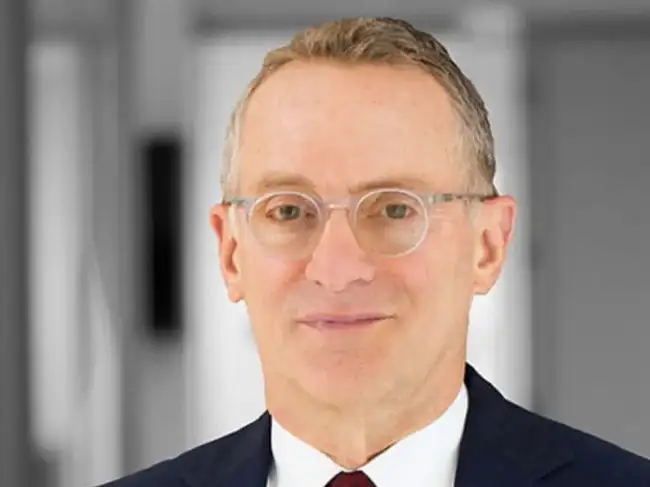
Howard Marks is co-founder and co-chairman of Oaktree Capital Management (Photo: https://www.chicagobooth.edu/)
When it comes to investing, few voices carry as much weight as Howard Marks, co-founder and co-chairman of Oaktree Capital Management, which has got over $225 billion assets under management. Known for his thoughtful memos and disciplined approach to risk, Marks has spent decades reminding investors that success is not just about making money—it is about staying in the game long enough to benefit from opportunities.
One of his most valuable lessons revolves around a simple but powerful idea: investors should focus on surviving difficult periods rather than constantly chasing the highest possible returns. According to Marks, whose personal networth is pegged more than $2 billion by Forbes, the difference between long-term success and failure often comes down to how people handle bad days, not good ones. Marks is also the author of The Most Important Thing and Mastering the Market Cycle.
Marks argues that every investor eventually faces a critical decision. They can either seek to optimize their investments or attempt to maximize them. According to Howard Marks, optimizing means aiming for solid returns while ensuring that a portfolio can withstand setbacks and market downturns. It is a balanced approach that prioritizes durability and long-term success.
Maximizing, on the other hand, is about trying to extract the greatest return in the shortest possible time. While this strategy can look attractive during bull markets, it often requires taking on excessive risk, leaving investors vulnerable when conditions change.
According to Marks, the temptation to maximize gains is one of the biggest mistakes investors make. The pursuit of extraordinary returns frequently comes at the cost of financial resilience.
Why Average Outcomes Can Be Misleading According to Howard Marks
To explain the dangers of overconfidence, Marks often refers to a memorable analogy. Imagine a person who is six feet tall attempting to cross a stream that averages five feet in depth. Even though the average depth appears safe, there may be sections that are much deeper. If the person encounters one of those deeper areas, the average becomes irrelevant.
The lesson is straightforward: surviving “on average” is not enough. Investors must be prepared for extreme situations and unexpected events. Markets or even life rarely move in a smooth, predictable fashion, and portfolios need to be built with those uncertainties in mind.
The Importance of Surviving the Bad Days
Marks believes that successful investing is less about maximizing gains during good times and more about ensuring survival during difficult periods. Market declines, recessions, and unexpected shocks are inevitable. Investors who structure their finances too aggressively may enjoy larger gains when everything goes well, but they often suffer disproportionately when conditions deteriorate.
His philosophy emphasizes resilience. A portfolio should be designed not only for favorable environments but also for periods of stress. The ability to endure setbacks allows investors to remain invested and benefit when markets eventually recover. According to Howard Marks' view, avoiding catastrophic losses is one of the most important aspects of wealth creation.
Howard Marks cautions on leverage
Marks also warns about the dangers of excessive leverage. Marks compares leverage to carrying extra weight while crossing a river. The heavier the burden, the harder it becomes to navigate challenging conditions. What appears manageable during calm periods can become overwhelming during a crisis. Borrowing money to invest can magnify profits when investments rise in value. However, leverage works both ways. Losses become larger during unfavourable conditions.
Another reality Marks highlights is that investors naturally believe their decisions will succeed. Nobody invests expecting to lose money. Yet even the most experienced professionals are wrong at times. Markets are uncertain, and no strategy can produce winning outcomes all the time, the famed investor said.
Who is Howard Marks?
He is the cofounder and co-chairman of Oaktree Capital Management, one of the world's leading alternative investment firms, managing more than $225 billion in assets. The firm has built its reputation on distressed debt investing and a disciplined approach to market cycles.
Before launching Oaktree in 1995 with Bruce Karsh and several colleagues, Marks worked at Citibank and later at TCW Group, developing expertise in high-yield bonds and credit markets. A graduate of the Wharton School and the Booth School of Business, he has become one of the most respected thinkers in finance.