Psychology says adults who keep the gas tank perpetually above half aren't overcautious; their body learne (original) (raw)
There’s a moment that might be familiar to you: you’re driving home, the fuel needle slips past the middle, and something in you stirs quietly. Not urgency, more of a nudge. The next exit has a station. You don’t need it, but you pull in anyway.
The tank had 180 miles left, and you fill it to the top.
On the outside, it looks like plain caution, and that's what you tell anyone who asks. But according to Psychology Today, this is what psychologists call a safety behavior: something we do to manage an imagined threat and bring our anxiety down, and although it works in the moment, it stops us from ever learning that the feared outcome wasn't going to happen anyway. The pull at that halfway mark might have nothing to do with running out of gas and everything to do with something that began long before you ever owned a car.
Your full tank is a promise you make to yourself Every fill-up mutes a certain mental image: car dead on a shoulder, hazards ticking, no station in sight, no one coming. The needle jumps to F and something in your chest loosens for a few minutes.
But that’s the problem with that relief. Safety behaviors are generalized as any action taken in the moment to prevent, escape, or reduce the impact of a feared event and these behaviors rob the individual of the direct experience that would disprove the fear in the first place, according to research published in the Journal of Anxiety Disorders. Because you always fill up, you never realize that a half-empty tank would have been fine. The anxiety never gets fixed. The needle drifts back towards the middle. The anxiety drifts. You fill up again. The habit does not solve anything. It just resets the clock.

Live Events
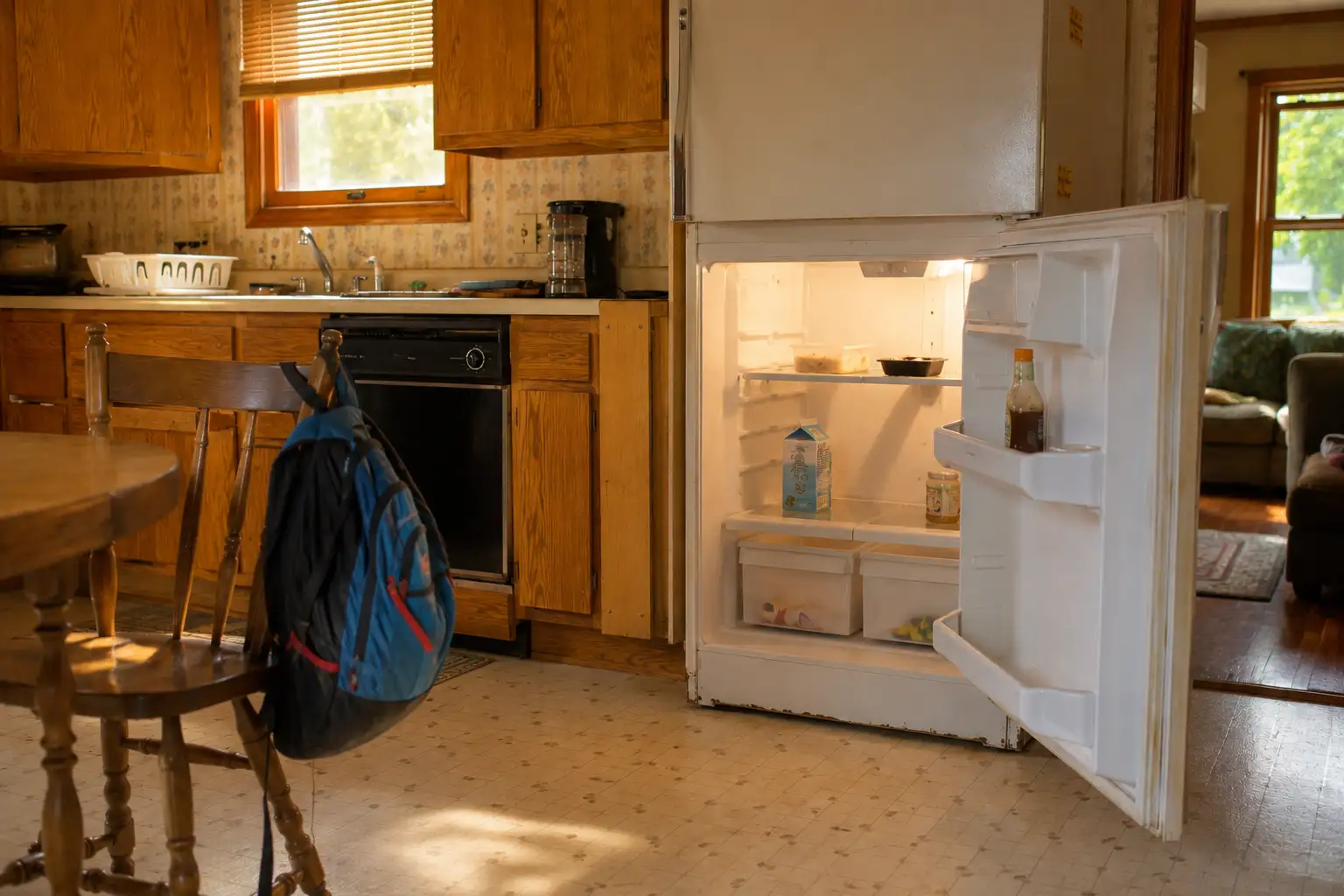
Scarcity in childhood doesn't stay in childhood. It moves into adulthood and quietly rewrites your relationship with having enough. Image Credits: ChatGPT
Where the fear really began None of this generally began from the gas tank. Chances are those who guard it so closely often grew up in homes where resources weren’t a sure thing; where a near-empty gauge wasn’t an inconvenience, but a real stressor. Maybe a parent coasted downhill in neutral to save gas. Perhaps one winter the heat got turned off, or by Thursday the fridge was empty, or a family trip had to be canceled because money just wasn’t there.
A kid in that house learns quickly that the supplies, gas, food, heat or cash aren't dependable. That lesson turns into what researchers call a scarcity mindset. In their landmark book Scarcity: Why Having Too Little Means So Much, economist Sendhil Mullainathan and Princeton psychologist Eldar Shafir argue that scarcity doesn’t just affect what you have; it rewires the way your brain works. Going a full night without sleep has less negative impact on a person’s cognitive capacity than the experience of poverty. That bandwidth loss shapes behavior in ways that don’t just disappear when finances improve.
The bank account may be in good shape now but the tank still needs to be kept full. When an empty gauge meant a real problem, the body figured out the rule and kept the rule long after the problem went away.
The hidden cost of always being prepared The gas tank is rarely the only thing on the list.
That same person will tend to keep their phone charged well past what the day calls for, with a spare charger in the bag and another in the glovebox. The pantry is deeper than two people could eat through. They have a little emergency cash folded somewhere out of their pocket. Each habit makes sense on its own. They tell of a job that is never finished.
Simply Psychology points out that chronic hypervigilance is taxing on the body and the emotions. This constant state of alertness can create fatigue, muscle tension, headaches and interrupted sleep, and it’s a cycle that feeds on itself: poor sleep increases alertness, which breeds more reactivity, which contributes to greater exhaustion, which makes it difficult to ever really feel safe.
That’s what a full tank of gas and a charged phone and a stocked pantry really cost. The shoulders tighten. Real rest is when all the gauges are registering safe. That almost never happens altogether. And then there's the simple math: a detour to a station you didn't need, eight minutes at the pump on a trip you didn't need to make, fuel purchased before the last gallon was burned. Small numbers, but a decade of weeks adds up to a quiet, ongoing tax paid to keep the needle where it calms you.
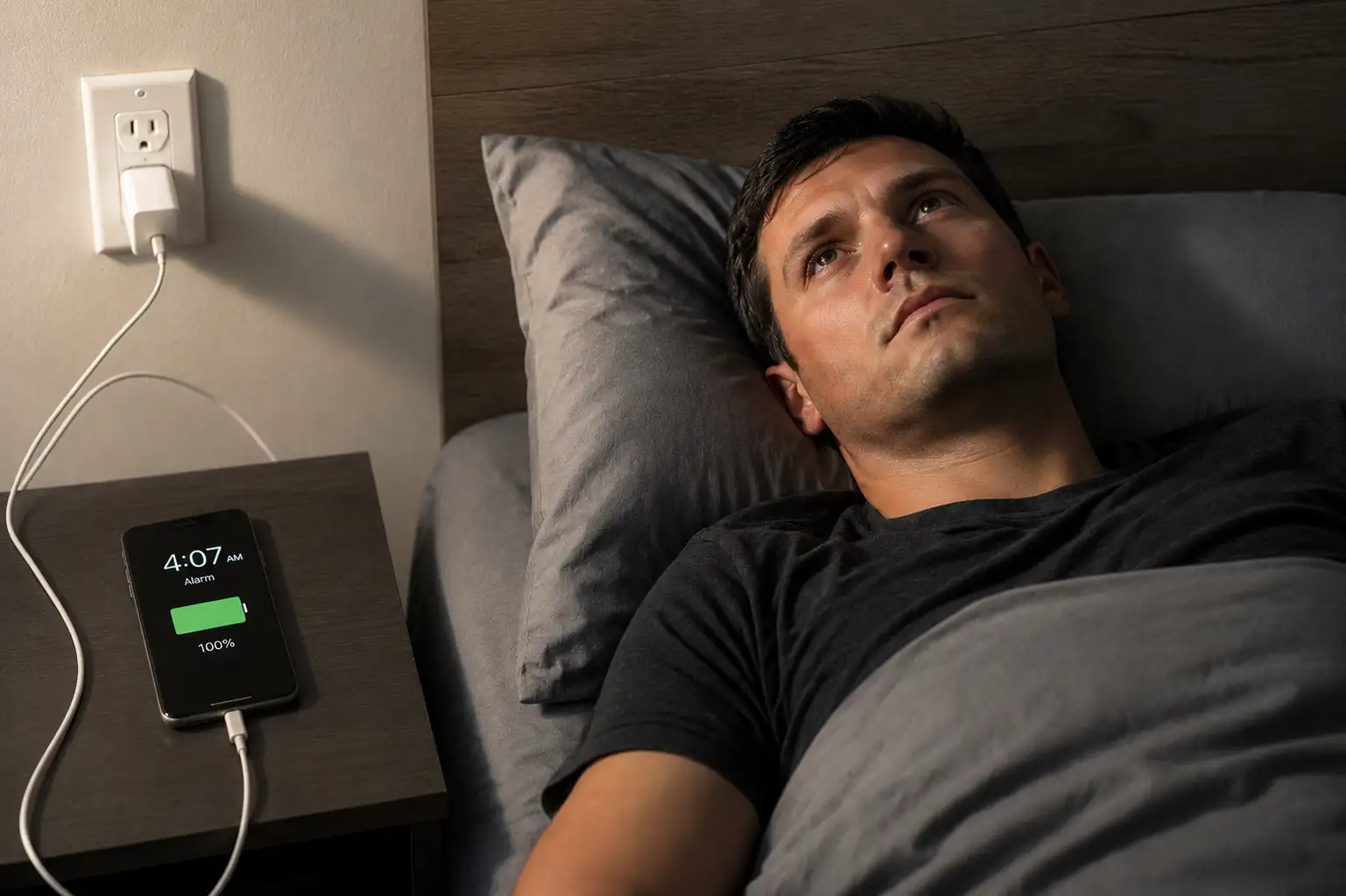
The quiet exhaustion takes a heavier toll on you than you realize. Image Credits: ChatGPT
The only thing that really helps Circumstances improve, but often the habit doesn't fade. A raise, a cushion of savings, years away from that cold winter: none of it affects the behavior, because the behavior was never really about the present. It was about a picture placed somewhere long ago.
Continued use of preventive safety behaviors is a key mediator of the relationship between anxiety symptoms and quality of life. Research published in the Journal of Anxiety Disorders suggests that it is the reduction of these behaviors rather than improvements in external circumstances that actually changes outcomes.
That means, in practice, doing the one thing that seems least appealing: purposely leaving the station alone at the half-tank mark, more than once and on a quarter tank, driving a familiar route to work, feeling the pull to take a detour, but staying on the road and allowing the orange warning light to come on and getting home, and seeing the night turn out just like any other night.
It's slow and uncomfortable at first. But after enough of those ordinary evenings, a low gauge is not what you lie awake at 4 a.m. worrying about. The needle can sit close to empty, and so can you, eventually.