Charting the global economy: Jobs, inflation feed rate-hike bets (original) (raw)
A blowout US jobs report prompted bets that the Federal Reserve will raise interest rates in 2026 as the ongoing Iran war fans inflation risk.
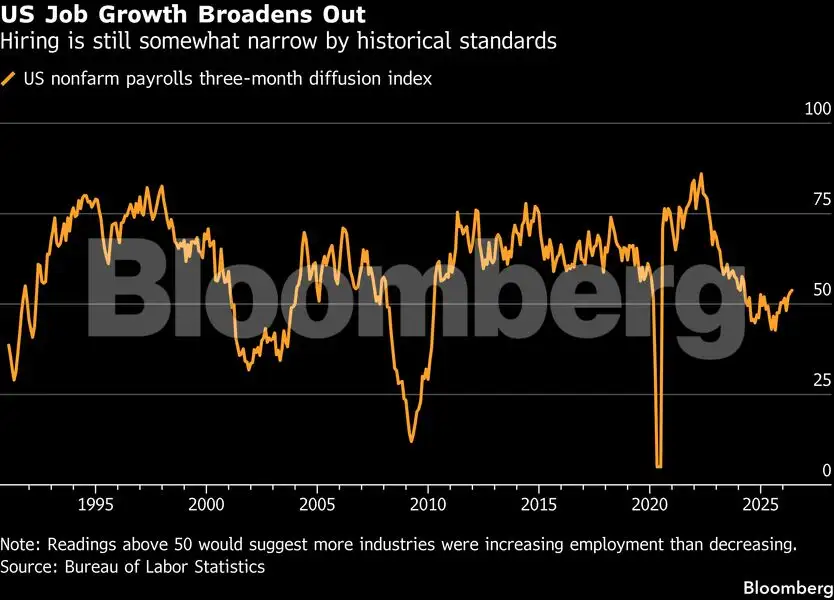
Hiring may have received a boost from the upcoming World Cup, but the breadth of job gains across industries offered some assurance that things are looking up for the labor market.
A fresh round of data on prices in the US next week will offer insights on the extent to which inflation is wiping out wage gains. Meanwhile monetary policy decisions, including one from the European Central Bank, are likely to feed the hawkish sentiment in financial markets.
Here are some of the charts that appeared on Bloomberg this week on the latest developments in the global economy, markets and geopolitics:
World

The central banks of Poland, Tunisia and India kept interest rates unchanged, while Kazakhstan cut them.

Live Events
 Bloomberg
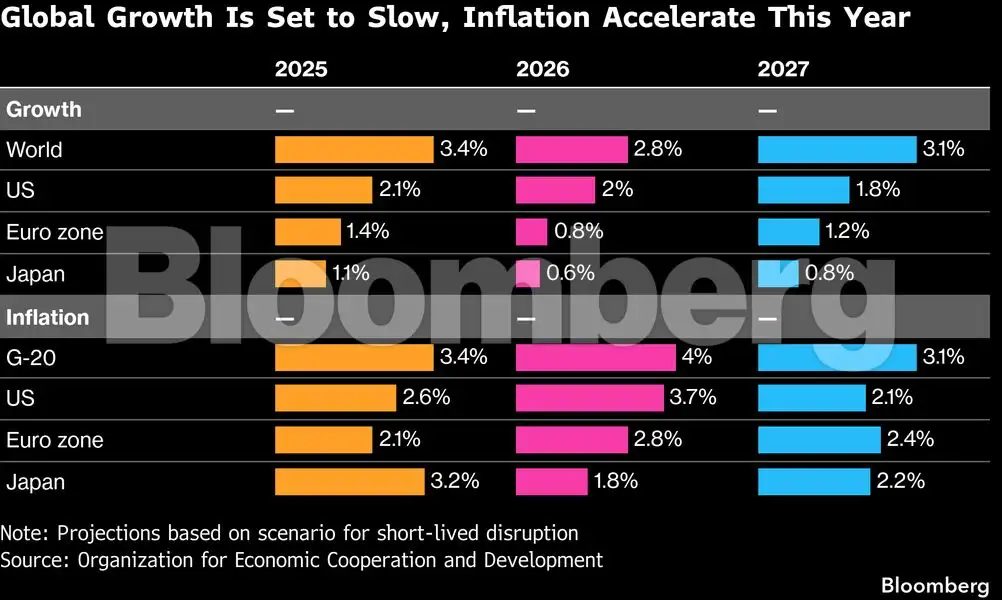
The fate of the global economy hinges on the conflict in the Middle East that has already stifled growth and could yet trigger recessions and significantly stronger inflation, the OECD said. Price pressures and weakened demand are set to be felt for some time, and may even worsen beyond a potential reopening of the Strait of Hormuz, the Paris-based organization said in its latest economic outlook.
US
 Bloomberg
US job growth topped all forecasts in May and the unemployment rate held steady at 4.3%, offering the clearest sign yet that the labor market may be breaking out of a prolonged period of lackluster hiring. Nonfarm payrolls increased 172,000 last month and hiring in March and April was stronger than previously reported, according to Bureau of Labor Statistics data out Friday. Taken together, the figures marked the strongest three-month advance in more than two years.
 Bloomberg
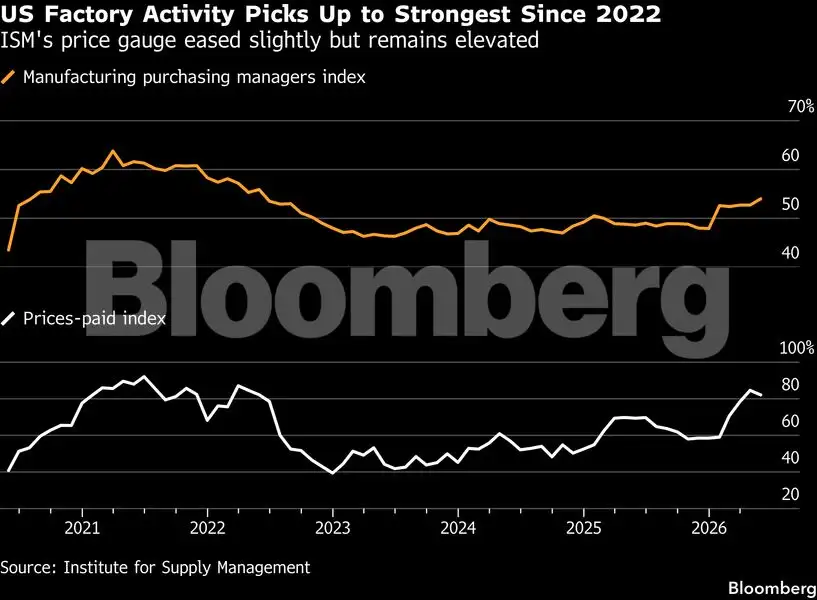
US manufacturing activity expanded in May at the fastest pace in four years, bolstered by a pickup in new orders and production. The Institute for Supply Management’s manufacturing gauge has now signaled expansion for five straight months, pointing to renewed vigor in the manufacturing sector amid a surge in artificial intelligence investment, more favorable tax provisions and diminished trade policy uncertainty.
 Bloomberg
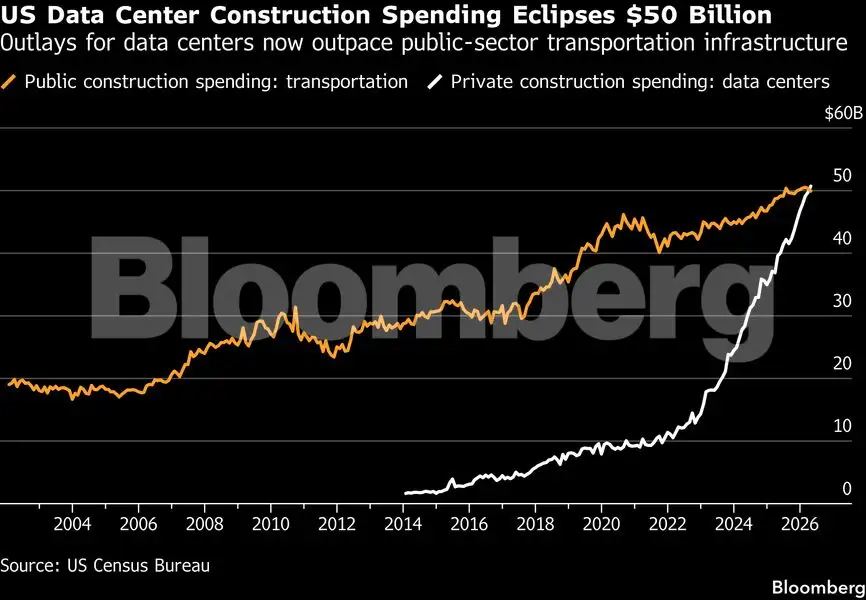
Spending on data-center construction in the US eclipsed $50 billion in April for the first time, according to Census Bureau figures published Monday. Data centers now account for 2.3% of all US construction spending, according to the report, which provides annualized rates that are not adjusted for inflation. Private-sector outlays for data centers also outpaced public spending on transportation-related structures — a category that includes airport facilities, marine terminals and mass transit — for the first time.
Europe
 Bloomberg
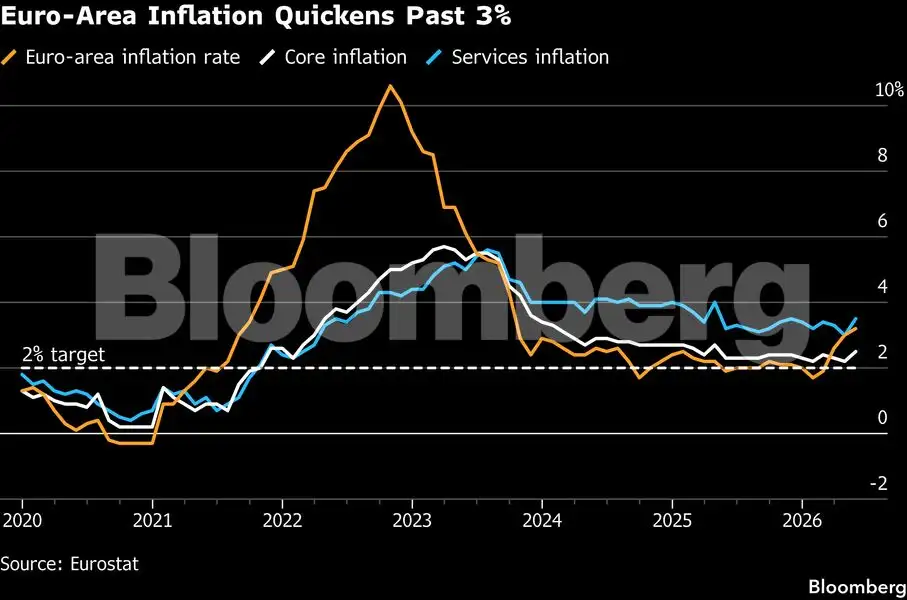
Euro-area inflation topped 3% for the first time in more than 2 1/2 years, cementing expectations for an interest-rate hike when the European Central Bank meets next week. Consumer prices rose 3.2% from a year ago in May, up from 3% the previous month, Eurostat said Tuesday. Core inflation, which excludes volatile items like food and energy, quickened more than anticipated.
The European Union will give extra budget leeway to member states to cope with high energy prices stoked by the Iran war, so long as it helps curb consumption of fossil fuels. The European Commission, the bloc’s executive arm, will offer room for up to 0.3% of gross domestic product per year to be devoted to green-related measures breaching the EU’s fiscal framework, Economy Commissioner Valdis Dombrovskis told journalists on Tuesday.
Asia
 Bloomberg
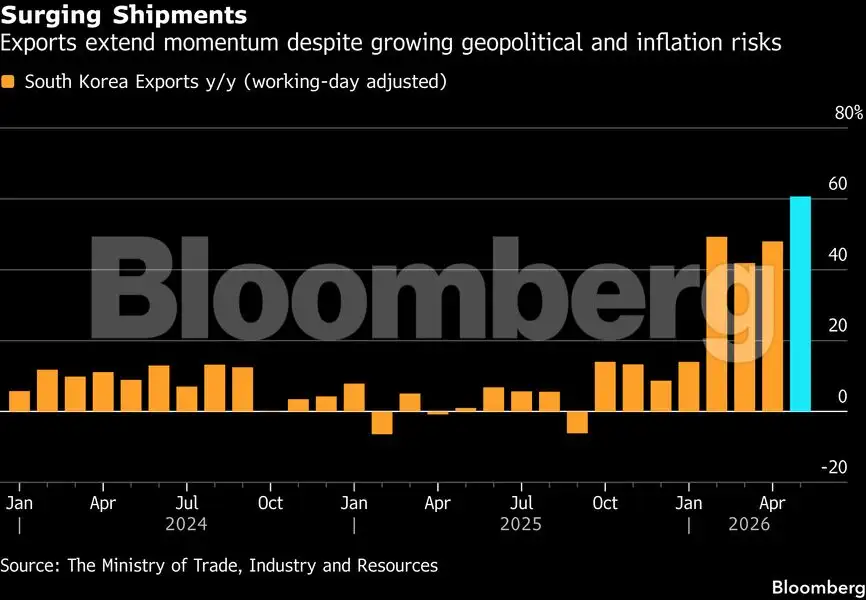
South Korea’s exports extended their strong run in May, reinforcing the central bank’s increasingly hawkish stance as booming semiconductor demand continues to underpin growth despite rising geopolitical and inflation risks. Exports adjusted for working-day differences surged 60.7% in May from a year earlier, the trade ministry said Monday. On an unadjusted basis, shipments increased 53.2% last month, the most since 1984, the ministry said.
 Bloomberg
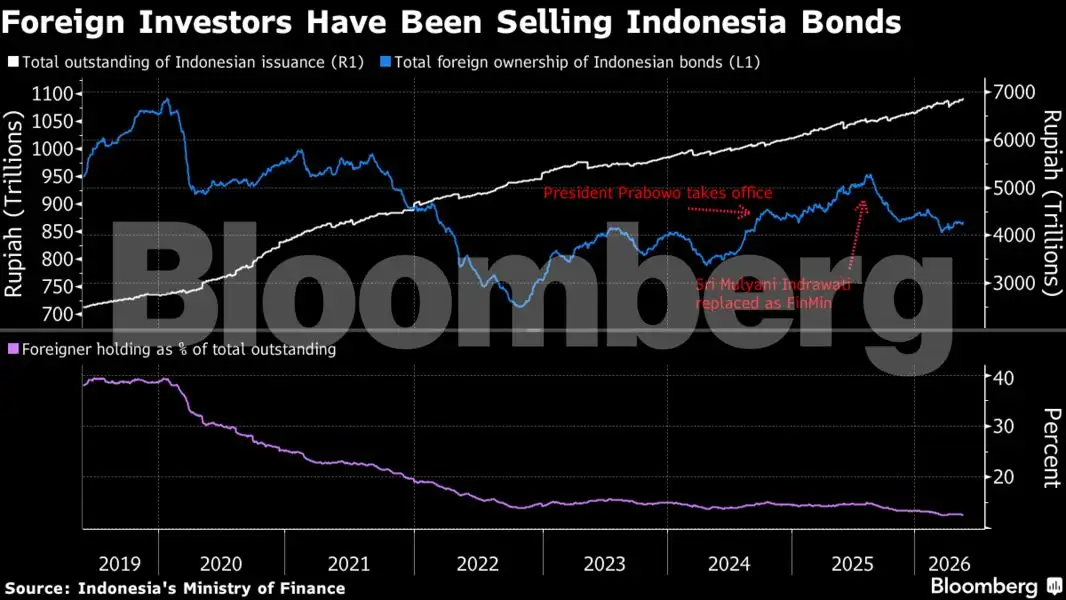
Investors increasingly see Indonesia as a market where policy uncertainty, political intervention and execution risks are beginning to outweigh one of the developing world’s most compelling long-term growth stories — a sentiment that’s been growing since President Prabowo Subianto took office less than two years ago.
Emerging Markets
 Bloomberg
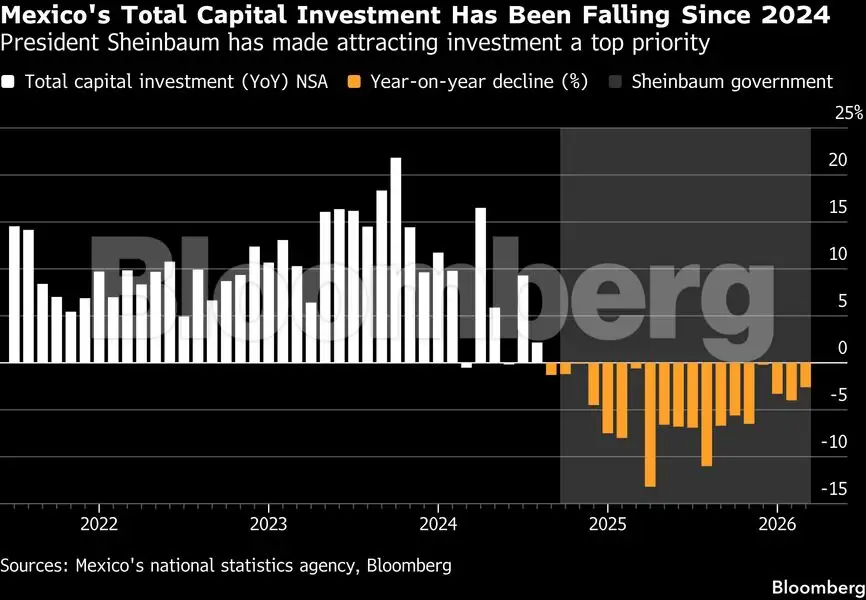
Mexican gross fixed investment extended its decline in March, underscoring concerns over the government’s domestic policies and uncertainty over tariffs and trade with the US, the country’s No. 1 trading partner. Latin America’s second-largest economy has now seen 19 consecutive months of negative total investment, one of the longest periods of decline in the last four decades, driven primarily by a contraction in private investment amid the economy’s slowdown.
 Bloomberg
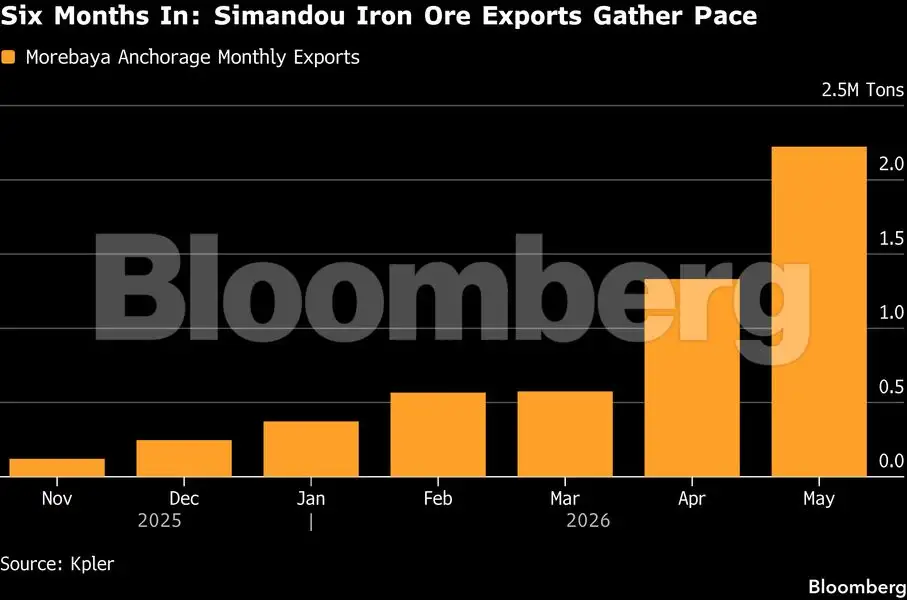
Exports from Guinea’s Simandou iron ore project surged in May, six months after the first shipment to China, marking a milestone in the ramp-up of the high-grade mine that has the potential to reshape the global market. Simandou has been touted as a game-changer for the iron ore industry with 120 million tons a year expected to be shipped once the project is at full capacity.