Ask IFAS: Anna Mészáros (original) (raw)
Publications
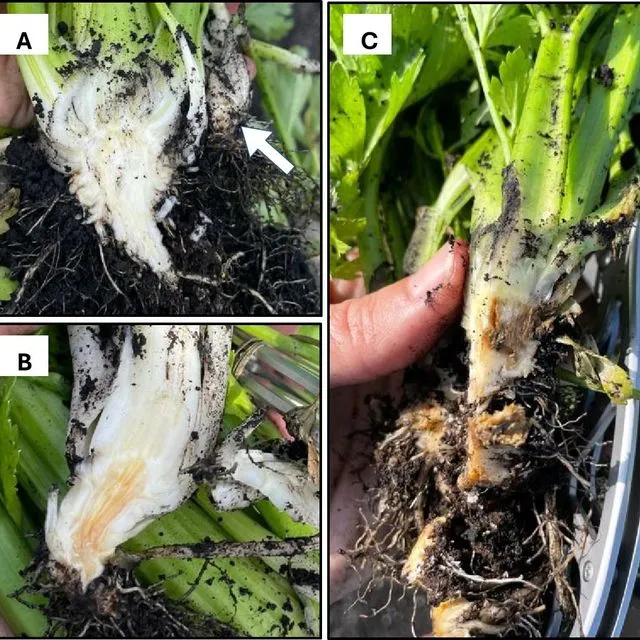 The Emergence of Fusarium oxysporum f. sp. apii Race 4 Causing Fusarium Wilt on Celery in South FloridaLarissa Carvalho Ferreira, Anna Mészáros, and Katia Viana XavierCelery (Apium graveolens L.) production in south Florida spans approximately 1,500 acres yearly. Fusarium wilt, caused by Fusarium oxysporum f. sp. apii (Foa) race 4, emerged as a significant threat to celery production in the Everglades Agricultural Area (EAA) in Florida in 2022. Since it was first reported in the United States in Michigan in 1914, Foa has evolved into four different pathogenic races. In 2013, race 4 was first reported in California, ?and since then, it has been causing substantial losses to celery growers. The first occurrence in south Florida is critically alarming because (1) race 4 is the most virulent among the four races, (2) there is a lack of effective chemical and varietal control options for EAA Florida growers, and (3) this pathogen can survive in the soil for many years. This publication provides novel information to growers, Extension agents, and crop consultants of the celery industry in Florida regarding disease identification and management.
 The Updated Seed Testing Rule for Lettuce mosaic virus in FloridaDe-Fen Mou, Germán V. Sandoya, Anna Mészáros, Ozgur Batuman, and Trevor SmithThis publication aims to raise awareness of the updated Florida seed certification requirement for lettuce mosaic virus (LMV). Florida mandates that all lettuce seeds sold and used in the state must be tested and certified as LMV-free (i.e., zero infected seed per 30,000 tested for LMV). The information presented in this publication is directed to state and county Extension faculty, crop consultants, current and potential lettuce producers, seed companies, and home gardeners who grow lettuce in Florida.
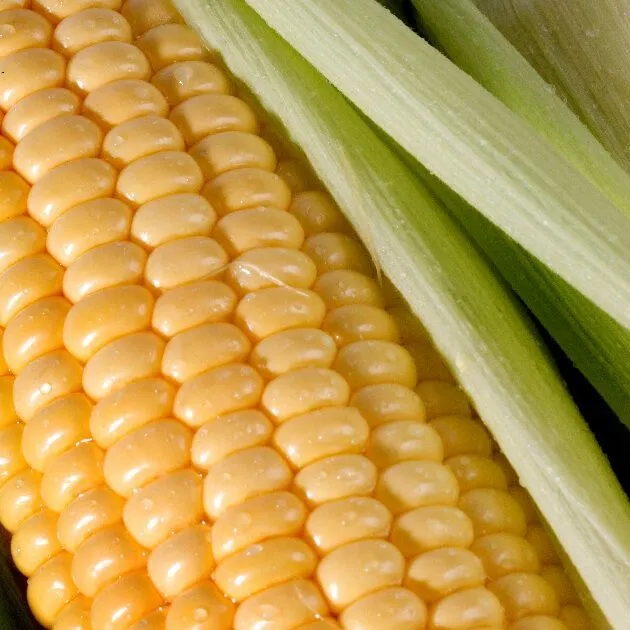 A Review of Fresh Market Sweet Corn Production and Price Trends from 2010 to 2022Kelvin Amon, Tara Wade, Anna Mészáros, and Tori RumenikThis publication provides information on conventional fresh market sweet corn acreage, volume, and pricing for the top four producing states: California, Florida, Georgia, and New York. (Other states produce a substantial amount of processed market sweet corn but are not the focus here.) This is one in a series of Ask IFAS publications focused on trends in Florida’s five most economically important specialty crops (excluding citrus): fresh market sweet corn, bell peppers, tomatoes, watermelons, and strawberries. This information will be useful to producers, Extension agents, and others interested in trends concerning specialty crop commodities. This publication serves as a unique source summarizing important information about the specialty crop market and production trends.