Florida Honey Bee Plants (original) (raw)
Mary Christine Bammer, William H Kern, and Jamie D. Ellis
Several factors influence the flora throughout Florida, including annual freezes, average temperature, annual rainfall, and soil composition. Because of these variations, plants that grow well in one region may not grow well in another. Climate, plant communities, and timing of floral resources differ significantly between the three main regions in Florida: north Florida, central Florida, and south Florida (north Florida encompasses the panhandle region south through Alachua, Levy, Putnam, and Flagler counties. Central Florida includes Marion County south through Sarasota County. South Florida encompasses the remaining counties including the Keys) (Figure 1).
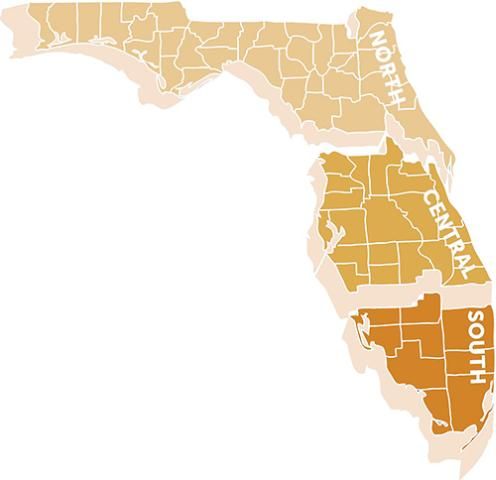
Figure 1.
While many plants are acceptable pollen producers for honey bees, fewer yield enough nectar to produce a surplus honey crop. The tables in this document list the nectar-bearing plants that are present to some degree in each region and the plants' respective bloom times. Please note, any nectar plants that are considered invasive in Florida have been excluded from this list.
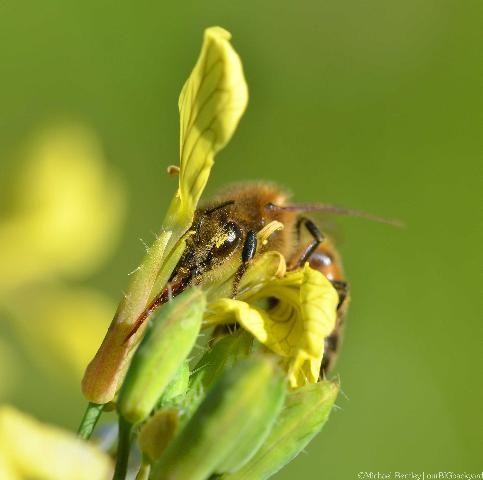
Figure 2. Honey bee on wild mustard.
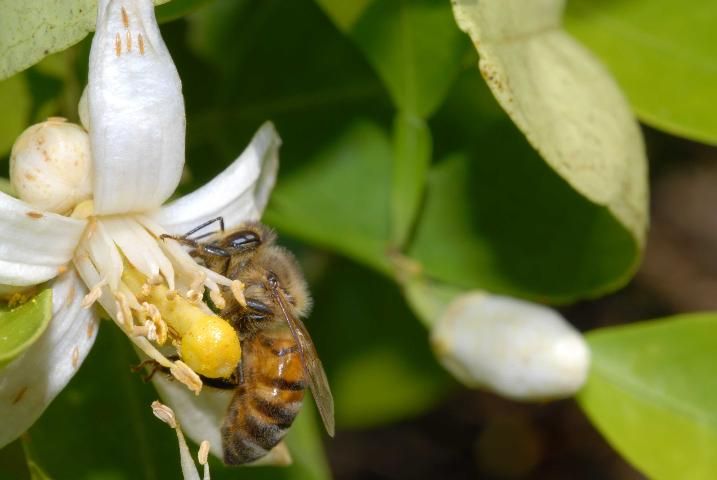
Figure 3. Honey bee on citrus.
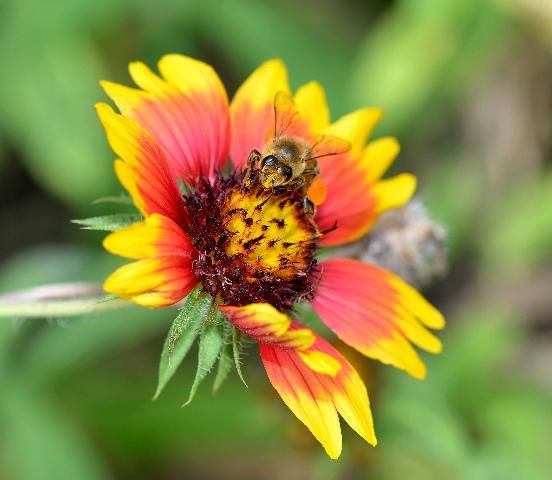
Figure 4. Honey bee on Indian blanket flower.
Table 1.
Honey bee plant bloom calendar for North Florida.
View Table
Table 2.
Honey bee plant bloom calendar for Central Florida.
View Table
Table 3.
Honey bee plant bloom calendar for South Florida.
View Table