Andrew H. Meyer (original) (raw)
Andy Meyer
A Computer Engineer with a passion for creating value by building extraordinary things
Welcome.
I am a computer engineer who values quality over quantity,
honors hard and honest work, and believes in teamwork, documented code,
and starting the day with a good cup of coffee.
The 30-second version of this document can be found on my resume!
The best way to contact me is via email.
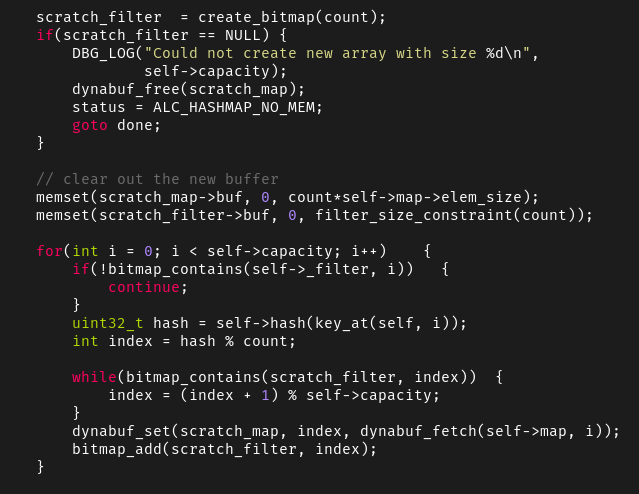 alibc.containers The missing #include for C. This project has been going since 2018 and started as an attempt to make an unopinionated, hassle-free Rapid Application Development library for C. It includes commonly-used datastructures that are written on top of a common memory management structure. I have used it for several school projects and for my own prototyping, and it is still under active development!
 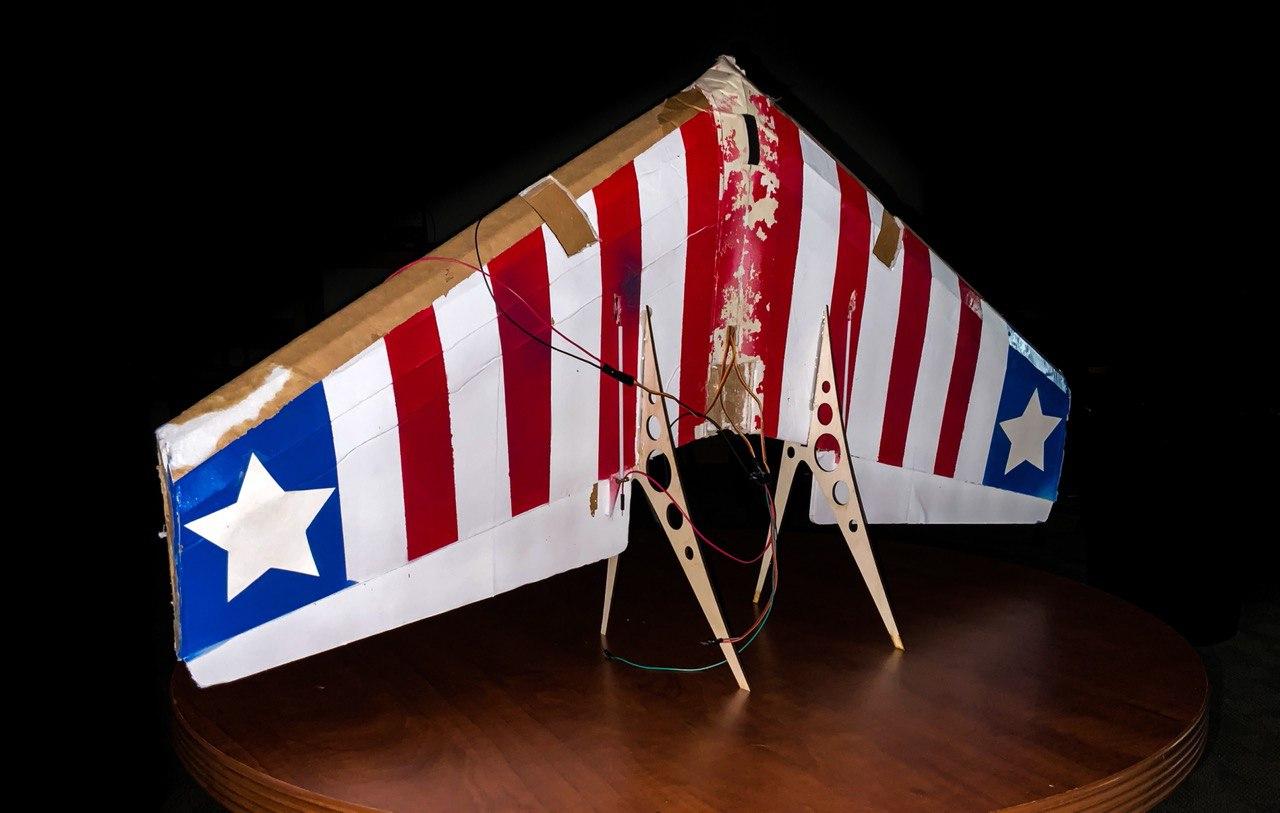 P20123/Autonomous Search and Rescue Drones Senior Design Project at RIT. I was the lead engineer and project manager for a multidisiplinary team with two mechanical engineers, an electrical engineer, and three computer engineers. I wrote a Real Time Operating System (RTOS) from scratch for this project, featuring a round-robin scheduler, system calls, and a modular build system. The syscall and context-switch entries were written by hand in ARMv7-M assembly. While the project was not completed, a great deal was learned about working with other engineers, specifically the challenges faced in other disciplines.
 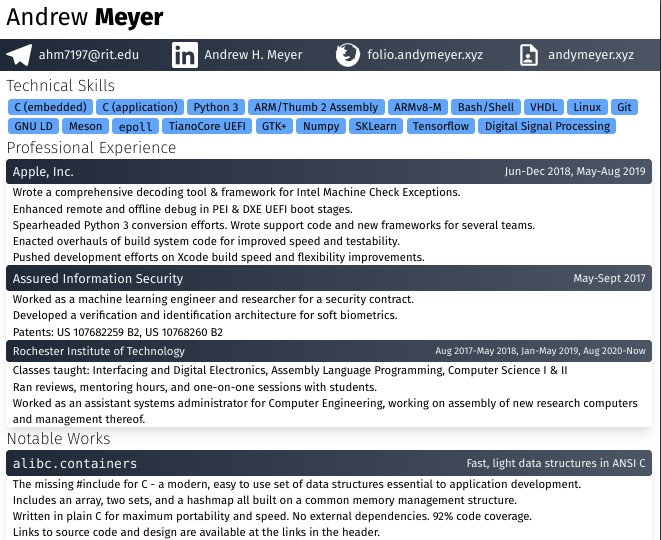 Online Resume and Portfolio Disclaimer: I am not a frontend dev. However, in an effort to have an online presence, I have taught myself enough web development to make a static resume and the portfolio you're currently reading. This project is among the more foreign to me, requiring almost entirely skills outside my expertise. I am pretty happy with the results!
  OPAL-01 Instruction Set Architecture I worked with my classmate and good friend Wesley Dahar on the OPAL-01 processor for our Computer Organization class. What was supposed to be a quick, eight-instruction CPU for an easy class project turned into a full manual inspired by the style of the ARMv8-M ISA documents. We designed the ISA from the ground up in about a week and Wesley made some example programs using our ISA. In Digital IC Design, OPAL-01 was used as the main coordinator of a neural-network accelerator design. My friend Sabrina Ly implemented the entire ISA in VHDL-93, and I wrote an assembler in C and the firmware for our accelerator in OPAL-01 assembly.
 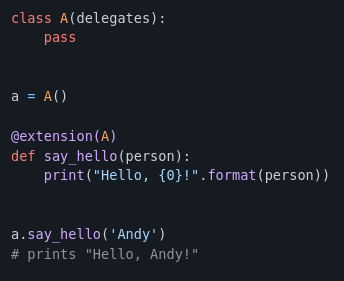 snake-lang The Fundamental Theorem of Python, 1, states that anything can be done in python. The Fundamental Theorem of Python, 2, states "just badly." snake-lang is engineering stand-up. Although it is unfit for use in production code, it demonstrates that the dynamic nature of Python allows it to emulate the features of other languages, such as Swift. Eventually I plan on adding other demonstrations, such as the ability to have static class interfaces with initialization-time enforcement.
 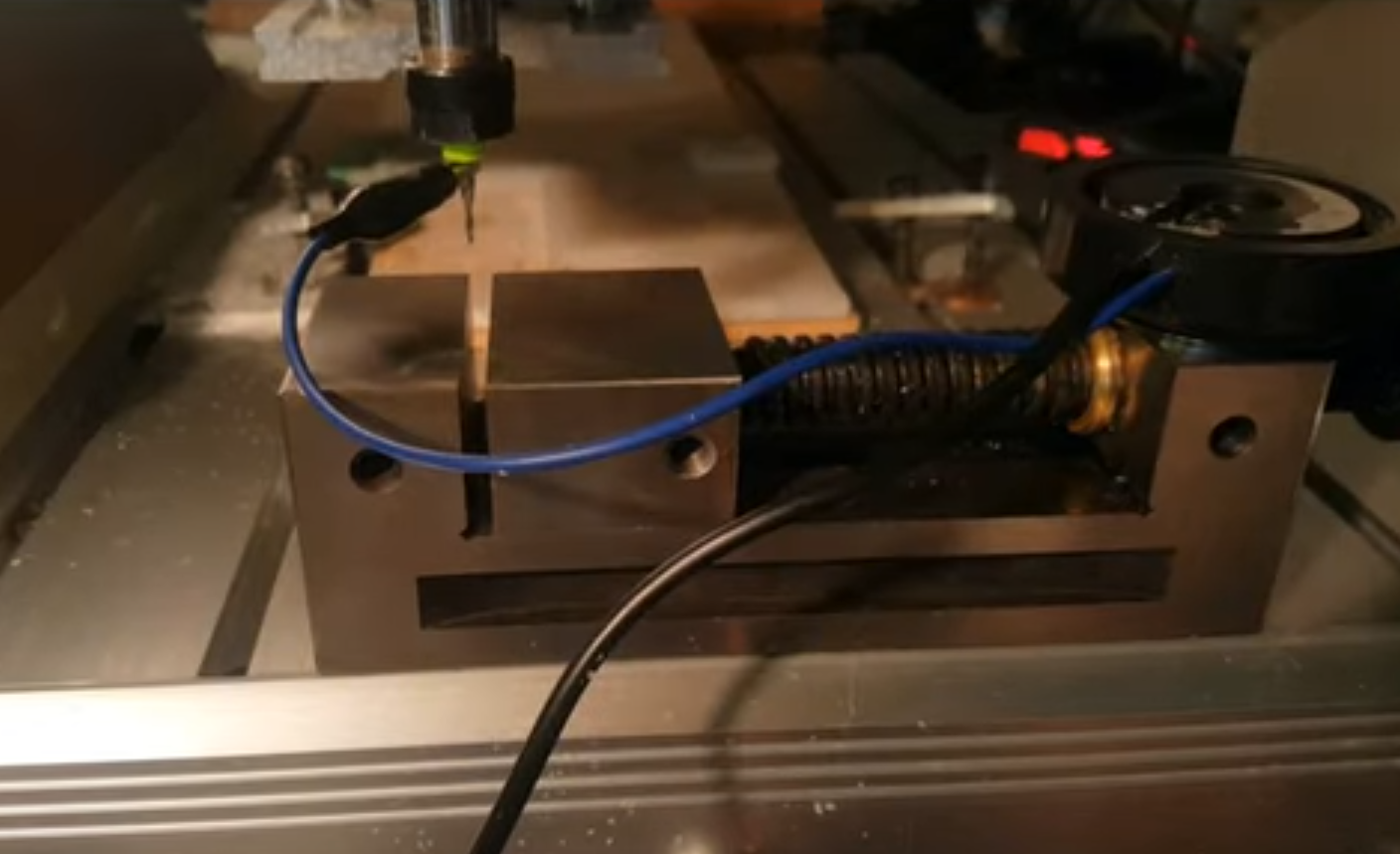 Super Touchplate/Automated Offset Milling This javascript widget makes it easier to align a 3-axis CNC mill to a workpiece. It plugs the fantastic Chilipeppr/TinyG by John Lauer (of Zipwhip), a browser-based, open source CNC milling platform. I wrote it in a week in 2015, and have made a few updates since then. While this is one of my earliest projects, it is one I can say has absolutely positively affected many people and I am glad that I had the opportunity to do something beneficial!
 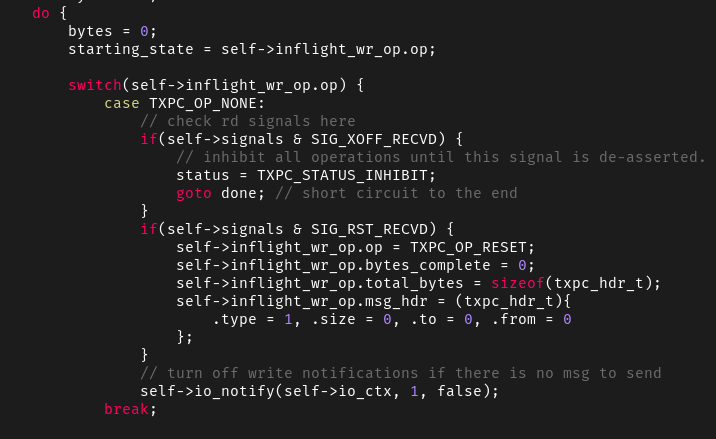 TinyXPC This ongoing project aims to develop an ultralight alternative to a normal TCP/IP stack, that can run on a variety of PHY layers without the resource requirements of full TCP. It's current revision works in software on Linux, and can be considered a proof of concept. It was originally designed as an inter-process message passing system, but the target design has evolved into a two-layer messaging system designed primarily for edge devices and microcontrollers.
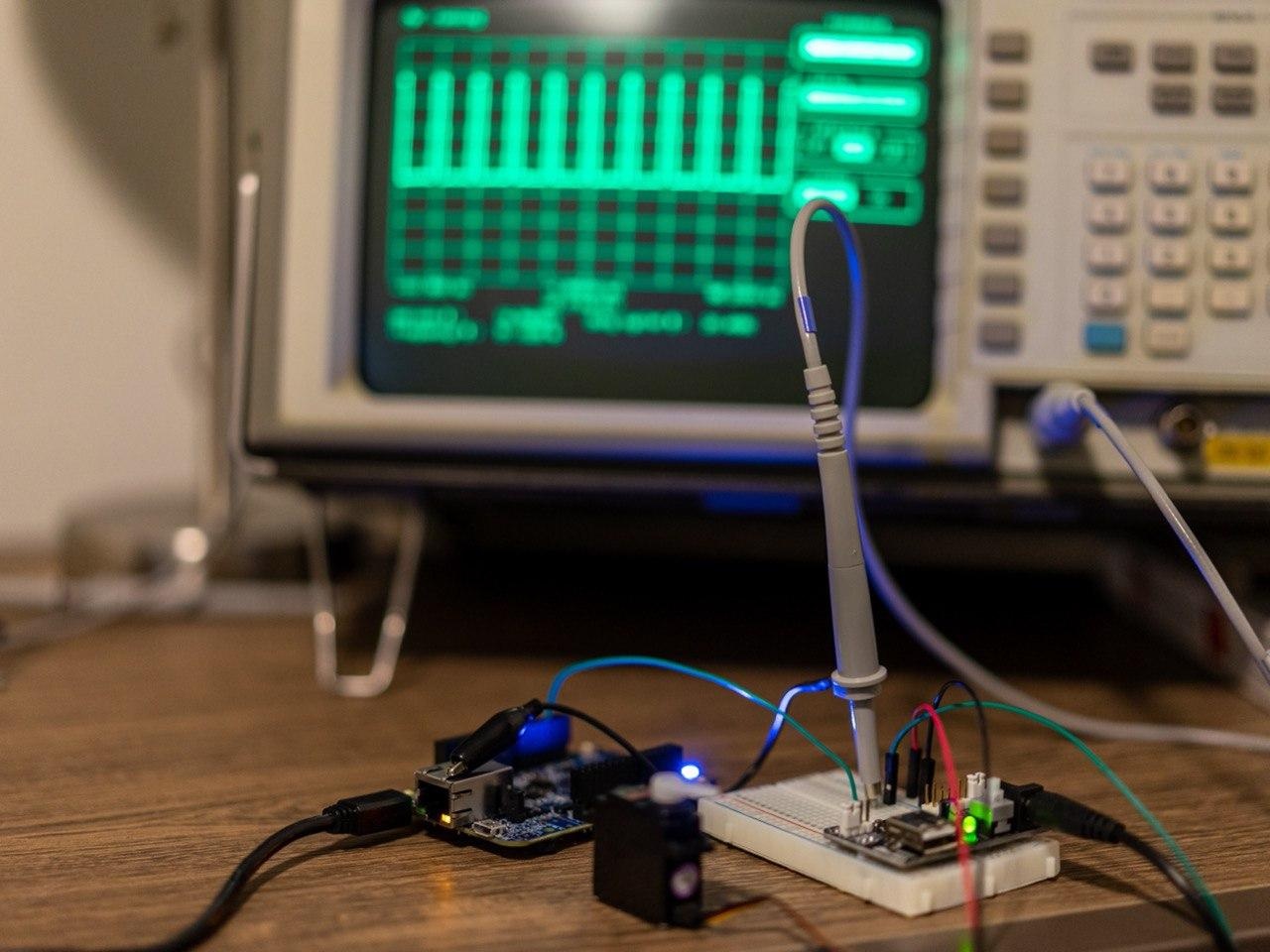
 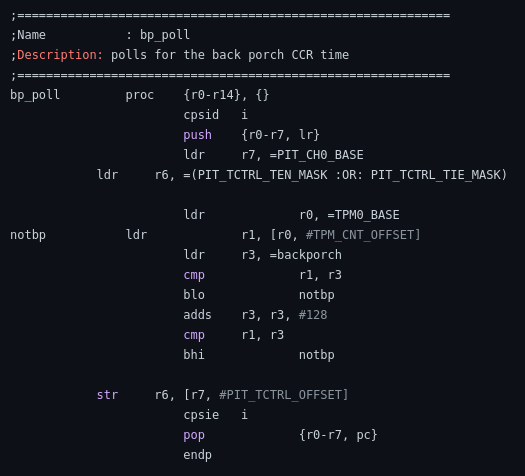 Bitbanged VGA Inspired by Linus Åkesson's Craft demo from 2008, which featured an ATMEGA88 rendering incredible graphics on a VGA monitor, my friend Piers Kwan and I tried to recreate a small subset of that functionality on a Kinetis KL46 Cortex-M0+, for the final project of our Assembly Language Programming class. We managed to get static colors on the screen in only two days, in which we wrote all of the code, learned the protocol, and figured out how to test our designs. The code that ran in the final demo is 100% hand-written ARMv7-M/Thumb 2 assembly. Maybe someday we'll try and make something worthy of our inspiration...
  Kinetis K60-Series Meson Template Embedded C does not have to be ugly, full of complicated shell scripts and Makefiles, and this project is the proof. Originally developed for my race car in Interface and Digital Electronics, and then evolved to a more robust platform for my Senior Design team, this template uses Meson and a few very simple Bash scripts to automate the build, flash, and debug stages of baremetal firmware development in C. Not only is it faster and smarter than a Makefile, but it is easier to maintain and extend. Meson is flexible enough that we were able to make several builds of an operating system and applications for our Senior Design project from a single repository, all configurable with a single command at compile time!