Guides: Types of Sources - What's the Difference: Types of Books (original) (raw)
Non-fiction (or nonfiction) is information or events that are fact or real life experiences. Non-fiction covers a variety of topics and make up the majority of books at Milner Library. Most non-fiction books are secondary sources. The exception are biographies and memoirs. Need help searching for books? View our Help Videos.
Here are examples of non-fiction at Milner Library
-
 The Politics of the Hunger Games by
Call Number: PS3603 .O4558 Z684 2015
This critical study of The Hunger Games explores the novels in the context of how we think about the nature of politics, the value of the individual, and the importance of political action. -
 Clocks of New York by Chris DeSantis
Call Number: TS543.U6 D47 2006
This richly illustrated work chronicles the history of public clocks in New York City. It discusses the premiere clock-makers of the 19th century such as the Ansonia Clock Company and the Self Winding Clock Company, the heyday of American public clock making and the ever-increasing importance of clocks. -
 Cool Cities by Benjamin R. Barber
Call Number: QC981.8.G56 B37 2017
Renowned political theorist Benjamin R. Barber describes how cities, by assuming important aspects of sovereignty, can take the lead from faltering nation states in fighting climate change by working together on climate change can find common measures by which to evaluate the radically different policies they pursue.
Edited books are a compilation of essays or research by various authors. The role of an editor is to communicate with authors, compile the written works, and coordinate with the publishing company. Like single author non-fiction, these books are based on information or events that are fact or real life experiences. Edited non-fiction books are secondary sources. Need help searching for books? View our Help Videos.
Examples of Non-fiction Edited Works at Milner Library
Reference books give a broad overview and are a synthesis or compilation of theories, philosophies, or common knowledge for a specific discipline or culture. These books, very often peer-reviewed, are excellent sources for obtaining background information on a topic. Reference non-fiction books are tertiary sources. Need help searching for books? View our Help Videos.
Examples of Non-fiction Reference at Milner Library
-
 Clinical Atlas of Human Anatomy by Peter H. Abrahams; Jonathan D. Spratt; Marios Loukas; Albert-Neels van Schoor
Call Number: QM25 .M23 2013 (Floor 2 Reference)
McMinn and Abrahams' Clinical Atlas of Human Anatomy, 7th Edition delivers the straightforward visual guidance you need to confidently perform all of the dissections required during your medical training...while acquiring the practical anatomical knowledge needed in your future clinical practice! Respected authority Prof. Peter H. Abrahams and a team of leading anatomists use a vast collection of clinical images to help you master all essential concepts. -
 Miller's Antiques Handbook and Price Guide 2012-2013 by Judith Miller
If you want to know the value of your antiques - or find out how the antiques market is faring - the world's best-selling antiques price guide is the place to look. Every year more than 8,000 items are photographed to make Miller's Antiques Handbook and Price Guide the most comprehensive and informative price guide on the market. Whether you're buying or selling, a dealer, collector or auctioneer, this is the book you need to help you keep track of the international market. Whenever you're buying or selling always take Judith with you. -
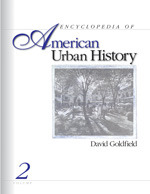 Encyclopedia of American Urban History by David R. Goldfield (Editor)
Call Number: HT123 .E49 2007 (Floor 2 Reference)
The Encyclopedia of American Urban History, edited by one of the leading scholars of urban studies, David Goldfield, it offers an accurate and authoritative historical approach to the dramatic urban growth experienced in the United States during the 20th century. The two-volumes Encyclopedia of American Urban History offer both a summary and an interpretation of the field.
Fiction is information, events, and characters that are imaginary; most often presented in the form of a story.
Fictional works are not used in a research project unless you are doing a critical analysis of the story, the body of work of the specific author, or the specific genre of writing.
Here are examples of fictional literature at Milner Library
-
 The Hunger Games by Suzanne Collins
Call Number: TMC Fiction COL
The first novel in the worldwide bestselling series by Suzanne Collins! Winning means fame and fortune. Losing means certain death. The Hunger Games have begun. . . . In the ruins of a place once known as North America lies the nation of Panem, a shining Capitol surrounded by twelve outlying districts. The Capitol is harsh and cruel and keeps the districts in line by forcing them all to send one boy and one girl between the ages of twelve and eighteen to participate in the annual Hunger Games, a fight to the death on live TV. Sixteen-year-old Katniss Everdeen regards it as a death sentence when she steps forward to take her sister's place in the Games. But Katniss has been close to dead before - and survival, for her, is second nature. Without really meaning to, she becomes a contender. But if she is to win, she will have to start making choices that weigh survival against humanity and life against love. -
 The Shape of Bones by Daniel Galera
Call Number: PQ9698.417 .A4 M3613 2017
A young man finds himself dragged, by the undertow of memory, to Esplanada, the neighborhood he grew up in, to the brotherhood of his old friends, and to the clearing in the woods where he witnessed an act that has run like a scar through the rest of his life. -
 Go Set a Watchman by Harper Lee
Call Number: PS3603 .O4558 Z684 2015
From Harper Lee comes a landmark new novel set two decades after her beloved Pulitzer Prize-winning masterpiece, To Kill a Mockingbird. Maycomb, Alabama. Twenty-six-year-old Jean Louise Finch-"Scout"-returns home from New York City to visit her aging father, Atticus. -
 A Tale of Two Cities by Charles Dickens
Call Number: PR4571 .A1 1993
Lucie Manette had been separated from her father for eighteen years while he languished in Paris's most feared prison, the Bastille. Finally reunited, the Manettes's fortunes become inextricably intertwined with two men, the heroic aristocrat Darnay, and the dissolute lawyer, Carton.