QwenImage (original) (raw)

Qwen-Image from the Qwen team is an image generation foundation model in the Qwen series that achieves significant advances in complex text rendering and precise image editing. Experiments show strong general capabilities in both image generation and editing, with exceptional performance in text rendering, especially for Chinese.
Qwen-Image comes in the following variants:
| model type | model id |
|---|---|
| Qwen-Image | Qwen/Qwen-Image |
| Qwen-Image-Edit | Qwen/Qwen-Image-Edit |
| Qwen-Image-Edit Plus | Qwen/Qwen-Image-Edit-2509 |
[!TIP][Caching](../../optimization/cache) may also speed up inference by storing and reusing intermediate outputs.
LoRA for faster inference
Use a LoRA from lightx2v/Qwen-Image-Lightning to speed up inference by reducing the number of steps. Refer to the code snippet below:
Code
from diffusers import DiffusionPipeline, FlowMatchEulerDiscreteScheduler import torch import math
ckpt_id = "Qwen/Qwen-Image"
scheduler_config = {
"base_image_seq_len": 256,
"base_shift": math.log(3),
"invert_sigmas": False,
"max_image_seq_len": 8192,
"max_shift": math.log(3),
"num_train_timesteps": 1000,
"shift": 1.0,
"shift_terminal": None,
"stochastic_sampling": False,
"time_shift_type": "exponential",
"use_beta_sigmas": False,
"use_dynamic_shifting": True,
"use_exponential_sigmas": False,
"use_karras_sigmas": False,
}
scheduler = FlowMatchEulerDiscreteScheduler.from_config(scheduler_config)
pipe = DiffusionPipeline.from_pretrained(
ckpt_id, scheduler=scheduler, torch_dtype=torch.bfloat16
).to("cuda")
pipe.load_lora_weights(
"lightx2v/Qwen-Image-Lightning", weight_name="Qwen-Image-Lightning-8steps-V1.0.safetensors"
)
prompt = "a tiny astronaut hatching from an egg on the moon, Ultra HD, 4K, cinematic composition." negative_prompt = " " image = pipe( prompt=prompt, negative_prompt=negative_prompt, width=1024, height=1024, num_inference_steps=8, true_cfg_scale=1.0, generator=torch.manual_seed(0), ).images[0] image.save("qwen_fewsteps.png")
The
guidance_scaleparameter in the pipeline is there to support future guidance-distilled models when they come up. Note that passingguidance_scaleto the pipeline is ineffective. To enable classifier-free guidance, please passtrue_cfg_scaleandnegative_prompt(even an empty negative prompt like ” ”) should enable classifier-free guidance computations.
Multi-image reference with QwenImageEditPlusPipeline
With QwenImageEditPlusPipeline, one can provide multiple images as input reference.
import torch from PIL import Image from diffusers import QwenImageEditPlusPipeline from diffusers.utils import load_image
pipe = QwenImageEditPlusPipeline.from_pretrained( "Qwen/Qwen-Image-Edit-2509", torch_dtype=torch.bfloat16 ).to("cuda")
image_1 = load_image("https://huggingface.co/datasets/huggingface/documentation-images/resolve/main/diffusers/grumpy.jpg") image_2 = load_image("https://huggingface.co/datasets/huggingface/documentation-images/resolve/main/diffusers/peng.png") image = pipe( image=[image_1, image_2], prompt='''put the penguin and the cat at a game show called "Qwen Edit Plus Games"''', num_inference_steps=50 ).images[0]


QwenImagePipeline
class diffusers.QwenImagePipeline
( scheduler: FlowMatchEulerDiscreteScheduler vae: AutoencoderKLQwenImage text_encoder: Qwen2_5_VLForConditionalGeneration tokenizer: Qwen2Tokenizer transformer: QwenImageTransformer2DModel )
Parameters
- transformer (QwenImageTransformer2DModel) — Conditional Transformer (MMDiT) architecture to denoise the encoded image latents.
- scheduler (FlowMatchEulerDiscreteScheduler) — A scheduler to be used in combination with
transformerto denoise the encoded image latents. - vae (AutoencoderKL) — Variational Auto-Encoder (VAE) Model to encode and decode images to and from latent representations.
- text_encoder (
Qwen2.5-VL-7B-Instruct) —Qwen2.5-VL-7B-Instruct, specifically theQwen2.5-VL-7B-Instruct variant. - tokenizer (
QwenTokenizer) — Tokenizer of classCLIPTokenizer.
The QwenImage pipeline for text-to-image generation.
__call__
( prompt: typing.Union[str, typing.List[str]] = None negative_prompt: typing.Union[str, typing.List[str]] = None true_cfg_scale: float = 4.0 height: typing.Optional[int] = None width: typing.Optional[int] = None num_inference_steps: int = 50 sigmas: typing.Optional[typing.List[float]] = None guidance_scale: typing.Optional[float] = None num_images_per_prompt: int = 1 generator: typing.Union[torch._C.Generator, typing.List[torch._C.Generator], NoneType] = None latents: typing.Optional[torch.Tensor] = None prompt_embeds: typing.Optional[torch.Tensor] = None prompt_embeds_mask: typing.Optional[torch.Tensor] = None negative_prompt_embeds: typing.Optional[torch.Tensor] = None negative_prompt_embeds_mask: typing.Optional[torch.Tensor] = None output_type: typing.Optional[str] = 'pil' return_dict: bool = True attention_kwargs: typing.Optional[typing.Dict[str, typing.Any]] = None callback_on_step_end: typing.Optional[typing.Callable[[int, int, typing.Dict], NoneType]] = None callback_on_step_end_tensor_inputs: typing.List[str] = ['latents'] max_sequence_length: int = 512 ) → ~pipelines.qwenimage.QwenImagePipelineOutput or tuple
Parameters
- prompt (
strorList[str], optional) — The prompt or prompts to guide the image generation. If not defined, one has to passprompt_embeds. instead. - negative_prompt (
strorList[str], optional) — The prompt or prompts not to guide the image generation. If not defined, one has to passnegative_prompt_embedsinstead. Ignored when not using guidance (i.e., ignored iftrue_cfg_scaleis not greater than1). - true_cfg_scale (
float, optional, defaults to 1.0) — Guidance scale as defined in Classifier-Free Diffusion Guidance.true_cfg_scaleis defined aswof equation 2. of Imagen Paper. Classifier-free guidance is enabled by settingtrue_cfg_scale > 1and a providednegative_prompt. Higher guidance scale encourages to generate images that are closely linked to the textprompt, usually at the expense of lower image quality. - height (
int, optional, defaults to self.unet.config.sample_size * self.vae_scale_factor) — The height in pixels of the generated image. This is set to 1024 by default for the best results. - width (
int, optional, defaults to self.unet.config.sample_size * self.vae_scale_factor) — The width in pixels of the generated image. This is set to 1024 by default for the best results. - num_inference_steps (
int, optional, defaults to 50) — The number of denoising steps. More denoising steps usually lead to a higher quality image at the expense of slower inference. - sigmas (
List[float], optional) — Custom sigmas to use for the denoising process with schedulers which support asigmasargument in theirset_timestepsmethod. If not defined, the default behavior whennum_inference_stepsis passed will be used. - guidance_scale (
float, optional, defaults to None) — A guidance scale value for guidance distilled models. Unlike the traditional classifier-free guidance where the guidance scale is applied during inference through noise prediction rescaling, guidance distilled models take the guidance scale directly as an input parameter during forward pass. Guidance scale is enabled by settingguidance_scale > 1. Higher guidance scale encourages to generate images that are closely linked to the textprompt, usually at the expense of lower image quality. This parameter in the pipeline is there to support future guidance-distilled models when they come up. It is ignored when not using guidance distilled models. To enable traditional classifier-free guidance, please passtrue_cfg_scale > 1.0andnegative_prompt(even an empty negative prompt like ” ” should enable classifier-free guidance computations). - num_images_per_prompt (
int, optional, defaults to 1) — The number of images to generate per prompt. - generator (
torch.GeneratororList[torch.Generator], optional) — One or a list of torch generator(s)to make generation deterministic. - latents (
torch.Tensor, optional) — Pre-generated noisy latents, sampled from a Gaussian distribution, to be used as inputs for image generation. Can be used to tweak the same generation with different prompts. If not provided, a latents tensor will be generated by sampling using the supplied randomgenerator. - prompt_embeds (
torch.Tensor, optional) — Pre-generated text embeddings. Can be used to easily tweak text inputs, e.g. prompt weighting. If not provided, text embeddings will be generated frompromptinput argument. - negative_prompt_embeds (
torch.Tensor, optional) — Pre-generated negative text embeddings. Can be used to easily tweak text inputs, e.g. prompt weighting. If not provided, negative_prompt_embeds will be generated fromnegative_promptinput argument. - output_type (
str, optional, defaults to"pil") — The output format of the generate image. Choose betweenPIL:PIL.Image.Imageornp.array. - return_dict (
bool, optional, defaults toTrue) — Whether or not to return a~pipelines.qwenimage.QwenImagePipelineOutputinstead of a plain tuple. - attention_kwargs (
dict, optional) — A kwargs dictionary that if specified is passed along to theAttentionProcessoras defined underself.processorindiffusers.models.attention_processor. - callback_on_step_end (
Callable, optional) — A function that calls at the end of each denoising steps during the inference. The function is called with the following arguments:callback_on_step_end(self: DiffusionPipeline, step: int, timestep: int, callback_kwargs: Dict).callback_kwargswill include a list of all tensors as specified bycallback_on_step_end_tensor_inputs. - callback_on_step_end_tensor_inputs (
List, optional) — The list of tensor inputs for thecallback_on_step_endfunction. The tensors specified in the list will be passed ascallback_kwargsargument. You will only be able to include variables listed in the._callback_tensor_inputsattribute of your pipeline class. - max_sequence_length (
intdefaults to 512) — Maximum sequence length to use with theprompt.
Returns
~pipelines.qwenimage.QwenImagePipelineOutput or tuple
~pipelines.qwenimage.QwenImagePipelineOutput if return_dict is True, otherwise a tuple. When returning a tuple, the first element is a list with the generated images.
Function invoked when calling the pipeline for generation.
Examples:
import torch from diffusers import QwenImagePipeline
pipe = QwenImagePipeline.from_pretrained("Qwen/Qwen-Image", torch_dtype=torch.bfloat16) pipe.to("cuda") prompt = "A cat holding a sign that says hello world"
image = pipe(prompt, num_inference_steps=50).images[0] image.save("qwenimage.png")
Disable sliced VAE decoding. If enable_vae_slicing was previously enabled, this method will go back to computing decoding in one step.
Disable tiled VAE decoding. If enable_vae_tiling was previously enabled, this method will go back to computing decoding in one step.
Enable sliced VAE decoding. When this option is enabled, the VAE will split the input tensor in slices to compute decoding in several steps. This is useful to save some memory and allow larger batch sizes.
Enable tiled VAE decoding. When this option is enabled, the VAE will split the input tensor into tiles to compute decoding and encoding in several steps. This is useful for saving a large amount of memory and to allow processing larger images.
encode_prompt
( prompt: typing.Union[str, typing.List[str]] device: typing.Optional[torch.device] = None num_images_per_prompt: int = 1 prompt_embeds: typing.Optional[torch.Tensor] = None prompt_embeds_mask: typing.Optional[torch.Tensor] = None max_sequence_length: int = 1024 )
Parameters
- prompt (
strorList[str], optional) — prompt to be encoded - device — (
torch.device): torch device - num_images_per_prompt (
int) — number of images that should be generated per prompt - prompt_embeds (
torch.Tensor, optional) — Pre-generated text embeddings. Can be used to easily tweak text inputs, e.g. prompt weighting. If not provided, text embeddings will be generated frompromptinput argument.
QwenImageImg2ImgPipeline
class diffusers.QwenImageImg2ImgPipeline
( scheduler: FlowMatchEulerDiscreteScheduler vae: AutoencoderKLQwenImage text_encoder: Qwen2_5_VLForConditionalGeneration tokenizer: Qwen2Tokenizer transformer: QwenImageTransformer2DModel )
Parameters
- transformer (QwenImageTransformer2DModel) — Conditional Transformer (MMDiT) architecture to denoise the encoded image latents.
- scheduler (FlowMatchEulerDiscreteScheduler) — A scheduler to be used in combination with
transformerto denoise the encoded image latents. - vae (AutoencoderKL) — Variational Auto-Encoder (VAE) Model to encode and decode images to and from latent representations.
- text_encoder (
Qwen2.5-VL-7B-Instruct) —Qwen2.5-VL-7B-Instruct, specifically theQwen2.5-VL-7B-Instruct variant. - tokenizer (
QwenTokenizer) — Tokenizer of classCLIPTokenizer.
The QwenImage pipeline for text-to-image generation.
__call__
( prompt: typing.Union[str, typing.List[str]] = None negative_prompt: typing.Union[str, typing.List[str]] = None true_cfg_scale: float = 4.0 image: typing.Union[PIL.Image.Image, numpy.ndarray, torch.Tensor, typing.List[PIL.Image.Image], typing.List[numpy.ndarray], typing.List[torch.Tensor]] = None height: typing.Optional[int] = None width: typing.Optional[int] = None strength: float = 0.6 num_inference_steps: int = 50 sigmas: typing.Optional[typing.List[float]] = None guidance_scale: typing.Optional[float] = None num_images_per_prompt: int = 1 generator: typing.Union[torch._C.Generator, typing.List[torch._C.Generator], NoneType] = None latents: typing.Optional[torch.Tensor] = None prompt_embeds: typing.Optional[torch.Tensor] = None prompt_embeds_mask: typing.Optional[torch.Tensor] = None negative_prompt_embeds: typing.Optional[torch.Tensor] = None negative_prompt_embeds_mask: typing.Optional[torch.Tensor] = None output_type: typing.Optional[str] = 'pil' return_dict: bool = True attention_kwargs: typing.Optional[typing.Dict[str, typing.Any]] = None callback_on_step_end: typing.Optional[typing.Callable[[int, int, typing.Dict], NoneType]] = None callback_on_step_end_tensor_inputs: typing.List[str] = ['latents'] max_sequence_length: int = 512 ) → ~pipelines.qwenimage.QwenImagePipelineOutput or tuple
Parameters
- prompt (
strorList[str], optional) — The prompt or prompts to guide the image generation. If not defined, one has to passprompt_embeds. instead. - negative_prompt (
strorList[str], optional) — The prompt or prompts not to guide the image generation. If not defined, one has to passnegative_prompt_embedsinstead. Ignored when not using guidance (i.e., ignored iftrue_cfg_scaleis not greater than1). - image (
torch.Tensor,PIL.Image.Image,np.ndarray,List[torch.Tensor],List[PIL.Image.Image], orList[np.ndarray]) —Image, numpy array or tensor representing an image batch to be used as the starting point. For both numpy array and pytorch tensor, the expected value range is between[0, 1]If it’s a tensor or a list or tensors, the expected shape should be(B, C, H, W)or(C, H, W). If it is a numpy array or a list of arrays, the expected shape should be(B, H, W, C)or(H, W, C)It can also accept image latents asimage, but if passing latents directly it is not encoded again. - true_cfg_scale (
float, optional, defaults to 1.0) — Guidance scale as defined in Classifier-Free Diffusion Guidance.true_cfg_scaleis defined aswof equation 2. of Imagen Paper. Classifier-free guidance is enabled by settingtrue_cfg_scale > 1and a providednegative_prompt. Higher guidance scale encourages to generate images that are closely linked to the textprompt, usually at the expense of lower image quality. - height (
int, optional, defaults to self.unet.config.sample_size * self.vae_scale_factor) — The height in pixels of the generated image. This is set to 1024 by default for the best results. - width (
int, optional, defaults to self.unet.config.sample_size * self.vae_scale_factor) — The width in pixels of the generated image. This is set to 1024 by default for the best results. - strength (
float, optional, defaults to 1.0) — Indicates extent to transform the referenceimage. Must be between 0 and 1.imageis used as a starting point and more noise is added the higher thestrength. The number of denoising steps depends on the amount of noise initially added. Whenstrengthis 1, added noise is maximum and the denoising process runs for the full number of iterations specified innum_inference_steps. A value of 1 essentially ignoresimage. - num_inference_steps (
int, optional, defaults to 50) — The number of denoising steps. More denoising steps usually lead to a higher quality image at the expense of slower inference. - sigmas (
List[float], optional) — Custom sigmas to use for the denoising process with schedulers which support asigmasargument in theirset_timestepsmethod. If not defined, the default behavior whennum_inference_stepsis passed will be used. - guidance_scale (
float, optional, defaults to None) — A guidance scale value for guidance distilled models. Unlike the traditional classifier-free guidance where the guidance scale is applied during inference through noise prediction rescaling, guidance distilled models take the guidance scale directly as an input parameter during forward pass. Guidance scale is enabled by settingguidance_scale > 1. Higher guidance scale encourages to generate images that are closely linked to the textprompt, usually at the expense of lower image quality. This parameter in the pipeline is there to support future guidance-distilled models when they come up. It is ignored when not using guidance distilled models. To enable traditional classifier-free guidance, please passtrue_cfg_scale > 1.0andnegative_prompt(even an empty negative prompt like ” ” should enable classifier-free guidance computations). - num_images_per_prompt (
int, optional, defaults to 1) — The number of images to generate per prompt. - generator (
torch.GeneratororList[torch.Generator], optional) — One or a list of torch generator(s)to make generation deterministic. - latents (
torch.Tensor, optional) — Pre-generated noisy latents, sampled from a Gaussian distribution, to be used as inputs for image generation. Can be used to tweak the same generation with different prompts. If not provided, a latents tensor will be generated by sampling using the supplied randomgenerator. - prompt_embeds (
torch.Tensor, optional) — Pre-generated text embeddings. Can be used to easily tweak text inputs, e.g. prompt weighting. If not provided, text embeddings will be generated frompromptinput argument. - negative_prompt_embeds (
torch.Tensor, optional) — Pre-generated negative text embeddings. Can be used to easily tweak text inputs, e.g. prompt weighting. If not provided, negative_prompt_embeds will be generated fromnegative_promptinput argument. - output_type (
str, optional, defaults to"pil") — The output format of the generate image. Choose betweenPIL:PIL.Image.Imageornp.array. - return_dict (
bool, optional, defaults toTrue) — Whether or not to return a~pipelines.qwenimage.QwenImagePipelineOutputinstead of a plain tuple. - attention_kwargs (
dict, optional) — A kwargs dictionary that if specified is passed along to theAttentionProcessoras defined underself.processorindiffusers.models.attention_processor. - callback_on_step_end (
Callable, optional) — A function that calls at the end of each denoising steps during the inference. The function is called with the following arguments:callback_on_step_end(self: DiffusionPipeline, step: int, timestep: int, callback_kwargs: Dict).callback_kwargswill include a list of all tensors as specified bycallback_on_step_end_tensor_inputs. - callback_on_step_end_tensor_inputs (
List, optional) — The list of tensor inputs for thecallback_on_step_endfunction. The tensors specified in the list will be passed ascallback_kwargsargument. You will only be able to include variables listed in the._callback_tensor_inputsattribute of your pipeline class. - max_sequence_length (
intdefaults to 512) — Maximum sequence length to use with theprompt.
Returns
~pipelines.qwenimage.QwenImagePipelineOutput or tuple
~pipelines.qwenimage.QwenImagePipelineOutput if return_dict is True, otherwise a tuple. When returning a tuple, the first element is a list with the generated images.
Function invoked when calling the pipeline for generation.
Examples:
import torch from diffusers import QwenImageImg2ImgPipeline from diffusers.utils import load_image
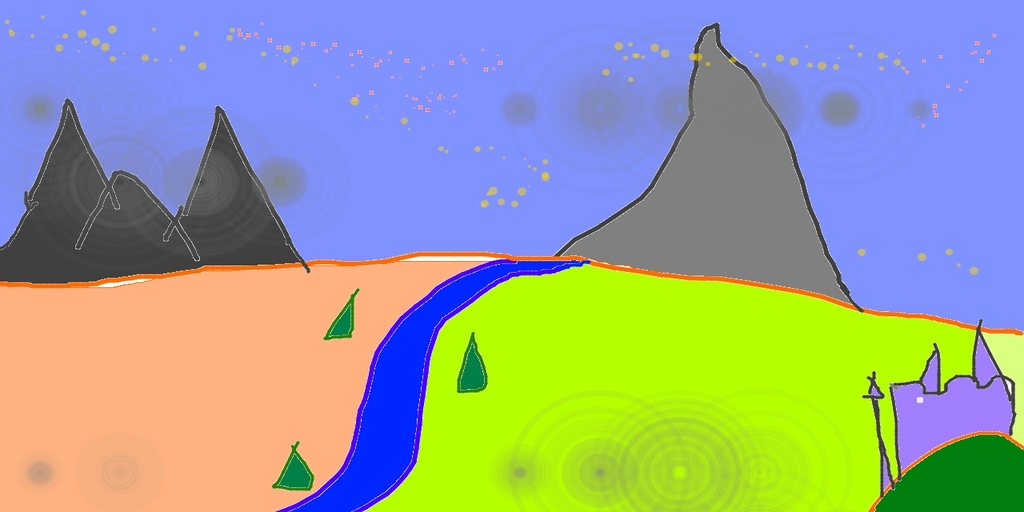
pipe = QwenImageImg2ImgPipeline.from_pretrained("Qwen/Qwen-Image", torch_dtype=torch.bfloat16) pipe = pipe.to("cuda") url = "https://raw.githubusercontent.com/CompVis/stable-diffusion/main/assets/stable-samples/img2img/sketch-mountains-input.jpg" init_image = load_image(url).resize((1024, 1024)) prompt = "cat wizard, gandalf, lord of the rings, detailed, fantasy, cute, adorable, Pixar, Disney" images = pipe(prompt=prompt, negative_prompt=" ", image=init_image, strength=0.95).images[0] images.save("qwenimage_img2img.png")
Disable sliced VAE decoding. If enable_vae_slicing was previously enabled, this method will go back to computing decoding in one step.
Disable tiled VAE decoding. If enable_vae_tiling was previously enabled, this method will go back to computing decoding in one step.
Enable sliced VAE decoding. When this option is enabled, the VAE will split the input tensor in slices to compute decoding in several steps. This is useful to save some memory and allow larger batch sizes.
Enable tiled VAE decoding. When this option is enabled, the VAE will split the input tensor into tiles to compute decoding and encoding in several steps. This is useful for saving a large amount of memory and to allow processing larger images.
encode_prompt
( prompt: typing.Union[str, typing.List[str]] device: typing.Optional[torch.device] = None num_images_per_prompt: int = 1 prompt_embeds: typing.Optional[torch.Tensor] = None prompt_embeds_mask: typing.Optional[torch.Tensor] = None max_sequence_length: int = 1024 )
Parameters
- prompt (
strorList[str], optional) — prompt to be encoded - device — (
torch.device): torch device - num_images_per_prompt (
int) — number of images that should be generated per prompt - prompt_embeds (
torch.Tensor, optional) — Pre-generated text embeddings. Can be used to easily tweak text inputs, e.g. prompt weighting. If not provided, text embeddings will be generated frompromptinput argument.
QwenImageInpaintPipeline
class diffusers.QwenImageInpaintPipeline
( scheduler: FlowMatchEulerDiscreteScheduler vae: AutoencoderKLQwenImage text_encoder: Qwen2_5_VLForConditionalGeneration tokenizer: Qwen2Tokenizer transformer: QwenImageTransformer2DModel )
Parameters
- transformer (QwenImageTransformer2DModel) — Conditional Transformer (MMDiT) architecture to denoise the encoded image latents.
- scheduler (FlowMatchEulerDiscreteScheduler) — A scheduler to be used in combination with
transformerto denoise the encoded image latents. - vae (AutoencoderKL) — Variational Auto-Encoder (VAE) Model to encode and decode images to and from latent representations.
- text_encoder (
Qwen2.5-VL-7B-Instruct) —Qwen2.5-VL-7B-Instruct, specifically theQwen2.5-VL-7B-Instruct variant. - tokenizer (
QwenTokenizer) — Tokenizer of classCLIPTokenizer.
The QwenImage pipeline for text-to-image generation.
__call__
( prompt: typing.Union[str, typing.List[str]] = None negative_prompt: typing.Union[str, typing.List[str]] = None true_cfg_scale: float = 4.0 image: typing.Union[PIL.Image.Image, numpy.ndarray, torch.Tensor, typing.List[PIL.Image.Image], typing.List[numpy.ndarray], typing.List[torch.Tensor]] = None mask_image: typing.Union[PIL.Image.Image, numpy.ndarray, torch.Tensor, typing.List[PIL.Image.Image], typing.List[numpy.ndarray], typing.List[torch.Tensor]] = None masked_image_latents: typing.Union[PIL.Image.Image, numpy.ndarray, torch.Tensor, typing.List[PIL.Image.Image], typing.List[numpy.ndarray], typing.List[torch.Tensor]] = None height: typing.Optional[int] = None width: typing.Optional[int] = None padding_mask_crop: typing.Optional[int] = None strength: float = 0.6 num_inference_steps: int = 50 sigmas: typing.Optional[typing.List[float]] = None guidance_scale: typing.Optional[float] = None num_images_per_prompt: int = 1 generator: typing.Union[torch._C.Generator, typing.List[torch._C.Generator], NoneType] = None latents: typing.Optional[torch.Tensor] = None prompt_embeds: typing.Optional[torch.Tensor] = None prompt_embeds_mask: typing.Optional[torch.Tensor] = None negative_prompt_embeds: typing.Optional[torch.Tensor] = None negative_prompt_embeds_mask: typing.Optional[torch.Tensor] = None output_type: typing.Optional[str] = 'pil' return_dict: bool = True attention_kwargs: typing.Optional[typing.Dict[str, typing.Any]] = None callback_on_step_end: typing.Optional[typing.Callable[[int, int, typing.Dict], NoneType]] = None callback_on_step_end_tensor_inputs: typing.List[str] = ['latents'] max_sequence_length: int = 512 ) → ~pipelines.qwenimage.QwenImagePipelineOutput or tuple
Parameters
- prompt (
strorList[str], optional) — The prompt or prompts to guide the image generation. If not defined, one has to passprompt_embeds. instead. - negative_prompt (
strorList[str], optional) — The prompt or prompts not to guide the image generation. If not defined, one has to passnegative_prompt_embedsinstead. Ignored when not using guidance (i.e., ignored iftrue_cfg_scaleis not greater than1). - image (
torch.Tensor,PIL.Image.Image,np.ndarray,List[torch.Tensor],List[PIL.Image.Image], orList[np.ndarray]) —Image, numpy array or tensor representing an image batch to be used as the starting point. For both numpy array and pytorch tensor, the expected value range is between[0, 1]If it’s a tensor or a list or tensors, the expected shape should be(B, C, H, W)or(C, H, W). If it is a numpy array or a list of arrays, the expected shape should be(B, H, W, C)or(H, W, C)It can also accept image latents asimage, but if passing latents directly it is not encoded again. - true_cfg_scale (
float, optional, defaults to 1.0) — Guidance scale as defined in Classifier-Free Diffusion Guidance.true_cfg_scaleis defined aswof equation 2. of Imagen Paper. Classifier-free guidance is enabled by settingtrue_cfg_scale > 1and a providednegative_prompt. Higher guidance scale encourages to generate images that are closely linked to the textprompt, usually at the expense of lower image quality. - mask_image (
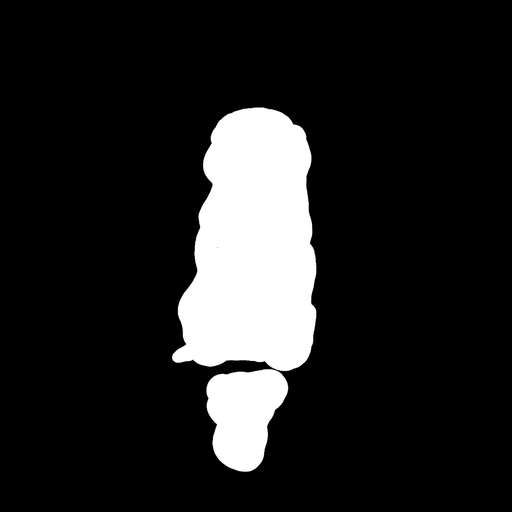
torch.Tensor,PIL.Image.Image,np.ndarray,List[torch.Tensor],List[PIL.Image.Image], orList[np.ndarray]) —Image, numpy array or tensor representing an image batch to maskimage. White pixels in the mask are repainted while black pixels are preserved. Ifmask_imageis a PIL image, it is converted to a single channel (luminance) before use. If it’s a numpy array or pytorch tensor, it should contain one color channel (L) instead of 3, so the expected shape for pytorch tensor would be(B, 1, H, W),(B, H, W),(1, H, W),(H, W). And for numpy array would be for(B, H, W, 1),(B, H, W),(H, W, 1), or(H, W). - mask_image_latent (
torch.Tensor,List[torch.Tensor]) —Tensorrepresenting an image batch to maskimagegenerated by VAE. If not provided, the mask latents tensor will be generated bymask_image. - height (
int, optional, defaults to self.unet.config.sample_size * self.vae_scale_factor) — The height in pixels of the generated image. This is set to 1024 by default for the best results. - width (
int, optional, defaults to self.unet.config.sample_size * self.vae_scale_factor) — The width in pixels of the generated image. This is set to 1024 by default for the best results. - padding_mask_crop (
int, optional, defaults toNone) — The size of margin in the crop to be applied to the image and masking. IfNone, no crop is applied to image and mask_image. Ifpadding_mask_cropis notNone, it will first find a rectangular region with the same aspect ration of the image and contains all masked area, and then expand that area based onpadding_mask_crop. The image and mask_image will then be cropped based on the expanded area before resizing to the original image size for inpainting. This is useful when the masked area is small while the image is large and contain information irrelevant for inpainting, such as background. - strength (
float, optional, defaults to 1.0) — Indicates extent to transform the referenceimage. Must be between 0 and 1.imageis used as a starting point and more noise is added the higher thestrength. The number of denoising steps depends on the amount of noise initially added. Whenstrengthis 1, added noise is maximum and the denoising process runs for the full number of iterations specified innum_inference_steps. A value of 1 essentially ignoresimage. - num_inference_steps (
int, optional, defaults to 50) — The number of denoising steps. More denoising steps usually lead to a higher quality image at the expense of slower inference. - sigmas (
List[float], optional) — Custom sigmas to use for the denoising process with schedulers which support asigmasargument in theirset_timestepsmethod. If not defined, the default behavior whennum_inference_stepsis passed will be used. - guidance_scale (
float, optional, defaults to None) — A guidance scale value for guidance distilled models. Unlike the traditional classifier-free guidance where the guidance scale is applied during inference through noise prediction rescaling, guidance distilled models take the guidance scale directly as an input parameter during forward pass. Guidance scale is enabled by settingguidance_scale > 1. Higher guidance scale encourages to generate images that are closely linked to the textprompt, usually at the expense of lower image quality. This parameter in the pipeline is there to support future guidance-distilled models when they come up. It is ignored when not using guidance distilled models. To enable traditional classifier-free guidance, please passtrue_cfg_scale > 1.0andnegative_prompt(even an empty negative prompt like ” ” should enable classifier-free guidance computations). - num_images_per_prompt (
int, optional, defaults to 1) — The number of images to generate per prompt. - generator (
torch.GeneratororList[torch.Generator], optional) — One or a list of torch generator(s)to make generation deterministic. - latents (
torch.Tensor, optional) — Pre-generated noisy latents, sampled from a Gaussian distribution, to be used as inputs for image generation. Can be used to tweak the same generation with different prompts. If not provided, a latents tensor will be generated by sampling using the supplied randomgenerator. - prompt_embeds (
torch.Tensor, optional) — Pre-generated text embeddings. Can be used to easily tweak text inputs, e.g. prompt weighting. If not provided, text embeddings will be generated frompromptinput argument. - negative_prompt_embeds (
torch.Tensor, optional) — Pre-generated negative text embeddings. Can be used to easily tweak text inputs, e.g. prompt weighting. If not provided, negative_prompt_embeds will be generated fromnegative_promptinput argument. - output_type (
str, optional, defaults to"pil") — The output format of the generate image. Choose betweenPIL:PIL.Image.Imageornp.array. - return_dict (
bool, optional, defaults toTrue) — Whether or not to return a~pipelines.qwenimage.QwenImagePipelineOutputinstead of a plain tuple. - attention_kwargs (
dict, optional) — A kwargs dictionary that if specified is passed along to theAttentionProcessoras defined underself.processorindiffusers.models.attention_processor. - callback_on_step_end (
Callable, optional) — A function that calls at the end of each denoising steps during the inference. The function is called with the following arguments:callback_on_step_end(self: DiffusionPipeline, step: int, timestep: int, callback_kwargs: Dict).callback_kwargswill include a list of all tensors as specified bycallback_on_step_end_tensor_inputs. - callback_on_step_end_tensor_inputs (
List, optional) — The list of tensor inputs for thecallback_on_step_endfunction. The tensors specified in the list will be passed ascallback_kwargsargument. You will only be able to include variables listed in the._callback_tensor_inputsattribute of your pipeline class. - max_sequence_length (
intdefaults to 512) — Maximum sequence length to use with theprompt.
Returns
~pipelines.qwenimage.QwenImagePipelineOutput or tuple
~pipelines.qwenimage.QwenImagePipelineOutput if return_dict is True, otherwise a tuple. When returning a tuple, the first element is a list with the generated images.
Function invoked when calling the pipeline for generation.
Examples:
import torch from diffusers import QwenImageInpaintPipeline from diffusers.utils import load_image
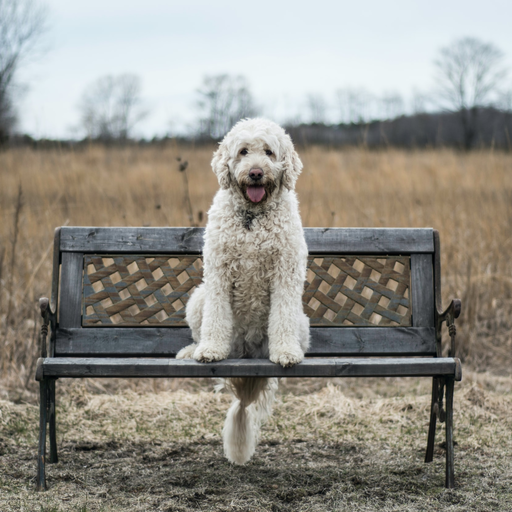
pipe = QwenImageInpaintPipeline.from_pretrained("Qwen/Qwen-Image", torch_dtype=torch.bfloat16) pipe.to("cuda") prompt = "Face of a yellow cat, high resolution, sitting on a park bench" img_url = "https://raw.githubusercontent.com/CompVis/latent-diffusion/main/data/inpainting_examples/overture-creations-5sI6fQgYIuo.png" mask_url = "https://raw.githubusercontent.com/CompVis/latent-diffusion/main/data/inpainting_examples/overture-creations-5sI6fQgYIuo_mask.png" source = load_image(img_url) mask = load_image(mask_url) image = pipe(prompt=prompt, negative_prompt=" ", image=source, mask_image=mask, strength=0.85).images[0] image.save("qwenimage_inpainting.png")
Disable sliced VAE decoding. If enable_vae_slicing was previously enabled, this method will go back to computing decoding in one step.
Disable tiled VAE decoding. If enable_vae_tiling was previously enabled, this method will go back to computing decoding in one step.
Enable sliced VAE decoding. When this option is enabled, the VAE will split the input tensor in slices to compute decoding in several steps. This is useful to save some memory and allow larger batch sizes.
Enable tiled VAE decoding. When this option is enabled, the VAE will split the input tensor into tiles to compute decoding and encoding in several steps. This is useful for saving a large amount of memory and to allow processing larger images.
encode_prompt
( prompt: typing.Union[str, typing.List[str]] device: typing.Optional[torch.device] = None num_images_per_prompt: int = 1 prompt_embeds: typing.Optional[torch.Tensor] = None prompt_embeds_mask: typing.Optional[torch.Tensor] = None max_sequence_length: int = 1024 )
Parameters
- prompt (
strorList[str], optional) — prompt to be encoded - device — (
torch.device): torch device - num_images_per_prompt (
int) — number of images that should be generated per prompt - prompt_embeds (
torch.Tensor, optional) — Pre-generated text embeddings. Can be used to easily tweak text inputs, e.g. prompt weighting. If not provided, text embeddings will be generated frompromptinput argument.
QwenImageEditPipeline
class diffusers.QwenImageEditPipeline
( scheduler: FlowMatchEulerDiscreteScheduler vae: AutoencoderKLQwenImage text_encoder: Qwen2_5_VLForConditionalGeneration tokenizer: Qwen2Tokenizer processor: Qwen2VLProcessor transformer: QwenImageTransformer2DModel )
Parameters
- transformer (QwenImageTransformer2DModel) — Conditional Transformer (MMDiT) architecture to denoise the encoded image latents.
- scheduler (FlowMatchEulerDiscreteScheduler) — A scheduler to be used in combination with
transformerto denoise the encoded image latents. - vae (AutoencoderKL) — Variational Auto-Encoder (VAE) Model to encode and decode images to and from latent representations.
- text_encoder (
Qwen2.5-VL-7B-Instruct) —Qwen2.5-VL-7B-Instruct, specifically theQwen2.5-VL-7B-Instruct variant. - tokenizer (
QwenTokenizer) — Tokenizer of classCLIPTokenizer.
The Qwen-Image-Edit pipeline for image editing.
__call__
( image: typing.Union[PIL.Image.Image, numpy.ndarray, torch.Tensor, typing.List[PIL.Image.Image], typing.List[numpy.ndarray], typing.List[torch.Tensor], NoneType] = None prompt: typing.Union[str, typing.List[str]] = None negative_prompt: typing.Union[str, typing.List[str]] = None true_cfg_scale: float = 4.0 height: typing.Optional[int] = None width: typing.Optional[int] = None num_inference_steps: int = 50 sigmas: typing.Optional[typing.List[float]] = None guidance_scale: typing.Optional[float] = None num_images_per_prompt: int = 1 generator: typing.Union[torch._C.Generator, typing.List[torch._C.Generator], NoneType] = None latents: typing.Optional[torch.Tensor] = None prompt_embeds: typing.Optional[torch.Tensor] = None prompt_embeds_mask: typing.Optional[torch.Tensor] = None negative_prompt_embeds: typing.Optional[torch.Tensor] = None negative_prompt_embeds_mask: typing.Optional[torch.Tensor] = None output_type: typing.Optional[str] = 'pil' return_dict: bool = True attention_kwargs: typing.Optional[typing.Dict[str, typing.Any]] = None callback_on_step_end: typing.Optional[typing.Callable[[int, int, typing.Dict], NoneType]] = None callback_on_step_end_tensor_inputs: typing.List[str] = ['latents'] max_sequence_length: int = 512 ) → ~pipelines.qwenimage.QwenImagePipelineOutput or tuple
Parameters
- image (
torch.Tensor,PIL.Image.Image,np.ndarray,List[torch.Tensor],List[PIL.Image.Image], orList[np.ndarray]) —Image, numpy array or tensor representing an image batch to be used as the starting point. For both numpy array and pytorch tensor, the expected value range is between[0, 1]If it’s a tensor or a list or tensors, the expected shape should be(B, C, H, W)or(C, H, W). If it is a numpy array or a list of arrays, the expected shape should be(B, H, W, C)or(H, W, C)It can also accept image latents asimage, but if passing latents directly it is not encoded again. - prompt (
strorList[str], optional) — The prompt or prompts to guide the image generation. If not defined, one has to passprompt_embeds. instead. - negative_prompt (
strorList[str], optional) — The prompt or prompts not to guide the image generation. If not defined, one has to passnegative_prompt_embedsinstead. Ignored when not using guidance (i.e., ignored iftrue_cfg_scaleis not greater than1). - true_cfg_scale (
float, optional, defaults to 1.0) — true_cfg_scale (float, optional, defaults to 1.0): Guidance scale as defined in Classifier-Free Diffusion Guidance.true_cfg_scaleis defined aswof equation 2. of Imagen Paper. Classifier-free guidance is enabled by settingtrue_cfg_scale > 1and a providednegative_prompt. Higher guidance scale encourages to generate images that are closely linked to the textprompt, usually at the expense of lower image quality. - height (
int, optional, defaults to self.unet.config.sample_size * self.vae_scale_factor) — The height in pixels of the generated image. This is set to 1024 by default for the best results. - width (
int, optional, defaults to self.unet.config.sample_size * self.vae_scale_factor) — The width in pixels of the generated image. This is set to 1024 by default for the best results. - num_inference_steps (
int, optional, defaults to 50) — The number of denoising steps. More denoising steps usually lead to a higher quality image at the expense of slower inference. - sigmas (
List[float], optional) — Custom sigmas to use for the denoising process with schedulers which support asigmasargument in theirset_timestepsmethod. If not defined, the default behavior whennum_inference_stepsis passed will be used. - guidance_scale (
float, optional, defaults to None) — A guidance scale value for guidance distilled models. Unlike the traditional classifier-free guidance where the guidance scale is applied during inference through noise prediction rescaling, guidance distilled models take the guidance scale directly as an input parameter during forward pass. Guidance scale is enabled by settingguidance_scale > 1. Higher guidance scale encourages to generate images that are closely linked to the textprompt, usually at the expense of lower image quality. This parameter in the pipeline is there to support future guidance-distilled models when they come up. It is ignored when not using guidance distilled models. To enable traditional classifier-free guidance, please passtrue_cfg_scale > 1.0andnegative_prompt(even an empty negative prompt like ” ” should enable classifier-free guidance computations). - num_images_per_prompt (
int, optional, defaults to 1) — The number of images to generate per prompt. - generator (
torch.GeneratororList[torch.Generator], optional) — One or a list of torch generator(s)to make generation deterministic. - latents (
torch.Tensor, optional) — Pre-generated noisy latents, sampled from a Gaussian distribution, to be used as inputs for image generation. Can be used to tweak the same generation with different prompts. If not provided, a latents tensor will be generated by sampling using the supplied randomgenerator. - prompt_embeds (
torch.Tensor, optional) — Pre-generated text embeddings. Can be used to easily tweak text inputs, e.g. prompt weighting. If not provided, text embeddings will be generated frompromptinput argument. - negative_prompt_embeds (
torch.Tensor, optional) — Pre-generated negative text embeddings. Can be used to easily tweak text inputs, e.g. prompt weighting. If not provided, negative_prompt_embeds will be generated fromnegative_promptinput argument. - output_type (
str, optional, defaults to"pil") — The output format of the generate image. Choose betweenPIL:PIL.Image.Imageornp.array. - return_dict (
bool, optional, defaults toTrue) — Whether or not to return a~pipelines.qwenimage.QwenImagePipelineOutputinstead of a plain tuple. - attention_kwargs (
dict, optional) — A kwargs dictionary that if specified is passed along to theAttentionProcessoras defined underself.processorindiffusers.models.attention_processor. - callback_on_step_end (
Callable, optional) — A function that calls at the end of each denoising steps during the inference. The function is called with the following arguments:callback_on_step_end(self: DiffusionPipeline, step: int, timestep: int, callback_kwargs: Dict).callback_kwargswill include a list of all tensors as specified bycallback_on_step_end_tensor_inputs. - callback_on_step_end_tensor_inputs (
List, optional) — The list of tensor inputs for thecallback_on_step_endfunction. The tensors specified in the list will be passed ascallback_kwargsargument. You will only be able to include variables listed in the._callback_tensor_inputsattribute of your pipeline class. - max_sequence_length (
intdefaults to 512) — Maximum sequence length to use with theprompt.
Returns
~pipelines.qwenimage.QwenImagePipelineOutput or tuple
~pipelines.qwenimage.QwenImagePipelineOutput if return_dict is True, otherwise a tuple. When returning a tuple, the first element is a list with the generated images.
Function invoked when calling the pipeline for generation.
Examples:
import torch from PIL import Image from diffusers import QwenImageEditPipeline from diffusers.utils import load_image
pipe = QwenImageEditPipeline.from_pretrained("Qwen/Qwen-Image-Edit", torch_dtype=torch.bfloat16) pipe.to("cuda") image = load_image( ... "https://huggingface.co/datasets/huggingface/documentation-images/resolve/main/diffusers/yarn-art-pikachu.png" ... ).convert("RGB") prompt = ( ... "Make Pikachu hold a sign that says 'Qwen Edit is awesome', yarn art style, detailed, vibrant colors" ... )
image = pipe(image, prompt, num_inference_steps=50).images[0] image.save("qwenimage_edit.png")

Disable sliced VAE decoding. If enable_vae_slicing was previously enabled, this method will go back to computing decoding in one step.
Disable tiled VAE decoding. If enable_vae_tiling was previously enabled, this method will go back to computing decoding in one step.
Enable sliced VAE decoding. When this option is enabled, the VAE will split the input tensor in slices to compute decoding in several steps. This is useful to save some memory and allow larger batch sizes.
Enable tiled VAE decoding. When this option is enabled, the VAE will split the input tensor into tiles to compute decoding and encoding in several steps. This is useful for saving a large amount of memory and to allow processing larger images.
encode_prompt
( prompt: typing.Union[str, typing.List[str]] image: typing.Optional[torch.Tensor] = None device: typing.Optional[torch.device] = None num_images_per_prompt: int = 1 prompt_embeds: typing.Optional[torch.Tensor] = None prompt_embeds_mask: typing.Optional[torch.Tensor] = None max_sequence_length: int = 1024 )
Parameters
- prompt (
strorList[str], optional) — prompt to be encoded - image (
torch.Tensor, optional) — image to be encoded - device — (
torch.device): torch device - num_images_per_prompt (
int) — number of images that should be generated per prompt - prompt_embeds (
torch.Tensor, optional) — Pre-generated text embeddings. Can be used to easily tweak text inputs, e.g. prompt weighting. If not provided, text embeddings will be generated frompromptinput argument.
QwenImageEditInpaintPipeline
class diffusers.QwenImageEditInpaintPipeline
( scheduler: FlowMatchEulerDiscreteScheduler vae: AutoencoderKLQwenImage text_encoder: Qwen2_5_VLForConditionalGeneration tokenizer: Qwen2Tokenizer processor: Qwen2VLProcessor transformer: QwenImageTransformer2DModel )
Parameters
- transformer (QwenImageTransformer2DModel) — Conditional Transformer (MMDiT) architecture to denoise the encoded image latents.
- scheduler (FlowMatchEulerDiscreteScheduler) — A scheduler to be used in combination with
transformerto denoise the encoded image latents. - vae (AutoencoderKL) — Variational Auto-Encoder (VAE) Model to encode and decode images to and from latent representations.
- text_encoder (
Qwen2.5-VL-7B-Instruct) —Qwen2.5-VL-7B-Instruct, specifically theQwen2.5-VL-7B-Instruct variant. - tokenizer (
QwenTokenizer) — Tokenizer of classCLIPTokenizer.
The Qwen-Image-Edit pipeline for image editing.
__call__
( image: typing.Union[PIL.Image.Image, numpy.ndarray, torch.Tensor, typing.List[PIL.Image.Image], typing.List[numpy.ndarray], typing.List[torch.Tensor], NoneType] = None prompt: typing.Union[str, typing.List[str]] = None negative_prompt: typing.Union[str, typing.List[str]] = None mask_image: typing.Union[PIL.Image.Image, numpy.ndarray, torch.Tensor, typing.List[PIL.Image.Image], typing.List[numpy.ndarray], typing.List[torch.Tensor]] = None masked_image_latents: typing.Union[PIL.Image.Image, numpy.ndarray, torch.Tensor, typing.List[PIL.Image.Image], typing.List[numpy.ndarray], typing.List[torch.Tensor]] = None true_cfg_scale: float = 4.0 height: typing.Optional[int] = None width: typing.Optional[int] = None padding_mask_crop: typing.Optional[int] = None strength: float = 0.6 num_inference_steps: int = 50 sigmas: typing.Optional[typing.List[float]] = None guidance_scale: typing.Optional[float] = None num_images_per_prompt: int = 1 generator: typing.Union[torch._C.Generator, typing.List[torch._C.Generator], NoneType] = None latents: typing.Optional[torch.Tensor] = None prompt_embeds: typing.Optional[torch.Tensor] = None prompt_embeds_mask: typing.Optional[torch.Tensor] = None negative_prompt_embeds: typing.Optional[torch.Tensor] = None negative_prompt_embeds_mask: typing.Optional[torch.Tensor] = None output_type: typing.Optional[str] = 'pil' return_dict: bool = True attention_kwargs: typing.Optional[typing.Dict[str, typing.Any]] = None callback_on_step_end: typing.Optional[typing.Callable[[int, int, typing.Dict], NoneType]] = None callback_on_step_end_tensor_inputs: typing.List[str] = ['latents'] max_sequence_length: int = 512 ) → ~pipelines.qwenimage.QwenImagePipelineOutput or tuple
Parameters
- image (
torch.Tensor,PIL.Image.Image,np.ndarray,List[torch.Tensor],List[PIL.Image.Image], orList[np.ndarray]) —Image, numpy array or tensor representing an image batch to be used as the starting point. For both numpy array and pytorch tensor, the expected value range is between[0, 1]If it’s a tensor or a list or tensors, the expected shape should be(B, C, H, W)or(C, H, W). If it is a numpy array or a list of arrays, the expected shape should be(B, H, W, C)or(H, W, C)It can also accept image latents asimage, but if passing latents directly it is not encoded again. - prompt (
strorList[str], optional) — The prompt or prompts to guide the image generation. If not defined, one has to passprompt_embeds. instead. - negative_prompt (
strorList[str], optional) — The prompt or prompts not to guide the image generation. If not defined, one has to passnegative_prompt_embedsinstead. Ignored when not using guidance (i.e., ignored iftrue_cfg_scaleis not greater than1). - true_cfg_scale (
float, optional, defaults to 1.0) — true_cfg_scale (float, optional, defaults to 1.0): Guidance scale as defined in Classifier-Free Diffusion Guidance.true_cfg_scaleis defined aswof equation 2. of Imagen Paper. Classifier-free guidance is enabled by settingtrue_cfg_scale > 1and a providednegative_prompt. Higher guidance scale encourages to generate images that are closely linked to the textprompt, usually at the expense of lower image quality. - mask_image (
torch.Tensor,PIL.Image.Image,np.ndarray,List[torch.Tensor],List[PIL.Image.Image], orList[np.ndarray]) —Image, numpy array or tensor representing an image batch to maskimage. White pixels in the mask are repainted while black pixels are preserved. Ifmask_imageis a PIL image, it is converted to a single channel (luminance) before use. If it’s a numpy array or pytorch tensor, it should contain one color channel (L) instead of 3, so the expected shape for pytorch tensor would be(B, 1, H, W),(B, H, W),(1, H, W),(H, W). And for numpy array would be for(B, H, W, 1),(B, H, W),(H, W, 1), or(H, W). - mask_image_latent (
torch.Tensor,List[torch.Tensor]) —Tensorrepresenting an image batch to maskimagegenerated by VAE. If not provided, the mask latents tensor will ge generated bymask_image. - height (
int, optional, defaults to self.unet.config.sample_size * self.vae_scale_factor) — The height in pixels of the generated image. This is set to 1024 by default for the best results. - width (
int, optional, defaults to self.unet.config.sample_size * self.vae_scale_factor) — The width in pixels of the generated image. This is set to 1024 by default for the best results. - padding_mask_crop (
int, optional, defaults toNone) — The size of margin in the crop to be applied to the image and masking. IfNone, no crop is applied to image and mask_image. Ifpadding_mask_cropis notNone, it will first find a rectangular region with the same aspect ration of the image and contains all masked area, and then expand that area based onpadding_mask_crop. The image and mask_image will then be cropped based on the expanded area before resizing to the original image size for inpainting. This is useful when the masked area is small while the image is large and contain information irrelevant for inpainting, such as background. - strength (
float, optional, defaults to 1.0) — Indicates extent to transform the referenceimage. Must be between 0 and 1.imageis used as a starting point and more noise is added the higher thestrength. The number of denoising steps depends on the amount of noise initially added. Whenstrengthis 1, added noise is maximum and the denoising process runs for the full number of iterations specified innum_inference_steps. A value of 1 essentially ignoresimage. - num_inference_steps (
int, optional, defaults to 50) — The number of denoising steps. More denoising steps usually lead to a higher quality image at the expense of slower inference. - sigmas (
List[float], optional) — Custom sigmas to use for the denoising process with schedulers which support asigmasargument in theirset_timestepsmethod. If not defined, the default behavior whennum_inference_stepsis passed will be used. - guidance_scale (
float, optional, defaults to None) — A guidance scale value for guidance distilled models. Unlike the traditional classifier-free guidance where the guidance scale is applied during inference through noise prediction rescaling, guidance distilled models take the guidance scale directly as an input parameter during forward pass. Guidance scale is enabled by settingguidance_scale > 1. Higher guidance scale encourages to generate images that are closely linked to the textprompt, usually at the expense of lower image quality. This parameter in the pipeline is there to support future guidance-distilled models when they come up. It is ignored when not using guidance distilled models. To enable traditional classifier-free guidance, please passtrue_cfg_scale > 1.0andnegative_prompt(even an empty negative prompt like ” ” should enable classifier-free guidance computations). - num_images_per_prompt (
int, optional, defaults to 1) — The number of images to generate per prompt. - generator (
torch.GeneratororList[torch.Generator], optional) — One or a list of torch generator(s)to make generation deterministic. - latents (
torch.Tensor, optional) — Pre-generated noisy latents, sampled from a Gaussian distribution, to be used as inputs for image generation. Can be used to tweak the same generation with different prompts. If not provided, a latents tensor will be generated by sampling using the supplied randomgenerator. - prompt_embeds (
torch.Tensor, optional) — Pre-generated text embeddings. Can be used to easily tweak text inputs, e.g. prompt weighting. If not provided, text embeddings will be generated frompromptinput argument. - negative_prompt_embeds (
torch.Tensor, optional) — Pre-generated negative text embeddings. Can be used to easily tweak text inputs, e.g. prompt weighting. If not provided, negative_prompt_embeds will be generated fromnegative_promptinput argument. - output_type (
str, optional, defaults to"pil") — The output format of the generate image. Choose betweenPIL:PIL.Image.Imageornp.array. - return_dict (
bool, optional, defaults toTrue) — Whether or not to return a~pipelines.qwenimage.QwenImagePipelineOutputinstead of a plain tuple. - attention_kwargs (
dict, optional) — A kwargs dictionary that if specified is passed along to theAttentionProcessoras defined underself.processorindiffusers.models.attention_processor. - callback_on_step_end (
Callable, optional) — A function that calls at the end of each denoising steps during the inference. The function is called with the following arguments:callback_on_step_end(self: DiffusionPipeline, step: int, timestep: int, callback_kwargs: Dict).callback_kwargswill include a list of all tensors as specified bycallback_on_step_end_tensor_inputs. - callback_on_step_end_tensor_inputs (
List, optional) — The list of tensor inputs for thecallback_on_step_endfunction. The tensors specified in the list will be passed ascallback_kwargsargument. You will only be able to include variables listed in the._callback_tensor_inputsattribute of your pipeline class. - max_sequence_length (
intdefaults to 512) — Maximum sequence length to use with theprompt.
Returns
~pipelines.qwenimage.QwenImagePipelineOutput or tuple
~pipelines.qwenimage.QwenImagePipelineOutput if return_dict is True, otherwise a tuple. When returning a tuple, the first element is a list with the generated images.
Function invoked when calling the pipeline for generation.
Examples:
import torch from PIL import Image from diffusers import QwenImageEditInpaintPipeline from diffusers.utils import load_image
pipe = QwenImageEditInpaintPipeline.from_pretrained("Qwen/Qwen-Image-Edit", torch_dtype=torch.bfloat16) pipe.to("cuda") prompt = "Face of a yellow cat, high resolution, sitting on a park bench"
img_url = "https://raw.githubusercontent.com/CompVis/latent-diffusion/main/data/inpainting_examples/overture-creations-5sI6fQgYIuo.png" mask_url = "https://raw.githubusercontent.com/CompVis/latent-diffusion/main/data/inpainting_examples/overture-creations-5sI6fQgYIuo_mask.png" source = load_image(img_url) mask = load_image(mask_url) image = pipe( ... prompt=prompt, negative_prompt=" ", image=source, mask_image=mask, strength=1.0, num_inference_steps=50 ... ).images[0] image.save("qwenimage_inpainting.png")
Disable sliced VAE decoding. If enable_vae_slicing was previously enabled, this method will go back to computing decoding in one step.
Disable tiled VAE decoding. If enable_vae_tiling was previously enabled, this method will go back to computing decoding in one step.
Enable sliced VAE decoding. When this option is enabled, the VAE will split the input tensor in slices to compute decoding in several steps. This is useful to save some memory and allow larger batch sizes.
Enable tiled VAE decoding. When this option is enabled, the VAE will split the input tensor into tiles to compute decoding and encoding in several steps. This is useful for saving a large amount of memory and to allow processing larger images.
encode_prompt
( prompt: typing.Union[str, typing.List[str]] image: typing.Optional[torch.Tensor] = None device: typing.Optional[torch.device] = None num_images_per_prompt: int = 1 prompt_embeds: typing.Optional[torch.Tensor] = None prompt_embeds_mask: typing.Optional[torch.Tensor] = None max_sequence_length: int = 1024 )
Parameters
- prompt (
strorList[str], optional) — prompt to be encoded - image (
torch.Tensor, optional) — image to be encoded - device — (
torch.device): torch device - num_images_per_prompt (
int) — number of images that should be generated per prompt - prompt_embeds (
torch.Tensor, optional) — Pre-generated text embeddings. Can be used to easily tweak text inputs, e.g. prompt weighting. If not provided, text embeddings will be generated frompromptinput argument.
QwenImageControlNetPipeline
class diffusers.QwenImageControlNetPipeline
( scheduler: FlowMatchEulerDiscreteScheduler vae: AutoencoderKLQwenImage text_encoder: Qwen2_5_VLForConditionalGeneration tokenizer: Qwen2Tokenizer transformer: QwenImageTransformer2DModel controlnet: typing.Union[diffusers.models.controlnets.controlnet_qwenimage.QwenImageControlNetModel, diffusers.models.controlnets.controlnet_qwenimage.QwenImageMultiControlNetModel] )
Parameters
- transformer (QwenImageTransformer2DModel) — Conditional Transformer (MMDiT) architecture to denoise the encoded image latents.
- scheduler (FlowMatchEulerDiscreteScheduler) — A scheduler to be used in combination with
transformerto denoise the encoded image latents. - vae (AutoencoderKL) — Variational Auto-Encoder (VAE) Model to encode and decode images to and from latent representations.
- text_encoder (
Qwen2.5-VL-7B-Instruct) —Qwen2.5-VL-7B-Instruct, specifically theQwen2.5-VL-7B-Instruct variant. - tokenizer (
QwenTokenizer) — Tokenizer of classCLIPTokenizer.
The QwenImage pipeline for text-to-image generation.
__call__
( prompt: typing.Union[str, typing.List[str]] = None negative_prompt: typing.Union[str, typing.List[str]] = None true_cfg_scale: float = 4.0 height: typing.Optional[int] = None width: typing.Optional[int] = None num_inference_steps: int = 50 sigmas: typing.Optional[typing.List[float]] = None guidance_scale: typing.Optional[float] = None control_guidance_start: typing.Union[float, typing.List[float]] = 0.0 control_guidance_end: typing.Union[float, typing.List[float]] = 1.0 control_image: typing.Union[PIL.Image.Image, numpy.ndarray, torch.Tensor, typing.List[PIL.Image.Image], typing.List[numpy.ndarray], typing.List[torch.Tensor]] = None controlnet_conditioning_scale: typing.Union[float, typing.List[float]] = 1.0 num_images_per_prompt: int = 1 generator: typing.Union[torch._C.Generator, typing.List[torch._C.Generator], NoneType] = None latents: typing.Optional[torch.Tensor] = None prompt_embeds: typing.Optional[torch.Tensor] = None prompt_embeds_mask: typing.Optional[torch.Tensor] = None negative_prompt_embeds: typing.Optional[torch.Tensor] = None negative_prompt_embeds_mask: typing.Optional[torch.Tensor] = None output_type: typing.Optional[str] = 'pil' return_dict: bool = True attention_kwargs: typing.Optional[typing.Dict[str, typing.Any]] = None callback_on_step_end: typing.Optional[typing.Callable[[int, int, typing.Dict], NoneType]] = None callback_on_step_end_tensor_inputs: typing.List[str] = ['latents'] max_sequence_length: int = 512 ) → ~pipelines.qwenimage.QwenImagePipelineOutput or tuple
Parameters
- prompt (
strorList[str], optional) — The prompt or prompts to guide the image generation. If not defined, one has to passprompt_embeds. instead. - negative_prompt (
strorList[str], optional) — The prompt or prompts not to guide the image generation. If not defined, one has to passnegative_prompt_embedsinstead. Ignored when not using guidance (i.e., ignored iftrue_cfg_scaleis not greater than1). - true_cfg_scale (
float, optional, defaults to 1.0) — Guidance scale as defined in Classifier-Free Diffusion Guidance.true_cfg_scaleis defined aswof equation 2. of Imagen Paper. Classifier-free guidance is enabled by settingtrue_cfg_scale > 1and a providednegative_prompt. Higher guidance scale encourages to generate images that are closely linked to the textprompt, usually at the expense of lower image quality. - height (
int, optional, defaults to self.unet.config.sample_size * self.vae_scale_factor) — The height in pixels of the generated image. This is set to 1024 by default for the best results. - width (
int, optional, defaults to self.unet.config.sample_size * self.vae_scale_factor) — The width in pixels of the generated image. This is set to 1024 by default for the best results. - num_inference_steps (
int, optional, defaults to 50) — The number of denoising steps. More denoising steps usually lead to a higher quality image at the expense of slower inference. - sigmas (
List[float], optional) — Custom sigmas to use for the denoising process with schedulers which support asigmasargument in theirset_timestepsmethod. If not defined, the default behavior whennum_inference_stepsis passed will be used. - guidance_scale (
float, optional, defaults to None) — A guidance scale value for guidance distilled models. Unlike the traditional classifier-free guidance where the guidance scale is applied during inference through noise prediction rescaling, guidance distilled models take the guidance scale directly as an input parameter during forward pass. Guidance scale is enabled by settingguidance_scale > 1. Higher guidance scale encourages to generate images that are closely linked to the textprompt, usually at the expense of lower image quality. This parameter in the pipeline is there to support future guidance-distilled models when they come up. It is ignored when not using guidance distilled models. To enable traditional classifier-free guidance, please passtrue_cfg_scale > 1.0andnegative_prompt(even an empty negative prompt like ” ” should enable classifier-free guidance computations). - num_images_per_prompt (
int, optional, defaults to 1) — The number of images to generate per prompt. - generator (
torch.GeneratororList[torch.Generator], optional) — One or a list of torch generator(s)to make generation deterministic. - latents (
torch.Tensor, optional) — Pre-generated noisy latents, sampled from a Gaussian distribution, to be used as inputs for image generation. Can be used to tweak the same generation with different prompts. If not provided, a latents tensor will be generated by sampling using the supplied randomgenerator. - prompt_embeds (
torch.Tensor, optional) — Pre-generated text embeddings. Can be used to easily tweak text inputs, e.g. prompt weighting. If not provided, text embeddings will be generated frompromptinput argument. - negative_prompt_embeds (
torch.Tensor, optional) — Pre-generated negative text embeddings. Can be used to easily tweak text inputs, e.g. prompt weighting. If not provided, negative_prompt_embeds will be generated fromnegative_promptinput argument. - output_type (
str, optional, defaults to"pil") — The output format of the generate image. Choose betweenPIL:PIL.Image.Imageornp.array. - return_dict (
bool, optional, defaults toTrue) — Whether or not to return a~pipelines.qwenimage.QwenImagePipelineOutputinstead of a plain tuple. - attention_kwargs (
dict, optional) — A kwargs dictionary that if specified is passed along to theAttentionProcessoras defined underself.processorindiffusers.models.attention_processor. - callback_on_step_end (
Callable, optional) — A function that calls at the end of each denoising steps during the inference. The function is called with the following arguments:callback_on_step_end(self: DiffusionPipeline, step: int, timestep: int, callback_kwargs: Dict).callback_kwargswill include a list of all tensors as specified bycallback_on_step_end_tensor_inputs. - callback_on_step_end_tensor_inputs (
List, optional) — The list of tensor inputs for thecallback_on_step_endfunction. The tensors specified in the list will be passed ascallback_kwargsargument. You will only be able to include variables listed in the._callback_tensor_inputsattribute of your pipeline class. - max_sequence_length (
intdefaults to 512) — Maximum sequence length to use with theprompt.
Returns
~pipelines.qwenimage.QwenImagePipelineOutput or tuple
~pipelines.qwenimage.QwenImagePipelineOutput if return_dict is True, otherwise a tuple. When returning a tuple, the first element is a list with the generated images.
Function invoked when calling the pipeline for generation.
Examples:
import torch from diffusers.utils import load_image from diffusers import QwenImageControlNetModel, QwenImageMultiControlNetModel, QwenImageControlNetPipeline
controlnet = QwenImageControlNetModel.from_pretrained( ... "InstantX/Qwen-Image-ControlNet-Union", torch_dtype=torch.bfloat16 ... ) pipe = QwenImageControlNetPipeline.from_pretrained( ... "Qwen/Qwen-Image", controlnet=controlnet, torch_dtype=torch.bfloat16 ... ) pipe.to("cuda") prompt = "Aesthetics art, traditional asian pagoda, elaborate golden accents, sky blue and white color palette, swirling cloud pattern, digital illustration, east asian architecture, ornamental rooftop, intricate detailing on building, cultural representation." negative_prompt = " " control_image = load_image( ... "https://huggingface.co/InstantX/Qwen-Image-ControlNet-Union/resolve/main/conds/canny.png" ... )
image = pipe( ... prompt, ... negative_prompt=negative_prompt, ... control_image=control_image, ... controlnet_conditioning_scale=1.0, ... num_inference_steps=30, ... true_cfg_scale=4.0, ... ).images[0] image.save("qwenimage_cn_union.png")

controlnet = QwenImageControlNetModel.from_pretrained( ... "InstantX/Qwen-Image-ControlNet-Union", torch_dtype=torch.bfloat16 ... ) controlnet = QwenImageMultiControlNetModel([controlnet]) pipe = QwenImageControlNetPipeline.from_pretrained( ... "Qwen/Qwen-Image", controlnet=controlnet, torch_dtype=torch.bfloat16 ... ) pipe.to("cuda") prompt = "Aesthetics art, traditional asian pagoda, elaborate golden accents, sky blue and white color palette, swirling cloud pattern, digital illustration, east asian architecture, ornamental rooftop, intricate detailing on building, cultural representation." negative_prompt = " " control_image = load_image( ... "https://huggingface.co/InstantX/Qwen-Image-ControlNet-Union/resolve/main/conds/canny.png" ... )
image = pipe( ... prompt, ... negative_prompt=negative_prompt, ... control_image=[control_image, control_image], ... controlnet_conditioning_scale=[0.5, 0.5], ... num_inference_steps=30, ... true_cfg_scale=4.0, ... ).images[0] image.save("qwenimage_cn_union_multi.png")
Disable sliced VAE decoding. If enable_vae_slicing was previously enabled, this method will go back to computing decoding in one step.
Disable tiled VAE decoding. If enable_vae_tiling was previously enabled, this method will go back to computing decoding in one step.
Enable sliced VAE decoding. When this option is enabled, the VAE will split the input tensor in slices to compute decoding in several steps. This is useful to save some memory and allow larger batch sizes.
Enable tiled VAE decoding. When this option is enabled, the VAE will split the input tensor into tiles to compute decoding and encoding in several steps. This is useful for saving a large amount of memory and to allow processing larger images.
encode_prompt
( prompt: typing.Union[str, typing.List[str]] device: typing.Optional[torch.device] = None num_images_per_prompt: int = 1 prompt_embeds: typing.Optional[torch.Tensor] = None prompt_embeds_mask: typing.Optional[torch.Tensor] = None max_sequence_length: int = 1024 )
Parameters
- prompt (
strorList[str], optional) — prompt to be encoded - device — (
torch.device): torch device - num_images_per_prompt (
int) — number of images that should be generated per prompt - prompt_embeds (
torch.Tensor, optional) — Pre-generated text embeddings. Can be used to easily tweak text inputs, e.g. prompt weighting. If not provided, text embeddings will be generated frompromptinput argument.
QwenImageEditPlusPipeline
class diffusers.QwenImageEditPlusPipeline
( scheduler: FlowMatchEulerDiscreteScheduler vae: AutoencoderKLQwenImage text_encoder: Qwen2_5_VLForConditionalGeneration tokenizer: Qwen2Tokenizer processor: Qwen2VLProcessor transformer: QwenImageTransformer2DModel )
Parameters
- transformer (QwenImageTransformer2DModel) — Conditional Transformer (MMDiT) architecture to denoise the encoded image latents.
- scheduler (FlowMatchEulerDiscreteScheduler) — A scheduler to be used in combination with
transformerto denoise the encoded image latents. - vae (AutoencoderKL) — Variational Auto-Encoder (VAE) Model to encode and decode images to and from latent representations.
- text_encoder (
Qwen2.5-VL-7B-Instruct) —Qwen2.5-VL-7B-Instruct, specifically theQwen2.5-VL-7B-Instruct variant. - tokenizer (
QwenTokenizer) — Tokenizer of classCLIPTokenizer.
The Qwen-Image-Edit pipeline for image editing.
__call__
( image: typing.Union[PIL.Image.Image, numpy.ndarray, torch.Tensor, typing.List[PIL.Image.Image], typing.List[numpy.ndarray], typing.List[torch.Tensor], NoneType] = None prompt: typing.Union[str, typing.List[str]] = None negative_prompt: typing.Union[str, typing.List[str]] = None true_cfg_scale: float = 4.0 height: typing.Optional[int] = None width: typing.Optional[int] = None num_inference_steps: int = 50 sigmas: typing.Optional[typing.List[float]] = None guidance_scale: typing.Optional[float] = None num_images_per_prompt: int = 1 generator: typing.Union[torch._C.Generator, typing.List[torch._C.Generator], NoneType] = None latents: typing.Optional[torch.Tensor] = None prompt_embeds: typing.Optional[torch.Tensor] = None prompt_embeds_mask: typing.Optional[torch.Tensor] = None negative_prompt_embeds: typing.Optional[torch.Tensor] = None negative_prompt_embeds_mask: typing.Optional[torch.Tensor] = None output_type: typing.Optional[str] = 'pil' return_dict: bool = True attention_kwargs: typing.Optional[typing.Dict[str, typing.Any]] = None callback_on_step_end: typing.Optional[typing.Callable[[int, int, typing.Dict], NoneType]] = None callback_on_step_end_tensor_inputs: typing.List[str] = ['latents'] max_sequence_length: int = 512 ) → ~pipelines.qwenimage.QwenImagePipelineOutput or tuple
Parameters
- image (
torch.Tensor,PIL.Image.Image,np.ndarray,List[torch.Tensor],List[PIL.Image.Image], orList[np.ndarray]) —Image, numpy array or tensor representing an image batch to be used as the starting point. For both numpy array and pytorch tensor, the expected value range is between[0, 1]If it’s a tensor or a list or tensors, the expected shape should be(B, C, H, W)or(C, H, W). If it is a numpy array or a list of arrays, the expected shape should be(B, H, W, C)or(H, W, C)It can also accept image latents asimage, but if passing latents directly it is not encoded again. - prompt (
strorList[str], optional) — The prompt or prompts to guide the image generation. If not defined, one has to passprompt_embeds. instead. - negative_prompt (
strorList[str], optional) — The prompt or prompts not to guide the image generation. If not defined, one has to passnegative_prompt_embedsinstead. Ignored when not using guidance (i.e., ignored iftrue_cfg_scaleis not greater than1). - true_cfg_scale (
float, optional, defaults to 1.0) — true_cfg_scale (float, optional, defaults to 1.0): Guidance scale as defined in Classifier-Free Diffusion Guidance.true_cfg_scaleis defined aswof equation 2. of Imagen Paper. Classifier-free guidance is enabled by settingtrue_cfg_scale > 1and a providednegative_prompt. Higher guidance scale encourages to generate images that are closely linked to the textprompt, usually at the expense of lower image quality. - height (
int, optional, defaults to self.unet.config.sample_size * self.vae_scale_factor) — The height in pixels of the generated image. This is set to 1024 by default for the best results. - width (
int, optional, defaults to self.unet.config.sample_size * self.vae_scale_factor) — The width in pixels of the generated image. This is set to 1024 by default for the best results. - num_inference_steps (
int, optional, defaults to 50) — The number of denoising steps. More denoising steps usually lead to a higher quality image at the expense of slower inference. - sigmas (
List[float], optional) — Custom sigmas to use for the denoising process with schedulers which support asigmasargument in theirset_timestepsmethod. If not defined, the default behavior whennum_inference_stepsis passed will be used. - guidance_scale (
float, optional, defaults to None) — A guidance scale value for guidance distilled models. Unlike the traditional classifier-free guidance where the guidance scale is applied during inference through noise prediction rescaling, guidance distilled models take the guidance scale directly as an input parameter during forward pass. Guidance scale is enabled by settingguidance_scale > 1. Higher guidance scale encourages to generate images that are closely linked to the textprompt, usually at the expense of lower image quality. This parameter in the pipeline is there to support future guidance-distilled models when they come up. It is ignored when not using guidance distilled models. To enable traditional classifier-free guidance, please passtrue_cfg_scale > 1.0andnegative_prompt(even an empty negative prompt like ” ” should enable classifier-free guidance computations). - num_images_per_prompt (
int, optional, defaults to 1) — The number of images to generate per prompt. - generator (
torch.GeneratororList[torch.Generator], optional) — One or a list of torch generator(s)to make generation deterministic. - latents (
torch.Tensor, optional) — Pre-generated noisy latents, sampled from a Gaussian distribution, to be used as inputs for image generation. Can be used to tweak the same generation with different prompts. If not provided, a latents tensor will be generated by sampling using the supplied randomgenerator. - prompt_embeds (
torch.Tensor, optional) — Pre-generated text embeddings. Can be used to easily tweak text inputs, e.g. prompt weighting. If not provided, text embeddings will be generated frompromptinput argument. - negative_prompt_embeds (
torch.Tensor, optional) — Pre-generated negative text embeddings. Can be used to easily tweak text inputs, e.g. prompt weighting. If not provided, negative_prompt_embeds will be generated fromnegative_promptinput argument. - output_type (
str, optional, defaults to"pil") — The output format of the generate image. Choose betweenPIL:PIL.Image.Imageornp.array. - return_dict (
bool, optional, defaults toTrue) — Whether or not to return a~pipelines.qwenimage.QwenImagePipelineOutputinstead of a plain tuple. - attention_kwargs (
dict, optional) — A kwargs dictionary that if specified is passed along to theAttentionProcessoras defined underself.processorindiffusers.models.attention_processor. - callback_on_step_end (
Callable, optional) — A function that calls at the end of each denoising steps during the inference. The function is called with the following arguments:callback_on_step_end(self: DiffusionPipeline, step: int, timestep: int, callback_kwargs: Dict).callback_kwargswill include a list of all tensors as specified bycallback_on_step_end_tensor_inputs. - callback_on_step_end_tensor_inputs (
List, optional) — The list of tensor inputs for thecallback_on_step_endfunction. The tensors specified in the list will be passed ascallback_kwargsargument. You will only be able to include variables listed in the._callback_tensor_inputsattribute of your pipeline class. - max_sequence_length (
intdefaults to 512) — Maximum sequence length to use with theprompt.
Returns
~pipelines.qwenimage.QwenImagePipelineOutput or tuple
~pipelines.qwenimage.QwenImagePipelineOutput if return_dict is True, otherwise a tuple. When returning a tuple, the first element is a list with the generated images.
Function invoked when calling the pipeline for generation.
Examples:
import torch from PIL import Image from diffusers import QwenImageEditPlusPipeline from diffusers.utils import load_image
pipe = QwenImageEditPlusPipeline.from_pretrained("Qwen/Qwen-Image-Edit-2509", torch_dtype=torch.bfloat16) pipe.to("cuda") image = load_image( ... "https://huggingface.co/datasets/huggingface/documentation-images/resolve/main/diffusers/yarn-art-pikachu.png" ... ).convert("RGB") prompt = ( ... "Make Pikachu hold a sign that says 'Qwen Edit is awesome', yarn art style, detailed, vibrant colors" ... )
image = pipe(image, prompt, num_inference_steps=50).images[0] image.save("qwenimage_edit_plus.png")
encode_prompt
( prompt: typing.Union[str, typing.List[str]] image: typing.Optional[torch.Tensor] = None device: typing.Optional[torch.device] = None num_images_per_prompt: int = 1 prompt_embeds: typing.Optional[torch.Tensor] = None prompt_embeds_mask: typing.Optional[torch.Tensor] = None max_sequence_length: int = 1024 )
Parameters
- prompt (
strorList[str], optional) — prompt to be encoded - image (
torch.Tensor, optional) — image to be encoded - device — (
torch.device): torch device - num_images_per_prompt (
int) — number of images that should be generated per prompt - prompt_embeds (
torch.Tensor, optional) — Pre-generated text embeddings. Can be used to easily tweak text inputs, e.g. prompt weighting. If not provided, text embeddings will be generated frompromptinput argument.
QwenImagePipelineOutput
class diffusers.pipelines.qwenimage.pipeline_output.QwenImagePipelineOutput
( images: typing.Union[typing.List[PIL.Image.Image], numpy.ndarray] )
Parameters
- images (
List[PIL.Image.Image]ornp.ndarray) — List of denoised PIL images of lengthbatch_sizeor numpy array of shape(batch_size, height, width, num_channels). PIL images or numpy array present the denoised images of the diffusion pipeline.
Output class for Stable Diffusion pipelines.