Chef Sanjeev Kapoor says airline food is chilled and then reheated: ‘You may not get fresh…’ (original) (raw)
Chef Sanjeev Kapoor, who has personally prepared meals for the airline industry, shared an insider’s view of the meals available on flights. “When you are travelling at the height of 35-40,000 feet, your olfactory senses are subdued. So, you tend to find food less tasty as you are dehydrated. So, we have to treat food accordingly. From a safety point of view, the food is made, chilled, and then reheated. It’s not that it is prepared and sent right away,” he told ANI on its YouTube podcast.
According to Kapoor, airline food is highly regulated even more than restaurants and hotels. “There are many things that have to be kept in mind…so a lot of science goes in. It is evolving. Earlier, equipment was an issue… now that’s not the case… you can also get a cappuccino on the flight…Things won’t go bad. Airline food is highly regulated. It is even more regulated than hotels and restaurants. It’s not easy. You may not get fresh food, but it won’t be stale.”

DISCLAIMER: This article is based on information from the public domain and/or the experts we spoke to. Always consult your health practitioner before starting any routine.
To verify, we reached out to Dr Amit Saraf, director of internal medicine at Jupiter Hospital in Thane, who said that airline catering follows strict safety rules.
“Food is usually prepared on the ground in controlled kitchens, then quickly chilled to slow down bacterial growth. This method, called blast chilling, helps keep both safety and quality during storage and transport. Once on board, the food is reheated right before serving. Given the time between preparation and consumption, this approach is one of the safest ways to reduce the risk of contamination while ensuring meals taste good,” said Dr Saraf.
Does reheating affect the nutritional value of the food?
Reheating can cause some loss of heat-sensitive nutrients, especially certain vitamins like vitamin C and some B vitamins, he mentioned. “However, this loss isn’t specific to airline food—it occurs in most cooked and reheated meals. Looking at the bigger picture, the overall nutritional impact depends more on the meal’s makeup than on the reheating process. If the meal is balanced, the nutrient loss tends to be modest,” said Dr Saraf.
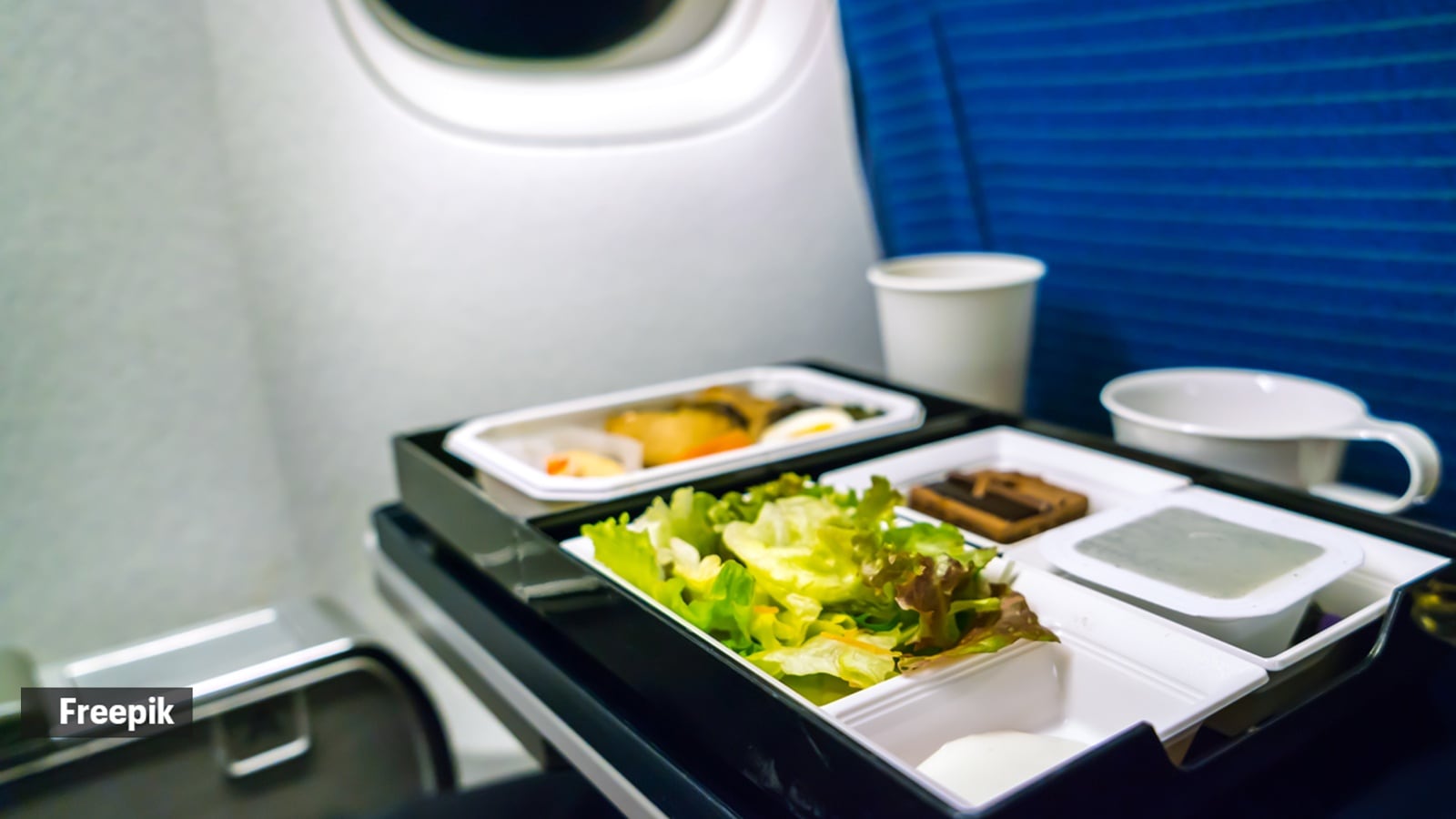 Here’s what you should consider (Photo: Freepik)
Are there any health concerns linked to eating reheated airline food?
According to Dr Saraf, for most healthy individuals, properly handled and reheated airline food is safe to eat.
Story continues below this ad
“The crucial factor is following strict food safety standards, which airline caterers must adhere to. Problems may only happen if food is not stored or reheated properly, which is rare in regulated airline operations. That said, some passengers may feel bloated or a bit uncomfortable, but this is usually due to cabin pressure changes and reduced mobility, not the food itself.”
What to note?
Staying hydrated is essential, as cabin air is often dry. “Choosing lighter meals and avoiding too much salt or heavy, greasy foods can help reduce discomfort. If you have a sensitive stomach, picking simpler options and eating in moderation is a smart way to go.”
DISCLAIMER: This article is based on information from the public domain and/or the experts we spoke to. Always consult your health practitioner before starting any routine.