Wearable drone controller gives FPV operators a 15.5-mile battlefield range (original) (raw)
A Los Angeles-based defense technology company has unveiled a wearable ground control station for first-person-view (FPV) drones that cuts the size of the system by more than half. It means a 15.5-mile (25-kilometer) operational range.
Neros Technologies announced the new Crossbow Block 2 controller for its Archer FPV drone platform this week, saying the redesign was driven by feedback from operators working in contested battlefield environments.
The company has already begun delivering the system to customers and plans to field it during the upcoming Gauntlet 2 phase of the US military’s Drone Dominance initiative.
Designed for mobility in modern warfare
The Crossbow Block 2 addresses one of the key challenges facing FPV drone operators: mobility. Traditional ground control stations can require dedicated vehicles or static operating positions, limiting an operator’s ability to move once a mission begins.
The entire new control station can now be worn directly on a plate carrier, allowing operators to carry the system on their body armor rather than relying on separate equipment cases or vehicle-mounted setups.
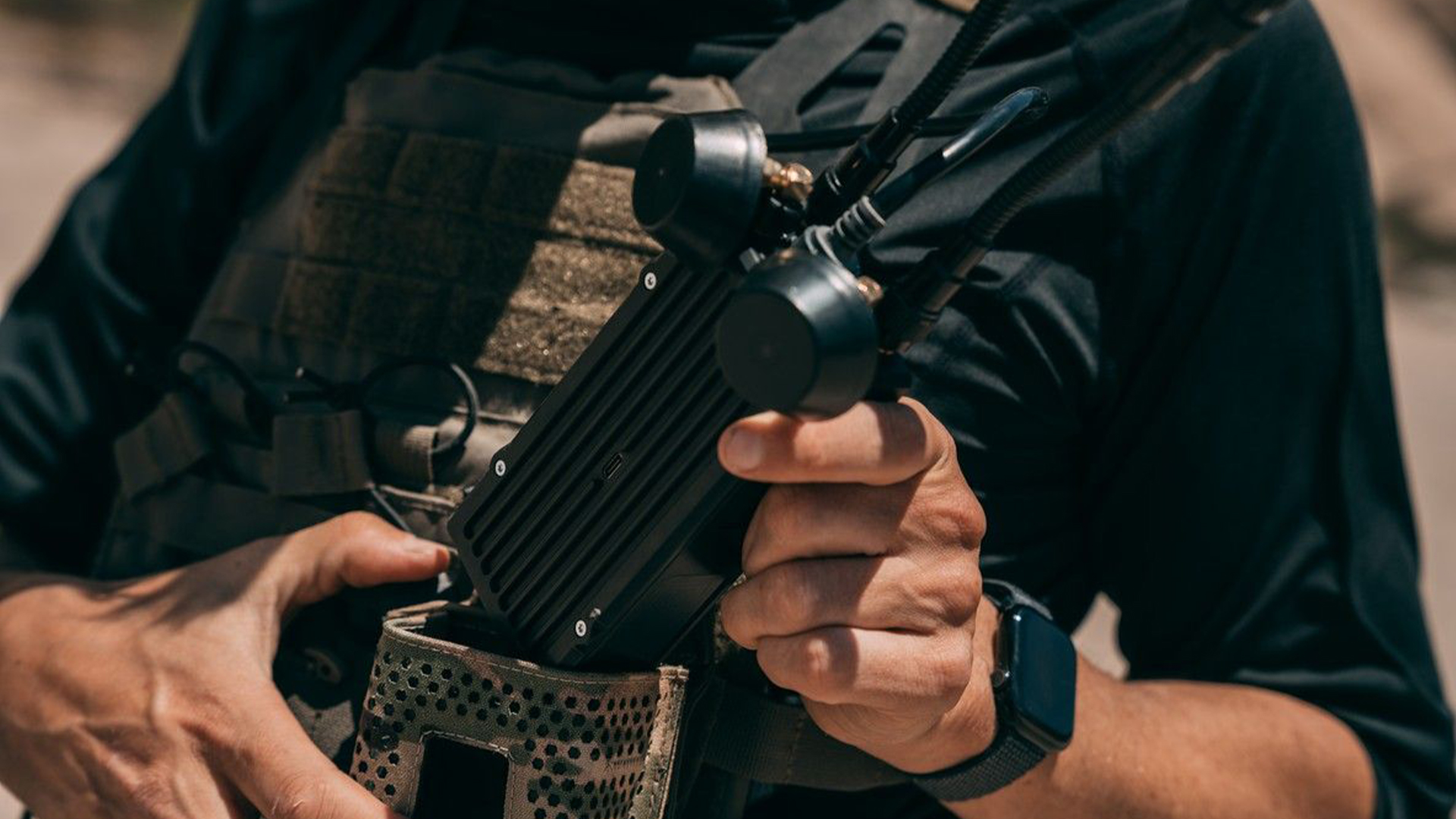
The Crossbow Block 2 maintains range with a 50 percent + reduction in total system size. Credit: Neros Technologies
The company says this gives operators greater freedom to relocate, maintain cover, and adapt to changing battlefield conditions.
A displaced radio configuration remains available for missions that require antennas to be positioned away from the operator for improved signal geometry.
About antenna upgrades
Another major focus of the redesign was simplifying operations during high-stress missions. FPV drone operators often need to manage antenna orientation while simultaneously piloting the aircraft and tracking targets.
To reduce that workload, Neros redesigned the Crossbow antenna system with more than twice the beam width of the previous version and added dual receivers for redundancy.
The wider coverage area reduces the need for precise antenna alignment, helping maintain signal quality even as operators focus on controlling the drone.
The antennas have also been redesigned with a lower profile and reinforced joints to improve durability during transportation and field use.
In addition, the system introduces push-pull harness connections across the goggles, handset, and radio.
The simplified connectors are intended to speed deployment and reduce connection errors during nighttime operations or stressful combat situations.
Built for networked battlefield operations
Beyond physical improvements, Crossbow Block 2 also introduced upgrades aimed at modern command-and-control integration.
The system features enhanced analog-to-digital video conversion and low-latency USB video output, supporting integration with ATAK, the Android Team Awareness Kit widely used by US and allied military forces for battlefield mapping and situational awareness.
By allowing drone video feeds to be shared within larger command networks, operators and commanders can gain a more comprehensive view of ongoing operations.
The radio and pilot box have also received ruggedized, weather-resistant enclosures designed to withstand harsh operating environments.
Neros confirmed that Crossbow Block 2 is already shipping to customers and will be fielded during the upcoming Gauntlet 2 event under the Department of Defense’s Drone Dominance program.
It is an effort to rapidly expand the military’s inventory of small tactical drones and related technologies.
Recommended Articles

Get the latest in engineering, tech, space & science - delivered daily to your inbox.
Atharva is a full-time content writer with a post-graduate degree in media & amp; entertainment and a graduate degree in electronics & telecommunications. He has written in the sports and technology domains respectively. In his leisure time, Atharva loves learning about digital marketing and watching soccer matches. His main goal behind joining Interesting Engineering is to learn more about how the recent technological advancements are helping human beings on both societal and individual levels in their daily lives.