Serious Allergic Reactions (Anaphylaxis) (original) (raw)
What Is Anaphylaxis?
Anaphylaxis is a severe allergic reaction that can be life-threatening. Things that can cause allergic reactions are called allergens.
Anaphylaxis (an-eh-fih-LAK-siss) most often happens during allergic reactions to:
- foods
- insect stings
- medicines
- latex
Anaphylaxis can be scary. But being prepared will help you treat a reaction quickly.
What Are the Signs & Symptoms of Anaphylaxis?
Severe allergic reactions can cause:
- trouble breathing
- throat tightness or feeling like the throat or airways are closing
- hoarseness or trouble speaking
- wheezing or cough
- nasal stuffiness
- nausea, belly pain, vomiting, and/or diarrhea
- trouble swallowing
- drooling
- low blood pressure
- skin itching, redness, or swelling
- hives
- a feeling like something bad is about to happen
- passing out
Anaphylaxis can cause different symptoms at different times. An allergic reaction is considered anaphylaxis if someone has:
- any severe symptoms, such as trouble breathing, repeated vomiting, passing out, or throat tightness
or - two or more mild symptoms, such as hives and vomiting or coughing and swelling
A person with symptoms of anaphylaxis needs treatment right away.
How Is Anaphylaxis Treated?
Someone with anaphylaxis needs help right away. The reaction can get worse very quickly.
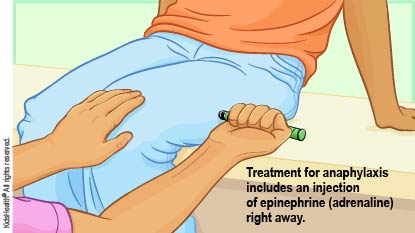
Usually, doctors want people with severe allergies to carry medicine called epinephrine. Epinephrine can be given with an auto-injector or, for some kids, as a nasal spray. Epinephrine enters the bloodstream and works quickly against serious allergy symptoms. Kids and teens who have severe allergies should always have epinephrine with them, including at school, sports, jobs, and other activities. The devices are small and easy to use.
If the doctor prescribes epinephrine for your child, they will show you how to use it. Two devices should always be with your child in case one does not work, or your child needs a second dose.
The doctor also might instruct you to give your child antihistamines in certain cases. But always treat a serious reaction with epinephrine. Never use antihistamines instead of epinephrine in serious reactions.
What Should I Do if My Child Has a Serious Reaction?
Time matters during anaphylaxis. If your child shows signs of a serious allergic reaction:
- Give the epinephrine right away. If you are alone with your child, give this medicine first, then call 911. If someone is with you, have the person call 911 while you give the epinephrine.
- Lay your child down with legs raised while you wait for the ambulance.
- Go to the emergency room, even if symptoms improve after epinephrine. Your child must be under medical supervision for several hours. This is because a second wave of serious symptoms (called a biphasic reaction) can happen. Your child can get more treatment at the emergency room, if needed.
What Else Should I Know?
Serious allergies can be scary. To help keep your child safe:
- Help your child avoid allergens.
- Always have two epinephrine devices with your child.
- Tell any caregivers, teachers, or coaches about your child's allergy and be sure they know what to do in an emergency.
- Check that your child's epinephrine has not expired and doesn't get too hot or too cold.
- Have your child wear a medical ID bracelet so others know about the allergies and know to use the epinephrine in case of an emergency.
Date reviewed: October 2024
/content/kidshealth/misc/medicalcodes/parents/articles/anaphylaxis