Hexane Extract of Raphanus sativus L. Roots Inhibits Cell Proliferation and Induces Apoptosis in Human Cancer Cells by Modulating Genes Related to Apoptotic Pathway (original) (raw)
Abstract
Raphanus sativus, a common cruciferous vegetable has been attributed to possess a number of pharmacological and therapeutic properties. It has been used in indigenous system of medicine for the treatment of various human ailments in India. This present study evaluated the chemopreventive efficacy of different parts of R. sativus such as root, stem and leaves, extracted with solvents of varying polarity and investigated the molecular mechanism leading to growth arrest and apoptotic cell death in human cancer cell lines. Of the different parts, significant growth inhibitory effect was observed with hexane extract of R. sativus root. Analysis of hexane extract by GC-MS revealed the presence of several isothiocyanates (ITCs) such as 4-(methylthio)-3-butenyl isothiocyanate (MTBITC), 4-(methylthio)-3-butyl isothiocyanate (erucin), 4-methylpentyl isothiocyanate, 4-pentenyl isothiocyanate and sulforaphene. R. sativus root extract induced cell death both in p53 proficient and p53 deficient cell lines through induction of apoptotic signaling pathway regardless of the p53 status of cells. The molecular mechanisms underlying _R. sativus_-induced apoptosis may involve interactions among Bcl2 family genes, as evidenced by up-regulation of pro-apoptotic genes and down-regulation of anti-apoptotic genes along with activation of Caspase-3. Our findings present the first evidence that hexane extract of R. sativus root exerts potential chemopreventive efficacy and induces apoptosis in cancer cell lines through modulation of genes involved in apoptotic signaling pathway.
Access this article
Subscribe and save
- Starting from 10 chapters or articles per month
- Access and download chapters and articles from more than 300k books and 2,500 journals
- Cancel anytime View plans
Buy Now
Price excludes VAT (USA)
Tax calculation will be finalised during checkout.
Instant access to the full article PDF.
Fig. 1
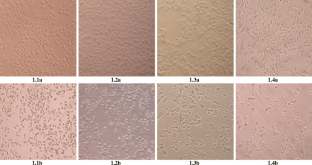
The alternative text for this image may have been generated using AI.
Fig. 2
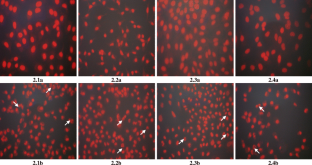
The alternative text for this image may have been generated using AI.
Fig. 3
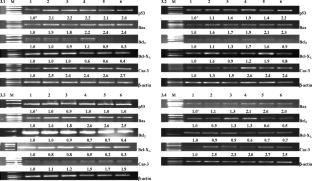
The alternative text for this image may have been generated using AI.
References
- Morse MA, Stoner GD (1993) Cancer chemoprevention: principles and prospects. Carcinogenesis 14:1737–1746
Article CAS Google Scholar - Surh YJ (2003) Cancer chemoprevention with dietary phytochemicals. Nat Rev Cancer 3:768–780
Article CAS Google Scholar - Potter JD, Steinmetz K (1996) Vegetables, fruit and phytoestrogens as preventive agents. In: Stewart BW et al (eds) Principles of Chemoprevention. International Agency for Research on Cancer. IARC Scientific, Lyon, pp 61–90
Google Scholar - Sun SY, Hail N, Lotan R (2004) Apoptosis as a novel target for cancer chemoprevention. J Natl Cancer Inst 96:662–672
Article CAS Google Scholar - Jeffery EH, Jarrell V (2001) Cruciferous vegetables and cancer prevention. In: Handbook of Nutraceuticals and Functional Foods. CRC Press, Boca Raton, FL, pp 169–192
- Kapoor LD (1990) Hand Book of Ayurvedic Medicinal Plants. CRC Press, Boca Raton, FL
Google Scholar - Nadkarni KM (1976) Indian Materia Medica. Popular Prakashan, Bombay
Google Scholar - Papi A, Orlandi M, Bartolini G, Barillari J, Iori R, Paolini M, Ferroni F, Fumo MG, Pedulli GF, Valgimigli L (2008) Cytotoxic and antioxidant activity of 4-methylthio-3-butenyl isothiocyanate from Raphanus sativus L. (Kaiware Daikon) sprouts. J Agric Food Chem 56:8750–8883
Article Google Scholar - Barillari J, Iori R, Papi A, Orlandi M, Bartolini G, Gabbanini S, Pedulli GF, Valgimigli L (2008) Kaiware Daikon (Raphanus sativus L.) extract: a naturally multipotent chemopreventive agent. J Agric Food Chem 56:7823–7830
Article CAS Google Scholar - Mosmann T (1983) Rapid colorimetric assay for cellular growth and survival: application to proliferation and cytotoxicity assays. J Immunol Methods 65:55–63
Article CAS Google Scholar - Vaughn SF, Berhow MA (2005) Glucosinolate hydrolysis products from various plant sources: pH effects, isolation, and purification. Ind Crop Prod 21:193–202
Article CAS Google Scholar - Blazevic I, Mastelic J (2009) Glucosinolate degradation products and other bound and free volatiles in the leaves and roots of radish (Raphanus sativus L.). Food Chem 113:96–102
Article CAS Google Scholar - Fimognari C, Nusse M, Iori R, Cantelli-Forti G, Hrelia P (2004) The new isothiocyanate 4-(methylthio) butyl isothiocyanate selectively affects cell-cycle progression and apoptosis induction of human leukemia cells. Invest New Drugs 22:119–129
Article CAS Google Scholar - Coogen RC, Wills RBH, Nguyen VQ (2001) Pungency levels of white radish (Raphanus sativus L.) grown in different seasons in Australia. Food Chem 72:1–3
Article Google Scholar - Visentin M, Tava A, Iori R, Palmieri S (1992) Isolation and identification of trans-4-(methylthio)-3-butenyl glucosinolate from radish roots (Raphanus sativus L.). J Agric Food Chem 40:1687–1691
Article CAS Google Scholar - Beevi SS, Mangamoori LN, Gowda BB (2010) Polyphenolics profile, antioxidant and radical scavenging activity of leaves and stem of Raphanus sativus L. Plant Foods Hum Nutr 65:8–17
Article CAS Google Scholar - Beevi SS, Mangamoori LN, Reddy LV (2010) Protective effect of Raphanus sativus on H2O2 induced oxidative damage in human lymphocytes. World J Microbiol Biotechnol. doi:10.1007/s11274.010.0328.4
Google Scholar - Lee BB, Cha MR, Kim SY, Park E, Park HR, Lee SC (2007) Antioxidative and anticancer activity of extracts of cherry (Prunus serrulata var. spontanea) blossoms. Plant Foods Hum Nutr 62:79–84
Article CAS Google Scholar - Tansuwanwong S, Yamamoto H, Imai K, Vinitketkumnuen U (2009) Antiproliferative and apoptosis of RKO colon cancer by Millingtonia hortensis. Plant Foods Hum Nutr 64:11–17
Article Google Scholar - Kilani S, Sghaier MB, Limem I, Bouhlel I, Boubaker J, Bhouri W, Skandrani I, Neffatti A, Ammar RB, Dijoux-Franca MG, Ghedira K, Chekir-Ghedira L (2008) In vitro evaluation of antibacterial, antioxidant, cytotoxic and apoptotic activities of the tubers infusion and extracts of Cyperus rotundus. Bioresource Technol 99:9004–9008
Article CAS Google Scholar - Hipp ML, Bauer G (1997) Intercellular induction of apoptosis in transformed cells does not depend on p53. Oncogene 15:791–797
Article CAS Google Scholar - Shao ZM, Dawson MI, Li XS, Rishi AK, Sheikh MS, Han QX, Ordonez JV, Shroot B, Fontana JA (1995) p53 independent G0/G1 arrest and apoptosis induced by a novel retinoid in human breast cancer cells. Oncogene 11:493–504
CAS Google Scholar - Scott RJ, Krummenacher F, Mary JL, Weber W, Spycher M, Muller H (1993) Hereditary p53 mutation in a patient with multiple tumors: significance for genetic counseling. Schweiz Med Wschr 123:1287–1292 (In German)
CAS Google Scholar - Sedlak TW, Oltvai ZN, Yang E, Wang K, Boise LH, Thompson CB, Korsmeyer SJ (1995) Multiple Bcl-2 family members demonstrate selective dimerization with Bax. Proc Natl Acad Sci USA 92:7834–7838
Article CAS Google Scholar - Miyashita T, Reed JC (1995) Tumor suppressor p53 is a direct transcriptional activator of the human bax gene. Cell 80:293–299
Article CAS Google Scholar - Basu A, Haldar S (1998) The relationship between Bcl2, Bax and p53: consequences for cell cycle progression and cell death. Mol Hum Reprod 4:1099–1109
Article CAS Google Scholar - Cheng EH, Levine B, Boise LH, Thompson CB, Hardwick JM (1996) Bax-independent inhibition of apoptosis by Bcl-xL. Nature 379:554–556
Article CAS Google Scholar - Pratesi G, Polizzi D, Perego P, Dal Bo L, Zunino F (2000) Bcl-2 phosphorylation in a human breast carcinoma xenograft: a common event in response to effective DNA-damaging drugs. Biochem Pharmacol 60:77–82
Article CAS Google Scholar - Poruchynsky MS, Wang EE, Rudin CM, Blagosklonny MV, Fojo T (1998) Bcl-xL is phosphorylated in malignant cells following microtubule disruption. Cancer Res 58:3331–3338
CAS Google Scholar - Porter AG, Janicke RU (1999) Emerging roles of caspase-3 in apoptosis. Cell Death Differ 6:99–104
Article CAS Google Scholar
Acknowledgement
This study was supported by a funding under the Technology Education Quality Improvement Program (TEQIP) by World Bank to Centre for Biotechnology, Institute of Science and Technology, Jawaharlal Nehru Technological University, Hyderabad, India. The first author acknowledges the financial support from CSIR in the form of a Senior Research Fellowship.
Author information
Authors and Affiliations
- Centre for Biotechnology, Institute of Science and Technology, Jawaharlal Nehru Technological University, Kukatpally, Hyderabad, 500 085, Andhra Pradesh, India
Syed Sultan Beevi, Lakshmi Narasu Mangamoori, Murugan Subathra & Jyotheeswara Reddy Edula
Authors
- Syed Sultan Beevi
- Lakshmi Narasu Mangamoori
- Murugan Subathra
- Jyotheeswara Reddy Edula
Corresponding author
Correspondence toLakshmi Narasu Mangamoori.
Rights and permissions
About this article
Cite this article
Beevi, S.S., Mangamoori, L.N., Subathra, M. et al. Hexane Extract of Raphanus sativus L. Roots Inhibits Cell Proliferation and Induces Apoptosis in Human Cancer Cells by Modulating Genes Related to Apoptotic Pathway.Plant Foods Hum Nutr 65, 200–209 (2010). https://doi.org/10.1007/s11130-010-0178-0
- Published: 23 July 2010
- Issue date: September 2010
- DOI: https://doi.org/10.1007/s11130-010-0178-0