How to Become a 6-Figure Certified Relationship Coach (original) (raw)
Want to become a certified relationship coach and build a six-figure business helping people create meaningful, lasting relationships?
You’re in the right place.
I’ve helped over 3,500 new coaches launch their businesses—and in this guide, I’ll walk you through:
- The exact steps to become a relationship coach online (even if you don’t have a degree)
- How much relationship coaches actually earn (spoiler: it’s more than you think)
- The 5 best relationship coaching certification programs (and why most are a waste of time and money)
- A proven system to land your first paying client—even if you’re starting from scratch
- Why relationship coaching is in more demand than ever
Let’s dive right in!

👋 Who am I? I’m Luisa Zhou — Princeton graduate, business coach, entrepreneur, and investor who’s helped 4,000+ coaches start and scale their businesses. This guide is based on my decade of hard-earned experience (including plenty of mistakes you won’t have to make). Read more here!
TL;DR – Key takeaways
- You don’t need a degree to become a relationship coach, but niche clarity and results are essential.
- Skip the website in the beginning—use outreach and social media to get your first clients.
- A $1,500 coaching offer can turn into a six-figure business with just a handful of clients.
- Certifications like iPEC, RCI, and Gottman are highly rated but aren’t mandatory to start.
Get the Ultimate Guide
for building a
6-Figure Relationship Coaching Business so you can achieve more freedom!
Table of contents: Become a relationship coach
- What is relationship coaching?
- Is there demand for relationship coaches?
- How to become a relationship coach (steps)
- Mistakes to avoid as a new relationship coach
- The best relationship coaching certifications
- How to choose the right certification program
- Success story: How Ruby grew a six-figure relationship coaching business
- FAQs about relationship coaching
But first, let’s understand what relationship coaching is and why clients are DESPERATE for your help right now…
What is relationship coaching? (And how it’s different from therapy)
A relationship coach helps people build healthier, more fulfilling relationships through goal-setting, accountability, and practical strategies.

Unlike therapists who focus on past trauma and mental health diagnoses, relationship coaches are future-focused. They help clients:
- Find love
- Develop confidence
- Improve communication
- Rebuild trust
- Navigate major life transitions
Think of it this way: A therapist helps clients understand why their relationships struggle. A relationship coach helps clients create the relationships they actually want.
Therapist vs. relationship coach: Key differences
| Feature | Therapist | Relationship coach |
|---|---|---|
| Focus | Past trauma, diagnosis | Future goals, practical tools |
| Training Required | Licensed degree, supervised hours | Certification optional |
| Session Style | Clinical, diagnostic | Action-oriented, strategic |
| Duration | Often long-term | Typically 3-6 months |
| Pricing | 100−200/session∣100-200/session | 100−200/session∣1,500-5,000/package |
The key types of relationship coaches:
Unlike general life coaches, relationship coaching is a specialized field with numerous sub-niches, each addressing specific relationship challenges:
- Couples coaching
- Dating coaching
- Marriage coaching
- Divorce and breakup coaching
- Family coaching
- Intimacy coaching
- Sex coaching
- Love coaching
- Business relationship coaching
What does a relationship coaches do?
Here’s what nobody tells you about becoming a relationship coach—it’s not about having the perfect relationship yourself. It’s about mastering these core skills:
- Help clients get clarity on what they want. Most people are chasing someone else’s idea of love. Your job? Help them figure out their own.
- Teach communication skills. School never covered how to have tough conversations or set boundaries. You will.
- Guide them toward becoming their best selves. It’s not about changing who they are—it’s about showing up authentically and confidently.
- Navigate relationship crises. Trust issues, breakups, “should I stay or go” moments—you’ll be their steady voice of reason.
But isn’t the market too saturated…?
Is there really demand for relationship coaches?
Absolutely. The relationship coaching industry is experiencing explosive growth, driven by several key factors:
- 40%-50% of marriages end in divorce
- Dating app fatigue affects 79% of singles
- Loneliness impacts 61% of young adults
- The coaching industry is a rapidly growing, $2 billion industry
At the same time, relationships today face unique challenges, like digital dating overwhelm, social media comparison, and delayed marriage trends.
This creates a massive opportunity for you to use your unique skills and gifts to help others.
What’s more, a coaching business is the best way to quit your 9-5 and create more freedom and flexibility in your life. (It’s what I call a Freedom Business.)
Take Ruby, for example. She went from working at eHarmony to starting her own six-figure relationship coaching business helping introverted men find love. Within 7 months, she quit her corporate job and now works with high-end clients.

And Briana, an arts therapist, who built a multi-6-figure business by teaching people how to identify and address their attachment issues:

Ruby and Briana are just two examples of many people who took their existing skills and experiences and transformed them into successful online businesses that allow them to live life on their own terms.
How to become a relationship coach (step-by-step)
Ready to transform your relationship expertise into a successful coaching business? Follow this step-by-step roadmap.

PS: Want to get started even faster? I’ve condensed the most important steps into a 10-minute video:
1. Choose your relationship coaching niche
First, you need to figure out your relationship coaching niche.
Because here’s the truth: “I help people with relationships” won’t get you clients.
But “I help successful women over 40 find love after divorce” gets people’s attention.
Specialization is everything. It makes you the obvious choice for your ideal clients and allows you to charge premium rates.
So, how do you find your niche?
Consider three things:
- Who is willing to pay for your services?
- Who is able to pay for your services?
- What is the result you offer?
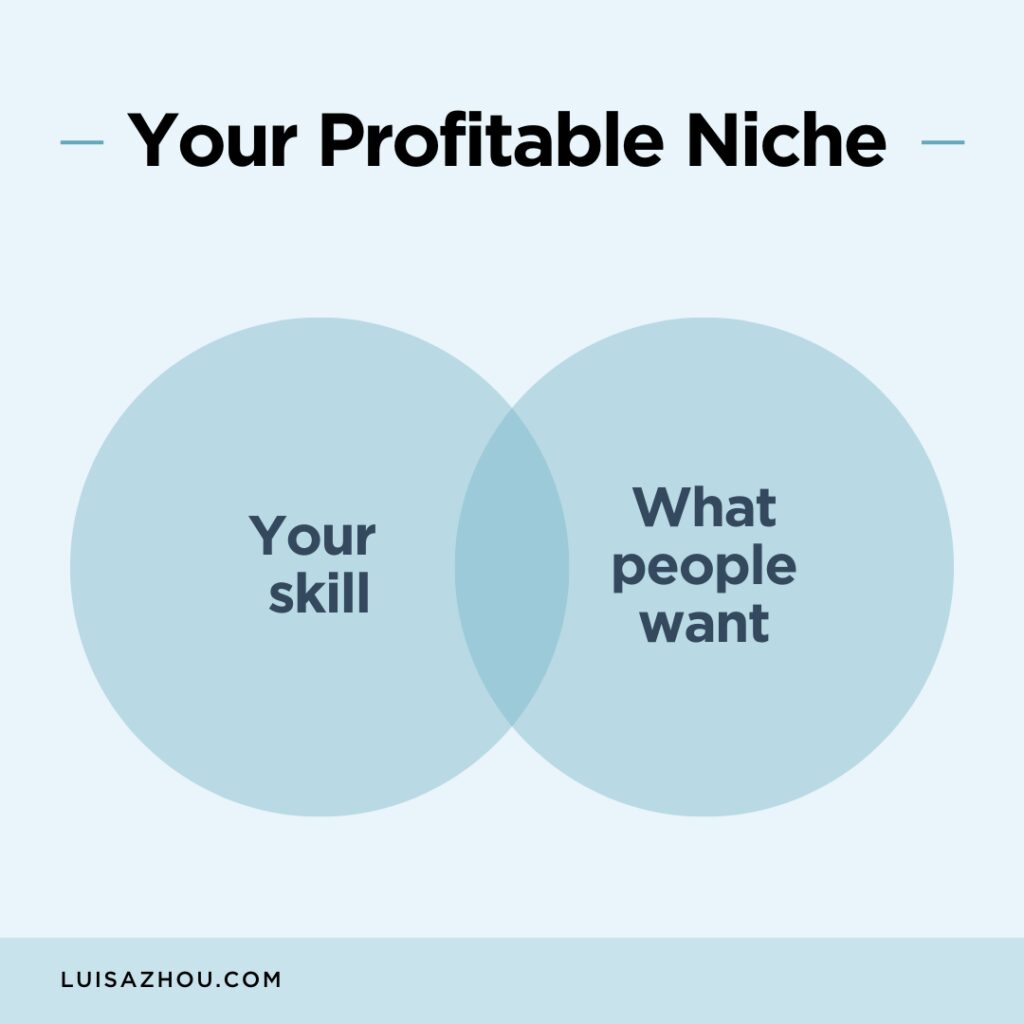
A few examples? Take a look at these relationship coaching niches:
Dating & singles romantic relationship coaching:
- Helping professionals find love
- Building confidence for shy daters
- Online dating optimization
- Cross-cultural relationships
- LGBTQ+ relationship support
Marriage & couples coaching:
- Communication skills training
- Conflict resolution
- Rebuilding intimacy
- Blended family challenges
Divorce & breakup coaching
- Divorce recovery coaching
- Getting over ex-relationships
Not sure what niche to choose? Here’s how to pick a profitable coaching niche. And in this video, I’ll help you find YOUR unique niche in one sentence:
2. Get the right experience
To become a coach, you need experience – and a way to help others get results. And “experience” doesn’t mean a degree, even though some coaches have backgrounds in psychology, social work, or counseling.
Experience can also mean your work or personal experience. My very first coaching offer was career coaching because friends kept asking how to switch industries and get six-figure salaries. Those were results I knew how to deliver because I had the right experience.
If you want to strengthen your background and experience first:
- Help friends and family achieve relationship goals you’ve mastered
- Participate in relationship forums like Reddit’s r/dating or r/relationships
- Volunteer with organizations that support couples or families
- Assist matchmakers, counselors, or mediators to learn the field
3. Get certified (if you want to)
Do you need certification to become a relationship coach?
No, you don’t. Coaching is largely unregulated, and what matters most is your ability to help clients achieve their goals.
That said, some niches, mainly in the health industry, require certification. And if you offer mental health support, you might need licensing.

Also, you might want to become a certified relationship coach. In that case, go for it.
Look for coaching training programs accredited by an organization like the International Coaching Federation (ICF), the “gold standard” in the coaching industry.
- ACC (Associate Certified Coach): 60+ training hours
- PCC (Professional Certified Coach): 125+ training hours
- MCC (Master Certified Coach): 200+ training hours
The requirements for each level vary, but the best place to start is with ACC. And if you’re wondering what program to choose, I’ll share some top certification programs below.
4. Set up your relationship coaching coaching business (the smart way)
Time to make it official. Here’s how to set up your coaching business without getting overwhelmed:
Choose your business structure
For most relationship coaches, I recommend starting with ether:
LLC (Limited Liability Company):
- Protects your personal assets
- Tax advantages
- Professional credibility
- Easy to set up online
Or:
Sole Proprietorship:
- Simpler setup
- Less paperwork
- Good for testing the waters
- Easy to convert to LLC later
Read more about business structures here.
Choose a relationship coaching business name
Keep it simple. You can use your own name (like LuisaZhou.com) or choose a name that reflects your niche and mission.
Examples of effective relationship coaching business names:
- Jane Doe Relationship Coaching
- Love After 40 Coaching
- Good Gentlemen
Set up a coaching contract
A contract helps you create boundaries from the start. Follow the steps in this guide to set up your own coaching contract.
Set up the right relationship coaching tools
The only 6 tools every relationship coach needs to start:
- Calendly – Schedule client calls effortlessly
- Zoom – Conduct coaching sessions professionally
- Stripe – Process payments securely
- Google Drive – Store and share client materials
- Dropbox Sign – Handle contracts electronically
- ChatGPT or other AI tools– Create content faster, transcribe calls, and much more
Everything else is a distraction until you have paying clients.
Why you don’t need a website yet!
Shocking truth: Many of my six-figure coaching clients didn’t launch with a website.
Here’s why websites are a mistake for new coaches:
- Nobody knows you exist yet, so they won’t find your site
- Takes months to build properly
- Costs thousands when done right
- Distracts from what matters (getting your first client)
Instead, use your LinkedIn profile as your “website.” It’s free, shows up in Google, and you can optimize it in 30 minutes.

I launched my own business website when I had made around $20,000 in my business.
5. Create a relationship coaching coaching offer
Your coaching package is the foundation of your business. Get this right, and everything else becomes easier.
For new relationship coaches, I recommend starting at $1,500 for a 3-month coaching package.
Here’s why this price point works:
- High enough to attract serious, committed clients
- Low enough to reduce price objections for new coaches
I discovered just how effective this price point is the hard way. While I got my first client for 5,000,Ithenhad30rejectionsinarowwithpeoplesaying“You’retooexpensive.”SoIaskedmyself:“What’sthelowestpriceI’dacceptwithoutresentingmyclients?”Ipulled5,000, I then had 30 rejections in a row with people saying “You’re too expensive.” So I asked myself: “What’s the lowest price I’d accept without resenting my clients?” I pulled 5,000,Ithenhad30rejectionsinarowwithpeoplesaying“You’retooexpensive.”SoIaskedmyself:“What’sthelowestpriceI’dacceptwithoutresentingmyclients?”Ipulled1,500 out of the air, and very soon after got my next three clients.
After I had a few wins and testimonials, I raised my rates to $5,000–and didn’t look back.
Here’s a specific example of what your package might look like:
Dating coaching for women in their 40s
- Initial 90-minute deep-dive assessment call
- 12 weekly 60-minute personalized coaching sessions
- Custom dating profile workshop
- Weekly accountability check-ins via messaging
Investment: 1,500or3monthlypaymentsof1,500 or 3 monthly payments of 1,500or3monthlypaymentsof525
6. Get your first paying relationship coaching clients
This is where most coaches fail.
They build beautiful websites, create perfect programs, and then… crickets.

Here’s the reality: You need to go where your clients already are, not wait for them to find you.
Strategy #1: Tap your existing network
Your first client will likely be someone you know.
Reach out to friends and family with this simple message:
Hi [Name],
I’m opening my own business helping people with [results]. If you know someone who would love to get my help with this, please let me know and I would appreciate it if you could connect us.
Thanks,
[Your name]
This is how I got my first ever coaching clients. I reached out to some coworkers and a few people said yes to working with me – and I was in business!
Strategy #2: Use social media
This strategy helped one of my students land her first $2,000 client in two weeks.
Here’s how she did it on Reddit:
- Found her ideal clients on relationship subreddit communities
- Posted valuable content answering common questions
- Offered free 30-minute sessions in exchange for market research
- Converted 1 out of 10 free sessions into paying clients
The exact post that worked:
“Hey! I’m a matchmaker in my job and I’m trying to see if I can build a business around it. If you are (this is where she included a description of her ideal clients), I would really appreciate it if you could give a bit of your time for some market research questions. In return, I’m happy to give you a short, free coaching session where I’ll help you identify the top 3 reasons you always get friend-zoned.”
Note that Reddit is just ONE social platform. My clients and I have gotten our first clients on social media networks like Facebook, Instagram, TikTok, LinkedIn, YouTube, and Pinterest – it really just depends on where your clients hang out.
For example, my first client came from Facebook. I saw a woman in a Facebook group asking for help, which I offered free to get some market research.
After two weeks of email support, she messaged: “You’ve helped me so much for free. How can I hire you?” That became my first client.
Not sure where YOUR first client will come from? Watch this quick video:
7. Learn how to coach
Getting clients is just the beginning. Keeping them (and getting referrals) requires actual coaching skills.
The coach-sultant approach
Forget the “ask questions and let them find their own answers” approach.
While there’s some merit to this thinking, your clients hired you because you’re the expert. They want guidance, not therapy.
The most effective relationship coaches use a “coach-sultant” method (I had a rare moment of brilliance coming up with this term), which is a mix of:
- Coaching: Ask powerful questions, provide accountability
- Consulting: Share proven strategies, give direct advice
What this comes down to is that you step up as a leader, provide a vision for your students, guide them, help them problem solve, and hold them accountable.
And as you develop as a coach, you’ll come up with your own relationship coaching techniques that make YOUR methodology so unique.
Powerful coaching sessions
For your coaching to deliver transformation, you need to learn how to structure your coaching sessions.
Start with developing sub-goals that lead up to the overall coaching package goal. Every session should achieve one of these goals.
And to hold your sessions, use a framework like this one:
Minutes 1-5: Check-in and wins celebration
Minutes 6-15: Explore current challenges
Minutes 16-35: Strategy and problem-solving
Minutes 36-45: Action planning and accountability
Minutes 46-50: Next session preview and homework
I share my full framework here:
Essential relationship coaching skills
And finally, the coaching skills you’ll need to develop to become a successful coach and deliver on your sessions include:
Active listening:
- Listen for what they’re NOT saying
- Reflect emotions, not just words
- Ask follow-up questions that dig deeper
Pattern recognition:
- Identify recurring relationship problems
- Connect past experiences to current challenges
- Help clients see their blind spots
Strategic planning:
- Break big goals into actionable steps
- Create accountability systems
- Adjust plans based on progress
Difficult conversations:
- Call out self-sabotaging behaviors
- Address resistance with compassion
- Set and maintain boundaries
The MOST important skill? Make sure you master it:
8. Scale to six figures (without burning out)
The math is simple: You can only work with so many one-on-one clients.
Most coaches hit a ceiling around 10-15 individual clients. That’s when smart coaches diversify their income streams with new offerings, like digital products, corporate training, workshops, or retreats.
From the beginning, I built my business to support the life I wanted—a seven-figure business requiring only 20 hours per week. And the most effective ways to scale with those goals in mind are with the right relationship coaching business models:
Income stream #1: Group coaching programs
The concept: Work with multiple clients simultaneously in a group setting.
Benefits:
- Charge $1,000-3,000 per person
- Deliver similar results with less time investment
- Create community among participants
- Scale your impact exponentially
Income stream #2: Online courses
Transform your coaching process into a self-study course.
Course ideas that sell:
- “The Confident Dater Blueprint” ($497)
- “Save Your Marriage in 90 Days” ($997)
- “Attract Your Soulmate Method” ($297)
Pro tip: Start with a mini-course priced under $500 to test demand.
Get the Ultimate Guide
for building a
6-Figure Relationship Coaching Business so you can achieve more freedom!
Before we continue on to certifications, let’s take a look at the top mistakes you should avoid:
Common relationship coaching mistakes (and how to avoid them)
After helping thousands of coaches launch their businesses, I’ve seen the same mistakes repeatedly.
Mistake #1: Trying to help everyone
- The problem: Generic messaging attracts no one.
- The solution: Pick one specific type of client and become known as THE expert for that group.
Mistake #2: Undercharging from day one
- The problem: Low prices signal low value.
- The solution: Start at a fair price point ($1,500/package) and raise prices as you gain experience.
Mistake #3: Focusing on features, not transformation
- The problem: Clients don’t care about your 12-step process.
- The solution: Lead with the outcome they want (“Find your soulmate in 6 months”).
And next, let’s move on to the best certifications for new relationship coaches.
The best relationship coaching certifications
| Program | Duration | Price | Best for |
|---|---|---|---|
| Certified Gottman Therapist (L1+L2) | 30 hrs | $599 | Therapists transitioning to coaching |
| Relationship Coach Certification (RCI) | 3 months | $3,997 | Relationship-focused coaching careers |
| iPEC Life Coach Certification | 7–10 months | $13,995 | Business + coaching systems |
| Relationship Coach Certificate (IAP) | 6 weeks | $149 | Budget-friendly intro |
| Sex Coach Certification (SHA) | 12 months | $5,850 | Intimacy and sexuality niche |
If you want to become a certified relationship coach, how do you find the right relationship coach certification?
While I haven’t personally taken these programs, this is a list of the top coaching training courses based on information and reviews available online:
- Best for therapists transitioning into coaching: Gottman
- Best budget option: IAP College
- Best for business and relationship coaching: iPEC
1. Certified Gottman Therapist (CGT) – Best for couple’s coaching
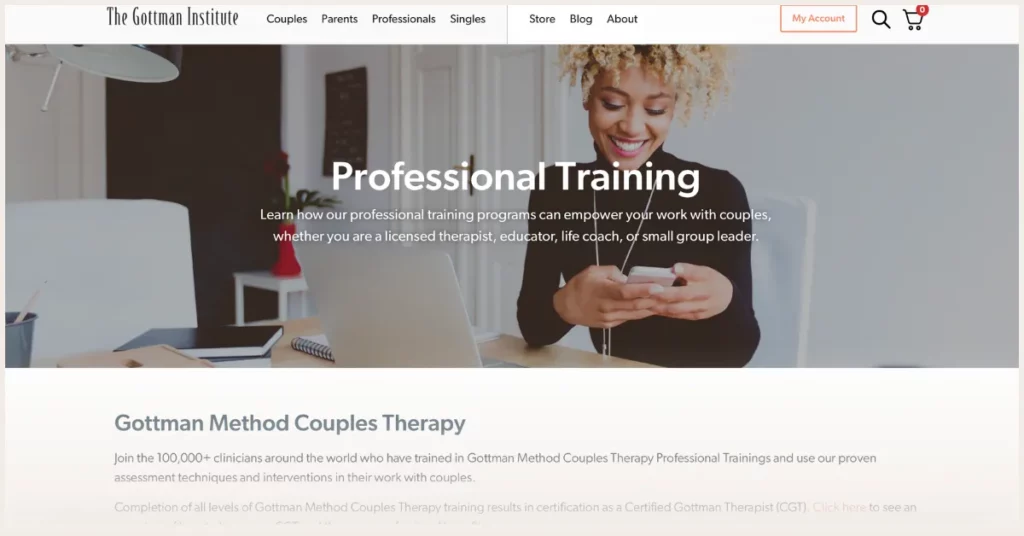
Provider: Gottman Institute
Price: $599 (Level 1 + Level 2)
Duration: 30 hours
Best for: Therapists transitioning to coaching, couples-focused coaches
The Gottman Institute is the gold standard for relationship research and interventions. Their approach is based on 40+ years of studying what makes relationships succeed or fail.
What you’ll learn:
- Research-backed relationship assessment techniques
- Gottman Method intervention strategies
- Sound Relationship House theory
- The Four Horsemen of relationship destruction
Note: Full certification requires a master’s degree in mental health, but anyone can take Level 1 and 2 training.
2. Relationship Coach Certification – Best overall program

Provider: Relationship Coaching Institute
Price: $3,997
Duration: 3 months
Accreditation: ICF-accredited
Best for: Dedicated relationship coaching careers
This comprehensive program covers both singles and couples coaching with hands-on practice and mentoring.
Certification levels available:
- Certified Relationship Coach for Singles (CRCS)
- Certified Relationship Coach for Couples (CRCC)
- Certified Relationship Coach for Singles and Couples (CRC)
- Master-level certifications also available
What’s included:
- Weekly group coaching calls
- Private mentoring sessions
- Comprehensive curriculum and resources
- Business development guidance
3. Life Coach Certification – Best for overall coaching

Provider: Institute for Professional Excellence in Coaching
Price: $13,995
Duration: 7-10 months
Accreditation: ICF Level 2 (ACTP)
Best for: Coaches wanting comprehensive business training
While not relationship-specific, iPEC provides excellent general life coaching training plus business development support.
You’ll Earn Three Certifications:
- Certified Professional Coach (CPC)
- Energy Leadership Index Master Practitioner (ELI-MP)
- COR.E Dynamics Specialist
Bonus: Strong alumni network and ongoing business support.
4. Sex Coach and Consultant Certification – Best for intimacy coaches

Provider: Sexual Health Alliance
Price: $5,850
Duration: 12 months
Accreditation: AASECT-approved
Best For: Intimacy and sexuality coaching niche
This specialized program is perfect for coaches wanting to address sexual and intimacy challenges in relationships.
What you’ll learn:
- Human sexuality fundamentals
- Intimacy coaching techniques
- Ethical considerations in sexuality work
- Business practices for sex coaching
5. Relationship Coach Certificate – Best budget option

Provider: IAP Career College
Price: $149
Duration: 6 weeks
Best for: Budget-conscious beginners
This introductory program covers relationship coaching basics at an affordable price point.
What’s included:
- Core coaching principles
- Relationship dynamics understanding
- Communication skills training
- Basic business setup guidance
Note: This certification carries less weight than accredited relationship coach training programs.
Want to dive deeper into coaching certifications? Check out the best coach certification programs.
How to choose the right relationship coach certification program
A relationship coaching certification will cost you time, money, and energy—resources you could use to get paying clients instead.
So, before investing in any program, ask yourself:
- What are your goals? Do you want to learn how to coach? Or learn about a specific topic? Do you want community and mentoring? Find a program that aligns with your specific goals.
- What accreditation should the program have? Is the program an accredited relationship coach certification program? Those programs will eventually have the biggest impact.
- How much time do you have? What’s your budget? Can you afford the program? And can you put in the required time?
Before becoming a certified dating coach, figure out what your goals are, talk to other coaches in the industry, and read program reviews.
One coach who made it without a certification? Ruby – and here’s her story.
Success story: How Ruby quit her job in 7 months and started a 6-figure relationship coaching business

Ruby, a former eHarmony employee, built a six-figure relationship coaching business in less than a year.
Ruby felt stuck in corporate life, but was too afraid to branch out on her own. She didn’t want to lose her secure paycheck and also didn’t know who would pay for an intangible goal like “finding love” (versus a tangible goal like “earning more money”).
But after enrolling in my program, Employee to Entrepreneur, she figured out the exact type of client who she wanted to serve (smart, successful men who kept getting friend-zoned).
And within two weeks, she had her first, $2,000 client.
Over the next six months, she got 2 more clients and made $10,000. That’s when Ruby knew she would be able to leave her job very quickly.
Today? Her business makes multiple six figures and she loves working with her high-end, one-on-one clients and hearing her clients get life-changing results.
The best part? Ruby followed a set formula I’ve taught her and 3,500+ coaches.
She’s no exception and neither are you—becoming a relationship coach is a goal you can achieve with the right strategies.
For more, take a look at my coaching success stories here.
🚀 And want to learn exactly how I grew my coaching business from ZERO to six figures in just four months without an audience or a business idea? Get my step-by-step case study here!
FAQ: How to become a relationship coach
Do relationship coaches make money?
Yes. According to Glassdoor, relationship coaches make 105,000/yearinmediantotalpay.Andsuccessfulrelationshipcoachesregularlyearnbetween∗∗105,000/year in median total pay. And successful relationship coaches regularly earn between 105,000/yearinmediantotalpay.Andsuccessfulrelationshipcoachesregularlyearnbetween∗∗3,000–$10,000/month, especially when they sell high-ticket packages ($1,500+). Once you build credibility, client results, and a repeatable offer, you can scale to six figures or more through one-on-one coaching, group programs, or online courses.
Can you be a relationship coach without a degree?
Absolutely. Relationship coaching is an unregulated industry, which means there’s no legal requirement for a degree or license. What matters most is your ability to help clients get results. That said, certifications or relevant experience in psychology, counseling, or coaching can boost your credibility.
What qualifications do you need to be a dating coach?
There are no mandatory relationship coach qualifications, but you’ll be more successful if you have:
- Personal or professional experience helping people in their love lives
- A clear coaching niche (e.g., introverted men, post-divorce women, LGBTQ+ clients)
- A well-structured coaching offer and a few client testimonials
How long does it take to be a relationship coach?
You can start offering coaching services right now, especially if you already have relevant experience. Certification programs typically take 6 weeks to 12 months, depending on the provider. Many coaches begin coaching clients before or during their training, using lower fees to gain experience and testimonials.
Is there a demand for relationship coaching?
Yes—more than ever. In a time when loneliness is rising and relationships are getting more complex, people are actively searching for guidance. The coaching industry is a $2+ billion market, and relationship coaching is one of the fastest-growing niches within it. Singles, couples, and even professionals seek help improving their communication, intimacy, and emotional connection
Get the Ultimate Guide
for building a
6-Figure Relationship Coaching Business so you can achieve more freedom!
Ready to start your online relationship coaching business?
There you have it. Now you know how to become a relationship coach.
Becoming a successful relationship coach isn’t just about helping others—it’s about creating the freedom and fulfillment you’ve always wanted.
The coaching industry has never been more accessible or profitable. With the right training, marketing strategy, and commitment to client results, you can build a six-figure coaching business that makes a real difference in people’s lives.
However, while this is a jam-packed blog post, there’s only so much I can share in one article.
Building a coaching business is a process…and one that can become incredibly overwhelming without the right support.
That’s why I created my own coaching business training program, Employee to Entrepreneur. This program builds on my 10+ years of experience as an entrepreneur, plus my learnings from having helped thousands of people start their own businesses.
Want to get a process to follow, not have to figure out the “how” (which often takes years of trial and error), and get the clarity you need to start your business today?
Then, get my free blueprint that shows you exactly how to build a six-figure coaching business.
Warmly,
Luisa Zhou
👉Read more:
- The Best Sex Coach Certifications
- Top Insurance for Coaches
- How to Create a Simple Coaching Business Plan
- How to Become an Emotional Intelligence Coach
- The Most Successful Types of Coaches
