Theatre Works: Bringing Stories to Life (original) (raw)
https://nac-cna.ca/en/artsalive/resource/careers-in-theatre
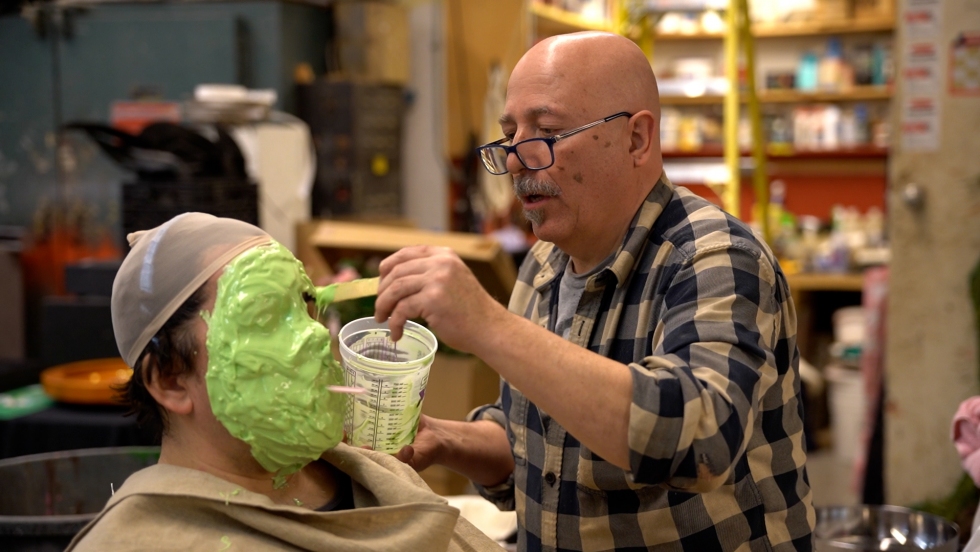
Theatreworks - thumbnail - mike©
Welcome
This resource invites you and your students to step behind the scenes and discover the many kinds of work that bring theatre to life across Canada.
Through flexible learning activities, students are introduced to a wide range of theatre careers, from artistic and creative roles to production, technical, and leadership work. Along the way, they encounter real examples that can widen their sense of what theatre is and who it needs, while encouraging them to imagine their own place within it. Designed to adapt easily to different classrooms, contexts, and points in the school year, this resource can be used in the way that best suits your learning community.
Table of Contents
- Career Spotlights — A ready-for-classroom video series showing theatre professionals at work.
- Career List — Descriptions of the many roles that make theatre happen.
- Module 1: Who Makes Theatre Happen? — An introduction to the variety of theatre professions and their main categories.
- Module 2: Step Into the Role — A deeper dive into specific careers through research and hands-on activities.
- Module 3: Off Script —Additional activities to further enrich students' understanding.
- Resources — A curated list of tools and references to support further learning.
Happy learning, and break a leg!
- Acknowledgements
This resource was developed with learning design by educator Rachel Anne Normand, and content contributions from Elyse Gauthier (French Theatre), Aimee Bouchard (English Theatre), Kerry Corbiere (Indigenous Theatre), and Ryan Drew (Arts Alive) of the National Arts Centre.
Career Spotlights
Classroom-Ready Videos
Celebrating the people who bring Canadian theatre to life! Created in collaboration with NAC English Theatre, French Theatre, and Indigenous Theatre, each video introduces learners to the wide range of professions and often unexpected pathways that shape the industry.
Career List
This list is designed to support the classroom activities included in this resource, offering clear descriptions of many theatre careers.
- Use it as a reference point during lessons or as a way to enrich discussions when new roles come up.
- You may also draw on it however is most helpful for your own teaching context, whether as background knowledge, a handout, or a springboard for further inquiry.
Artistic Careers
Adapter
Someone who transforms or reinvents an original work by adding, removing or reorganizing elements of the original. The adaptation can highlight certain themes or bring the story up to date with the contemporary moment. Often, this role is held by a playwright or dramaturg.
Actor / Actress
An artist who portrays a character on stage following the director's guidance. They memorize their lines and work on delivering their dialogue, movements, and gestures to bring their character to life.
Choreographer
A person who creates the dance movements for a production. They may also design the overall physical work of the performers, including gestures, movements, and some physical interactions.
Combat Choreographer
A person who creates and directs fight scenes in a production, working alongside the director. They teach the performers stage combat techniques, ensuring their movements are safe and realistic.
Composer
A person who creates the music for a production. They write the musical scores and oversee the recording or live performance of the music during the show.
Costume Designer
A person who designs costumes for a production. They conduct research and collaborate with the director to understand the characters and the setting. They propose sketches, supervise costume creation, and participate in fittings to ensure the costumes support the performers' roles.
Dialect Coach
A specialist who helps performers work on their voice, pronunciation, and clarity, particularly for verse texts or foreign accents.
Double / Understudy
A person who learns other performers' roles to replace them when needed, ensuring the continuity of the production.
Dramaturg
An expert in playwriting who provides context, research, and feedback to improve the quality of a production, bringing clarity to directors, actors, and designers.
Lighting Designer
A person who prepares a lighting plan, specifying the placement of fixtures, colors, and patterns. They oversee the installation of lights and adjust their intensity for each scene. See also Technician.
Makeup Designer
A person who helps performers transform their appearance to match their character.
Master at Arms
A specialist in armed combat scenes who choreographs duels and teaches performers basic fencing techniques and the safe use of weapons.
Playwright
An author of plays who creates characters and a story through dialogue and action.
Puppet Designer / Puppeteer
A person who manipulates puppets. They alter their voice and use precise movements to bring the puppets to life. They may also design and create their own puppets.
Scenographer
A person who creates the set and visual elements of a production. They collaborate with the director to design an environment that complements the text and characters, choosing shapes, colors, and textures. They create sketches and a model and supervise set construction. See also Set Designer.
Sound Designer
A person who creates the soundscape for a production using sounds, music clips, and recorded voices. They help establish the setting and enhance the emotional tone of the scenes.
Stage Director
A person responsible for the artistic direction of a production. They interpret the script, guide the performers, and collaborate with designers to create the visual and auditory world of the play. They bring all elements together for a coherent vision.
Video and Projection Designer
A person who uses projections, videos, or holograms to depict locations, characters, or events.
Set Designer
See Scenographer.
Technical Careers
Deck Stage Manager
Person responsible for backstage operations during performances. They ensure props are ready, cue performers for entrances, and coordinate the work of stagehands.
Dresser
Person who prepares costumes and assists performers with dressing or quick changes. They also handle urgent costume repairs during shows.
Fly Operator and Rigger
Person who manages any scenery or equipment that moves up and down from the fly space (the area above the stage) during a performance.
Hair and Wig Specialist
Person who creates and installs wigs, fake beards, or mustaches for performers. They may also style or cut performers’ hair to meet production needs.
Lighting Designer
Person who designs the lighting for a production, determining the placement, color, intensity, and timing of the lights in collaboration with the creative team.
Lighting Operator
Person who programs and runs the lighting console during rehearsals and performances. They assist the Lighting Designer and help implement the lighting design.
Production Manager
Person (or people) who oversees various aspects of production, such as sets, lighting, sound, and front-of-house operations. They organize and coordinate tasks in their department while respecting budgets, priorities, and schedules. They also ensure safety, equipment functionality, and handle unforeseen situations.
Props Master
Person who finds or creates all necessary props. They work closely with set designers and directors to ensure a cohesive integration of objects into the set. They may also manage props during performances.
Sound Designer
Person who creates and oversees the overall sound environment for a production, including music, sound effects, and audio reinforcement, in collaboration with the creative team.
Stage Manager
Person who prepares and coordinates all technical aspects of rehearsals and performances. They compile the stage management book (cahier de régie), detailing cues for lighting, sound, and scenery. During the show, they supervise technical cues and ensure synchronization with performers.
Stagehand
Person who works backstage to carry out set changes and manage special effects during performances.
Technical Director
Person responsible for managing the technical equipment of a performance venue. They advise designers on technical aspects of projects, assess feasibility, and supervise technicians to ensure deadlines, budgets, and safety standards are met.
Technician
Person who sets up and dismantles scenery and operates the sound and lighting consoles during rehearsals and performances.
Production and Management Careers
Administrative Director
A person who manages the budgets of a theater company or performance venue. They work closely with the artistic leadership to plan and supervise projects, ensuring they run smoothly and stay within budget.
Agent
A person who negotiates contracts for an artist. They advise the artist on various career-related decisions and help manage their professional engagements.
Artistic Director
A person who decides the programming, coordinates productions, hires directors, and participates in choosing performers and designers.
Assistant Director
A person who assists the director. They ensure rehearsals run smoothly, schedule them, take notes, and help performers with their lines. They may also contribute to some artistic decisions.
Board of Directors
A group of individuals who oversee a theater company, ensuring it meets legal obligations. They plan activities, manage finances, and guide staff according to the company’s long-term objectives.
Box Office Attendant
A person who sells tickets and subscriptions. They also provide information to the public about shows and available services.
Communications Director
A person responsible for managing the relationship between the theater venue or company and the public or media. They oversee promotions, marketing materials, ticket sales, fundraising, and sponsorship activities.
General Manager
A person who supervises all productions and activities at a performance venue. They coordinate the work of all artistic, technical, and administrative staff.
House Manager
A person responsible for the safety and smooth running of performances. They supervise the box office, bar, ushers, and maintenance staff to ensure a pleasant experience for the audience.
Press Agent
A person who handles relations with the press and media. They write press releases, arrange interviews, prepare publicity materials, and select images for publication.
Producer
A person or organization that provides resources to finance a theatrical production. They hire the team and assume the financial risks necessary to stage the play.
Production Manager
A person who organizes the production of a play. They negotiate contracts, manage the budget, plan the schedule, and coordinate with various teams to meet deadlines.
Technical Director
Person responsible for managing the technical equipment of a given performance venue. They advise designers on the technical aspects of projects and assess their feasibility. They supervise technicians to ensure that deadlines, budgets, and safety standards are met.
Usher
A person who greets audience members, guides them to their seats, and ensures their comfort and safety during the performance.
Venue Manager
A person or organization that presents performances by providing a space and overseeing the organization of shows, promotion, ticketing, and audience reception.
Cultural Careers
Accessibility Consultant
A person who ensures that productions are accessible to everyone, including people with disabilities. They recommend solutions such as audio descriptions and wheelchair access to make productions inclusive.
Adapter
Someone who transforms or reinvents an original work by adding, removing or reorganizing elements of the original. The adaptation can highlight certain themes or bring the story up to date with the contemporary moment. Often, this role is held by a playwright or dramaturg.
Critic
A journalist who writes about theatrical productions and shares their impressions and comments with the public.
Cultural Advisor
Someone who collaborates with the creative team to ensure that the cultural elements of a production are respectful and authentic. They may consult communities—for example, Indigenous communities—to ensure that representations are faithful to cultural traditions and values.
Cultural Mediator
Someone who creates connections between the audience and a theatrical work by making the culture accessible and understandable. They organize discussions, workshops, or activities to help the audience better understand the cultural content of the play. They may also plan events to attract new audiences.
Diversity Director
A person who ensures that production teams are inclusive and representative of various physical abilities as well as cultural, ethnic, and gender diversity. They work to create a fair and respectful work environment that promotes diversity in artistic choices and recruitment.
Translator
Someone who adapts a play into another language. They translate each line while respecting the original text’s style, wordplay, and rhythm.
Module 1: Who Makes Theatre Happen?
Introduction
This first module introduces your students to the world of theatre professions, providing them with foundational knowledge that will pave the way for a deeper understanding of theatre careers in the next module. Before diving in, make sure that the learners you're working with have a solid understanding of the following key concepts:
The forms and genres of theatre
The basic components of a production (script, direction, acting, set design, costumes, lighting, etc.)
The audience's role
 The cast of Snow in Midsummer (NAC 2024) © Dahlia Katz
 From the Director's Chair
Time: 15–20 minutes
Step 1. Read aloud (or invite a student to read) this reflection from Nina Lee Aquino, Artistic Director of NAC English Theatre:
"Most of the time, a story begins as a spark in someone's mind. When a playwright finds the courage to put that idea onto paper, characters and conflicts emerge, and the drama takes shape. But theatre cannot live on the page alone. Theatre is meant to be embodied—manifested on stage, in three dimensions, performed in front of an audience. It exists because of that exchange.
And it takes a community to make that happen.
Community gives theatre its breath and heartbeat. Community is also what allows a production to be born. The process runs on the fuel of collaboration: the playwright and director, yes, but also actors, designers, stage managers, technicians, administrators, and audiences. The magic that begins on the page continues through the minds and hands of everyone who touches a production—in every rehearsal hall, across every workbench, inside every office.
It is a communal effort. Different circles of community form, intersect, and sometimes collide—all in the name of creation, all in the belief that what we place onstage can change the lives of those who witness it. That is who makes theatre happen. That is theatre."
Step 2. Encourage discussion using the prompts below.
- Nina Lee Aquino says "it takes a community to make that happen." What kinds of people might be part of that community?
- Think of theatre as more than just the stage—what kinds of work might be happening "in every rehearsal hall, across every workbench, inside every office"?
- Why do you think theatre needs so many different kinds of people, not just playwrights and actors?
- If you imagine being part of a theatre community, what role could you see yourself playing?
This discussion sets the stage (pun intended) for the Career Wall activity. The goal here is not to list every possible job yet, but to spark curiosity about how many different hands, minds, and skills are involved in theatre-making. The next activity will build on these first ideas by creating a collective, evolving list of theatre careers.
Career Wall
Time: 15–20 minutes
Step 1. Ask learners to brainstorm as many theatre-related careers as possible.
Step 2. Post these careers on a list displayed on the classroom wall. You'll continue to add to it throughout the unit. This will be your "career wall."
Step 3. To make the wall more engaging and visually appealing, encourage learners to illustrate the various careers with drawings, symbols, or icons that represent each role. This not only helps make the wall more eye-catching and memorable, but also supports diverse learning styles—offering visual and creative entry points that can encourage broader participation.
Step 4. Throughout the following activities and future discussions, invite learners to share new roles they come across. Continue adding to the word wall as they do.
Genre Introduction
Time: 20–30 minutes
Step 1. Explain to learners that certain careers are specific to, or particularly important within, certain forms and genres of theatre.
Step 2. Review a range of theatrical forms and genres with your learning community, using the list below as a general guide:
- Classical theatre (tragedy, comedy, historical drama, etc.)
- Indigenous theatre
- Modern and contemporary theatre (theatre of the absurd, immersive theatre, experimental plays)
- Non-Western theatre forms (kabuki, nō, puppetry, shadow theatre, etc.)
Step 3. Invite learners to identify which roles are unique to (or especially significant within) those forms and genres. For example:
- In puppet theatre, the puppeteer plays a central role.
- In immersive theatre, interactive guides or audience facilitators may be essential to guide and engage participants.
Step 4. Add these roles to the word wall.
Genre Jigsaw: Categorizing Theatre Careers
Time: 30–45 minutes
Step 1. Revisit the list of careers with your learners. Discuss the relative importance of each role within a theatre production.
Step 2. Enrich the word wall using this resource's Career List. Keep in mind that an in-depth exploration of specific roles will take place in the next module—it’s not necessary to examine every role in detail at this stage.
Step 3. Continue the conversation.
Step 4. Invite learners to sort the careers into categories that make sense to them, and encourage discussion about why each decision is made. Encourage them to think about what the roles have in common in order to organize them meaningfully. Use the categories below if helpful:
- Artistic Roles — These individuals work together to bring the artistic vision of the production to life.
- Technical Roles —These professionals ensure the technical execution and quality of the production.
- Production and Management Roles — These positions handle planning, budgeting, and promotion of the production.
- Cultural Roles —These roles ensure authentic and diverse cultural representation and help make productions accessible to a wide range of audiences.
Reflection Activity
Time: 15–20 minutes
Step 1. Ask each learner to take a few minutes to reflect individually on the careers they explored and answer the following questions:
- Which career surprised me the most? Why?
- Of all the roles we discovered, which one interests me the most? What made it so appealing?
This personal reflection helps learners connect more meaningfully with the theatre careers explored and gives you insight into their interests as you proceed with this resource.
Module 2: Step Into the Role
Introduction
This module invites your learning community to dig deeper into the world of theatre careers by highlighting the unique and specialized role each profession plays in a production.
 Photo: November Wong (2021)
 From the Director's Chair
Time: 15–20 minutes
Step 1. Read aloud (or invite a student to read) this reflection from Amélie Bergeron, Associate Artistic Director of the NAC French Theatre's Youth Programming:
It isn't uncommon for someone to take on more than one role in a project (you just have to know how to manage your time and energy!) or even to take on a new role from one project to another. You don't have to settle for one specialty if your curiosity and interest drive you to do more. More and more artists are also having fun combining disciplines to create unexpected works that offer the audience new types of experiences. Theatre can be anything you can imagine. Whether there's a script or not. Whether there are actors on stage or not. Then, to realize your vision, you have to take the plunge. And every time you do, you give yourself a chance to see further or differently for the next project. You open yourself up to what is possible and what is beyond you.
Step 2. Encourage discussion using the prompts below.
- Amélie says "you don’t have to settle for one specialty." What do you think are some benefits—and challenges—of taking on more than one role in theatre?
- How might combining different skills or art forms create new experiences for an audience? Can you think of an example (from theatre, music, film, or another art form) where this happens?
- Amélie says, "Theatre can be anything you can imagine." If you could design a project with no limits, what surprising element or role would you include?
Under The Spotlight
Time: 30–45 minutes
Step 1. Have each learner (or small group) select one theatre career to study in detail using the provided Theatre Career Profile Template which can be found in the Files and links tab at the start of this resource. Steer each learner or group toward a career that has not already been chosen.
Step 2. Learners should complete their career profile by conducting research online, at the library, or by speaking with professionals in the field. Scaffold this activity with whatever resources available to your learning community, or with whichever resources you'd like for your learners to seek out on their own.
Step 3. Each learner or group will then prepare a short presentation to share their findings with the class. Consider how you'd like learners to present this information and make this information available to their peers. This way, the whole group gains insight into a range of theater professions. Be sure to keep the completed profiles, as they will be used in the following activity.
Mock Production Meeting
Time: 30–40 minutes, not including the preparation phase.
Stage 1. Share with your learning community the purpose of a production meeting, explaining that for this activity everyone will take on specific roles and participate in a mock planning session.
Step 2. Assign each learner a key role in a theatre production (for example, director, costume designer, set designer, lighting designer, stage manager, actor). Emphasize that each role is essential to planning a fully realized production.
Step 3. Provide each learner with a short play or experience that will serve as the basis for the production meeting.
Step 4. Encourage learners to deepen their understanding of the tasks associated with their assigned role, using the career profiles they created in the previous activity. Learners should reflect on the needs of the play from their role's perspective—considering elements such as costume, lighting, direction, and so on.
Step 5. Set a clear deadline for this preparatory phase so that learners have time to explore their roles thoroughly.
Step 6. Plan the production meeting, during which each learner contributes ideas and helps shape the collective vision of the play, according to their professional role. Importantly, encourage learners to focus their input strictly within the scope of their role's expertise.
Step 7. Prompt discussion around core elements of a theatrical production: direction, costume, set design, lighting, and any other relevant considerations.
For example:
- The costume designer can present costume ideas using reference images or fabric swatches.
- The set designer can share sketches or concepts for stage layout and design.
- The lighting designer can describe lighting effects appropriate for specific scenes.
- The director will coordinate all contributions to ensure artistic cohesion.
- The stage manager may address logistical requirements and technical feasibility.
Step 8. Conclude the meeting by having each participant summarize the decisions made. As a practical extension to this activity, ask that each group prepare a clear action plan for next steps, such as a schedule for rehearsals or beginning the blueprint design process for sets and costumes.
What is a Production Meeting?
A production meeting is a planning session where the core creative and technical team of a theatre production comes together to coordinate all aspects of a performance. Each member—whether a director, costume designer, set designer, stage manager, or lighting designer—shares input and ideas to help shape the overall vision.
The goal is to ensure all departments work in sync so that costumes, sets, lighting, and technical needs align before rehearsals begin.
Personal Reflection Activity
Time: 5 minutes
Step 1. Guide a discussion where learners choose the theatre profession that best aligns with their own interests and skills. Ask each learner to prepare a brief presentation or written piece explaining their choice, highlighting the abilities and personal traits (with examples) that make them a good fit for that role.
Module 3: Off-Script
Introduction
This final module offers ten activity suggestions to further enrich your classroom’s engagement with theatre careers. Through guest conversations, site visits, cross-curricular connections, and hands-on projects, learners are invited to step deeper into the world of theatre — exploring who makes it all happen, and the many paths that bring a production to life.
 Batailles. Photo: Robert Etcheverry (2025)
 Ten Kickstarters for Theatre Education
- Visit a Performing Arts Venue: Organize an in-person or virtual visit to a performing arts venue to show learners how all elements of a production come together. Consult the suggested resources for access to virtual tours if an in-person trip isn't possible.
- Guest Speaker Sessions with Theatre Professionals: Invite local theatre professionals or passionate community members to speak about their work, share personal experiences, and engage directly with learners. If needed, consider setting up a virtual meeting.
- Interdisciplinary Connections: Encourage learners to identify concepts or skills from other subject areas and explain how those skills can be applied to theatre careers. Examples include
- Math: Set designers and lighting technicians use geometry and proportional calculations to build sets and position lights effectively.
- Science: Lighting designers apply principles of electricity and physics to operate equipment and understand how light interacts with space onstage.
- Literature and Language Arts: Playwrights rely on text analysis, creativity, and writing skills to craft compelling narratives.
- Physical Education: Choreographers and actors must have body awareness and coordination—essential skills for physical expression on stag.
- Mini Theatre Production: Divide your classroom into groups and have them assign theatre roles based on their individual strengths, interests, and skills. Each group can then collaborate to stage a short year-end or semester-end productio.
- Community Theatre Projects: Attend local community theatre productions or involve learners in collaborative projects (virtual if necessary), such as co-creating a play with a local organization or theatre troupe.
- Skills Mapping Activity: Invite groups to list the key skills that might be required for specific theatre careers. Distribute a list of skills and challenge learners to match the appropriate skills to the relevant careers.
- Missing Career: Encourage learners to identify a theatre career not yet covered in class. Have them research the role and present their findings to their peers. Try taking this activity a step further: prompt learners to come up with a new career that would push the industry in a new direction, or that reponds to some contemporary problem that exists in the Canadian theatre scene today.
- Dream Career in Theatre: Ask learners to imagine and design their ideal theatre career by combining aspects of multiple roles. This activity reflects the reality that in theatre, professionals often “wear many hats”—for example, someone might be both a playwright and a director, or a costume designer and a choreographer.
- What sets Canadian Theatre apart? Individually or in groups, invite learners to reflect on Canadian identity (or identities, rather) and consider the role theatre might play at the provincial, regional, national, or international level. Even with younger learners, exploring both points of unity worth celebrating and contradictions worth questioning can lead to meaningful discussion about how theatre engages with the complexities of Canadian identity.
- Postsecondary Theatre Training : Have learners research college, university, or professional programs related to theatre careers. They can then share their findings with the class to build awareness of educational pathways into the industry.