4 Best Telescopes and Binoculars 2026 (original) (raw)
The Best Telescopes for Beginners, According to Astronomers
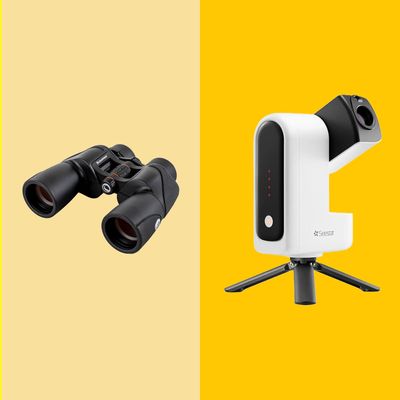
Photo-Illustration: The Strategist; Photos: Retailers
With the Artemis II mission’s successful voyage around the moon in the history books, space is back in the news. For those enchanted by the possibility of seeing further into the heavens (or looking to pass on that enchantment to the next generation), a telescope is the best tool, and there are many options out there for easy-to-learn, easy-to-transport models that will bring years of entertainment and inspiration.
“When I recommend telescopes, I ask three questions,” says Katherine Troche, president of the Amateur Astronomers Association. “How much space do you have? How much are you willing to carry? What are you trying to see?” The astronomers we spoke to generally agreed that ease of use and portability are the most important qualities for budding skygazers, so that you will continue to use the instrument you purchase. If you want to take your telescope on a camping trip or even to your backyard, you need something that you can operate and transport easily. “You are not going to use it very often if it’s difficult to set up,” says Mary Odekon, an astrophysicist and professor of physics at Skidmore College.
Want to be emailed about sales and other updates to your saved products? Success! You'll get an email when something you've saved goes on sale.
Yes
New! You can now save this product for later.
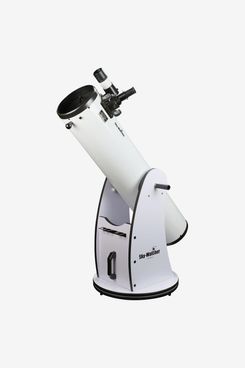
When you’re shopping for a telescope, says astronomer Rick Fienberg, the former press officer of the American Astronomical Society and co-author of Astronomy for Dummies, “the two most important features are quality optics (lenses and/or mirrors) and a sturdy mount that lets you adjust the aim of the telescope smoothly and precisely.” For beginners, most of the astronomers we talked to recommend a Dobsonian telescope. Odekon recommends an eight-inch Dobsonian like this model from Sky-Watcher for beginners.
Developed in the 1960s by amateur astronomer John Dobson, the Dobsonian design allows for the manufacture of very powerful and lightweight telescopes, significantly increasing the size and observational power available to amateur astronomers. Their simple mechanical design makes them relatively affordable, easy to use and carry, and they don’t require much setup — in fact, you don’t even need a tripod. A Dobsonian telescope uses an alt-azimuth mount, or “rocker box,” a simple lazy-Susan-style base that sits directly on the ground (or on a tabletop for smaller models) and allows smooth, manual movement for easy positioning with minimal fuss.
Dobsonian telescopes use a Newtonian reflector system, which produces images using two mirrors that gather light and reflect it through the eyepiece. A larger aperture — the size of the main mirror, typically measured in millimeters or inches — allows you to see objects that are more faint in the sky. An eight-inch model gives you enough magnification to see the rings of Saturn or the moons of Jupiter (and, of course, they have plenty of power to observe the Earth’s own moon).
The Sky-Watcher comes with everything you’ll need to get started, including a finder scope (that’s the miniature telescope that’s mounted next to the eyepiece) to let you target objects in the sky, but it doesn’t have a lot of bells and whistles — the simple design is all about the optics. And that’s just fine, according to Justine Haupt, staff scientist at the Brookhaven National Laboratory, who says that beginners are best served by a telescope that simply gets the basic functions right. “You want a telescope that has the most light-gathering ability for the buck. You can trade off electronic bells and whistles to get it.”
Want to be emailed about sales and other updates to your saved products? Success! You'll get an email when something you've saved goes on sale.
Yes
New! You can now save this product for later.
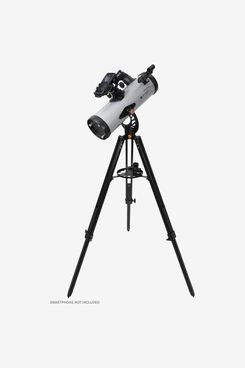
For a less-expensive option, Troche recommends the Celestron StarSense Explorer LT 114AZ Newtonian reflector. Unlike a Dobsonian model, this classic Newtonian telescope sits on a tripod (it’s included in the kit), so there’s a little more setup involved. But in this case, electronic bells and whistles aren’t all bad. As Troche says, “it does allow you to connect your smartphone to the telescope to act as a guide while helping you learn the night sky. Also, you can’t beat the price.”
Fienberg also recommends Celestron’s StarSense system. “Once you get the phone and telescope synced up via the app, you tap on an object on the displayed star map,” he says. “The app tells you which way to move the telescope left, right, up, and down to find it and alerts you when you’ve landed on the right spot. Then the target is in the eyepiece. It’s a great system for beginners, especially ones who are quite attached to their smartphones!”
Want to be emailed about sales and other updates to your saved products? Success! You'll get an email when something you've saved goes on sale.
Yes
New! You can now save this product for later.
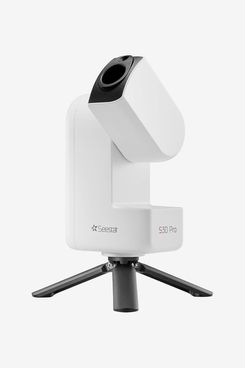
Smart scopes, a more recent telescope-technology innovation, use your smartphone or tablet and a built-in camera to capture dramatic images of the night sky. Connected by Wi-Fi or Bluetooth, the camera transmits colorful images to your device and uses your phone’s GPS to sync your coordinates to the sky above you. You can then pick an object from its online star atlas, and the scope finds it and starts taking pictures.
“There’s something about regular telescopes that most astronomers won’t tell you,” warns Fienberg. “Aside from a handful of the brightest celestial objects, most don’t look all that impressive in them, especially if you’re viewing from a city or suburb with a light-polluted sky. If you’re expecting to see Hubble-like views, you’re going to be sorely disappointed. But with a smart scope, even from the middle of a big city, you can get images that will knock your socks off.”
Want to be emailed about sales and other updates to your saved products? Success! You'll get an email when something you've saved goes on sale.
Yes
New! You can now save this product for later.
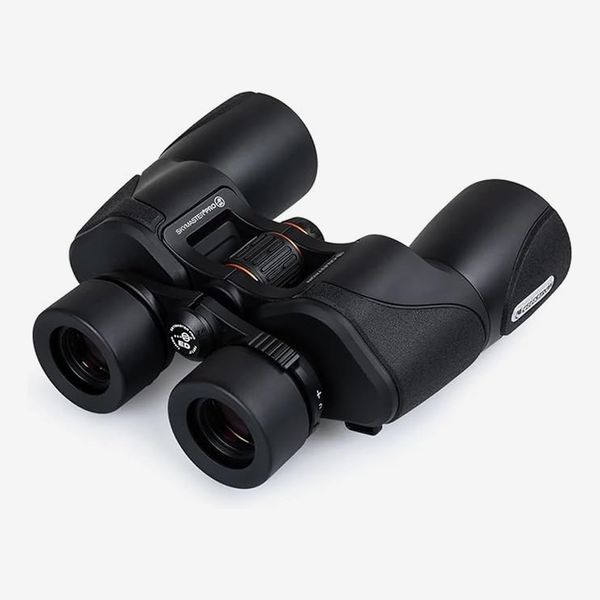
“The experience of looking through binoculars is its own thing. It’s easier to find things organically,” says Haupt. For many people, binoculars can be a better choice than a telescope, as they are lightweight, require no setup, and display a “correct” image (as opposed to a telescope, which shows an upside-down, mirrored image). They can also serve multiple purposes and many people already own a pair. “You can use them for birding, at the beach, on your terrace. They are less likely to become a coatrack,” suggests Troche.
If you do choose a binocular, look at a brand like Celestron that focuses on the astronomy market with models designed to maximize brightness. Some larger models are designed to be used with a tripod. However, since a pair of high-magnification binoculars on a tripod is not much less cumbersome than a telescope, beginners will want to start with something smaller and easier to handle. Fienberg recommends the Celestron SkyMaster, which he owns in the 7x50 size. He notes, “It’s hard to hold steady any binoculars that magnify by more than about eight times. Aperture is important here, too: I’d recommend anything with a magnification of seven or eight and an aperture of 35 to 56 mm. — bigger, more powerful binoculars are great for stargazing, but they require some sort of mount.”
Want to be emailed about sales and other updates to your saved products? Success! You'll get an email when something you've saved goes on sale.
Yes
New! You can now save this product for later.
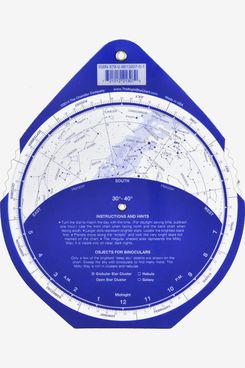
Besides optics, the most important tool an amateur astronomer needs to get started is something that lets you get better acquainted with the night sky. If you’re not using an app-enabled telescope, you’ll want a guide to the stars above.
With a planisphere — a simple paper device, also called a star wheel — you enter the date and time you’ll be observing to reveal an accurate star map for your location. (Before you buy, make sure you get the right version for your latitude — they’re available in multiple editions for your geographic vantage point.)
If you prefer a paper map but don’t need the adjustability, you can download printable guides to the stars online. “Skymaps.com gives maps for every month. It’s the right amount of detail for beginners, with the right amount of information,” says Odekon. Or you can consult apps like SkySafari, which give you an up-to-the-minute guide to the skies above. “Some people think it’s cheating, but we have smartphones for a reason,” argues Troche.
A note: If you’re getting back into stargazing (or looking to get your kids into it) and haven’t bought or used a telescope since elementary school, you might notice that some familiar brands — including the once-ubiquitous Meade and Orion, which we recommended in the past — aren’t available any longer. That’s because both companies went out of business in 2024 following a protracted legal battle.
• Rick Fienberg, former press officer of the American Astronomical Society and co-author of Astronomy for Dummies
• Justine Haupt, staff scientist at the Brookhaven National Laboratory
• Mary Odekon, astrophysicist and professor of physics at Skidmore College
• Katherine Troche, president of the Amateur Astronomers Association
The Strategist is designed to surface the most useful, expert recommendations for things to buy across the vast e-commerce landscape. Some of our latest conquests include the best acne treatments, rolling luggage, pillows for side sleepers, natural anxiety remedies, and bath towels. We update links when possible, but note that deals can expire and all prices are subject to change.
The Best Telescopes for Beginners, According to Astronomers Your product is saved! You’ll receive emails when your saved products go on sale. Manage preferences.