Integrating microbial modulation solutions into agricultural practices (original) (raw)
Soil microbiome - integrating microbial modulation solutions into agricultural practices.
Problem
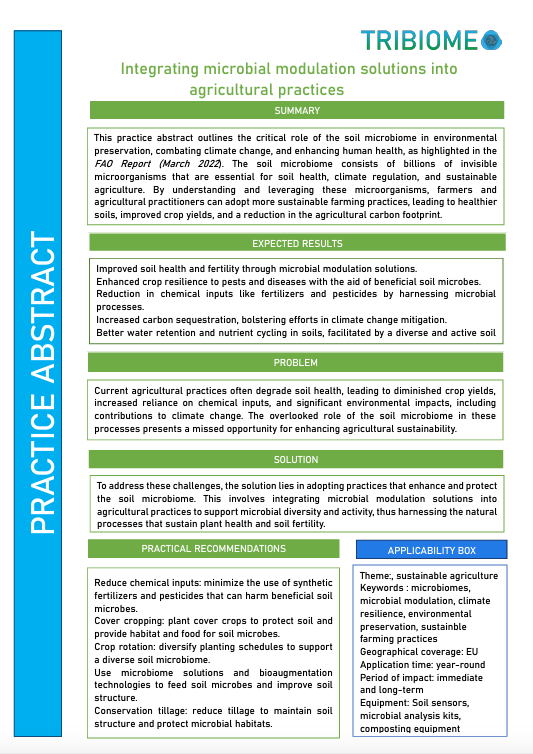
Current agricultural practices often degrade soil health, leading to diminished crop yields, increased reliance on chemical inputs, and significant environmental impacts, including contributions to climate change. The overlooked role of the soil microbiome in these processes presents a missed opportunity for enhancing agricultural sustainability.
Solution
To address these challenges, the solution lies in adopting practices that enhance and protect the soil microbiome. This involves integrating microbial modulation solutions into agricultural practices to support microbial diversity and activity, thus harnessing the natural processes that sustain plant health and soil fertility.
Description
This practice abstract outlines the critical role of the soil microbiome in environmental preservation, combating climate change, and enhancing human health, as highlighted in the FAO Report (March 2022). The soil microbiome consists of billions of invisible microorganisms that are essential for soil health, climate regulation, and sustainable agriculture. By understanding and leveraging these microorganisms, farmers and agricultural practitioners can adopt more sustainable farming practices, leading to healthier soils, improved crop yields, and a reduction in the agricultural carbon footprint.