Lead Scoring: The Complete Guide for B2B Sales and Marketing - 2025 Update (original) (raw)
Lead scoring helps you identify which campaigns are bringing in high-quality leads — and which ones aren’t. By focusing your budget on what actually works, you reduce wasted spend and improve your return on investment.A lead score reflects how likely someone is to buy from you — the higher the score, the “hotter” the lead.
These scores are based on a mix of factors (which we’ll break down in the next section), like whether they’ve unsubscribed from emails, visited your website, or what their job title is, just to name a few.
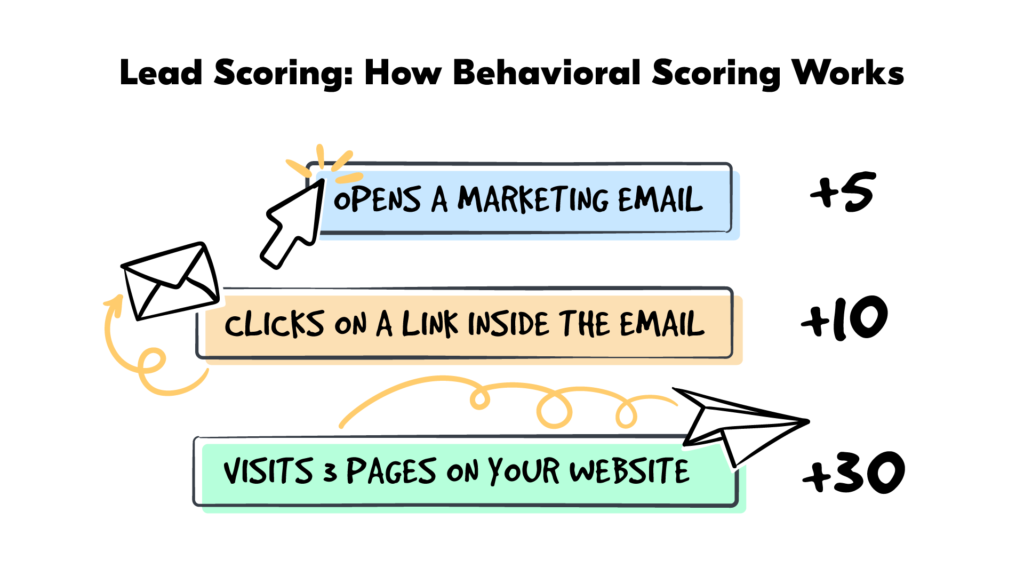
Let’s take a closer look at the two main types of lead scoring attributes: demographic and behavioral.
Demographic/ firmographic attributes
These are details you know about the lead or their company — the kind of information typically collected via forms or lead enrichment. Think:
- Job title
- Company size
- Industry
- Location and/or language
This type of data helps you figure out if someone fits your ideal customer profile.
Behavioral attributes
Behavioral scoring is all about what your leads do — how they interact with your brand. This gives you insight into how interested they are and where they might be in the buying journey. Examples include:
- Downloading a white paper or other gated content
- Visiting your website
- Engaging with your emails
- Watching product demos or videos
- Attending webinars or other events
- Getting a promotion
Each action (or inaction) can either add or subtract points from a lead’s score.
For example:
- Visiting your pricing page? That’s a high-intent signal — add points.
- Unsubscribing from emails? That’s a sign of disengagement — subtract points.
Once a lead reaches a certain score threshold — say, 50 points — they can be flagged for your sales team to follow up. (Most teams use sales automation to make sure those hot leads don’t fall through the cracks.)
4 benefits of lead scoring that marketing and sales teams can’t ignore
Now that we understand why lead scoring is an essential tool in the B2B buying cycle, let’s take a look at the four main benefits for both the marketing team and the sales team:
1. Cut marketing and acquisition costs
Lead scoring helps you identify which campaigns are bringing in high-quality leads — and which ones aren’t. By focusing your budget on what actually works, you reduce wasted spend and improve your return on investment.
2. Boost conversion rates and save time
Seema Nayak, Marketing Manager at AdChina.io, increased their MQL-to-customer conversion rate by 25%.
Her tactic? Sales reps only speak to leads with a score of 50 and above. Leads who score below 50 go through an automated lead nurturing email workflow.
3. Align sales and marketing (finally)
If your sales team is constantly grumbling about unqualified leads, that’s a flashing neon sign that your lead scoring process needs work.
With a solid lead scoring model, both teams agree on what makes a lead “qualified.” Marketing sends over warmer leads, sales is more effective, and everyone’s happier. Win-win.
4. Drive more revenue
When you use lead scoring, you aren’t just improving lead quality — you’re powering real revenue growth.
In fact, companies with lead scoring frameworks often see their lead-to-opportunity conversion rates jump by 77% and marketing-driven revenue rise by 79%.
Other data backs this up: implementing lead scoring can increase lead-generation ROI by up to 70% compared to firms without it.
The bottom line? Lead scoring isn’t just about sorting leads — it’s about turning better data into bigger sales.
How to score leads: a 5-step (and data-driven) guide
Now that we’ve covered the why behind lead scoring, let’s get into the how. Whether you’re building your first lead scoring model or refining an existing one, this 5-step guide will help you create a system that actually works, and drives revenue.
1. Unify and clean your sales and marketing data
Before you assign points, you need to make sure you’re working with clean, complete data.
One of the biggest obstacles to effective lead scoring is fragmented customer data. In our revenue marketing report, 32% of marketing and sales professionals reported that they’re still manually moving data between tools. That’s a huge opportunity for improvement as well as automation. You’ll want to:
- Bring together your CRM, marketing automation platform, and website data into a single view.
- The above is easy if you’re using an all-in-one platform such as HubSpot. If you pick and mix your stack, use tools like Outfunnel to create a 360-degree profile for each lead by syncing contact and engagement data across platforms.
- Clean up duplicates and standardize field formats to ensure consistency.
Once everything’s in one place, look at your closed-won deals to identify the attributes and behaviors that most commonly lead to conversions.
2. Interview your sales team (with a clear framework)
Your CRM tells one part of the story. Your sales team tells another.
Sales reps have a gut feeling about which leads are most likely to buy — and which ones are a waste of time. Capture that intel and bake it into your lead scoring model.
Start prioritizing leads and increase led-to-win conversion rates by 25%
Works with Pipedrive, Salesforce, Copper, and HubSpot.