Ecosystem Modelling with EwE (original) (raw)
Book Title: Ecosystem Modelling with EwE
by Villy Christensen and Carl J. Walters
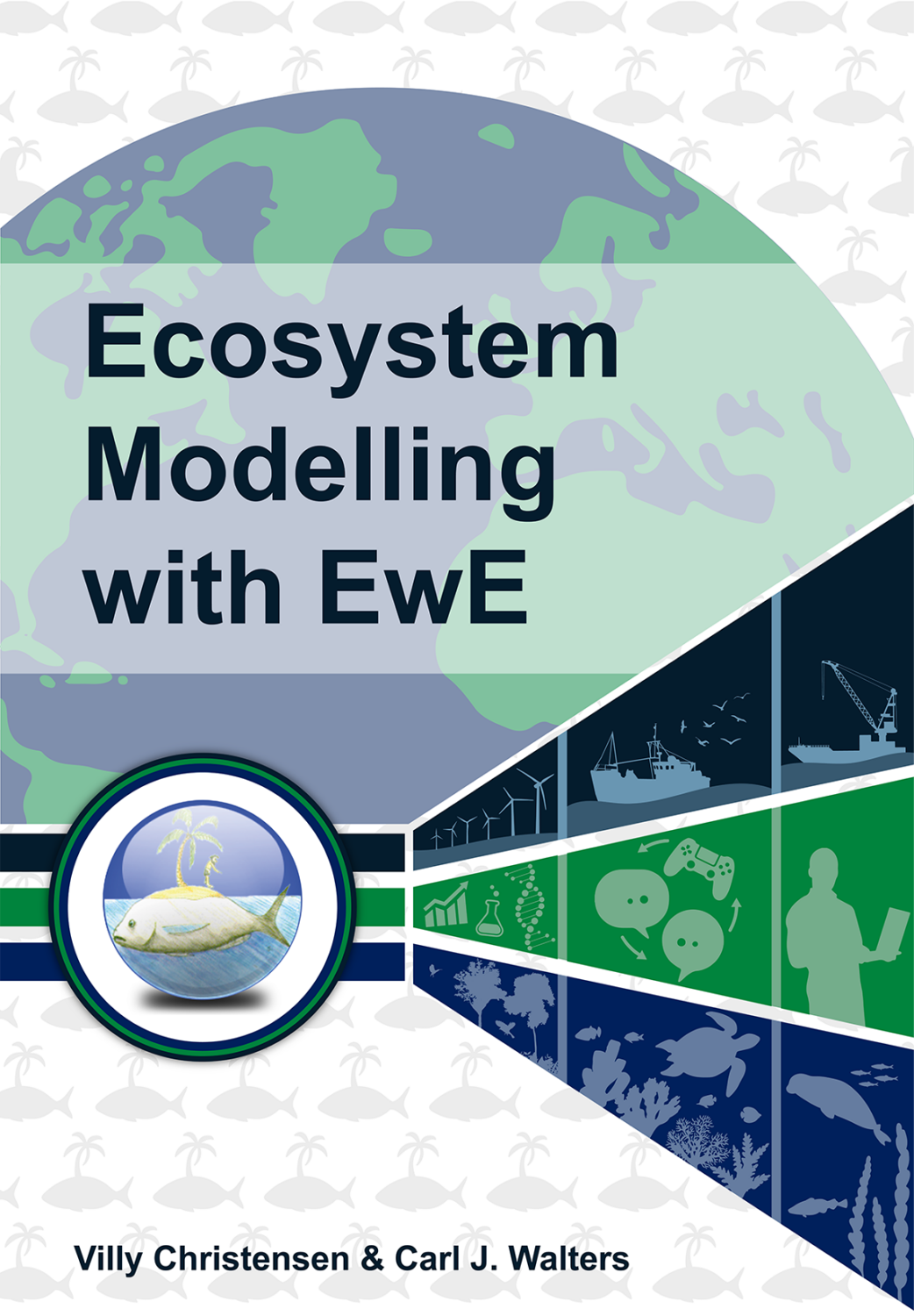
Book Description: In the ever-evolving field of ecological modelling, “Ecosystem modelling with EwE" stands out as a seminal text, essential for students, researchers, and professionals keen on mastering ecosystem-based management tools. This comprehensive textbook delves deep into the what and why of the Ecopath with Ecosim (EwE) software suite – a powerful tool designed for analyzing food webs and assessing trade-offs in the impact of fisheries and environmental changes on aquatic ecosystems. Published by the University of British Columbia.
License:
Creative Commons Attribution NonCommercial ShareAlike
Contents
Book Contents Navigation
- I. Ecosystem Modelling
- II. An Introduction to Ecopath
- III. Network Analysis
- IV. An Introduction to Ecosim
- V. Ecosim: Environment
- VI. Fitting Models to Data
- VII. Ecosim: Fisheries
- VIII. Ecological, Social and Economic Factors
- IX. Ecospace Introduction
- 51. Habitat capacity
Villy Christensen; Marta Coll; Jeroen Steenbeek; Joe Buszowski; David Chagaris; and Carl J. Walters
- 51. Habitat capacity
- X. Spatial Planning
- XI. Spatial Applications
- XII. Tracking Persistent Pollutants
- XIII. Research and Policy Questions
- XIV. Course planning
Book Information
Book Description
This textbook provides a basis for courses in ecosystem modelling based on the Ecopath with Ecosim (EwE) modelling framework and software. EwE is a versatile approach with a low but very long (and gradually steeper) learning curve.
The authors have been central to the development of EwE for more than thirty years, and during that time the simple Ecopath mass-balance approach it started with has through the addition of time and spatial-dynamic models, among others, been expanded to become a dynamic toolbox that can be used to address anything from simple fundamental research questions to very complex management and policy questions related to ecosystem based management.
It’s been a guiding principle throughout the development of EwE to provide an easy-to-access approach that does not require extensive mathematical or programming capabilities to get start. Model first, ask later is the philosophy. By just getting started with modelling, you gain insight and can start asking fundamental questions about how components of ecosystems interplay. Diving deeper is important, but this textbook makes the initial getting-started as simple and accessible as possible.
Authors
Villy Christensen and Carl J. Walters
License
Subject
Mathematical modelling