What is encryption? A complete guide | Proton (original) (raw)
Encryption explained
Encryption is the key to security on the internet. It keeps your personal information private and secure by scrambling it into what appears to be random text. Read on to learn more about encryption, why it matters, and how Proton uses encryption to protect your digital life.
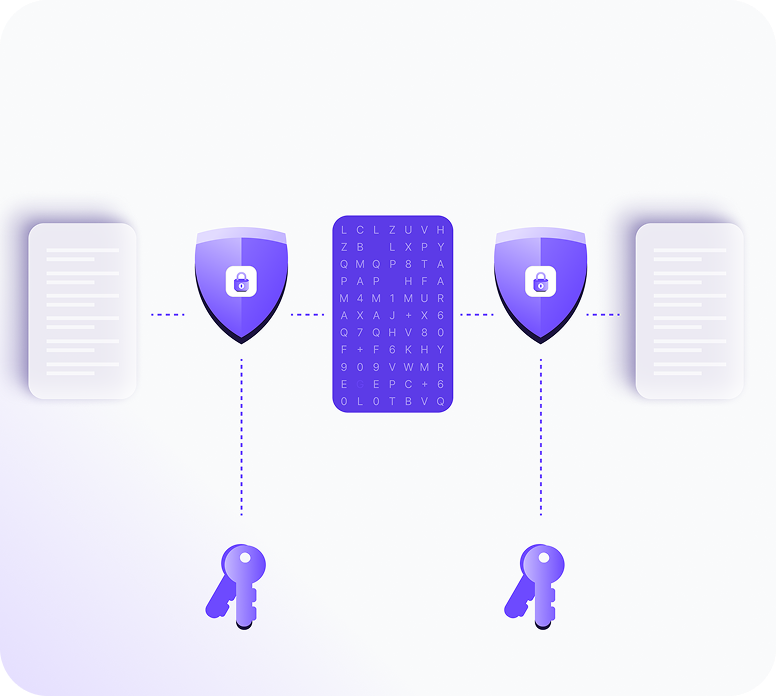
Encryption is the mathematical process of transforming information into an unreadable code, so that no one can decipher it unless they have the correct cryptographic key. Without encryption, anyone could intercept, read, or alter your sensitive data, including photos, passwords, and messages.

How does encryption work?
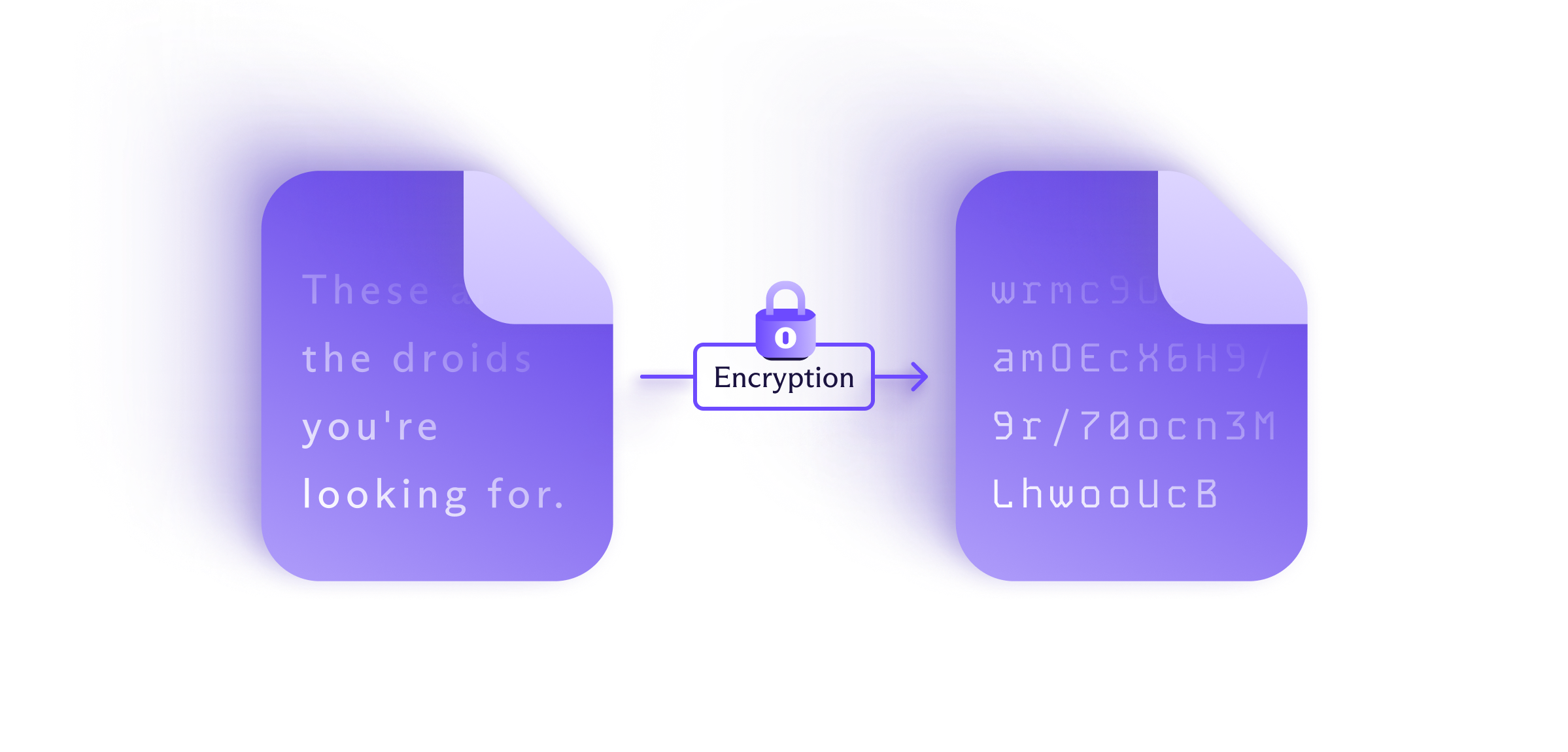
The most common way to encrypt information is to transform the readable text, known as plaintext, into unreadable text, called ciphertext, using mathematical operations known as algorithms. These algorithms use a cryptographic key, or a set of shared mathematical values (like prime numbers or elliptic curves), to scramble a file. Only the matching key can decipher the file and convert it back into its original format.
To someone without the correct cryptographic key, an encrypted file looks like random data, but encryption follows logical, predictable rules. It has to, because otherwise, decryption would be impossible.
The security of an encryption algorithm depends on its complexity. Modern encryption uses complex algorithms and strong key sizes so that even the strongest supercomputers cannot guess every possible answer in a reasonable amount of time.
Data is typically encrypted when it’s stored (“at rest”) and when it’s sent between devices (“in transit”).
Encryption example
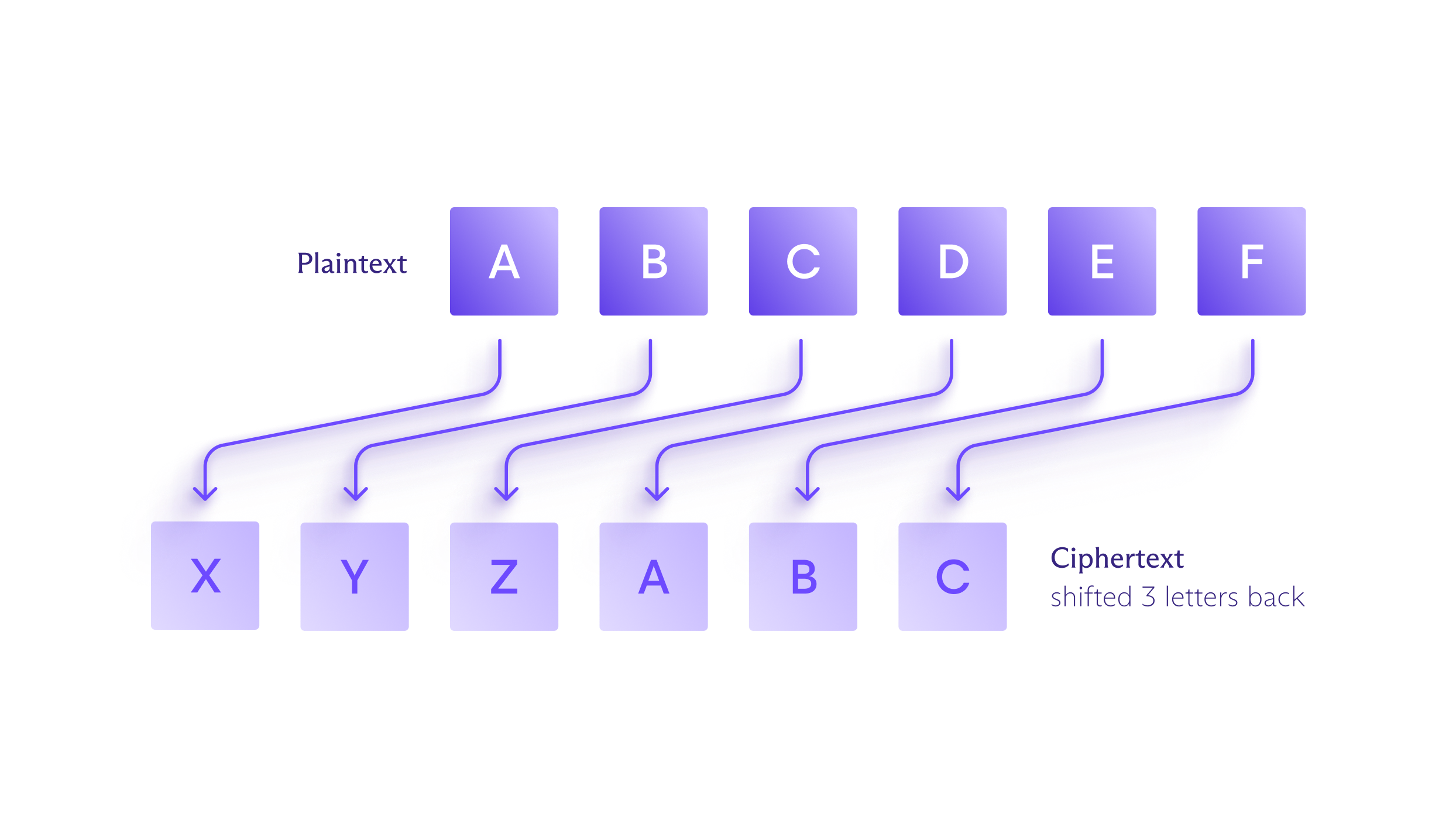
One of the best-known examples of encryption is the Caesar cipher, used by Julius Caesar to keep his messages private. In this cipher, each letter in the original text is replaced by another letter moved up or down a fixed number of positions in the alphabet. For instance, by shifting three positions backwards, “A” becomes “X” in the ciphertext, “B” becomes “Y”, and so on.
Of course, ciphers (a specific algorithm used for encryption) have since evolved to become far more complex, making them much harder to crack. Modern encryption is handled by complicated algorithms that can encrypt plaintext and then decrypt ciphertext in milliseconds, so you don’t have to sacrifice convenience for security.
What are encryption algorithms?
When you use a service that encrypts data, the encryption is handled by algorithms, which are complicated mathematical formulas. The two main categories are symmetric and asymmetric algorithms.
An encryption key’s security is tied to its length, which is measured in bits. The difficulty of cracking a key grows exponentially as its length increases.
For example, a 1-bit key has only two possible values (1 or 0), making it easy to guess. A 128-bit key, however, would have a 340 undecillion possible combinations (that’s 340 with 36 zeros behind it), making brute-force attacks virtually impossible.
Generally, symmetric encryption keys of 256 bits are seen as secure, but asymmetric keys must sometimes be thousands of bits long to provide similar levels of security.
Symmetric encryption algorithms
Symmetric algorithms usually encrypt information either bit by bit (called stream ciphers) or in blocks of several bytes (called block ciphers).
The main upside of using symmetric encryption is that it’s fast, making it a good choice for things like full-disk encryption or VPN traffic.
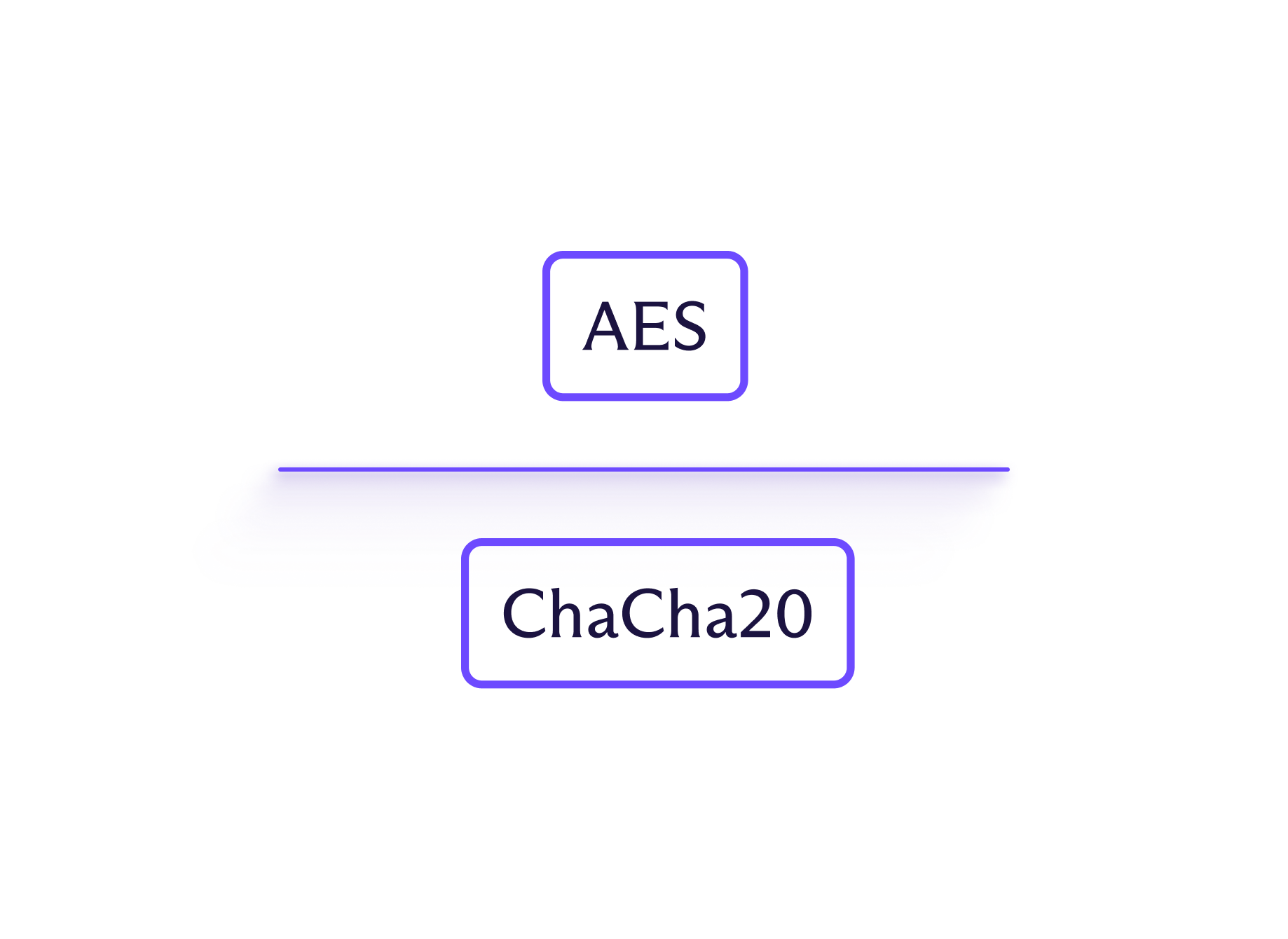
Examples of symmetric encryption algorithms are AES (Advanced Encryption Standard) and ChaCha20.
Asymmetric encryption algorithms
Asymmetric encryption is slower than symmetric encryption because of the mathematics it must perform to encrypt and decrypt ciphertext. Though the delay can be measured in milliseconds, this adds up when dealing with large files.
This means asymmetric encryption is most commonly used to handle key exchanges, not bulk data encryption. A symmetric encryption key is generally used to encrypt the data, and then asymmetric encryption (like encrypting it with the recipient's public key) is applied so it can be securely transported across open networks like the internet.
Common asymmetric encryption algorithms include the RSA (Rivest–Shamir–Adleman) cryptosystem and ECDH (Elliptic-curve Diffie–Hellman), which is used to securely agree on encryption keys.
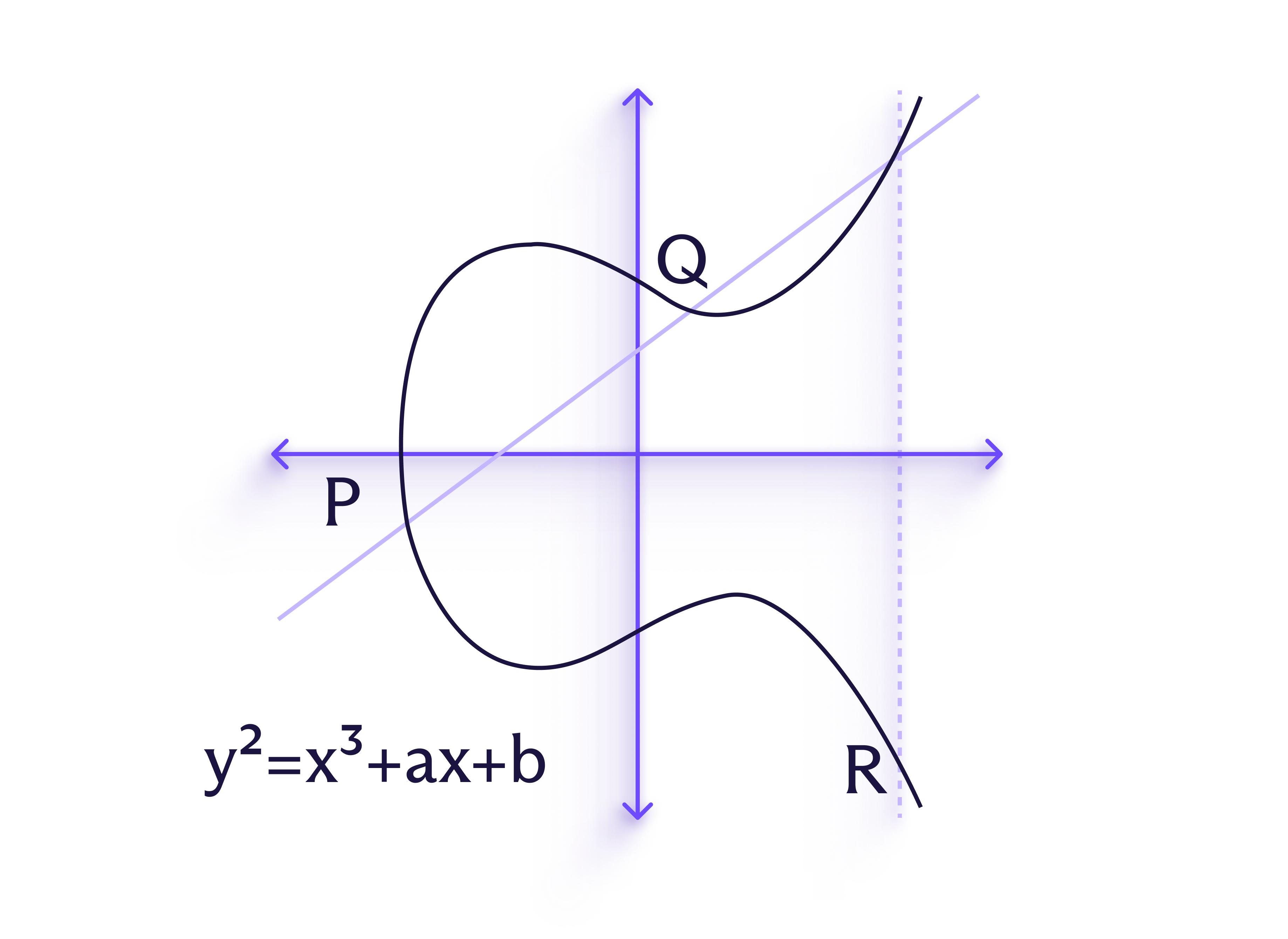
ECDH is a specific type of elliptic-curve cryptography (ECC). ECC relies on the structure of elliptic curves (pictured) to achieve greater security without requiring longer keys, making it useful for applications where resources are limited, such as messaging.
Symmetric vs. asymmetric encryption: Differences
Symmetric vs asymmetric encryption
Why is encryption important?
The main benefit of encryption is to make sure information stays private, especially as it travels through the internet. Encryption has become much more common online, especially on messaging apps and services that handle sensitive data, like banking apps.
In fact, just about every website is now protected by TLS (indicated by “https” at the beginning of the URL). TLS uses asymmetric encryption to securely exchange a symmetric encryption key, then switches to symmetric encryption to protect your data during the session.
Strong encryption is particularly important for businesses, as powerful data protection is essential for compliance with data regulations such as HIPAA (governing health data in the US), GDPR (governing general data privacy in Europe), and PCI DSS (governing payment systems worldwide).
Protect yourself with Proton encryption
Now that you know how encryption works, put it to work. Protect your data with Proton.
Frequently asked questions about encryption
Is all encryption equally secure?
Is encryption future-proof?
If someone steals my encryption key, can they read all my past messages?
Do I need encryption for everyday use?
How does encryption protect against hackers?
Is encryption the same as a password?
Does encryption slow down performance?
Can I share my encrypted data with others?
Can the government or law enforcement get access to end-to-end encrypted messages?