I Spin Records Into Gold - Reactor (original) (raw)
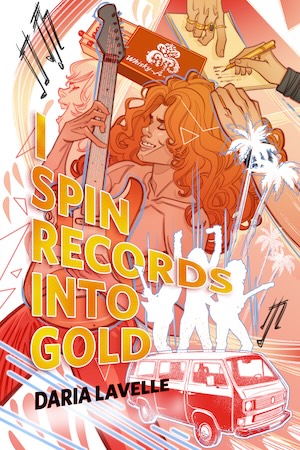
_Amid the glitz and glamor of the 1970s American rock scene, a mysterious music exec promises an up-and-coming rock band fame and fortune…with disastrous consequences.
Short story | 7,400 words
Eddie hated the gig and he worshipped it.
He hated the labor, the setup, hauling gear twice his size—speakers and equalizers and amps and cabinets—up onto the unworthy stages of second-rate venues, shitty little clubs, greasy dives, and fly-paper bars. Hated the long nights and early mornings, the polyester hours in the cramped VW bus, the tangerine shag pickled by the stank of five adult males—so potent that even copious amounts of Jovan Musk couldn’t mask it. Hated the desperate way he craved proximity—to the golden glow of the guys’ talent, to the second-hand high of their music-making, to coolness by association.
He’d been in school for engineering. Good at solving problems, great at seeing things no one else saw. He was supposed to land in the space program, make a lot of money, and send someone into orbit on something he built. He’d always been more study than stud, but he figured with a good degree he’d get the girls to see past his stringy hair and thick glasses. He’d graduate, work for NASA, marry a fox, buy a big house in the burbs with a pool, and have two and a half kids. Golden retriever waiting at the door. That was the dream.
Until he met the band, anyway.
He’d been bartending at Radar, and the band had booked one of their first gigs there, a rough slot on a Tuesday. They had a different name then, something lackluster, and packed the place with friends-of-friends who bought cheap beer. Eddie remembered how scant the tips were, how some of them even asked for change.
But as soon as Mac put his fingers on that guitar—hit the first notes, turned heads—something in Eddie turned, too. He felt his heart switch gears, ventricles veering toward the beat Tuck hammered into those drums like a coronary piper. His body rolled along the melody Mac and Eric wove into that stale bar air, guitar and bass lines spinning one over the other, gyroscopic. And when Jimmy opened his mouth to sing, Eddie levitated like someone had hit ignition, countdown 5…4…3…2…1.
_That_—that feeling, the unflinching gravitational pull every time they played, every time he heard them—was what Eddie worshipped.
By the time they were done with their set, he found himself pouring a pitcher and carrying a stack of plastic cups over just so he could bask a little longer. Tuck reached for his wallet to pay for the beer, asking what they owed him.
“It’s on me. That was…something else. Really.”
Jimmy smirked and Tuck said Look Ma, groupies under his breath.
“We appreciate it, buddy,” Mac said finally, nesting his guitar into a black case plastered with peeling band stickers—The Stones, The Who, Hendrix.
Mac was the picture of cool. When he talked, the other guys all listened. He was tall with long limbs and lithe blue veins at his wrists and elbows. The whole effect of him was dark, like someone had dimmed the lights, from the smeared black liner around his eyes to the dirty, wavy hair that just grazed the stubble on his chin, to the inky tattoos—song lyrics he’d burned up his arms and across his chest so that it looked like someone was writing a letter to his neck.
“Yeah, thanks, man,” Eric said, coiling a thick black cable around his elbow.
Eric was the one the girls liked. A high school dropout from a farm in Indiana. Young. Like maybe not old enough to drink young. He’d met Jimmy at a ball game at Victory Field—_swing, batter batter!_—and joined up. He had that corn-fed look, broad chest and strong shoulders, the kind you got hauling hay. A sad smile. The way he held his jaw—always gritting his teeth, bracing for impact—made you feel like he’d seen things, never mind his age.
Eddie turned to the other two. “That was really far out.”
“Glad you felt it, pal. Thanks.” Jimmy poured the beer and handed it around, tilting his cup in Eddie’s direction.
Jimmy was a born front man. He had that puckish grin, the perfect teeth, the kind of mouth that looked good singing and better belting. He was half a head shorter than the others but it didn’t matter because in a room, your eyes went right to him. He had a sort of bottled-up wildness, something he was wrestling to contain. Onstage was where it came out, this thing that toed the line between craze and control. The danger in his eyes, the snap when he hit a hard note or sang a hook, was inebriating.
“For the beer, too,” Tuck added, bending down to unscrew his drum pedal.
Tuck was the stable element in the compound. The straight man. The metronome. A redhead, with fine freckles up and down his arms, hairless and aerodynamic as a swimmer. He looked like the last person you’d want in a rock band until his foot started tapping and he twirled his sticks in the air in perfect time, drawing figure eights with his index and middle fingers, and counted the band down, a-five-six-seven-eight. Onstage, he was a sniper. He’d drum a beat that lodged right in your chest, striking the exact center of each note until he got to the solo, at which point he’d let loose and melt time a little, blur the beat just around the edges—almost early, nearly late—until it grew achingly human, a murmur creeping into a heart.
“To fame, fellas,” Jimmy toasted, and they bumped their plastic cups together and drank, Eddie thrilled to be included, fifth wheeling.
They drank in silence before going back to packing up. Eddie hovered on the edges of awkward, unsure whether he was coming or going.
“You need something, uh—” Jimmy was asking him.
“Eddie. My shift just ended. You all need any help striking?”
A week later, Jimmy came by the bar and asked if Eddie wanted to go on tour.
He said no flat out, but the more Jimmy talked, the better it sounded.
“Just take a couple months off, Ed. I’m not saying give up your degree. I wouldn’t be any kind of friend if I told you to do that. But we’re gonna be big, man. Can’t you feel it? Don’t you wanna be able to say you were there?”
Eddie worked it over like lint in a pocket, wearing all the sharp edges away.
Life on the road. A different city every few days. Wide highway lanes and tunes blaring and the windows down. The groupies afterward, sex and drugs and rock’n’roll and all the other things he’d never done. But mostly that magic hour onstage, when they set the room on fire. He said yes. Of course he did.
They slept in the van or at roach motels or on the couches of friends. Mac did most of the bookings, and sometimes he got them into decent spots but mostly not. Once, they played in the corner at a diner while retirees ate blue-plate specials and coconut cream pie_._ Another time, the bar they booked had been condemned by the Health Department, infested by golden weevils.
Nothing shook the guys, though. They held fast to the unwavering belief that some stranger in one of these deadbeat bars would be the record exec who’d change their lives. Their certainty was what made Eddie buy it—keep buying it—when they told him that the next place, the next city, would be it, man, where someone from a label was finally going to discover them. Though he’d privately calculated that the statistical likelihood of their discovery was going down and not up, Eddie kept at it, kept hauling gear in, kept loading it out, kept shimmying into dark corners for outlets and picking orange shag out of his hair on the off chance that he was wrong, that Jimmy’s gut was right, that today’s the day their luck would finally change.
And then, in Las Vegas, in a run-down old bar with a tired gold rush theme_,_ far, far from the glitz of the strip, Bill Bullion strolled into their lives.
The smell of The Golden Nugget—bleach and stale beer and bile—reminded Eddie of Radar, which was to say it didn’t feel like the kind of place record execs hung out. At ten to eleven, it was abandoned. The guys were sitting at a four-top beside a dingy little stage, tuning up. Eddie was nursing a room-temperature water in the corner, because that, at least, was free.
“Maybe we should just call it,” Mac said, plucking his guitar a little too hard—it twanged resentfully—and adjusting the note. “If no one shows, they won’t pay.”
“Five more minutes,” Jimmy said. “It’s early.”
“Sure, Vegas is a late-night town.” Tuck, ever the optimist.
“Who gave you this hot tip, anyway?” Mac again, annoyed. “We could’ve done better.”
“What, like a strip-side diner?” Jimmy countered, piss and vinegar. “Look, I booked it. Before we even started the tour. Lemme at least be the one to fold. Someone told me this is the place to be if we want to turn things around.”
“It’s not like we’ve got other plans,” Eric said, plucking the G string up and down an octave. “Or the cash to buy any.”
“Speaking of, what’ve you guys got left?” Mac asked. “We don’t get paid tonight and we’re sleeping in the van again—”
“—we’re sleeping in the van anyway,” Jimmy interjected.
“—and we’re either gonna need a wire,” Mac looked hopefully at Tuck, whose accountant father had scraped them out before, “or we gotta wash dishes or cars or slot machines or whatever they got out here for gas money.”
“Hey, look,” Eric said then, pointing the neck of his bass toward the saloon-style doors.
There was someone silhouetted in the doorway, a man so slight his cowboy hat was barely visible over the bell curve of wood. In the half-light, he seemed caught on the edge of intention, neither here nor there.
“Here, Kitty Kitty,” Jimmy willed him with a whisper, and, as though he’d heard, the man took a step forward and came inside.
He was short statured, his face twisted like an old root, and when he smiled, Eddie noticed three gilded teeth in his mouth, glinting right up in front. He had watery black eyes that darted around beneath the ten-gallon’s brim, not missing a beat, and he chewed a single piece of straw, a cud that looked like it’d been there for years. Eddie watched him size the guys up, a greedy smile spreading like margarine.
“You boys fixin’ to play?” he asked, tipping his hat in their direction.
“Long as you’ll listen,” said Jimmy.
“I’m all ears.”
The man sidled up to the bar and ordered bourbon, neat. He had thick gold rings on every one of his fingers, but they were tarnished and didn’t shine. There was a lariat around his neck with a big gold buckle shaped like a wheel. Like the rings, it was dull, but Eddie felt sure it was the real McCoy, fourteen karat. His suit was custom, goldenrod velvet and sharply tailored, but threadbare at the elbows and knees, like he’d worn it for years. He lifted his drink, took a slow sip, and revolved on the barstool to face the band, that gold-flecked smile like an exposed nerve.
The guys shuffled onto the stage. Eddie should have helped, but something told him to hang back and watch instead. They’d sound-checked already, but Tuck adjusted the stand on his kick drum anyway, then readjusted it. Eric plugged his bass into the amp, tugged the cable. Jimmy puffed into the mic to hear it fizz. Mac fiddled with one of his pegs.
They looked nervous. They never looked nervous.
And then:
Tuck counted them in; Mac struck the first chord on his axe; Eric’s bass line shivered, and Jimmy’s voice—Jimmy’s voice exploded like a star, the gravity of it a collapsing sun, blinding and undeniable, so strong it drew people in, pulled them off the street and through those swinging doors, ten or fifteen by the time they hit the third track.
The man at the bar licked his lips. Eddie watched him tap those ringed fingers against the glass in his hand, almost ahead of the beat, as if he already knew the song.
After the set, he introduced himself: Bill Bullion, band manager, put ’er there. He was based in LA, he said. Had worked with a lot of bands, he said. All the big names, everyone you’d know, matter of fact you got a couple of their stickers on your case there, Sport. He specialized in marketing, in spin, in good old grassroots word-of-mouth, he said. He said a lot of things.
But when he told them that he liked their sound, that he’d been looking for a group like theirs, that he thought he could score them a record deal if they were interested in that sort of thing, they clung to his words like drowning men.
“It’s what I do, boys,” he explained. “Spin records into gold. You make the music, and I drum up interest. Get airplay on the radio, get you on Dick Clark, make sure there’s screaming fans and sold-out shows because all that means they’ll buy the vinyls. If you’re in, I can have a contract drawn up. Now you don’t have to sign anything until you’re sure—I’m happy to do a little trial period, even—though there are a few small tweaks I think we should make before we get you in front of any A&R.”
“What kind of tweaks?” Mac asked, arms crossed in front of his chest.
“Things that make you seem…unpolished. Take where you stood onstage—drums should always be left of the mic, not right. Lose the stickers; those guys don’t need any free advertising. And we’ll have to do something about the name, of course.”
“The name?” Tuck, incredulous.
“How come?” Eric, unsure.
“We like the name.” Jimmy, combative.
“Nirvana?” Bill Bullion sucked his gold teeth like it pained him. “I can’t sell that. Too new age. Too meditative. If you were a folk outfit, then maybe, but rock’n’roll? It won’t fly. Besides, I got the perfect name for you boys, something real special. Been saving it for years, and it’s right up your alley. It’ll kill.”
Bill Bullion got them to LA.
Eddie didn’t think he looked like a guy flush with cash, but he spent money like you could grow it. He booked them a suite in a ritzy hotel, told them to order room service, sent over Champagne and caviar that no one ate. But the real kicker was when he called to say he’d gotten them a slot at The Whiskythe next night—a little on the early side, six thirty, but still, still, the Whisky A Go-Go! An institution! An A-list spot! There would almost certainly be people there who mattered. And at six thirty, they might even be sober.
The guys were so hopped up they couldn’t sleep, half dopamine and half adrenaline and, pretty soon thereafter, three-quarters liquor. They emptied the bar cart in celebration, bottles glinting like jewels on the floor, and then smoked a little, the haze hanging like gauze. Around one, Mac said they should at least jam if they weren’t going to get any sleep, and Tuck said, I’m in, and Jimmy said, I’ll get my book, and Eric grinned and said, Man oh man, have I got just the thing. He passed around a pouch of little golden pills, said that Bill had slipped them to him before they left Vegas, that he’d told him to live a little, kid, and that these pills—you could see the whole world with one under your tongue.
Eddie watched them from beside a potted palm, one of the golden pills rolling along his frenulum, stars in his eyes. He didn’t know if it was the drug or the promise of success or the new name, but music ricocheted out of the band that night. Jimmy would rattle off a lyric from his bloated old blotter—_hey, how about this—_and Mac would improvise a few bars on guitar, and Eric would pluck out the harmony on bass, and Tuck would beat those drums like they’d been sleeping with his sister. Then they’d be off, racing one another to the last note.
Later, when they talked about that night, they called it the goldrush because that’s what it had been: five gold records—an entire A-side—composed right there in that room. The songs were earworms, parasitic. Different from their other stuff in a way that most people wouldn’t notice but that Eddie did, especially with that pill in his mouth. These new tracks had all the thrill of their earlier work—heart-lifting, pulse-racing, head-spinning—but there was something else, a feeling afterward like he’d experienced more than music. A hallucination between bars. Something subliminal simmering just below the surface, pricking him like a spindle. Telling him to listen, keep listening, listen some more.
The gig at The Whisky was what Rolling Stone would hail as the band’s official arrival on the music scene. There were two A&R guys in the audience, one from Sonic Records and one from Atlantic, and they both left determined to sign the band. Bill Bullion took care of the negotiations, drove them into a bidding war, bled the labels dry. Sonic agreed to an absurd publicity budget, swore up, down, and sideways that everyone in the world would know their name, and that sealed the deal. Bill Bullion drew up two contracts, one with Sonic, and one for his management services. The guys all signed—Jimmy and Mac and Eric and Tuck—in what turned out to be their own blood.
Fame came fast.
Their eponymous debut album premiered in the top ten and rose like a flare to number one. Their first single—“Sign On”_—_went gold in the first month. Eddie heard that people had gotten into fistfights over the last copy at record stores. He couldn’t walk down the street without hearing one of their tracks, a few bars of a song trickling out of somebody’s car window, some kid humming a chorus under his breath at the Five & Dime.
They were headed out on tour again in a couple weeks—a real tour this time, their name stenciled on the side of a Silver Eagle coach, headlining at stadiums, merch for sale. Eddie figured he’d head back to school, re-enroll, finish that engineering degree and start papering Houston and Cape Canaveral with his résumé by Christmas. But it was already August, and Jimmy kept telling him to stay. Begging him.
“Just till January,” he pleaded again, over beer at a dive. “Till the tour’s over.”
“But you guys don’t need me. Sonic’s got all the roadies you can handle.”
“It’s not Sonic we’re worried about.”
Eddie took a sip. “What, then?”
“This just stays between us, alright?” Eddie nodded and Jimmy chewed his lip. “It’s like this. We’re not sure about Bill anymore. He’s been coming on strong lately, pushing us for a sophomore album by December.”
“_December?_The first album just got to number one!”
“I know, man. He wants us in Europe by the spring. And he’s been sending us songs—shit songs, Ed, Mickey Mouse stuff—saying it doesn’t matter what we play, it’ll go gold. Guy’s losing touch.”
“You gonna cut him loose?”
“We’re trying.” Jimmy finished the rest of his beer and stared soberly at his own hands. “He’s made threats.”
“Like to sue? Because you’d win if—”
“No,” Jimmy stopped him. “Not like that.” He cracked his knuckles. “I think his exact words were ‘I’ll wipe you out, off the face of the earth.’”
“Jesus.”
“A deal’s a deal, but this is getting out of hand. Mac thinks we should cut our losses. Tuck wants to work it out. Eric’s optimistic or delusional, take your pick. Thinks it’ll work itself out.”
“But what’s all that got to do with me?”
“You’re the only one whose name’s not on that contract. That makes you the only person I trust to see things clearly. Be my eyes and ears, just a little while longer, alright? And look—whatever school’s gonna cost you, I’ll cover it. And then some.”
“Why do I get the feeling you’re not telling me something?”
Jimmy looked up at the ceiling then, his eyes tracing a series of cracks. “What would you pay, Ed, if you could be the best at something? Not just good, but legendary. The greatest there ever was.”
“Something I cared about?” Eddie took another sip of beer. “Whatever it cost. Anything. But you guys are already—”
“Just pay attention. Just in case.” Jimmy tapped the counter for a refill. “Besides, how can you walk away from the music? I see it speak to you, man.”
“It’s not like I’m making it. I mean, in my dreams, right?”
“Half the time, I’m not even sure we’re making it. It’s like it writes itself. But you, Ed, you’re witnessing it. That brings it to life, you know? What’s the point of something beautiful if no one remembers?”
That tour, everyone remembered.
They sold out every show. The kids who saw them play in one place would tell their friends, and they’d roll into the next city to find the bus surrounded by fans all clutching records and awaiting autographs. Everything the guys touched turned to gold—T-shirts and tour books and commemorative pins.
Even Eddie.
Eddie handpicked who got backstage, who was invited to the after-parties, who got the address of the band’s hotel and their room numbers. The girls who showed up to the concerts—it made Eddie bite his lip just thinking about it. Perfect skin in miniature dresses, fabric so thin they never wore underwear. Free love and cutoffs and tank tops and platform heels like on TV, and if ten girls came backstage, every one of them wore a smile. They were chummy to begin with, but the drugs turned them all feral, obsessed with the band, willing to do anything. And there were always drugs those days, things to drink and smoke and shoot in every color of the rainbow.
It made the guys feel limitless. Invincible.
And in Pittsburgh, on a cold December night, Jimmy got indestructible and made a bad mistake. He called up Bill Bullion and told him to get his ass on a plane to New York City. Said that they needed him there for the last show of the tour. Said that they’d had enough of his bullshit. Said that they were going to talk like men now, face-to-face. Said a lot of things.
Three days later, in Madison Square Garden, Bill Bullion clicked his way into the greenroom, a new sheen on his golden spurs, only to find that the guys were cutting him like a loose thread. He listened politely to their explanations and stammering excuses, to Mac’s diplomatic apology and to Jimmy’s brusque little speech telling him he’d been the lucky one, riding their coattails to the top. Bill had his hands folded in his lap, his rings polished now, gleaming, and when they finished, he unfolded them, took a cigarette from a gilded case, and grinned, sharp golden teeth flashing. He looked the guys in the eye one at a time. Then he laughed.
“Oh, you ungrateful little pricks!” He shook his head and flicked his lighter. “You think your talent got you here? Did it all by yourselves, and mean old Bill just rode your wave? Bet you also think Freddie was born with those extra teeth—”
“Who?” Mac and Jimmy at the same time.
“—or that John and Paul met in church, like two apostles,” he raved on. “You think it all just happens? Records spin themselves into gold? You wouldn’t last five minutes without me! It’d be like you never existed.”
“We’d like to try,” Eric said, not unkindly.
“Last chance,” Bill warned, the ember of his cigarette glowing dangerously hot.
“Get out,” spat Jimmy, pointing to the door.
The smile slid off Bill Bullion’s face and rolled across the floor. He stubbed his butt out on the greenroom carpet, burning a round black hole in the fibers.
“You boys have a great show,” he said slowly. “And in the morning, we’ll just see what happens.”
“There’s nothing to see!” Jimmy again. “It’s done. We’re done. Now fuck on off before we call security.”
“We’ll see,” Bill said again, his voice a straight razor, shaving a curve.
The crowd was electric, wired before they even took the stage. Jimmy sang the words and an ocean sang them back, the Garden so full of sound 34thStreet shook. At the end of the set, the guys took their bows and headed offstage, but the audience wouldn’t budge. The crowd stomped their feet in unison, a stampede of sound. Before long, they were all shouting for one more song, chanting their name.
The encore was incandescent. The pitch of the screaming fandom burst several overhead lights, sending glass glittering down like fairy dust. Eddie remembered thinking it was the start of something wild, a restless energy in the room that couldn’t be contained, the hydrogen interior of a bomb, detonation 5…4…3…2…
The next morning, no one in the world knew their name.
The albums were gone, vanished from record players and shelves and radio stations. There was no mention of them on any of the Billboard lists. No record at all that they’d ever existed. Even the music itself—the melodies Eddie thought he’d never get out of his head, the choruses that gave him chills, the lyrics that tumbled absentmindedly out of his mouth—had gone away, sublimated into thin air.
When he woke up, it was in an extra long twin bed, covered in the same plaid sheet set he’d left in his dorm room months before. The prior semester was a blur when he thought about it, the details hazy, so he didn’t think about it all that much. He’d been tired, that was all. And stressed. Working too hard. Besides, when he had to remember equations or a chemical compound from the advanced-level courses, they came right back, so he must have learned them. He’d been in class. Obviously. Where else would he be?
And so Eddie kept spinning in his wheel, bartending nights at Radar,studying mechanical engineering and aerospace technologies, figuring out which NASA site was closest to a suburb where he’d want to live. He graduated a semester early, fall of ’69, and moved to Cape Canaveral. Took a job on a project launching probes deep into space, shooting them straight out of the Milky Way, a long game the result of which he’d never live to see.
Along the way, he met a girl. Allison. He knew right there, in that dinky roller rink, the way she twirled a golden strand of hair around her finger, the way she laughed across the room, the way his heart beat double time. He saw stars, light refracted in her eyes, twinkling like he’d only witnessed through a telescope. He got down on one knee three weeks later. They got married, got a house with a picket fence, a big yard, a swimming pool. They started a family: Capricorn twins, Jack and Annie, born Christmas Day. A dog, Clive, curled up on the rug.
It was perfect. Everything he’d ever dreamed.
Eddie lived a beautiful life until 1971, when he was in a record store and Led Zeppelin’s “Stairway to Heaven”came over the speaker. Hearing those notes, the string of sounds, was like entering a combination on a lock, popping open a series of little doors inside his mind. Eddie knew this song—not just knew it but knew it—even though the words were wrong, not the ones he anticipated.
“You probably heard a clip of it somewhere and forgot,” Allison said the next morning, as she poured his coffee. “How else could you know it? It just came out.”
But it happened again a year later, driving with the radio on and the new Elton John track playing into the wind, “Rocket Man,” a song Eddie knew inside and out because it had been written about him, not by Elton and Bernie but somebody else, a band, in a room where he watched them work beside a potted palm, four guys who saw him as he was, who knew what he’d given up to go on tour with them, except he’d never been on tour, had never met these men, and the lyrics were changed again, like a bad parody, the logic of these new lines uneasy, British English, but even so, even so, this was his song,he knew it; he’d know it anywhere. The title—“Failure to Launch”_—_finally came back, but for the life of him, Eddie couldn’t remember the band’s name.
He reached out to the labels for Zeppelin and John and asked for lists of managers and reps and staff. He scoured the liner notes of the albums and interviews with the artists. He tried to find a pattern, an irregularity, some sort of connection, a false friend they shared. Only there wasn’t one. A couple of the names he’d come across caught his eye—Buckey Gold, Cash Sterling—but Eddie never got anywhere tracking them down. Just disconnected numbers and return-to-senders. Like grasping at straw.
And then, 1973. Jack and Annie were bouncing in the seat of a grocery cart, rattling the cans of SPAM, and “Dream On”poured out of the tinny speakers at Gooding’s, halting Eddie halfway down the aisle. He opened his mouth and all the wrong words spilled out, the lyrics to “Sign On_,_”an identical song, absolutely identical, down to the chord progressions, only Jimmy’d sung it better.
Jimmy. Jimmy Kiss.
And there it was: a name, a breadcrumb, a trail.
It took a year, but the guys filtered back to him. He tracked each one down.
Jimmy Kiss was a Michigan mechanic and a homewrecker. He worked the race car circuit in a pair of filthy coveralls and smoked so many cigarettes that his voice was gravel. Nope, he’d never been in a band. Nope, he didn’t sing. Nope, he didn’t know anyone named Mac or Tuck. But YES, there was something funny about that Aerosmith song, wasn’t there?
Mac Ericson’s tattoos were gone, and his eyeliner, and his edge. He rolled coins into paper sleeves at a retail bank in Illinois, had never so much as strummed a guitar, didn’t care for rock music. Have you been in this branch before, sir? he asked Eddie politely. You look awfully familiar.
Tuck Malloy was in school for accounting, set to follow in his father’s footsteps, dating a nice Irish girl. Drums? he repeated, incredulous. Never, but it’s pretty wild you’re asking. Guy came around a couple months ago, asking the same thing. You all must have me confused, but what a coincidence, don’t you think? His name? Well, wouldja look at that. I…I don’t know.
And Eric Curruthers—Eric hadn’t run away to join a band with a guy he met at a baseball game. He’d stayed at the farm with the abusive stepdad, who got drunk one night and ran him over with a plow. Eric was dead.
While Eddie couldn’t mention the nameless band, or the conspiracy, or the time warp, or the different life he’d maybe lived and maybe hadn’t, it didn’t stop him from talking constantly about the music. He waxed poetic about the records, the way they moved him, the sheer force of sound. He talked about them so much his boss took notice, asked if he wouldn’t like to work on a real gold record, on The Golden Record, the one that would stand the test of time, live on forever—or 4.468 billion years, whichever came first—traveling out on Voyager I, as far as radioisotopes would take it.
The team was lean, working out of temporary offices in the next building. Eddie took the extra work on as a passion project, nights and weekends. They needed someone to help weed through all the possibilities of what to put on that disc; there was only room for so many tracks, an analog solution for an exponential problem. The creative director asked him to scan all the rock albums he could, to flag anything of interest. Eddie did it in his own wood-paneled basement, the kids asleep upstairs, Allison watching To Tell the Truth in the den.
When he slipped the needle onto A Night at the Opera, pencil poised for note-taking on the evaluation form, he didn’t expect the answer to be right there, waiting for him in the grooves. But halfway through “Death on Two Legs” a light bulb erupted in his mind. The sly shyster who’d ripped off the band—the way Freddie Mercury’s falsetto sent him packing, the lyrical laceration—Eddie felt certain that that guy was who he was looking for.
He reached out to Queen’s management team under the pretense of an immortal spot on the NASA space record, but it wasn’t until dinner the next night when that crack about Freddie’s teeth came back to him, and the one about John and Paul along with it. Boy, but this guy had touched the whole industry! He was a menace. A devil. An imp. A trickster. Sure, he spun records into gol—
Eddie dropped his fork, mashed potatoes splattering the table.
“You okay, Daddy?” Annie asked.
And Eddie nodded absently at her, and then got up and rushed into her room, to her shelf, threw one book on the floor, and then another, kept tossing them away, searching, desperate for the one he’d read from night after night, the story Annie always wanted to hear, You’d never trade me, Daddy, would you? Even if I could make gold? and Jack pulling a face, proclaiming it was dumb, just kid stuff, and anyway who cared, because she found his name out in the end, he was shouting it for Pete’s sake, like he wanted them to hear.
When Eddie showed up at Gold Standard Talent, his back was slick with sweat and his mouth was saltine dry. The waiting room walls were lined with gold records, each one stamped and framed, every visible surface marked by greatness. Eddie waited where a secretary told him. He didn’t know what he was doing there, exactly. What he even wanted besides maybe the truth.
“Well color me surprised,” the man behind the desk said when Eddie came through the thick oak door. “Eddie, right? Or do you go by Ed now? Edward?”
Eddie swallowed. He hadn’t expected to be remembered. “Eddie’ll do.”
“Eddie it is.” The man—the talent manager—folded his hands and leaned back in a chartreuse chair. “What can I do you for?”
He came back to Eddie suddenly, flashes of tarnished gold and a shabby suit. Same man, different name. He’d been Bill Bullion then. He looked good now. Better. Hadn’t aged a day, had maybe even grown younger. His wrinkles weren’t as deep as Eddie remembered, and the gold in his mouth had been replaced with ivory crowns, the teeth straight and white as Chiclet gum.
“I want to know what happened to Rumpelstiltskin.”
Bill Bullion raised his considerable eyebrows. “Well,” he said, “that’s not a name you hear every day.”
“No,” Eddie agreed. “Thanks to you.”
“Thanks to me?Pal, they’re gone thanks to Jimmy Kiss. It’s always the one that asks you to feed ’im that winds up biting your hand.”
Eddie shook his head. “Jimmy didn’t do—”
“Jimmy begged me to see them play in Vegas. Did you know that? Before they even went on tour he got on his hands and knees.”
“He maybe got you involved with them, but he didn’t do whatever this is. Alternate reality or time travel or—”
“Contract law.”
“What does that even mean? What did you do to them?”
“I let them put my name—my actual name—on the outfit. I paid their way to fame. I made them a goddamn household name. Everything after that was business. Pure and simple. They signed a contract, and then they were in breach. They took away their commitment, so I took away mine. Now no one knows their names.”
“You know Eric’s dead? Being in a band saved him and now he’d dead.”
“We all have to go sometime.”
“Except you, right?” Eddie fumed like a cigarette. “What, you just change it up every few millennia?”
Bill Bullion’s face broke into a broad grin. “Is that what you think? Straw or vinyl, I’m King Midas?” He cackled loudly. “You were supposed to be the smart one.”
“Don’t tell me the money doesn’t matter.”
“I’m in it for the people, kid. Like all good devils.”
“Nothing doing_._ Devils want souls, but you…” He thought of the story, the way Annie and Jack always wondered why he never just took that baby, why he gave the girl a chance to find out his name. Not just one chance, but three. Enough time to search a kingdom. The baby was never what mattered. “It was the story you wanted, wasn’t it? For everyone to say your name.”
Bill Bullion laughed again. “Oh, this is rich!”
“It’s…fame, right?” Eddie continued, grasping at straws. “Or infamy? People to talk about you, tell your tale—that’s how you live forever.” Bill Bullion stopped laughing. “But if no one remembers you—game over.”
Bill shrugged one padded shoulder. “Like anything that goes out of vogue.”
“So the band—it was just a way to get your name out there?”
“Give the boy a prize.”
“Then why get rid of them? Even if they cut you loose, they still had the name. They were everywhere.”
Bill smiled a small, wicked smile. “Because I didn’t care for how they spoke to me. Set a bad precedent. I couldn’t let that stand.”
“So why not just get another band then, start over clean? Why steal their songs?”
Bill Bullion rose and poured himself a bourbon from a cart. “Lemme ask you something, kid. Why’d you quit school to follow them?”
Eddie opened his mouth and closed it again. “I—I don’t remember.”
“Try.”
Bill took a sip, and an old memory jogged forward from Eddie’s mind: Radar,that first time the band played, Mac and Tuck and Jimmy and Eric, real magic in the air, not golden pills or time warps but music that turned something on inside of him.
“Because they were doing something special.”
The ice clicked in Bill’s glass. “And you wanted to feel special, too, didn’t you?”
Eddie nodded, something sticking in his throat.
“I can see it in you.”
“Greatness?”
“Desire.” Bill burst his bubble. “Those songs were gold, even without my help. They were real. I couldn’t let them die. So when they reneged on our deal, I found a way to keep the tracks and lose the boys.”
“You made it so they’d never make music again. Those songs you love—you stopped them making any more.”
“Maybe.” He waved it away with one sparkling hand. “But no one would ever hear those records if it weren’t for me. They made music, but I made them. If I brought them back to the start tomorrow, let them go their own way, they’d never make it. You’d see.”
“I bet they could.”
“Well it doesn’t matter anyway. I won’t shift time again unless it serves me. And they, obviously, thought they were above that.”
Eddie sat back, stunned, in his chair. “Can you—you can do that? You can put it back?”
Bill smiled like a magician being asked his best tricks. “Sure. I can spin it over. Flip it like a B-side. But what are we talking about here? Even if I agreed, you can’t pay what it’ll take. This ain’t The Golden Nugget_._ We’re in the high roller room now.”
Eddie closed his eyes, pictured the band playing at diners and dives, playing at stadiums, writing songs in hotel rooms, their sound on the radio, pouring through every open window, the way those songs had made him feel, stoked like fire, the way he’d felt being close to it, like he was part of it, hovering over its edges, helping bring it to life. He wanted it back, wanted so much to live it again, to remember what it felt like to stray off his engineered path, to feel and see and live full throttle. His life—his very nice, perfectly ordinary life—could still be there if he wanted it, the kind of dream you have when nothing ever prompts you to dream bigger, Florida and NASA, a house with a pool, Allison and the kids.
Allison and the kids.
This gave Eddie pause, an itch in his chest that he fought to ignore.
It was easy, he told himself, working through the logic. All he had to do was show up in Neptune Beach, 1969. Catch her in his arms again at the roller rink when her skate laces tangled together. She’d be there. Where else would she be? He could always find himself a second chance at her love, at their life, but this was his only shot for the band. And there was Eric to think about. Poor, dead Eric, who Eddie could save if he played his cards right. The other guys, too—their lives weren’t supposed to be this way, some milquetoast imitation, passionless and dry.
And maybe this time, Eddie could shine, just like they had.
He thought about what Jimmy had said that night at the bar, about being the best in the world, about what he’d pay. He could take a swing at being onstage for a change, at hearing people shout his name. Get a taste of a big dream before he settled back down to his little one.
He knew what it would take, to buy all that.
“What if I told you I could get you on the ultimate record?”
The fluorescent lighting in The Golden Nugget buzzes loudly, then flickers, interrupts the argument.
“Hey, look,” Eric says, pointing the neck of his bass toward the saloon-style doors.
There’s someone silhouetted in the doorway, a man so slight his cowboy hat is barely visible over the bell curve of wood. In the half-light, he seems caught on the edge of intention, neither here nor there.
“Here, Kitty Kitty,” Jimmy wills him with a whisper.
Eddie’s head gives an almost imperceptible shake, his fingers tightening the strings of the guitar in his hand to a feverish pitch.
The man tips back on his heels.
Spins.
Is gone, back down the street, far, far away.
Eddie breathes for what feels like the first time in years.
“Goddamnit.” Jimmy slams his notebook onto the ground. “Well if we’re not playing, I’m gonna go get friendly with the bartender. Wouldn’t mind taking her home tonight.”
Eddie looks toward the bar and sees it there, the ghost of his future past: Allison wiping out a glass; Allison leaning on the bartop; Allison laughing at something Jimmy is saying; Eddie’s once upon a time unraveling before his eyes.
He has made a mistake, an awful miscalculation.
He thinks of bolting out the door, of finding Bill, of begging, but Mac taps him on the shoulder, nods at the door, at the people filtering in.
“Looks like we got ourselves a crowd. You ready to change our lives?”
Eddie clears his throat, pulls his eyes away from what he could have had, what he’ll never have, now. Everything has a price, and he has to make this life worth what it cost him.
“Ready,” he says. “Let’s rock.”
“I Spin Records Into Gold” copyright © 2026 by Daria Lavelle Art copyright © 2026 by Marguerite Sauvage
Buy the Book
I Spin Records Into Gold
Daria Lavelle