State of Remote Work 2017 | Owl Labs (original) (raw)
Remote Work Distribution by Department and Role
52% of employees work remotely at least once per week.

Percentage of Employees in Department
- 0%
- 10%
- 20%
- 30%
- 40%
- 50%
- 60%
- 70%
Department
Percentage of Employees in Department x Department
Sales hires remote employees 66% more often than average.
Percentage of Workers Who Were Hired Remotely
Percentage of Workers Who Were Hired Remotely x Department
Small companies are 2X more likely to hire full-time remote employees.


Full-time remote workers are 2x more likely to be individual contributors than management.
Percentage of Respondents in This Role
Percentage of Respondents in This Role x Department
Individual contributors work from home
more often than management.

Remote Work's Impact on Hiring, Retention and Management
Fully distributed companies take 33% less time to hire a new employee.
Time to Hire (Weeks)
- 0
- 1
- 2
- 3
- 4
- 5
- 6
- 7
Time to Hire (Weeks)
Companies that support remote work have 25% lower employee turnover than companies that don't.
Percent of People Who Have Left
- 0
- 1
- 2
- 3
- 4
- 5
- 6
- 7
- 8
- 9
- 10
- 11
- 12
- 13
Percent of People Who Have Left
Working remotely doesn't negatively impact employees' investment in their work.
Level of Investment
(0 = Not Invested, 4 = Extremely Invested)
- 0
- 1
- 2
- 3
- 4
Percentage of Employees in Department x Department
Ready to improve remote and flexible work on your team?
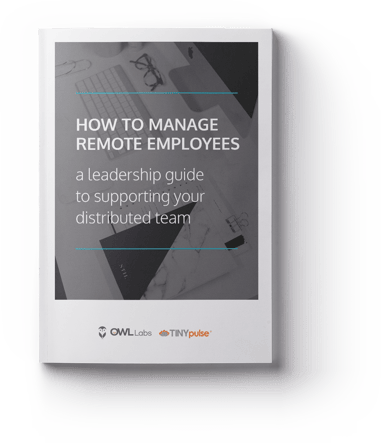
Download How to Manage Remote Employees, a free leadership guide to supporting your distributed team.

Benefits & Challenges of Working Remotely
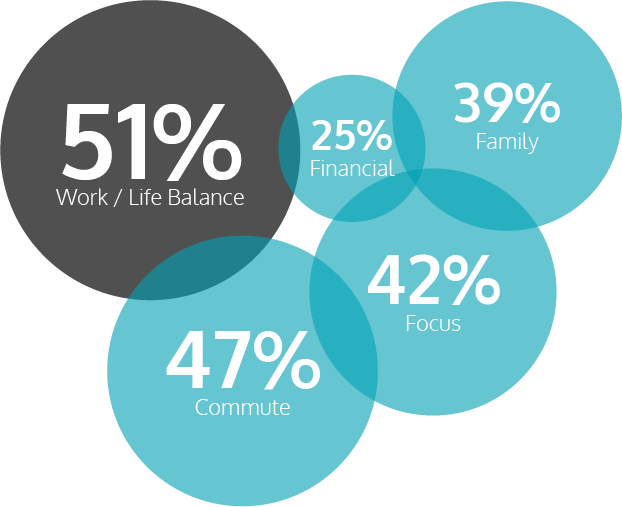
51% of remote employees work remotely to improve work/life balance.
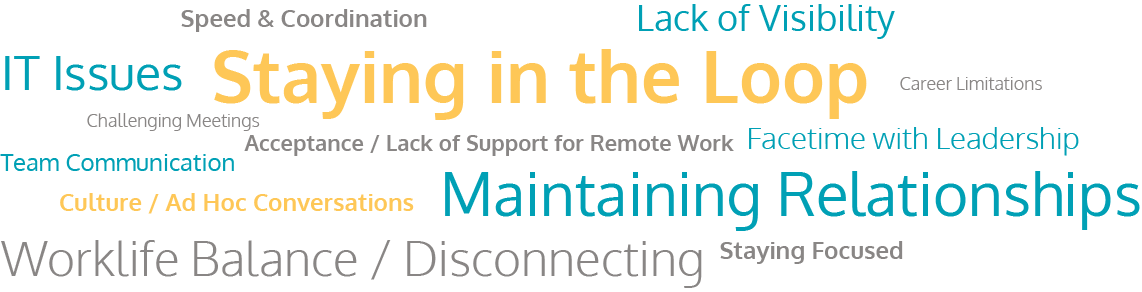
Employees miss conversations and celebrations most when working remotely.
Remote workers say their biggest challenge is staying in the loop.
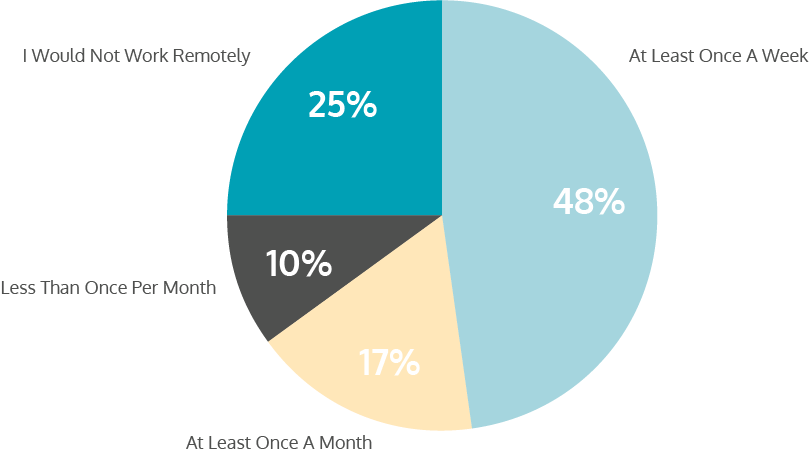
of employees who don't work remotely today would like to work remotely at least once a month.
57% of onsite employees choose not to work remotely because the nature of their job doesn't allow it.
Percentage of Respondents Who Choose Not to Work Remotely
Percentage of Respondents Who Choose Not to Work Remotely
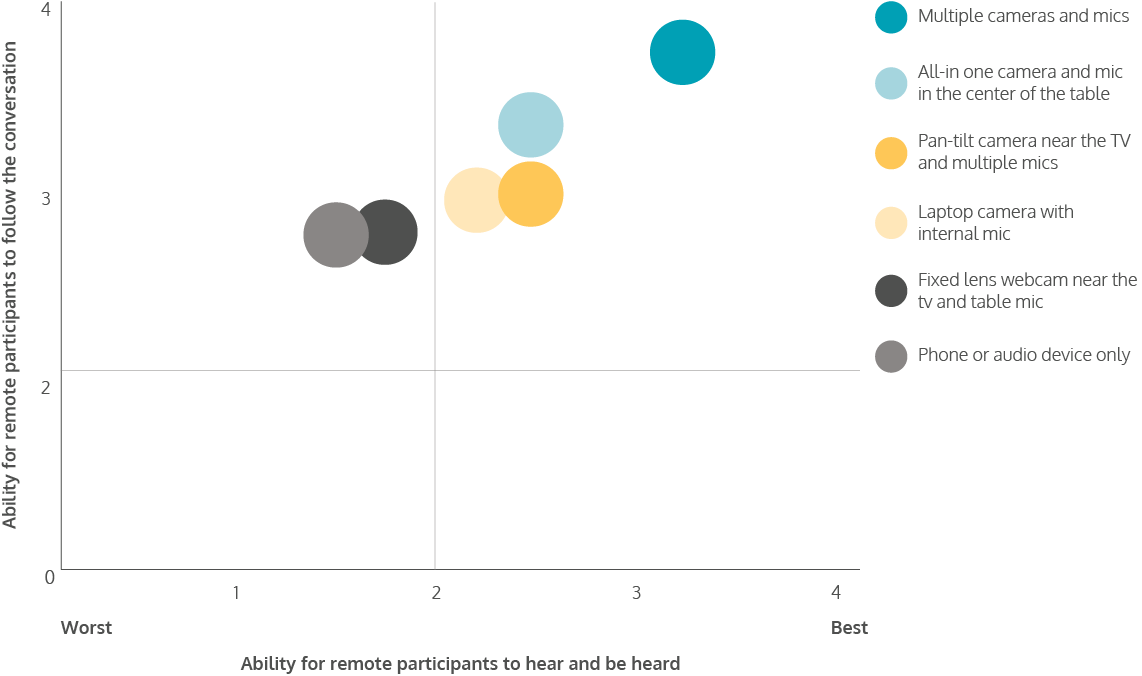
Brainstorms are the most challenging meeting to follow when attending remotely.

Video conferencing performs 30% better for communication than audio-only setups.
Managing a Remote Workforce
Managers of distributed teams say their biggest challenge is cultivating strong company culture.

Remote workers with managers who work on site have 25% fewer career growth conversations than average.
Average number of career growth conversations per year between manager and employee
- 0
- 5
- 10
- 15
- 20
Average number of career growth conversations per year between manager and employee
Remote Work and Job Performance
Job performance is most important to managers when considering an employee's request to work remotely.

Managers see equal performance between their onsite and remote employees.
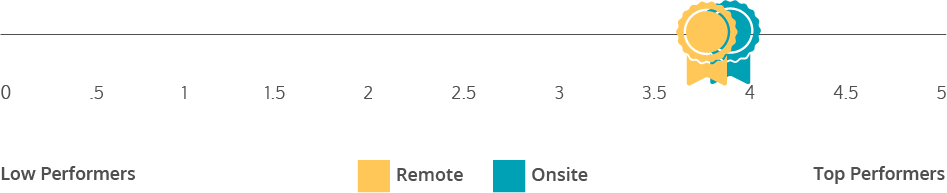
Data includes 1,097 US-based respondents across all company sizes and industries.

Download the Data
Want to share this report with a colleague or reference on your own blog? Download the graphs in slide format. All cited content should reference and link to the State of Remote Work.