15 Types Of Hand Embroidery Threads - SewGuide (original) (raw)
Hand embroidery does not need elaborate equipment or supplies; you can do it with a good enough fabric, embroidery thread, and a suitable needle. But when you get into the world of embroidery, you get to explore a lot more – Several embroidery tools and fabric and needles and threads that change the way you embroider altogether. Out of all these, threads make the most difference.
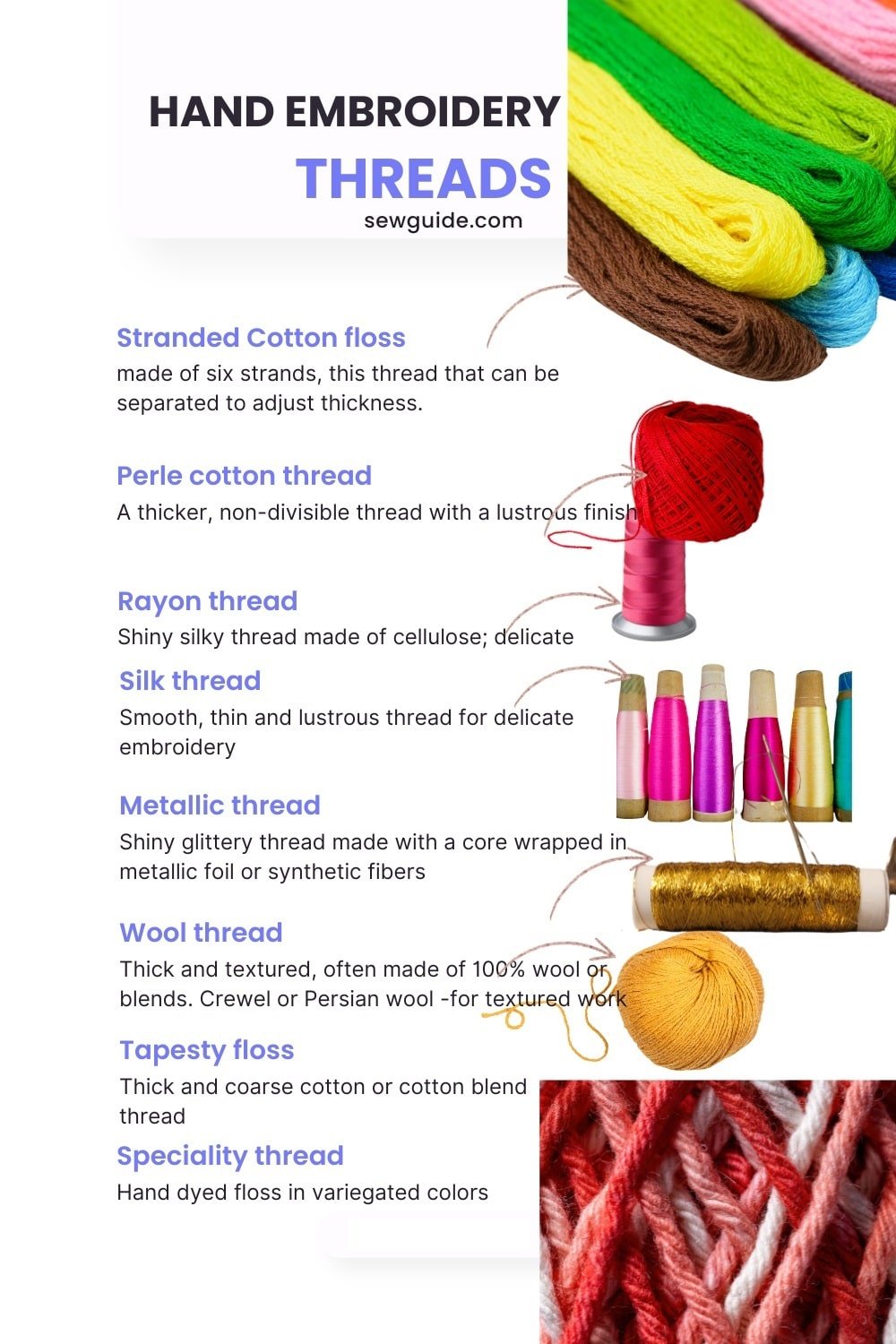
The most frequently used embroidery threads are 6-strand embroidery floss, (single color and multi color) Perle cotton, Wool thread, rayon (satin thread), Tapestry floss, wool thread, and metallic embroidery thread.
- 1. Stranded Embroidery Cotton/ embroidery floss
- 2. Perle cotton
- 3. Rayon Floss (Satin embroidery thread)
- 4. Metallic hand embroidery thread
- 5. Crewel Yarn/ wool
- 6. Tapestry Yarn/ Persian Yarn
- 7. Silk Threads
- 8. Knitting Yarn
- 9. Variegated threads or Multi color thread
- 10. Cord & Beading thread
- 11. Ribbons
- 12. Crochet thread
- 13. Sashiko thread
- 14. COTTON FLOCHE THREAD
- 15. Light effects embroidery thread
1. Stranded Embroidery Cotton/ embroidery floss

Stranded embroidery cotton thread is the most preferred thread for doing embroidery work .You may be calling it by the name ‘Embroidery floss’. This is the most common thread used for most embroidery work including cross stitch. Embroidery Thread or Floss is sold in skeins that have 8 1/2 yards in them with 6 strands.
Also called 6 strand embroidery floss.
It has 6 strands of thread throughout the skein. You can thread your needle with the whole 6 strands or separate the thread depending on the effect you want on the work or the material you are working on. Usually you just cut the floss to about 18 to 24 inches and then pull one strand at a time up and out of it.
For fine lines and delicate work, you will use one strand on your needle. For example for a needle painting work you use one strand and for cross stitch two strands and for needlepoint the full 6 strands. The embroidery floss is available in different fibers – cotton, rayon and silk.
2. Perle cotton

This is a slightly more heavier thread than the single strand of Stranded cotton thread. The pearl cotton thread is available in many weights . Buy a pearl cotton medium for most of your needs.
This thread comes in one single strand. If you look carefully at each of the single strands you will find that it is made of two fibers twisted together. Do not separate this – it is meant to be used so
If there is a number on your embroidery thread they mean something – higher the number lighter the thread.
The textured effect of this thread makes it great to be used in Hardanger embroidery, cross stitch, redwork etc. You can use this thread to make beautiful tassels.
3. Rayon Floss (Satin embroidery thread)

Rayon floss is used because of the bright colours and attractive silk (satin) like sheen. It is the shiniest embroidery floss and is available the same way that stranded cotton thread is.
But Rayon thread can be a difficult thread to work with. It knots and tangles easily. You can use short lengths to avoid tangling problems. You can also slightly dampen the thread before working by running a wet sponge to moisturize it.
4. Metallic hand embroidery thread

It is usually used to give highlights to other embroidery techniques or on its own like in gold work. Checkout the different types of metallic threads used for embroidery here. Metallic thread tarnishes easily, it tangles, snags and even frays but their beauty and brilliance is something else.
It may be difficult to wash a fabric embroidered with some metallic thread so it kind of limits the scope of work with it. Synthetic metallic thread does not tarnish though.
Light effects embroidery thread has a special glow (sometimes even glow-in-the-dark).
5. Crewel Yarn/ wool

This is a fine natural wool or acrylic two-ply strand; It is used in wool embroidery, needlepoint, cross-stitch, tapestry work. You can thread the wool thread on your needle and use it just like other embroidery threads for projects where you need some texture, as one strand of this yarn is as thick as two strands of embroidery floss thread.
6. Tapestry Yarn/ Persian Yarn

Tapestry yarn or Tapestry wool thread is a soft thick yarn that is best used on canvas and other heavy material – this is also used for needlepoint projects, crewelwork. Persian Yarn is another yarn used in needlepoint embroidery, crewel embroidery, and cross-stitch. It is great to use with canvas and other thick materials.
Felted wool yarn is 100% pure wool yarn that undergoes a felting process to give it a fuzzy texture. You can use it for couching in embroidery.

7. Silk Threads

Silk threads are available in beautiful brilliant shades and are very much used in fine embroidery. The problems encountered when using silk threads in embroidery work are that they fade very easily and they may bleed.
After you have done the silk thread embroidery just lightly press the back of the work using slight steam on the iron- this will give the whole silk thread a beautiful sheen
Silk thread is used to couch thicker threads ( like metallic threads or cords) on fabric surfaces. Checkout the different ways of couching.
8. Knitting Yarn

Knitting yarn is used for knitting, ofcourse, what else. It has a different thickness, referred to as Yarn weight. Learn more about the yarnn needed for hand knitting
9. Variegated threads or Multi color thread

This is a classification of embroidery thread based on the color of the thread. The variegated thread has many shades of the same colour in the same skein; the colour changes along the length of the same thread. It is available in all the types of thread fibers like cotton, silk and rayon.
This thread can make your work look stunning if used correctly. Buy variegated thread with subtle and gradual colour change for big projects. Learn how to work with variegated thread here.
10. Cord & Beading thread

Cord is used for couching embroidery, making jewellery, crafting, leather sewing, binding, wrapping, stringing, knotting, lacing, or beading.
Beading embroidery is beautiful and needs strong and durable threads. You get a nylon thread for beading embroidery stitches. The beading nylon threads are very thick, and durable though they are very fine and can be used with very fine beads. These threads are available in many beautiful colors. Then there are Waxed Cotton Cord Thread and polyester stretch cords. These thicker cords are used for beading stitches as well as macrame.
Elastic beading twines stretch and makes them best for making bracelets and such. There are invisible beading cords made of polyester which are sometimes preferred for stringing beads.

Related posts : 16 Different types of cords ; Checkout the Beadwork Stitching Tips and the different kinds of beads used.
11. Ribbons

Though they are not thread, Ribbons are used for embroidery the same way as you use embroidery floss. It is threaded through the needle and used to stitch beautiful floral designs. There are many different kinds of ribbons – check out the 15 common types of ribbons you can buy and embroider.
You can checkout the tutorial for ribbon embroidery stitches and the tutorial to make 10 easy ribbon embroidery flowers
12. Crochet thread

You can crochet with anything, even embroidery floss. The yarns mentioned earlier can also be used for doing crochet. But there is a special yarn used for crochet that has a beautiful sheen. It can be used to make beautiful doilies and other crochet things and to create string art.
13. Sashiko thread
This is a special embroidery thread used for stitching the Japanese embroidery work called Sashiko.
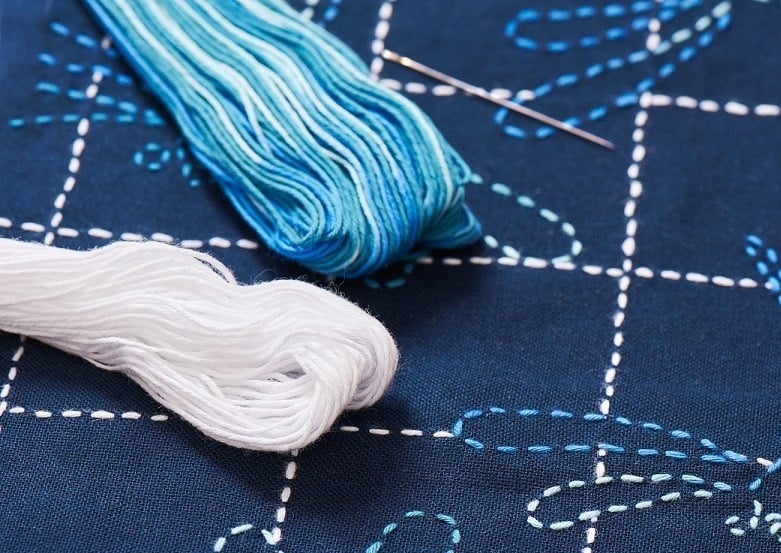
One strand of Sashiko embroidery thread is the thickness of 4 embroidery threads with a special twist which makes it very strong and durable – just right for the clothing repair work that it is famous for. You can use this thread with a thin long needle with a big eye (or a special sashiko needle). Read more on Sashiko here.
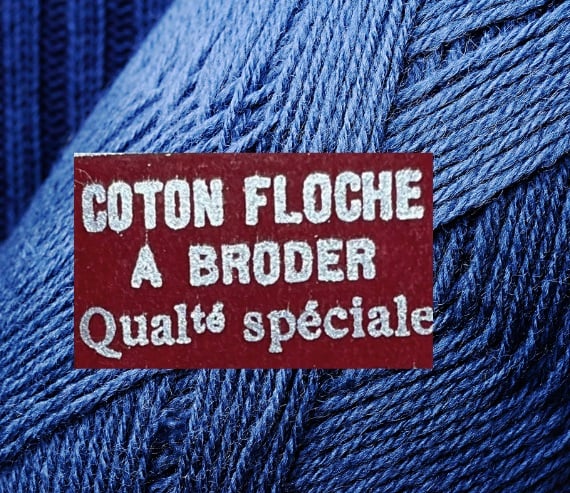
14. COTTON FLOCHE THREAD
A single-ply, non-divisible cotton thread with a beautiful sheen – Best for satin stitches, monograms and white work embroidery.
15. Light effects embroidery thread
This is a very shiny glow-in-the-dark, 100% polyester thread , colorfast and tarnish resistant metallic thread.
Related post: How to embroider on clothes – 10 steps to perfection.

Related posts: What embroidery means; Sewing machine thread; Decorative hand embroidery stitches; Best braided stitches; Embroidery stitch for large areas ; Enbroidery sampler