The Key Differences Between Economy, Premium Economy, Business & First Class (original) (raw)
 Credit: Shutterstock

Published Jun 9, 2026, 1:01 PM EDT
Alejandro Núñez Vicente is a Spanish industrial design engineer and founder of Chaise Longue, a pioneering aviation design startup focused on reinventing economy class seating with innovative two-level seats to improve passenger comfort and space. Recognized for his disruptive Chaise Longue Economy Seat concept, Alejandro’s work has drawn industry attention, including nominations for the Crystal Cabin Awards and engagements with major aerospace partners as he leads development and commercialization of next-generation aircraft interior solutions.
Sign in to your Simple Flying account
Boarding a plane today means stepping into a highly structured, carefully designed world. If you’re a frequent traveler or just interested in aviation, you probably spend your walk down the aisle analyzing exactly how airlines divide up the limited space inside their aluminum — nowadays also composite — tubes with wings. Understanding the real differences between economy class, premium economy, business class, and first class goes beyond just picking a ticket — it’s actually a masterclass in clever cabin design and airline economics that extends far beyond what we as passengers could ever imagine. In this guide, we’ll break down exactly what you get for your money across all four cabin zones.
To understand today's LOPAs (acronym for Layout of Passenger Accommodations), you have to look at how much flying has changed. During the "Golden Age" of the 1950s and 60s, just being on an airplane was a luxury, and even standard "coach" seats offered generous legroom and a sophisticated onboard service. Today, the industry is highly competitive, data-driven, and built on optimizing every single square inch. While we might miss the spaciousness of the past, this high-density approach is exactly what made flying affordable for millions, creating a sliding scale of comfort that fits just about every budget.
Economy Class: The Harsh Reality Of Flying Coach
Economy class, often called "coach", "standard seating," or "the back of the bus," is the undisputed backbone of the global commercial aviation industry. As someone who spends a lot of time thinking about airplane seats, I look at the economy cabin not only as the cramped space — and barely acceptable experience — that it is, but as an incredible feat of modern engineering and logistics. This is where the vast majority of travelers sit, and it’s the cabin that makes it possible for airlines to transport hundreds of people across the globe at affordable prices. While it often gets a deserved bad reputation for tight legroom and shrinking seat sizes, economy class is actually a masterclass in efficiency, allowing carriers to maximize passenger count while still meeting strict global safety regulations.
The main defining feature of modern economy class is space optimization, which is measured primarily by "seat pitch," the distance from any point on one seat to the exact same point on the seat in front of it. A few decades ago, standard pitch was around 34 inches (about 86cm), but today, most major carriers offer between 30 and 31 inches, with some ultra-low-cost carriers tightening it to 28 inches (about 71 cm). To make up for this lost space, seat manufacturers have developed "slimline" designs, stripping out bulky padding and using lightweight composite materials to carve out a little extra knee room for the passenger. Even with less physical space, today's modern long-haul economy seats often come with a crisp, on-demand entertainment screen, USB power outlets and a very limited recline, which tries to compensate for the uncomfortable and claustrophobic passenger experience that has become standard on almost every airline around the globe.
Despite the obvious physical limitations, economy class delivers exactly what it promises: safe, reliable transport that gets you to your destination at the exact same time as the people paying thousands of dollars at the front of the plane. For the budget-conscious traveler or the weekend adventurer, flying coach is a highly practical decision that leaves more money in your pocket for your actual vacation. Plus, when you consider that a modern twin-engine jet like the Airbus A350 or Boeing 787 is pressurizing the cabin to a more comfortable altitude and pumping in more humidity than older jets, the actual physiological experience of flying in economy today is arguably better than it was twenty years ago — but the truth is that the physical experience isn't.
Premium Economy: The Growing Sweet Spot
 Credit: Japan Airlines
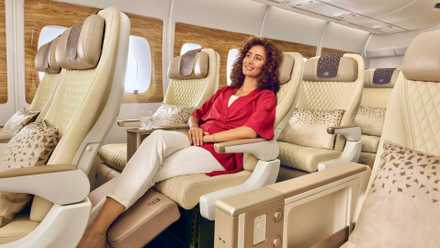
If you've booked a long-haul flight recently, you've probably noticed that premium economy has become one of the most popular cabin choices available. Introduced back in the early 1990s by airlines like EVA Air and Virgin Atlanticpremium economy was designed to sit — literally — right in the middle of standard economy and business class, filling a massive gap in the market. As business class tickets got more expensive and economy seats got tighter, a whole new demographic of travelers emerged: people who wanted just a bit more comfort and space, but couldn't justify the sky-high prices of a lie-flat bed. Premium economy essentially brings back the standard of comfort from the older days of flying, repackaging it as an upgraded experience for the modern era.
The physical differences when you upgrade to premium economy have a surprisingly big impact on a long flight. You usually get a wider seat — often 19 or 19.5 inches compared to the standard 17 to 18 inches in economy — and the seat pitch is bumped up to a very comfortable 38 inches, giving you plenty of room to stretch your legs and have a decent amount of recline. The seats also feature wider armrests that you don't have to fight your neighbor for, and usually a fold-out footrest or leg rest to help you sleep better. On top of the physical seat, airlines elevate the "soft product" as well, meaning you might get priority boarding, an upgraded amenity kit, and meals served on real ceramic dishware with metal cutlery instead of plastic trays.
From an airline business perspective, premium economy is an absolute home run. Industry data shows that this cabin often generates the highest profit margins per square foot of any zone on the aircraft, because it only takes up slightly more floor space than standard economy but sells for significantly more money — close to two times the price of an economy ticket. It’s the perfect product for small business owners, corporate employees whose travel policies won't pay for business class, or leisure travelers who want to start their vacation feeling rested.
 Related
3 Things That Matter Most In Premium Economy Comfort
The seat is the foundation of premium economy comfort. Airlines can add better amenities, but none of those compensate for an uncomfortable seat.
Business Class: The New First Class
 Credit: Qatar Airways
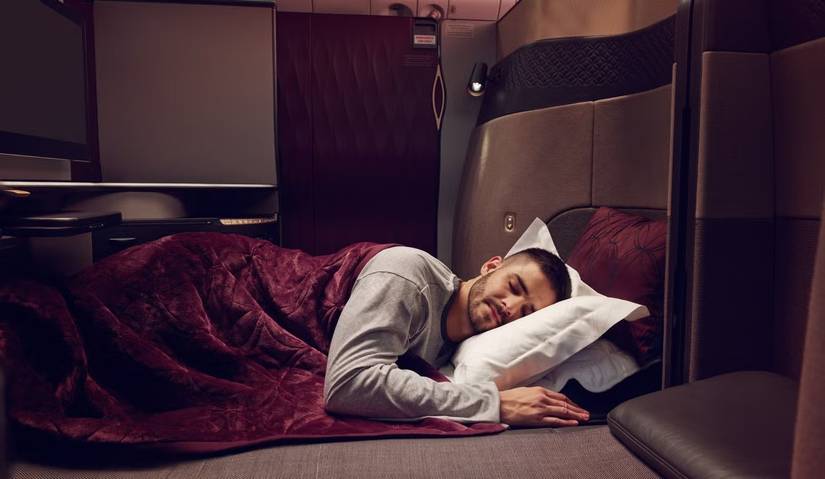
Business class is where the world’s major international airlines really go head-to-head to win over high-spending customers and corporate contracts. Decades ago, business class was just a section of slightly wider recliner seats with better food, designed to give executives a place to work. But over the last twenty years, this cabin has evolved so drastically that it has fundamentally changed the layout of modern aircraft, effectively replacing the need for first class on many routes. Today, long-haul business class is all about horizontal rest (essentially lie-flat beds), privacy, and creating a space where you can land feeling completely refreshed and ready to go.
The constant push for innovation in business class seating has been amazing to watch in the last 10 years. We went from "angle-flat" seats that tended to slide you downward while you slept, to 180-degree fully lie-flat beds, and now to direct-aisle-access layouts where nobody has to climb over their neighbor to go to the restroom or the galley. Carriers like  Qatar Airways with its famous Qsuites, or Japan Airlines with its brand new A350-1000 suites, have added sliding doors to the seats, turning them into private mini-rooms. Inside these suites, you’re treated to massive 4K entertainment screens, multiple storage compartments, designer bedding, and Michelin Star restaurant-quality dining that you can order on demand.
The reason business class has become so luxurious is simply that airlines have realized what premium passengers value most: uninterrupted sleep. Business travelers are paying a premium to avoid a day of lost productivity due to jet lag and back pain. By providing a true bed and a quiet, private environment, airlines are selling time and well-being rather than just transportation, making it the most important competitive product in their entire lineup.
First Class: The Ultimate Exclusivity
 Credit: Air France
While business class is focused on comfort and productivity, first class is all about pure, undeniable exclusivity and personalized service. It’s the highest tier of commercial air travel — and almost better than flying on a private jet in every aspect — as it is a space usually reserved for ultra-wealthy individuals, celebrities, or very dedicated travel hackers who have saved up millions of credit card points. First Class goes beyond just giving you a bed; it tries to replicate the experience of a five-star luxury hotel, making you forget that you are actually flying on an airplane at 35,000 feet.
The biggest difference between first and business class today comes down to real estate and the passenger-to-crew ratio. A Business Class cabin might have 40 to 60 seats, but a true first class cabin on a plane like the B777 or A380 usually only has six to eight massive suites and in smaller aircraft like the A350, between three and six. The space you get in first class is just incredible, sometimes featuring a separate leather armchair alongside an actual, standalone bed, rather than a seat that mechanically folds down. This is where airlines pull out all the stops:  Emirates has its famous onboard shower spas exclusively dedicated to first class customers, Singapore Airlines offers double beds if you're traveling with a partner, and
  Etihad Airwaysgoes even one step further with their "Residence" — which features an incredible wide sofa for up to two passengers together with a private bathroom that even has a shower, and to round up the experience a queen-sized bed onboard their A380s. The food for first class passengers on most premium airlines is almost always prepared by a dedicated onboard chef, featuring caviar and high-end vintage champagnes, and every single luxury you could expect for a seating experience that almost never goes below the staggering price of 5,000 US dollars on a one-way ticket, and that can sometimes reach 30,000 or 35,000 US dollars for an ultra-long-haul return ticket.
However, despite how amazing it looks, international first class is actually becoming pretty rare. Because business class has gotten so good with lie-flat beds and sliding doors, most passengers and companies simply aren't willing to pay three or four times the price for first class. As a result, many airlines have completely removed first class from their fleets, using that valuable floor space to install more business and premium economy seats instead. Today, first class is mostly kept around as a "halo product" — something that looks great on billboards and social media to build brand prestige, even if very few people can actually afford to fly in it. For this reason, the only airlines still offering a true first class product are the following:
The Economics Of Upgrading: Is It Worth It?
 Credit: Shutterstock
One of the most common questions I hear from friends and readers is, "Should I pay for the upgrade?" The answer is actually very complicated and depends heavily on how airlines price their tickets and how you value your own comfort. Deciding whether to upgrade from economy to a premium cabin is a personal choice that involves considering your budget, the length of the flight, and the condition you need to be in when you land. Here is a chart with all the key differences between the different classes:
| Feature | Economy | Premium Economy | Business Class | First Class |
|---|---|---|---|---|
| Seat Type | Standard upright seat | Wider seat, deeper recline, footrest | Lie-flat bed (on long-haul) | Private suite or extra-large bed |
| Seat Pitch (legroom) | 28" – 32" | 38" – 40" | 60" – 80" | 80"+ (often full cabin length) |
| Seat Width | 17" – 18" | 18.5" – 20" | 20" – 22" | 22" – 30"+ |
| Food & Drink | Standard meals, served in foil/plastic | Upgraded menu, real china and metal cutlery | Multi-course gourmet, premium alcohol | On-demand fine dining, caviar, exclusive wines |
| Airport Experience | Standard check-in and boarding | Dedicated check-in, priority boarding | Lounge access, priority security | Exclusive lounges, tarmac transfers, escorts |
| Price | Base fare (x) | 1.5x to 2x Economy | 3x to 5x Economy | 5x to 10x+ Economy |
If you want to look at it logically, try breaking down the upgrade cost by the hour. For example, if you're taking a six-hour daytime flight from New York to London, sitting in Economy is completely fine for most people; paying an extra 2,500toupgrademeansyou′respendingover2,500 to upgrade means you're spending over 2,500toupgrademeansyou′respendingover400 an hour just to have a wider seat while you watch movies. On the other hand, if you're flying 15 hours on a red-eye from Los Angeles to Sydney, the math changes completely. On ultra-long-haul flights, upgrading to a lie-flat bed isn't just a luxury; it's an investment in your physical well-being, meaning you won't lose the first two days of your trip to exhaustion and jet lag — but only if you can afford it.
It’s also helpful to know how airlines handle these upgrades today. In the past, you might have gotten lucky by dressing nicely and asking the gate agent, but today, upgrades are controlled by complex algorithms. Airlines use yield management software to try to sell empty premium seats for cash right up until departure. Many carriers now use digital bidding systems that let you offer a specific amount of money for an upgrade a few days before the flight. It turns the whole process into a silent auction, allowing the airline to squeeze a bit more revenue out of the seat while giving you a chance to fly better for less than the standard fare.
The Future Of Cabin Design
 Credit: Boom Supersonic
When you really think about it, walking through the different cabins of an airplane shows us how many different ways there are to experience the exact same journey. Whether you are drinking champagne in a massive First Class suite or settling into a window seat in the very last row of Economy, the core product is identical: you are flying through the air at 600 miles per hour, crossing oceans and continents in a matter of hours, from point A to point B. The segmentation of the cabin simply reflects the different priorities of travelers, allowing the people who pay the most expensive tickets at the front to essentially subsidize the more affordable tickets in the back, making global travel possible for everyone.
Looking at the industry today, it's incredible to see how far we've come in terms of safety, technology, and cabin design. We take it for granted that we can watch live TV and browse the internet while miles above the ocean. But as a seat designer, I'm always thinking about what comes next. Airlines will always look for ways to optimize space and increase revenue, but there is a growing demand from passengers for better ergonomics, smarter storage, and more creative uses of the cabin space that doesn't solely rely on standard horizontal rows.
As we look toward the next generation of aircraft and the future of commercial aviation, the big challenge will be balancing airline economics with the passenger experience. With new aircraft materials and potential shifts in fuselage shapes on the horizon, will we continue to just tweak the traditional rows of seats, or is it finally time to completely rethink the three-dimensional space of the cabin to give every passenger — regardless of their ticket class — a better way to fly?