Top Employee Reward Programs & How to Implement Them (original) (raw)
Key takeaways
- An employee rewards program recognizes individual and team achievements through social recognition, monetary or experiental bonuses, and other awards.
- Many employee engagement apps offer tools to design and implement workplace rewards programs.
What is an employee workplace rewards program?
A workplace rewards program is a structured way to recognize employees and teams that go above and beyond company goals through praise, bonuses, gifts, or shared experiences. Beyond handing out perks, employee reward programs create momentum. When recognition becomes part of your culture, people feel seen, work harder, and stay longer.
Done well, employee rewards programs build a performance-driven culture where great work is consistently celebrated. They can improve engagement, reduce turnover, and boost productivity across teams.
However, it’s important to realize that employee workplace rewards programs are a complement to — not a replacement for — a robust compensation strategy. Company swag or shout-outs can’t make up for a missing raise or promotion. If retention is your main goal, start by ensuring employees are compensated competitively before layering on recognition programs.
4 types of employee workplace rewards
Social recognition, monetary rewards, tangible rewards, and experiential rewards are some of the most common types of employee workplace rewards.
Public praise and appreciation build social currency. When employees see their work valued by peers, managers, or company leaders, it strengthens morale and reinforces the behaviors you want repeated.
When and how to give social recognition:
- Project completion: Post a shout-out for the team that launched the new product ahead of schedule.
- Customer success: Thank a support rep publicly for turning a tough client interaction into a positive review.
- Teamwork: Highlight an employee who stepped in to help a coworker meet a deadline.
- Innovation: Recognize someone who suggested a process tweak that saved time or money.
- Milestones: Celebrate a five-year work anniversary with a company-wide appreciation post.
- Adaptability: Acknowledge a team that quickly mastered a new tool or system.
- Culture-building: Praise an employee who consistently lives out company values.
Even good intentions can backfire if recognition feels shallow or uneven. Avoid generic praise like “Great job!” and be specific about what the person did and why it mattered. Watch for patterns of favoritism, too. If the same people are always recognized, others may feel overlooked. And remember, not everyone loves public attention, so give employees the option to receive appreciation privately.
Recognition can come through platforms like Motivosity, where employees share value-based appreciation notes publicly or privately — giving everyone a way to be seen in a style that suits them. Managers can also create formal awards to mark major milestones and achievements.
2. Monetary rewards
Bonuses, raises, or gift cards show appreciation in a form that employees can directly use — and that’s powerful motivation. Tying monetary rewards to milestones, sales goals, or performance targets helps reinforce a culture of accountability and results.
When and how to give monetary rewards:
- Goal achievement: Award a bonus to a salesperson who exceeds quarterly targets.
- Project excellence: Give a cash reward to the team that delivered a complex project under budget.
- Innovation: Offer a spot bonus to an employee whose idea improves efficiency or cuts costs.
- Milestones: Provide a monetary gift for major anniversaries, like five or ten years with the company.
- Exceptional performance: Recognize a standout employee during performance reviews with a merit increase.
- Referral success: Reward staff who refer successful new hires.
- Company-wide wins: Share profit-based bonuses after hitting annual revenue or customer satisfaction goals.
What to watch out for when giving monetary rewards
Monetary rewards are powerful but tricky. If the criteria for earning them aren’t clear, bonuses can feel arbitrary or unfair. Be careful not to rely too heavily on cash — when employees start expecting financial rewards for every achievement, intrinsic motivation fades. Keep the system consistent, measurable, and sustainable within your budget.
Platforms like Bonusly let employees choose how they’d like to receive rewards, increasing satisfaction and perceived fairness.
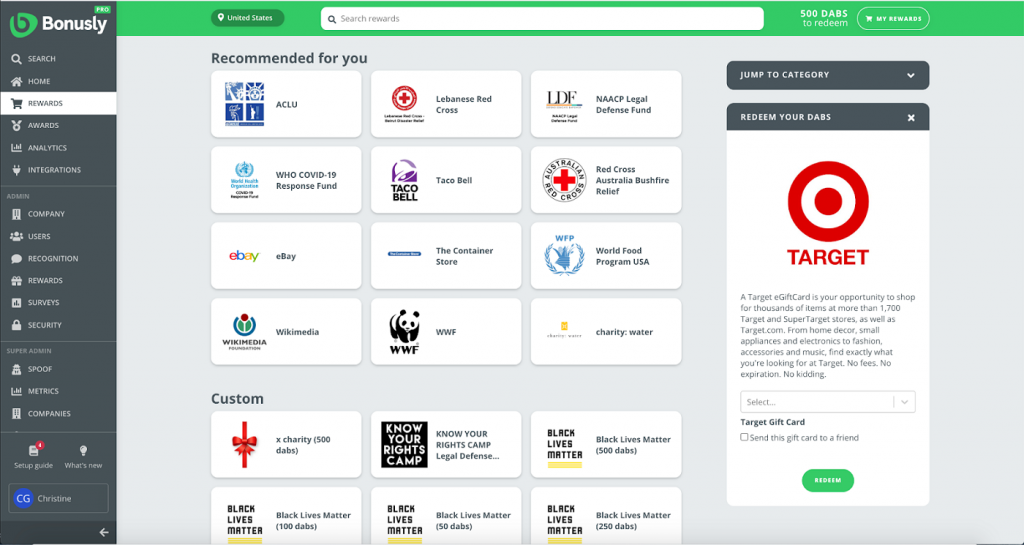
Apps like Bonusly let employees choose from a wide variety of monetary rewards. Source: Bonusly
3. Tangible, non-monetary rewards
Tangible employee rewards often come in the form of company swag. Branded pens, mugs, t-shirts and other merch items are usually easy to order and budget-friendly, but they tend to lack a personal touch and require physical storage space.
When and how to give out tangible, non-monetary rewards:
- Project completion: Gift team-branded hoodies after a major product launch.
- Employee of the Month: Present a personalized trophy or framed certificate.
- Creative achievement: Send a custom notebook or mug featuring the employee’s design or slogan.
- Milestones: Give a branded backpack or water bottle for work anniversaries.
- Above-and-beyond effort: Surprise an employee with a curated gift box after handling an urgent client issue.
- Event participation: Hand out company swag to volunteers at recruiting fairs or community events.
- Peer recognition: Let employees nominate a coworker to receive a small personalized gift.
What to watch out for when giving tangible, non-monetary rewards
Physical rewards can feel personal and fun, but they can also miss the mark if they’re one-size-fits-all. A cheap water bottle or another logoed T-shirt may not make employees feel valued. Choose items that reflect individual interests or achievements, and plan for logistics like shipping, inventory, and sustainability so the gesture stays meaningful, not wasteful.
Some rewards platforms, like Awardco, let users pick items from Amazon and other retailers. This flexibility often reduces waste and improves employee satisfaction.
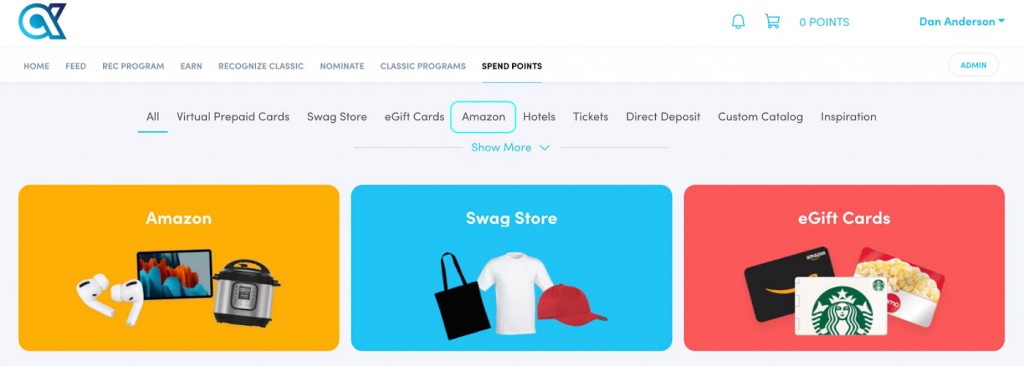
Awardco users can redeem points for the items they want. Source: Awardco
4. Experiential rewards
Most employees are happy to receive a bonus check or physical gift, but experiential rewards are often the most cost-effective and engaging form of appreciation. In a 2023 study, Blueboard found that experiential rewards have 38% more positive impact on employee experience than gift cards, cash bonuses, extended PTO, food, and physical gifts.
For teams and departments, that might look like a team outing or office celebration. For individual employees, bucket-list adventures or curated hands-on activities are often the most meaningful ways to show appreciation.
Still, recognition isn’t experienced equally. A 2025 Reward Gateway survey found that men report feeling more appreciated than women, and employees at larger organizations (2,500 + staff) feel less valued than those at smaller companies.
Thoughtful, personalized experiences can help close those appreciation gaps and make recognition feel more genuine, inclusive, and impactful for everyone.
When to give out experiential rewards:
- Major milestones: Celebrate a 10-year anniversary with a weekend getaway or concert tickets.
- Outstanding performance: Reward a top performer with a cooking class or spa day.
- Team achievements: Treat the whole team to an escape room, dinner out, or group workshop.
- Innovation wins: Offer a “choose your own experience” voucher for employees whose ideas drive measurable impact.
- Company celebrations: Host a company-wide retreat, volunteer day, or cultural event after hitting key business goals.
- Employee recognition programs: Let monthly or quarterly award winners select from curated experiences like travel, live shows, or adventure packages.
What to watch out for when giving experiential rewards
Experiential rewards create lasting memories, but only if they’re thoughtful and well-matched. Not everyone wants the same kind of experience, so offer a range of choices to fit different interests and comfort levels. Keep an eye on budget creep, and follow through carefully on promised experiences to maintain trust and excitement.
How to create an employee workplace rewards program
Want to create an employee workplace rewards program, but not sure how to get started? Here are the steps that you should follow to create an employee workplace rewards program:
Step 1: Decide on your goals for an employee workplace rewards program
First, you need to decide on your goals for your employee workplace rewards program. There are many possible reasons why your company might want to implement a rewards program — you might want to improve employee morale, create a more positive company culture, reduce turnover, or all of the above. Pinpointing your exact motivations will help you to set up an effective program.
Step 2: Select reward criteria and frequency
There are many positive behaviors that are worth rewarding, and the most effective rewards programs recognize a healthy mix.
Some rewards may be performance-oriented, such as finishing a project before the deadline or fixing a critical issue. Other behaviors that are more oriented towards teamwork and company culture, like volunteering to help a coworker or reaching a milestone employment anniversary, are worth rewarding too.
You should also consider how often different types of rewards are given. Peer recognition is most effective when it can be given spontaneously, but top-down, company-wide recognition and high dollar rewards are more impactful when they are awarded less frequently.
Step 3: Establish KPIs to track performance
If you want to give out performance-based rewards, establishing key performance indicators (KPIs) is essential. KPIs allow you to objectively track performance and make objective comparisons between individuals or teams. They are especially important for determining monetary rewards such as bonuses and merit salary increases.
Appropriate KPIs vary from business to business and team to team. For example, you might want to track the total number of tickets your customer service reps close, but it would make more sense to track deal closure rates for sales employees.
Performance management software such as Leapsome and 15Five makes it easy to set and track these KPIs for each employee across the entire business. Many HR software platforms now include a performance management module, but you can also get standalone performance management solutions if your current HR software doesn’t have this capability.
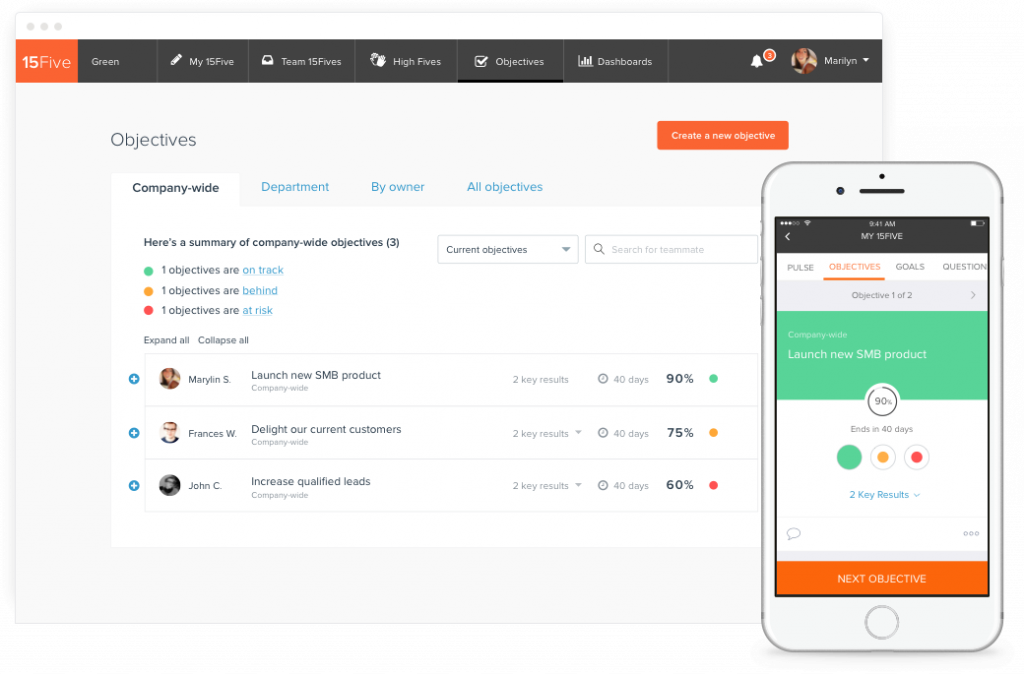
15Five provides an objective view of individual and teamwide performance. Source: 15Five
Step 4: Plan the budget for your reward
Next, it’s time to plan the budget for your employee rewards programs. Calculate the total amount of money you want to spend on employee rewards for the next year as well as the estimated costs for each type of reward you are thinking of offering. Keep in mind that employee reward programs typically increase productivity and retention rates, so they have a high ROI when implemented correctly.
Step 5: Determine which rewards are most valuable to employees
Once you have an idea of what rewards are realistically within the budget, it’s time to survey employees about what they actually want. Employee engagement apps, like Leapsome, make it easy to create surveys, distribute them to employees, collect responses, and analyze the results.
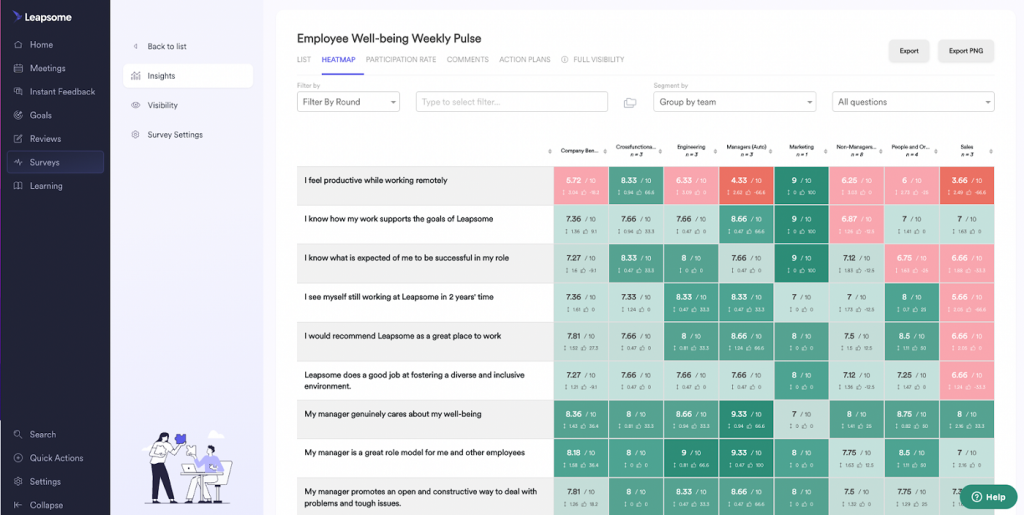
Leapsome’s analytics tools provide clear visualizations of pulse survey results. Source: Leapsome
If most employees want vastly different rewards, then you might be better off implementing a points-based reward system. With these systems, employees collect points as they achieve goals and get recognition from their peers. Once they’ve saved up enough points, they can redeem them for gift cards, swag, and other rewards of their choice.
Step 6: Collect employee feedback and continue to adapt
After implementing your workplace rewards program, continue to regularly survey your employees about the effectiveness of the program. Review the feedback for patterns and implement changes based on the responses to maximize the impact of your rewards investment.
Employee rewards FAQs
When designed and implemented well, an employee workplace rewards program offers many potential benefits. For starters, a workplace rewards program makes employees feel like a valued part of the company. It also fosters a sense of belonging and makes employees feel more connected to team members.
Not only does this make employees feel happier and more satisfied at work, but it also improves engagement and productivity. Employees who are effectively and appropriately rewarded for excellent work are more likely to stick around and produce consistent results that benefit the company as a whole.
Recognition works best when it’s timely and specific. Social recognition can happen anytime someone goes above and beyond, while larger rewards — like bonuses or awards — might be quarterly or annual. The key is consistency, not frequency.
Set clear, transparent criteria for all rewards and track participation to ensure equal opportunity. Balance public recognition with private options, and vary rewards so they resonate across different roles, personalities, and backgrounds.