6 Strategies to Reduce High Employee Turnover (original) (raw)
Key takeaways
- Employee turnover is the cyclical process of hiring, losing, and replacing employees.
- It’s a normal part of business, but a turnover rate of 18% or more is high, costing companies money, morale, and productivity.
- Companies can improve employee retention by supporting new employees, improving the terms of employment, and investing in workplace culture.
6 strategies to reduce employee turnover
Employers can reduce employee turnover through several retention strategies that help optimize the employee life cycle:
1. Conduct exit interviews
HR teams can remove the guesswork from voluntary departures by conducting effective exit interviews to understand what’s actually causing people to leave, so you can fix issues before more employees walk out.
Over time, exit interview data might reveal common themes that departing employees mention. These often uncover patterns like:
- Culture or workload issues
- Compensation that’s no longer competitive
- Ineffective or untrained managers
- Unclear role expectations
- Limited growth or career pathways
Combining this data with workforce analytics can uncover more patterns that lead to more effective employee retention strategies. As a result, HR can turn these into actionable points, such as adjusting compensation, workload, or management training.
2. Optimize employee onboarding
Poor or inconsistent onboarding is one of the biggest drivers of early attrition. Most voluntary turnover happens in the first 6–12 months, making the early employee experience one of the most critical retention windows.
Strengthening onboarding—especially beyond the first week—helps new hires feel supported, confident, and connected before they reach the point where early-stage attrition typically occurs.
HR teams can turn to a number of data sources to adjust their onboarding process. A few examples that can pinpoint where new hires are getting stuck are:
- Help desk or HRIS data showing manual processes or onboarding gaps
- Exit interview insights about unclear expectations or lack of support
- Engagement metrics showing low connection or belonging
- Time-to-productivity data signaling slow ramp-up
If engagement among new employees seems to be an issue, HR team members can help new hires plug into the company culture by introducing them to others in the company through welcome events, checking in routinely, and establishing an onboarding buddy system.
Perhaps the onboarding process is unclear, or many tasks are manual, which points to issues with the software solution or how its workflows are configured.
3. Invest in company culture
Culture is one of the strongest predictors of long-term retention. When employees feel respected, included, and connected, they’re far less likely to leave, regardless of tenure or role.
While fixing workplace culture is a feat that will take time, investing in employee engagement software, social collaboration tools and workplace events helps to set a new tone for the company culture. These efforts, in turn, help boost morale and foster connections that make employees want to stay.
For example, examining turnover data more closely in terms of demographics might reveal that the company culture doesn’t respect and value employees from a range of backgrounds, identities, and abilities.
In response, a company can create or revamp diversity, equity, and inclusion (DEI) initiatives in the organization by offering:
- Freedom to establish employee-initiated, employee-led employee resource groups (ERGs).
- Diversity and inclusion training framed as learning opportunities about unconscious bias, workplace harassment, how to foster an inclusive workplace environment, and how to be an ally.
Regardless of whether a particular demographic makes up most of the turnover, fostering social collaboration and team building helps boost workplace culture and employee engagement, too.
Gallup’s 2025 Sate of the Global Workforce Report revealed that employee engagement fell to 21% when 2024 closed. To boost enagement, companies can set up:
- Corporate volunteer events
- In-person celebrations or events
- A mentorship program
- Interest groups for employees to connect on shared interests, e.g., Slack channels, book clubs, etc.
- Avenues for giving and receiving employee recognition, such as in Motivosity
- Feedback loops through employee engagement tools to identify signs that employees are unhappy
Pulling some or all of these levers can result in returns on employee satisfaction and engagement.
Learn more about how you can recognize employees in Motivosity below:
4. Offer flexible work arrangements
Today’s employees value flexibility more than ever. According to the International Foundation of Employee Benefit Plans’ 2025 survey, 80% of corporate employers now offer hybrid work options, and more than half of those (53%) also support fully remote employees.
As a result, companies should abandon a one-size-fits-all approach to how work gets done, focus on results, and let employees decide how they work best. This could include offering:
- Remote work options (full-time or location-flexible)
- Hybrid schedules with designated in-office collaboration days
- Flexible hours that let employees choose when they start or finish
- Compressed workweeks (e.g., 4×10 schedules or 9/80 arrangements)
- Core hours models where employees must be online for a set window but manage the rest of their time independently
- Job-sharing arrangements for employees who need reduced workloads
- Flexible shift swaps for frontline or hourly teams
Providing a menu of flexible work options empowers employees to choose arrangements that best fit their needs that ultimately improve satisfaction and reduce turnover.
5. Develop a (better) benefits and compensation strategy
Low pay and lackluster benefits continue to drive employee resignations. A 2025 Thatch survey found that pay is the primary deciding factor for one-third of employees planning to leave their jobs. The same study also showed that health benefits ranked higher than both culture and career growth when employees weighed whether to stay or move on.
Human capital management (HCM) vendors, such as Workday and Oracle HCM, use industry benchmarks to help a company determine and improve the level of competitiveness in their compensation strategy.
Analytics in benefits administration software indicates to HR how effective the current benefits package is. For example, employee engagement metrics such as enrollment and usage are good starting points for assessing how competitive a company’s benefits are.
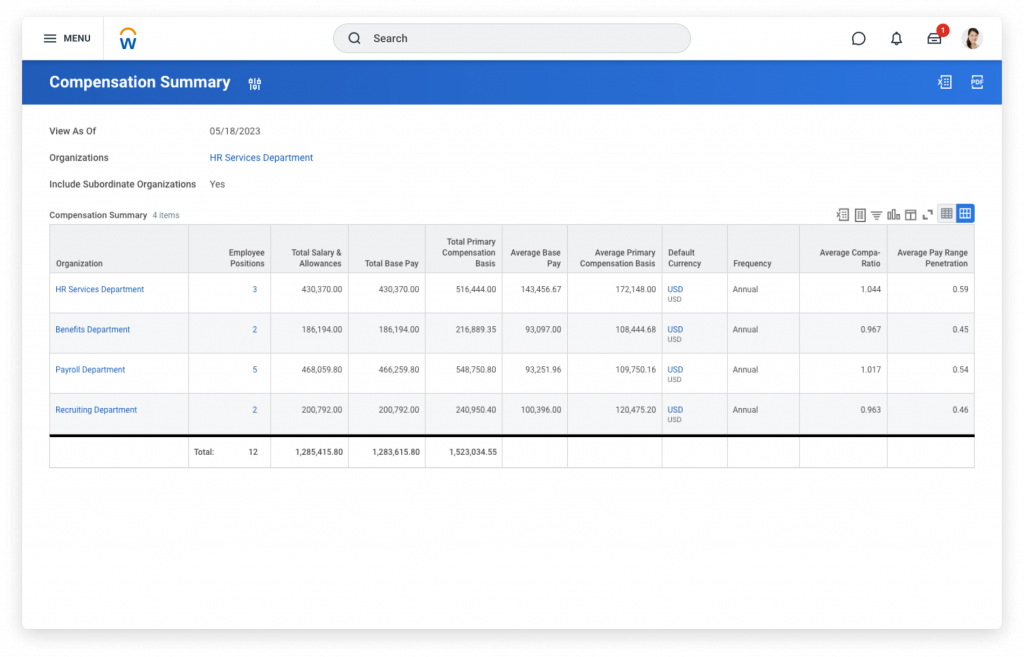
Workday allows you to collaborate with multiple stakeholders on a fair and equitable compensation plan, ensuring your pay remains competitive. Source: Workday
External factors shape employee expectations
Beyond pay and benefits being top turnover drivers, broader economic pressures are also shaping what employees expect. Rising cost-of-living, volatile inflation, and years of wage stagnation have pushed workers to prioritize compensation more sharply than before.
As a result, employees increasingly expect transparent pay ranges, clear salary progression paths, and predictable compensation policies that help them plan their finances with confidence.
6. Facilitate employee training and development
Employees desire an employer that will invest in and support their professional development, so if the employer fails to do so, this could be a reason for turnover. In fact, lack of opportunities for growth and advancement—as well as low pay—were cited as top reasons why people left their jobs in the Pew study.
HR and learning and development teams can create pathways for career development through:
- Learning management systems that host personalized training and recommendations.
- Mentorship programs.
- Performance management to encourage and reward goal setting.
- Manager training, as poor management is another major contributor to employee turnover.
How do you calculate employee turnover rate?
Turnover rate =
Number of employees who leave their role within a set time frame
Average number of total employees in the same time period
x 100
- Define the time period for measuring turnover. This could be a month, quarter, or year, or it could be a time frame surrounding a particular event.
- To find the average headcount for that time period, add the number of employees at the beginning of the period to the number of employees at the end of the period and divide by two.
- Then, divide the number of employees who left their role by the average headcount for that period. Multiply that result by 100 to arrive at the turnover rate.
Here’s an example of this formula in practice:
A company has 100 employees at the start of the month and 80 at the end. The average headcount is calculated like this: (100+80)/2 = 90 total employees on average.
Let’s say 20 employees moved to another role during that month. This is the equation for turnover rate: (20/90) x 100 = 22.2%
Employee turnover FAQ
The right HR software that includes robust people analytics can assist with reducing employee turnover. Check out our HR Software Guide.