Native Coneflowers: A Beginner's Guide | The Plant Native (original) (raw)
Coneflowers—also known by their Latin name _Echinacea—_are cheerful, bright perennial flowers that bloom for a month or more in the summer. All nine species are native to North America. Coneflowers are known for their distinctive drooping petals and large, cone-shaped seed heads. Their blooms become seeds in the fall, turning into natural bird feeders. Coneflowers love full sun, are very easy to grow, and are drought tolerant. An absolute must for any sunny garden.
All nine native coneflower species are pollinator favorites
Coneflowers are a perfect native plant to grow because they are so easy to grow and they look stunning quickly. Their blooms are not shy: the neon-pink or bright-yellow petals look electrified in the summer. Coneflowers are perennials—plant once and they come back year after year. Let’s spend some time getting to know more about coneflowers, including how to plant them and what kinds to add to your garden.
Why is it important to plant native plants like coneflowers?
Planting native plants like coneflowers makes our yards and spaces gorgeous while helping the birds, butterflies, and animals (and helping save us time.) Here are three reasons why planting native is worth it:
- Support wildlife. Without native plants, iconic animals like Monarch butterflies and songbirds won’t have the food or homes needed to survive.
- Save time and money: After the first year of establishment, native plants are happy with normal rainfall.
- Enjoy fuss-free, resilient beauty. Coneflowers are drought-tolerant and require no fancy fertilizers or special care. Native plants are always the best choice for busy gardeners.
About their Latin name Echinacea (and a warning about seed tops!)
Coneflower and Echinacea are two different names for the same plants. Coneflower is a common name, or a plant name given generations before. However, all coneflowers also have a Latin name, or a singular two-part name to help place them within the plant kingdom.
All coneflowers’ Latin names begin with Echinacea, which is also sometimes used as these plants’ names (especially regarding vitamins—more on that later).
Every single one of the nine species of Echinacea is native to North America. If you see a plant that has Echinacea in its Latin name—plant away!
Coneflowers are related to daisies
If they remind you of daisies, that’s because coneflowers and daisies are in the same plant family—the Asteraceae or Compositae family. Most of this family’s plants share the center-surrounded-by-petals flower shape we learn to draw in kindergarten. (Asteraceae comes from the Greek word for star, which refers to the star-like flower shape.)
However, coneflowers are native to North America, while daisies are not. The classic white-with-yellow-center shasta daisy is native to Europe and Asia. For more, read our FAQ: Asters, Daisies, and Chrysanthemums—What’s the Difference?
When do coneflowers bloom?
Coneflowers have a very long bloom time: flowers will be out from mid-summer to early fall. Their bright petals are out for 4-6 weeks. Plant coneflowers in your garden for memorable, bright blooms through the end of summer and early fall. They are the perfect plant for highly visible, sunny spaces.
What do coneflowers look like in the fall and winter?
Leave your coneflowers in the garden through the fall and winter and let them become nature’s bird feeders. Leaving our gardens alone throughout the fall and winter helps native flowers turn into seed buffets for birds.
Small birds like bright yellow finches love to sit on top of the seed heads and enjoy a feast. In the late winter and early spring, coneflowers are a welcome food source.
Now that we’ve covered the name and benefits, let’s meet the different species.
Meet North America’s native coneflowers
Nine species of coneflowers are native to North America. Four species are easily found in seed or plant form. Look for these in your local plant nurseries or garden shares.
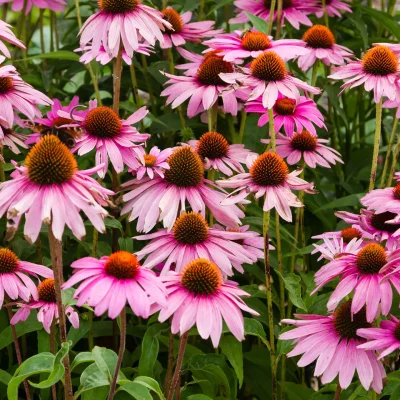
Purple Coneflower
Echinacea purpurea
You know and love Purple Coneflower. This icon is native to the Eastern United States (It’s also sometimes called ‘Eastern Purple Coneflower ‘). Plant as many as possible in your garden, for pollinators and birds alike. They can grow tall, reaching up to 4-5 feet. Surround them with shorter plants.
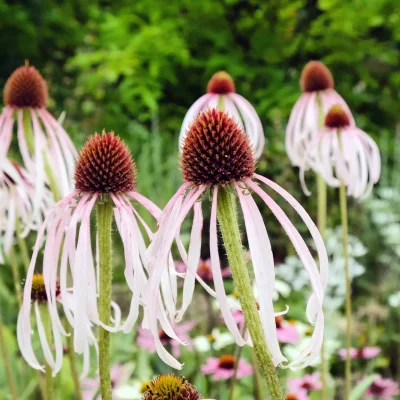
Pale Purple Coneflower
Echinacea pallida
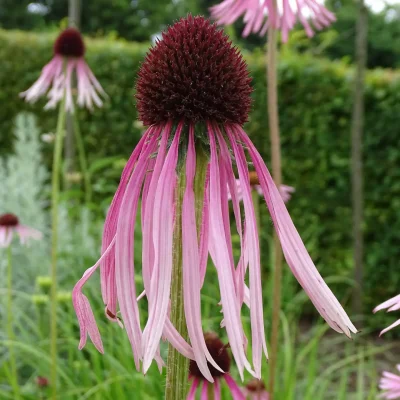
Pale Purple Coneflower is native to the great plains. Its long, elegant petals look like a ballerina’s tutu, especially when caught in the breeze. They get tall—4-6 feet. Surround them with medium and shorter native flowers.
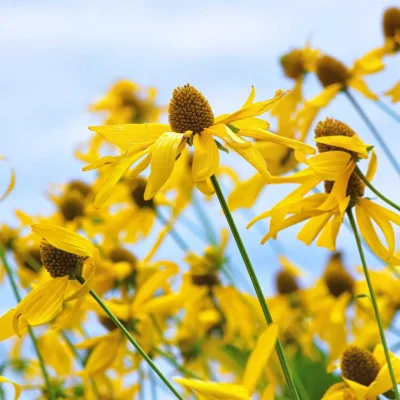
Yellow or Ozark Coneflower
Echinacea paradoxa
Yellow Coneflower (sometimes called Ozark Coneflower) is straight-forwardly named; its shape and drought tolerance are similar to that of its purple and pink cousins. Native to just four states: Arkansas, Texas, Oklahoma, and Missouri.
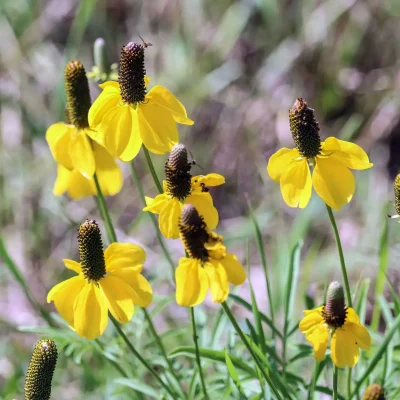
Prairie Coneflower
Ratibida columnifera
Prairie Coneflower is not in the Echinacea plant genus, but since its common name often includes ‘coneflower,’ we’ll include it here. It is also sometimes referred to as Mexican Hat Coneflower. These tall, sun-loving perennials look gorgeous in the heat of the summer.
Looking for the other native coneflowers? Sadly, the other species are rare—some are even endangered.
Here’s the story, which ties back to echinacea in grocery stores worldwide.
Endangered and rare native coneflowers
We’ve all heard of echinacea before, especially when we have a cold and are perusing the vitamin or tea aisle. As we mentioned earlier, everything that says ‘Echinacea’ comes from a coneflower plant. Coneflowers have been used for centuries—first by Native Americans—for their medicinal benefits.
Sadly, in recent generations, these native plants have been pulled up in enormous numbers. According to plant historian Marjorie Harris, “In 1990 alone, 70,000 pounds of dried [coneflower] root were collected, much of which was shipped abroad. The same year, the U.S. government stopped issuing licenses for this purpose in fear that the herb might be wiped out.”
Combine this with the rise of invasive plants like kudzu overtaking coneflower habitat, and you’ll see why some native coneflower species are in trouble.
Below are some endangered, threatened, or imperiled native coneflower species. (The different names relate to different levels of scarcity, but the message remains the same: these plants need help to survive.) If you see these plants in the wild, admire but do not touch. If you spot them in a local nursery or plant sale, take good care of them and give away as many seeds as you can.
Let’s wrap up the list of native coneflowers. These final four species have smaller ranges within the U.S. (their names give clues to their small ranges.)
6. Topeka Purple Coneflower (Echinacea atrorubens) 7. Sanguine Purple Coneflower (Echinacea sanguine) 8. Wavyleaf Purple Coneflower (Echinacea simulata) 9. Tennessee Purple Coneflower (Echinacea tennesseensis)
Congrats! You’ve met all the native coneflowers!
Now I bet you’re thinking… “Hmm. I’ve seen other coneflowers before in reds, whites, oranges. What are those?”
Those are cultivar coneflowers.
What is a coneflower cultivar?
A cultivar is a plant that has been created or curated by humans to look or behave a certain way—here is a quick cultivar overview. There are so many coneflower cultivars that have been developed for use in gardens. (You know it’s a cultivar by a cheeky marketing name in ‘single quotes’.) Popular coneflower cultivars include:
- Echinacea purpurea ‘White Swan’: This cultivar has large, white petals and is a popular choice for adding a touch of white to a garden.
- Echinacea purpurea ‘Mac ‘n Cheese’: This cultivar’s name says it all: its bright orange-yellow flowers look dipped in cheese powder.
- Echinacea purpurea ‘Green Envy’: This cultivar has green petals surrounding a dark center—very memorable.
- Echinacea purpurea ‘PowWow Wild Berry’: A cultivar with hot pink petals and a dark red cone.
- Echinacea purpurea ‘Hot Papaya’: This cultivar has bright orange-red flowers that remind you of flamenco dancers.
The Latin name Echinacea purpurea shows that all these cultivars are made from the native Purple Coneflower, which provides the original DNA.
Native vs. Cultivar Coneflowers
Let’s compare a native Purple Coneflower to its cultivar cousin.
When you see them side by side, you have to wonder—how can pollinators understand this is the same plant?
Are coneflower cultivars bad?
The conversation about planting native cultivars vs. true native species is heated in botany and horticulture. Some believe that planting true native species found naturally within your home area is the only way. Other gardeners—even some Master Gardeners at Mt. Cuba Center, the largest native garden in the U.S.—embrace cultivars in their landscapes.
If you’re looking for The Plant Native’s opinion:
Plant true native plants whenever possible. Do this so that the genes will cross-pollinate with other native species and continue to evolve into resilient, beautiful plants. But let’s not make gardening feel like a botany exam. If you fall in love with a cultivar, it’s always better than a non-native plant.
Where to plant coneflowers
Coneflowers like full sun and most varieties get tall (up to 4-5 feet) Plant them in sunny areas, with shorter native plants in front (Bee Balm, Nodding Onion, and Butterfly Weed—a type of milkweed—are great pairings).
How to grow coneflowers
Coneflowers are very easy to grow. They are
- Drought resistant: don’t worry about them surviving dry summers; they can handle droughts
- Low maintenance: no fertilizer or special needs are required for coneflowers to thrive
- Longtime bloomers: their bright blooms are open 4-8 weeks from the summer to early fall
- Perennials: they will come back year after year. Once you plant them and they are happily established, you can enjoy them in your yard for years to come.
More good news:
Coneflowers are deer-proof
Deer do NOT eat coneflowers. If you’re worried about deer nibbling your garden, planting coneflowers is a good native gardening choice.
Grow coneflowers by seed
It’s easy to plant coneflowers by seed if you are patient: plants started from seed may not flower until the second year.
For less than $5, you can plant a garden full of coneflowers by seed. Seeds are easily found in any local nursery and even at big box stores.
For $0, you can also plant a garden full of coneflowers, if a neighbor gives you a seed head. Make sure you do this in the fall—before the birds eat it all! (Coneflower seed heads are very spikey—remember to wear gloves when handling the seed tops.)
To collect the coneflower seed, put the seed head between two plastic cups and shake vigorously. The seeds will separate from the seedhead easily.
Grow coneflowers from plants
Coneflower plants will normally flower the first year they are planted and will return in the following years with taller plants and bigger blooms.
There are four reliable ways to find coneflower plants for your yard:
What to plant with coneflowers
Coneflowers look great alongside other plants that flower at different times, so pollinators always have something to eat.
Native flowers for spring
Other native plants for the summer
Native plants for fall
Coneflowers are a beautiful and drought-resistant addition to any Mid-Atlantic, Midwest, Northeast, or Southern garden. With their range of colors and easy maintenance, they thrive in a variety of environments. For $5 or less, you can plant a coneflower garden in no time. Easy-to-find coneflowers include Purple Coneflower, Pale Purple Coneflower, and Yellow Coneflower. Whether you are an experienced gardener or just starting, add coneflowers to your landscape and watch wildlife chow down year-round. Keep learning about native favorites in our Beginner’s Guide to Bee Balm, Beginner’s Guide to Lupines, or meet a badass flower named Rattlesnake Master. (Yes, that’s a real name.) Happy planting!