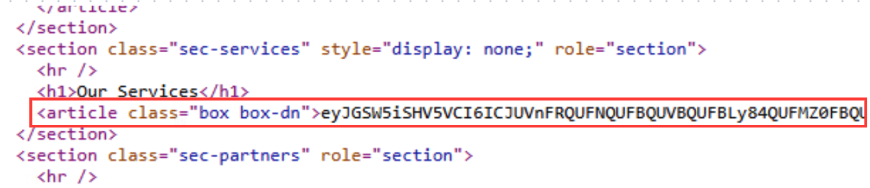
Figure 4. AshenOrchestrator’s Base64-encoded payload embedded within the article HTML tags.
AshTag Malware Suite
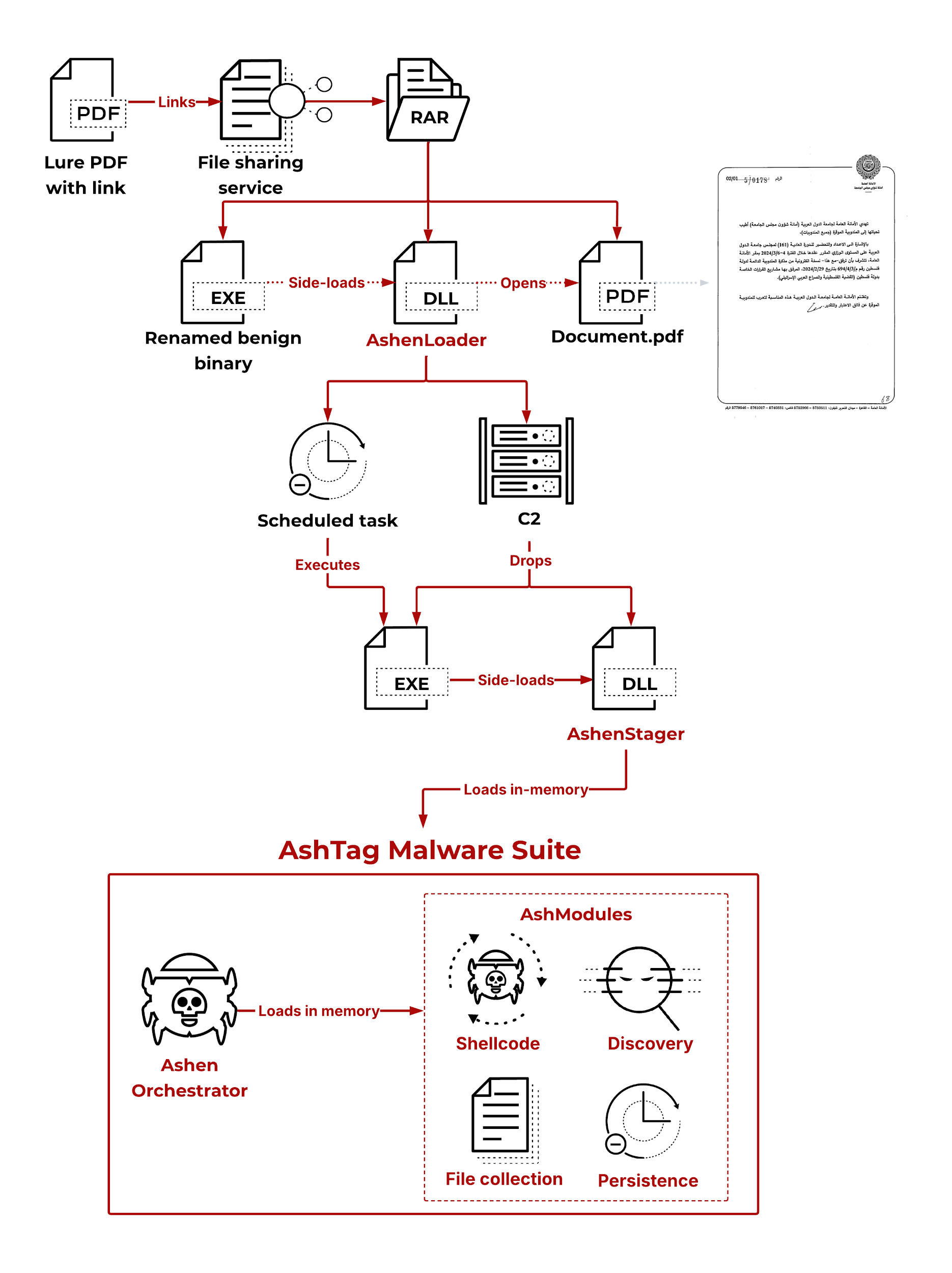
AshTag is a modular .NET backdoor designed for stealthy persistence and remote command execution. AshTag masquerades as a legitimate VisualServer utility to evade suspicion. In reality, this backdoor is a multi-feature malware suite that uses AshenOrchestrator to conduct communication and to execute other payloads in memory.
When AshenStager retrieves AshenOrchestrator’s payload, the stager receives a Base64-encoded JSON file. The JSON file contains the payload and the payload’s configuration. The configuration contains parameters such as specific URL paths that lead to different modules, encryption keys and the C2 domain. The configuration also includes sleep time buffers (jitter), mn and mx, which are used to avoid detection of the C2 beaconing. Figure 5 shows an example of such a configuration.
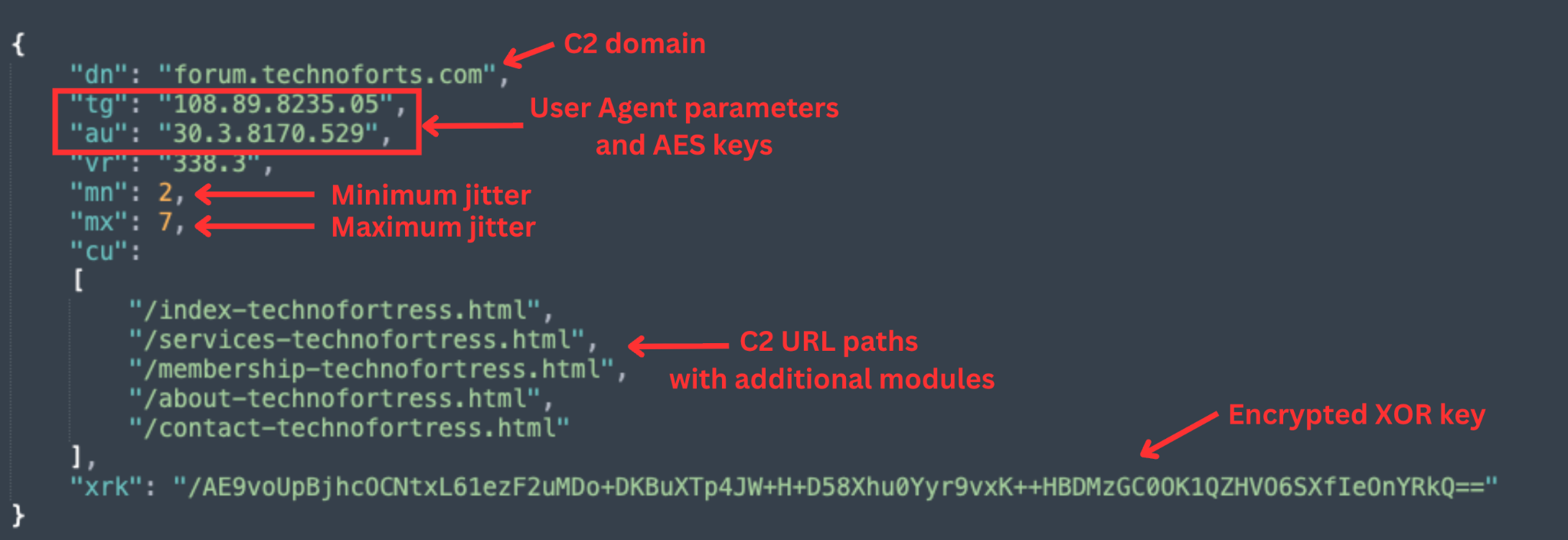
Figure 5. Decoded AshenOrchestrator configuration.
Like most of the tools used in this campaign, AshenOrchestrator extracts its next payload from embedded HTML tags. However, in this instance, the payload is even more well hidden. Instead of using a hardcoded tag name, the stager searches for a specific commented-out tag within the HTML page that contains the relevant tag name. Figure 6 demonstrates the payload embedding scheme.
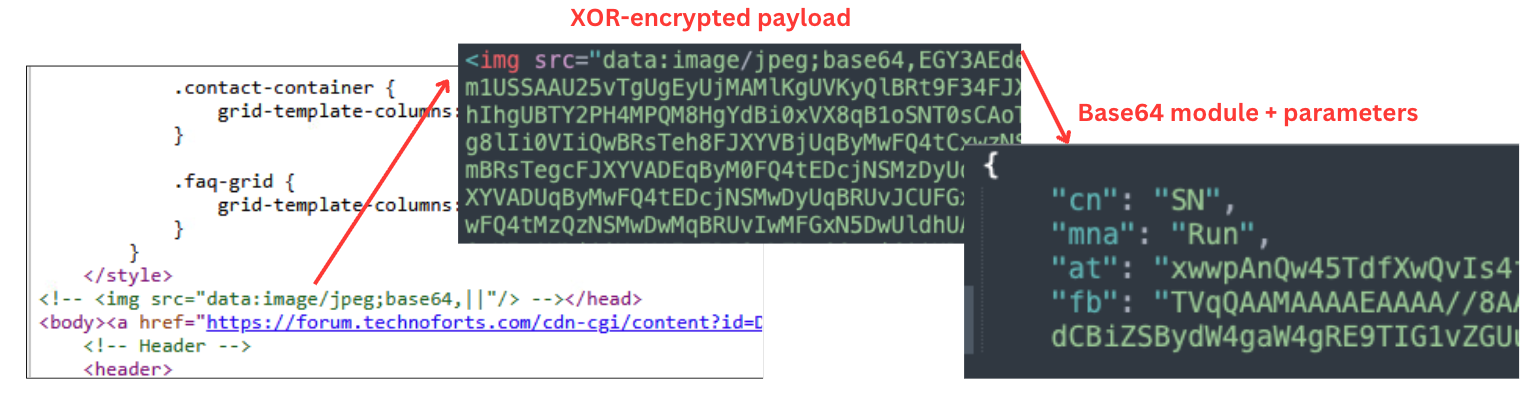
Figure 6. AshTag module decoding process.
AshenOrchestrator creates a unique AES key from the tg and au parameters, and decrypts the xrk XOR encryption key. The decrypted XOR key is then used to decrypt the embedded HTML value that contains the payload. The payload itself is a specific module contained in another Base64-encoded JSON that has additional configuration parameters. These parameters determine the module’s loading method name (mna) and class name (cn). Table 2 lists the different class names that AshenOrchestrator expects and their inferred functionalities.
| Class Name ( cn ) | Inferred Purposes |
|---|---|
| PR1, PR2, PR3 | Persistence Process Management |
| UN1, UN2, UN3 | Uninstall Update Removal |
| SCT | Screen Capture |
| FE | File Explorer File Management |
| SN | System Fingerprinting |
Table 2. Different Ashen modules and their inferred purposes.
The mna value dictates the action that AshenOrchestrator performs for each module that it retrieves. There are four possible actions:
- Upload additional content
- Download the module to disk
- Execute the module as a .NET assembly
- Inject the module into memory
Analyzing the injection method revealed that its code was not actually implemented, and only returned false, indicating that certain aspects of the AshTag malware suite are still in active development.
Retrieving the different modules for analysis was a complicated task, in part because Ashen Lepus appears to be actively rotating the modules that are hidden within webpage content. This would explain why not all modules are available at the same time. In addition, we found that different encryption keys open different types of modules.
Despite these complicating factors, we were able to retrieve one of the modules responsible for system fingerprinting – internally named the SN module. The module is an extremely simple .NET program that executes WMI queries and sends a unique victim ID back to the attackers. Figure 7 shows the main function of the SN module.
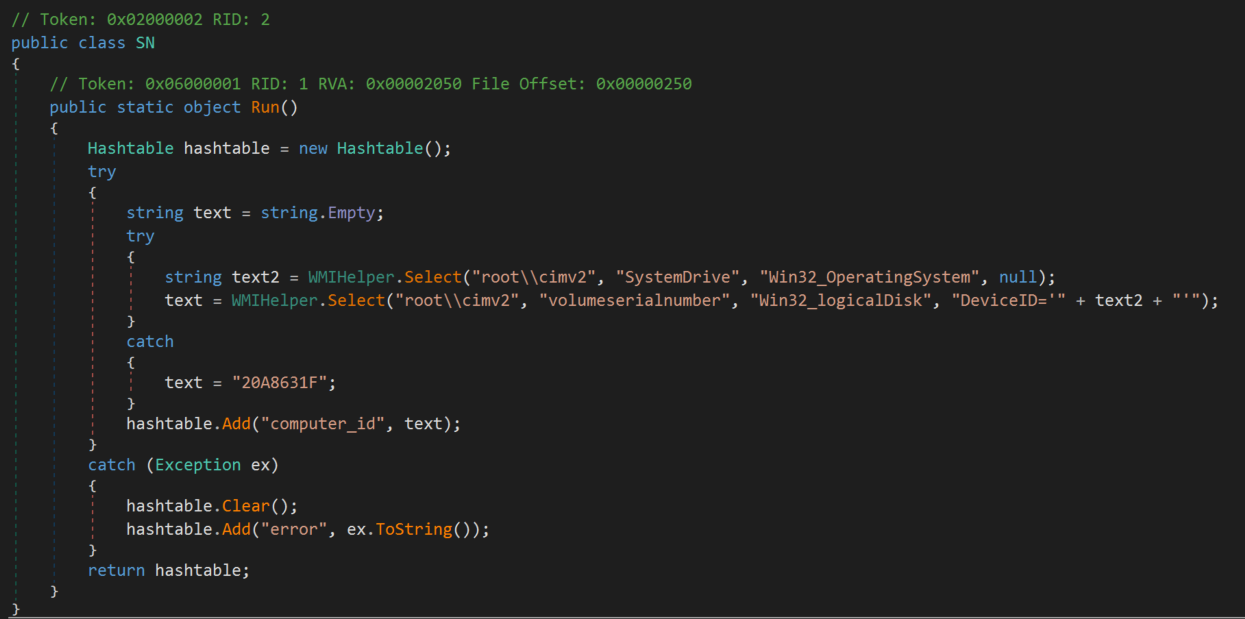
Figure 7. Code from the SN fingerprinting module.
We identified the threat actor’s operations in our telemetry, which indicated that they used additional modules to stage and exfiltrate files.
Ashen Lepus's Hands-On Activity
Following the initial automated infection, the threat actor accessed the compromised system to conduct hands-on data theft. A few days after the original infection, the attackers loaded a custom module via AshenOrchestrator and began staging specific documents in the C:\Users\Public folder.
Our analysis indicates that the threat actor downloaded these documents directly from a victim’s mail accounts, revealing the group’s main objective: obtaining specific, diplomacy-related documents. This aligns with past reports of the group’s practice of obtaining intelligence relating to regional geopolitical conflicts.
To exfiltrate the staged files, Ashen Lepus downloaded the Rclone open-source tool, transferring the data to an attacker-controlled server. This appears to be the first time this threat group has been observed using Rclone for data exfiltration. In doing so, Ashen Lepus joins a growing number of actors who leverage legitimate file transfer tools to blend their malicious activity with benign network traffic and avoid detection.
Conclusion
Ashen Lepus remains a persistent espionage actor, demonstrating a clear intent to continue its operations throughout the recent regional conflict – unlike other affiliated threat groups, whose activity significantly decreased. The threat actors’ activities throughout the last two years in particular highlight their commitment to constant intelligence collection.
During this campaign, Ashen Lepus has begun to deliver its new malware suite, AshTag. AshTag is a modular .NET suite, capable of data exfiltration, command execution and in-memory payload execution.
While the group's core TTPs are not highly sophisticated, this campaign reveals an evolution in its approach. We observed a clear effort to improve operational security by enhancing payload encryption, shifting infrastructure to innocent-looking subdomains and executing payloads in memory. This "low-cost, high-impact" methodology allows the threat actors to effectively evade static defenses and thwart analysis.
The expansion of Ashen Lepus’s victimology beyond their traditional geographic targets, coupled with new lure themes, suggests a broadening of its operational scope. We assess that Ashen Lepus will continue to adapt its toolset and targeting to pursue its geopolitical intelligence objectives. Organizations in the Middle East, particularly in the governmental and diplomatic sectors, should remain vigilant against this evolving threat.
Palo Alto Networks customers are better protected from the threats described in this article through the following products and services:
- The Advanced WildFire machine-learning models and analysis techniques have been reviewed and updated in light of the indicators shared in this research.
- Advanced URL Filtering and Advanced DNS Security identify known domains and URLs associated with this activity as malicious.
- Cortex XDR and XSIAM
- Cortex XDR helps to prevent the threats described in this blog, by employing the Malware Prevention Engine. This approach combines several layers of protection, including Advanced WildFire, Behavioral Threat Protection and the Local Analysis module, to help prevent both known and unknown malware from causing harm to endpoints.
If you think you may have been compromised or have an urgent matter, get in touch with the Unit 42 Incident Response team or call:
- North America: Toll Free: +1 (866) 486-4842 (866.4.UNIT42)
- UK: +44.20.3743.3660
- Europe and Middle East: +31.20.299.3130
- Asia: +65.6983.8730
- Japan: +81.50.1790.0200
- Australia: +61.2.4062.7950
- India: 000 800 050 45107
- South Korea: +82.080.467.8774
Palo Alto Networks has shared these findings with our fellow Cyber Threat Alliance (CTA) members. CTA members use this intelligence to rapidly deploy protections to their customers and to systematically disrupt malicious cyber actors. Learn more about the Cyber Threat Alliance.
Indicators of Compromise
SHA256 Hashes of Malware Samples
RAR Archives
- 3502c9e4896802f069ef9dcdba2a7476e1208ece3cd5ced9f1c4fd32d4d0d768
- 1f3bd755de24e00af2dba61f938637d1cc0fbfd6166dba014e665033ad4445c0
- 4e1f7b48249dd5bf3a857d5d017f0b88c0372749fa156f5456056767c5548345
- 3d445c25752f86c65e03d4ebed6d563d48a22e424ba855001ad2db2290bf564c
- 7e5769cd8128033fc933fbf3346fe2eb9c8e9fc6aa683546e9573e7aa01a8b6b
AshenLoader Variant #1
- f554c43707f5d87625a3834116a2d22f551b1d9a5aff1e446d24893975c431bc - dwampi.dll
- a17858f40ff506d59b5ee1ba2579da1685345206f2c7d78cb2c9c578a0c4402b - dwampi.dll
- ebe3b6977f66be30a22c2aff9b50fec8529dfa46415ea489bd7961552868f6b5 - dwampi.dll
- 8870bd358d605a5685a5f9f7785b5fee5aebdcb20e4e62153623f764d7366a3c - dwampi.dll
- 2d71d7e6ffecab8eefa2d6a885bcefe639fca988bdcac99e9b057e61698a1fd6 - dwampi.dll
- 8c44fa9bf68341c61ccaca0a3723945543e2a04d9db712ae50861e3fa6d9cc98 - wtsapi32.dll
- f380bd95156fbfb93537f35941278778819df1629cb4c5a4e09fe17f6293b7b7 - wtsapi32.dll
AshenLoader Variant #2
- f9816bc81de2e8639482c877a8defcaed9b15ffdce12beaef1cff3fea95999d4 - srvcli.dll
- e71a292eafe0ca202f646af7027c17faaa969177818caf08569bd77838e93064 - srvcli.dll
- 739a5199add1d970ba22d69cc10b4c3a13b72136be6d45212429e8f0969af3dc - netutils.dll
- b00491dc178a3d4f320951bccb17eb85bfef23e718b4b94eb597c90b5b6e0ba2 - netutils.dll
AshenStager
- 6bd3d05aef89cd03d6b49b20716775fe92f0cf8a3c2747094404ef98f96e9376 - wtsapi32.dll
AshenOrchestrator
- 30490ba95c42cefcca1d0328ea740e61c26eaf606a98f68d26c4a519ce918c99
AshTag Module Designated as "SN"
- 66ab29d2d62548faeaeadaad9dd62818163175872703fda328bb1b4894f5e69e
AES Keys and Nonce
AshenLoader Variant #1
- Key: {9a 20 51 98 4a 2b b1 76 ef 98 87 e3 be 87 f9 ca 44 ba 8c 19 a8 ef ba 55 62 98 e1 2a 39 21 ea 8b}
- Nonce: {44 ba 8c 19 a8 ef ba 55 62 98 e1 2a 39 21 ea 8b}
AshenLoader Variant #2
- Key: {60 3d eb 10 15 ca 71 be 2b 73 ae f0 85 7d 77 81 1f 35 2c 07 3b 61 08 d7 2d 98 10 a3 09 14 df f4} (generic default key)
- Nonce: {f0 f1 f2 f3 f4 f5 f6 f7 f8 f9 fa fb fc fd fe ff} (generic default nonce)
- AshenStager XOR Key: msasn1.dll
C2 Domains
Backdoor
- forum.techtg[.]com
- forum.technoforts[.]com
Exfiltration Server
- api.technology-system[.]com
Loaders Variant #1
- api.healthylifefeed[.]com
- api.softmatictech[.]com
- apiv2.onlinefieldtech[.]com
- auth.onlinefieldtech[.]com
- status.techupinfo[.]com
- api.medicinefinders[.]com
- account.techupinfo[.]com
Loaders Variant #2
- api.systemsync[.]info
- api.widetechno[.]info
Scheduled Task Names
- C:\Windows\System32\Tasks\Windows\WindowsDefenderUpdate\Windows Defender Updater
- C:\Windows\System32\Tasks\Windows\WindowsServicesUpdate\Windows Services Updater
- C:\Windows\System32\Tasks\Automatic Windows Update
Appendix A: Attribution
Our assessment utilizes the Unit 42 Attribution Framework, which provides a systematic, evidence-based methodology to connect observed malicious activity to specific threat groups. This approach moves beyond subjective assessments, allowing us to rigorously evaluate multiple dimensions of threat data, including TTPs, tooling, OpSec, network infrastructure and victimology.
Tactics, Techniques and Procedures (TTPs)
There is a significant overlap between this campaign and Ashen Lepus’s established modus operandi. The group consistently crafts lures written in Arabic that focus on the developing political and military situation in the Middle East, with a specific emphasis on the Palestinian Territories.
While public reporting on the group's post-compromise activity is limited, the hands-on espionage actions observed in this incident – specifically, the targeted theft of diplomatic documents – strongly correlate with the group's known intelligence collection interests and sophistication level.
Infrastructure Overlaps
We identified clear infrastructure overlaps with historic reporting on the group. Specifically, the URL structure observed in this campaign aligns with findings from Check Point. For example, the URL cited in their report has the same subdomain naming scheme and URL parameter structure that we observed in previous loader versions (api/v1.0/account?token=):
- hxxps://support-api[.]financecovers[.]com/api/v1.0/account?token={encrypted_recon_data}
A similar URL was also documented in OWN Security's report:
- hxxps://cdn[.]techpointinfo[.]com/api/v1.0/account?token={encrypted_recon_data}
Malware Artifacts
Analysis of the loader reveals key features consistent with previous campaigns from this group, as documented by Check Point. Notably, the loader continues to embed next-stage payloads within HTML tags of seemingly benign webpages and utilizes similarly structured execution lures to initiate the infection chain. The group also uses the same file names for their payloads – both their SharpStage .NET backdoor and previous versions of their loader were named wtsapi32.dll.
Appendix B: The Development of New Loader Versions
AshenLoader is a possible evolution of the group's previous IronWind loader. Throughout 2025, Ashen Lepus was actively tweaking AshenLoader, which for the most part retained the same functionality. In addition to AshenLoader’s ability to communicate to the C2 server to download and execute additional payloads, the following features were updated:
- Encryption algorithm: The threat actors implemented an AES-CTR-256 cipher in versions of the malware that they compiled from early to late 2025, in contrast to the TEA algorithm mentioned in previous research. In samples that were compiled from mid to late 2025, the actors modified the encryption key and counter value (nonce) values. In both variants, the nonce and AES keys are hardcoded into the binaries.
- Fingerprinting additional data from infected endpoints: The new variants provide the threat actors with more detailed information about the infected endpoint than previous versions – such as listing files under the ProgramFiles directory.
- URI updates: Variants discussed in previous public research used the token parameter sent in the initial beaconing GET request. The earlier 2025 variants shifted toward using id= and q= parameters. Late 2025 variants then changed the scheme again and started using auth=. Additionally, part of the URI changed from /v1/ to /v2/.
Although these features do not significantly change the loader’s functionality, they are simple and effective ways to avoid static detection engines.
Additional Resources
- Hamas-affiliated Threat Actor WIRTE Continues its Middle East Operations and Moves to Disruptive Activity – Check Point
- Molerats in the Cloud: New Malware Arsenal Abuses Cloud Platforms in Middle East Espionage Campaign [PDF] – Cybereason
- WIRTE Threat Group Card – Electronic Transactions Development Agency (ETDA)
- WIRTE : à la recherche du temps perdu – OWN CERT
- TA402 Uses Complex IronWind Infection Chains to Target Middle East-Based Government Entities – Proofpoint
Updated Dec. 11, 2025 at 4:21 a.m. PT to remove a sentence about Turkish entities for clarification.