How to Launch a Successful Feature Release? (original) (raw)
Delivering a successful feature release is no easy task. It is extremely time-consuming and pretty stressful because you need to get it right the first time.
In our guide, we discuss;
- The importance of feature releases.
- The stages of a successful release.
- Best practices for each of these stages.
We also mention how Userpilot can help your product and product management team orchestrate your feature releases.
Let’s get right to it!
Summary of how to launch a successful feature release
- A feature release involves adding and launching feature improvements or new functionality to a product.
- Feature releases make products more useful and valuable for users. This increases their satisfaction which translates into greater loyalty and higher revenue.
- New functionality plays a big role in retaining existing customers and attracting new ones.
- The pre-release stage starts with feature discovery. New feature ideas come from customer requests, tracking user behavior and their pain points, customer feedback, and your competitors.
- Before developing a new feature, make sure it’s in line with your product vision.
- To prioritize the features to develop, use a framework like the Kano model or Cost of Delay.
- Before you build a complete feature, run prototype tests to validate the ideas. Popular validation techniques involve fake door testing and the Wizard of Oz.
- Always beta-test your features before releasing them to the whole user base.
- For feature or product announcements, use multiple channels, like in-app messaging, emails, social media, or blogs.
- At the market release stage, you can release your features either to all users at once, or incrementally. The latter approach is more complex but less risky too.
- The timing of your release will depend on such factors as feature readiness, how urgent it is, how likely your competitors are to beat you to the market as well as seasonal considerations.
- After releasing your feature, measure its success by tracking its adoption rate and customer satisfaction.
- Monitoring user engagement with the feature allows you to spot friction and areas for improvement.
- Contextually triggered in-app surveys are great for collecting feedback about new features.
- Userpilot allows you to collect feature requests, announce your releases with in-app messages, measure the success of new features, and gather feedback on how well they satisfy users. Book the demo to see how!
What is a feature release?
A feature release is the process of adding functionality to an existing product and announcing it to the users. The release could include improvements or major new features.
Normally, feature releases are part of a larger development cycle that includes market and customer research, development, testing, and the actual feature launch process.
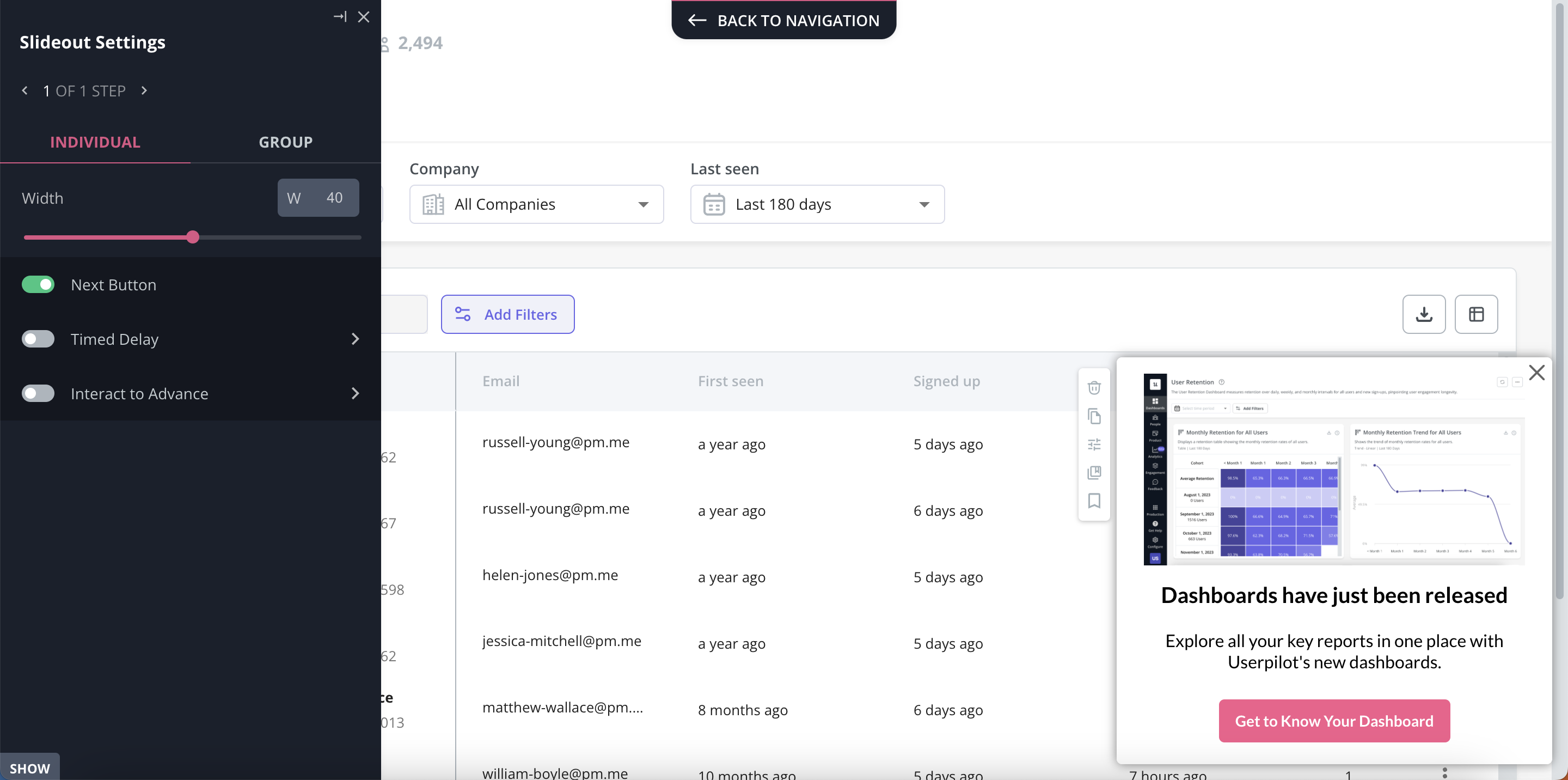
An example of a feature release message.
Why are feature releases important?
Feature releases are necessary to achieve and maintain a competitive edge in the market.
How so?
They allow you to:
- Expand the product functionality to make it more useful and valuable for customers.
- Improve the product stability, performance, and security.
- Keep up to date with technological developments.
- Improve user experience.
- Boost customer satisfaction and loyalty.
- Attract new customers and possibly win back the churned ones.
The three stages of a new feature release
Let’s have a closer look at what happens at each of the 3 stages of the launch phase of the product release process:
- Pre-release stage.
- Market release stage.
- Post-release stage.
Pre-release stage
At this stage, you lay the foundation for your new feature release.
Feature discovery
The process starts with feature discovery.
You need to ensure that you identify the right features that will be consistent with the needs and wants of your existing customers.
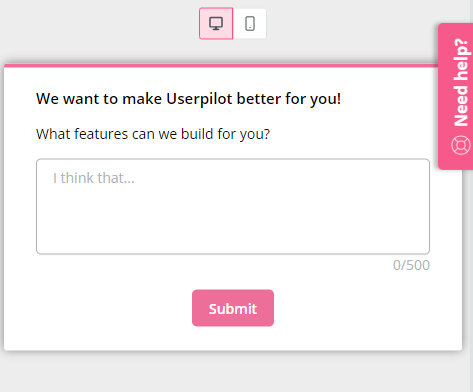
Feature request survey created with Userpilot.
You should use a range of sources to inform your new feature discovery. Your options include:
- Feature requests from customers.
- Tracking user in-app behavior to identify friction points in the user journey.
- Feedback received by the sales team and customer support team.
- Performing market research and monitoring what your competitors do.
Prioritize key feature releases
Once you identify a range of possible new features, you need to prioritize them.
Start by weeding out those that aren’t aligned with your product vision. You can’t solve all the problems in the world, so don’t try.
Also, try to get to the root cause of users’ feedback or requests. Is a functionality missing or is your onboarding poor and users simply don’t know about the features?
Don’t copy your competitors’ features blindly either as this can send you down the feature parity trap.
Once you eliminate such distractions, use a prioritization framework to help you manage your backlog.
Popular prioritization techniques when building your MVP include the Kano model and MoSCoW. Later on, when you’re adding new features, Dot-voting or Cost of Delay may be more suitable.
Create and test the new feature prototype
At this stage, it’s time to let the developers do the work and build the feature.
Start small, and before you build full functionality, use prototypes to validate your ideas. Useful validation techniques include:
- Fake door testing – you make your user believe the feature already exists and test their interest.
- Wizard of Oz – you build the feature’s front end while doing all the work manually behind the scenes.
- User testing – you develop a high-fidelity prototype and watch users interact with it.
If your idea passes all the tests, and you finally build it, make sure to beta-test it thoroughly to ensure it’s stable and bug-free. You won’t iron out all the kinks at this stage but do your best.
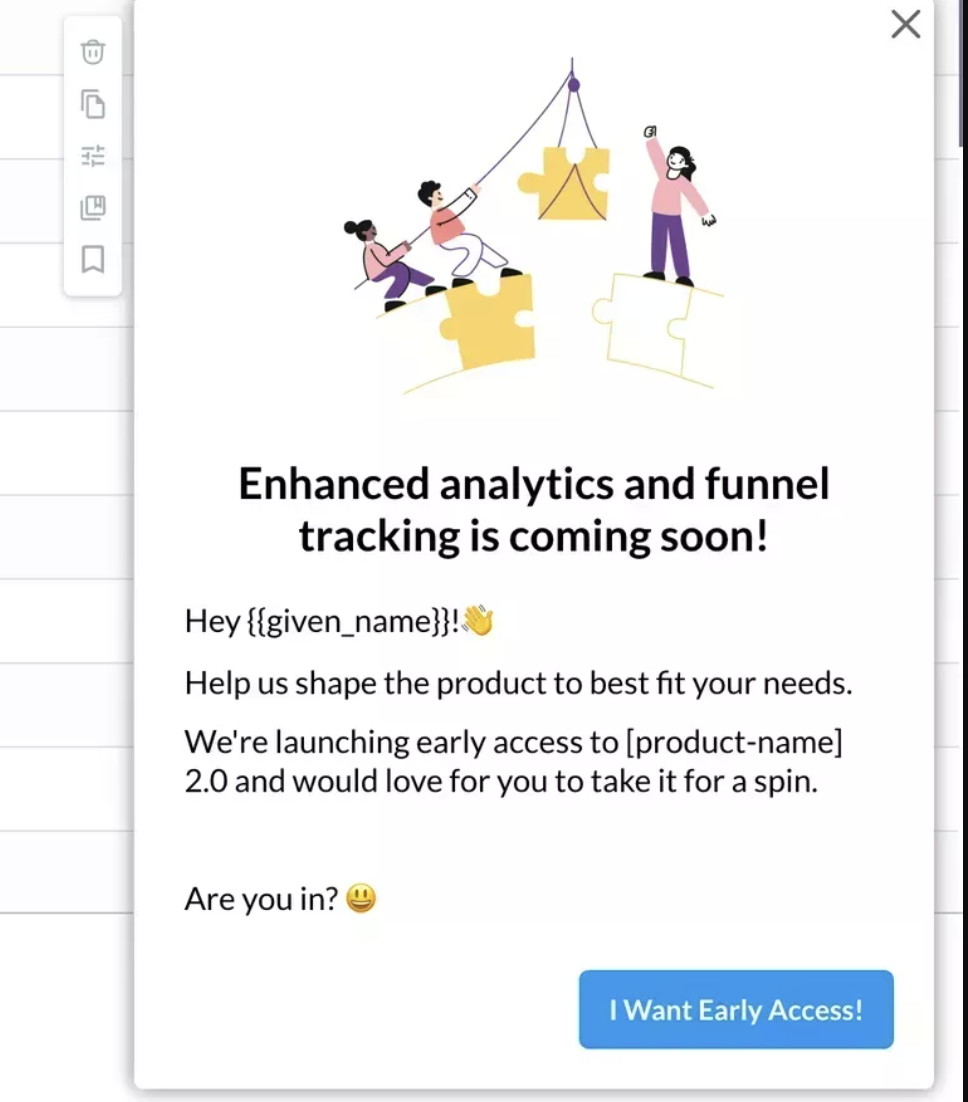
Beta testing invite sent with Userpilot.
Select the right platforms for feature release announcements
Another decision to make at the pre-release stage is how to announce the release.
A good feature release announcement never relies on one communication channel. Instead, they use multiple channels to reach different customer segments.
- Press releases – they have high credibility and by distributing them to news outlets, industry journalists, or influencers, you can reach a wider audience.
- Emails – they allow you to reach inactive and churned users and hopefully win them back.
- Social media posts – they can help you expand your reach and bring the new feature release to the radar of prospective customers.
- Blog posts – an SEO-optimized blog post is a good way to reach prospective users who are looking for solutions to their problems.
- In-app feature release– modals, tooltips, slideouts, or banners are great for announcing new features to existing users.
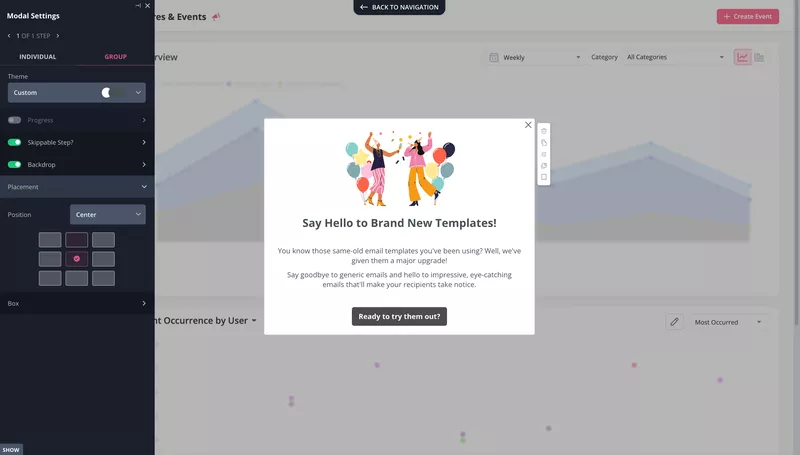
Announce new features in-app with modals.
Market release stage
Having done all the groundwork in the previous stage, it’s time to unveil your brand-new feature and let your users enjoy its benefits.
Before you launch the feature, decide on who is going to see it and when.
Decide between full feature release or incremental release
You have two main options.
Option 1 is releasing the feature to the entire user base. It’s easy to coordinate but it comes with higher risk. If the release is buggy or unstable, it can damage your reputation in the eyes of all your users.
Option 2 is an incremental release where you launch the feature gradually to different user segments, just like Notion did with its AI functionality.
This approach is less risky because it affects only a relatively small number of users, usually the most loyal ones for that matter.
What’s more, it allows you to collect feedback and improve your feature before you release it to the more demanding customer base. And it allows you to build the hype around the release and leverage word-of-mouth marketing to promote it.
Select The Right feature launch timing
The next thing to consider is the timing of your launch. This will be affected by factors like:
- Feature maturity: Is it ready to release? How much more work does it require?
- Feature urgency: Is it solving a problem that needs to be addressed as soon as possible?
- Competition: Is there a risk that a competitor will steal the first mover advantage?
- User behavior patterns: Is there anything about the user behavior that points to a specific release time? This could include seasonal consideration and variable demand for products and features during the year.
Post-release stage
Your new feature is out! Congratulations!
That’s not the end of the work though. You need to measure the feature performance and make sure it delivers the intended value.
Analyze in-app engagement of new features
Analyzing how users engage with the new feature allows you to identify friction and make improvements.
Most analytics tools allow you to tag features, ideally code-free, and track user engagement of different user segments.
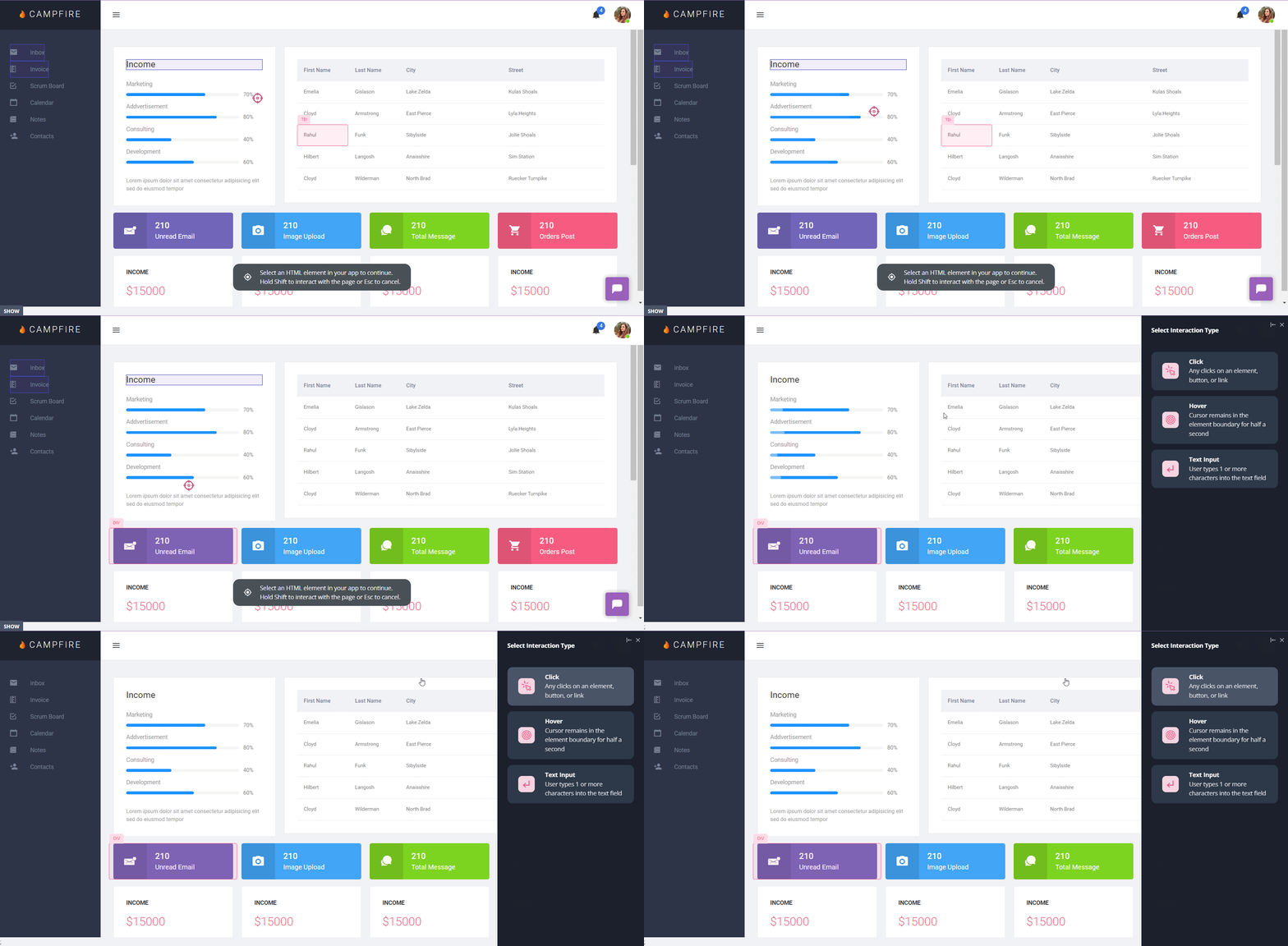
Tag UI elements to monitor feature engagement.
Track important new feature success metrics
There are several metrics you should track to assess how well your feature is performing.
- Customer satisfaction score – how happy the users are with the new feature or the product as a whole as a result of the new feature release?
- Total active users using the new feature – how many users have used the feature? If the number is high, it means the demand for the feature is high and your secondary onboarding is working well.
- Feature adoption rate – how many users are adopting the new feature? A high adoption rate means that users find the feature valuable and are using it to achieve their goals.
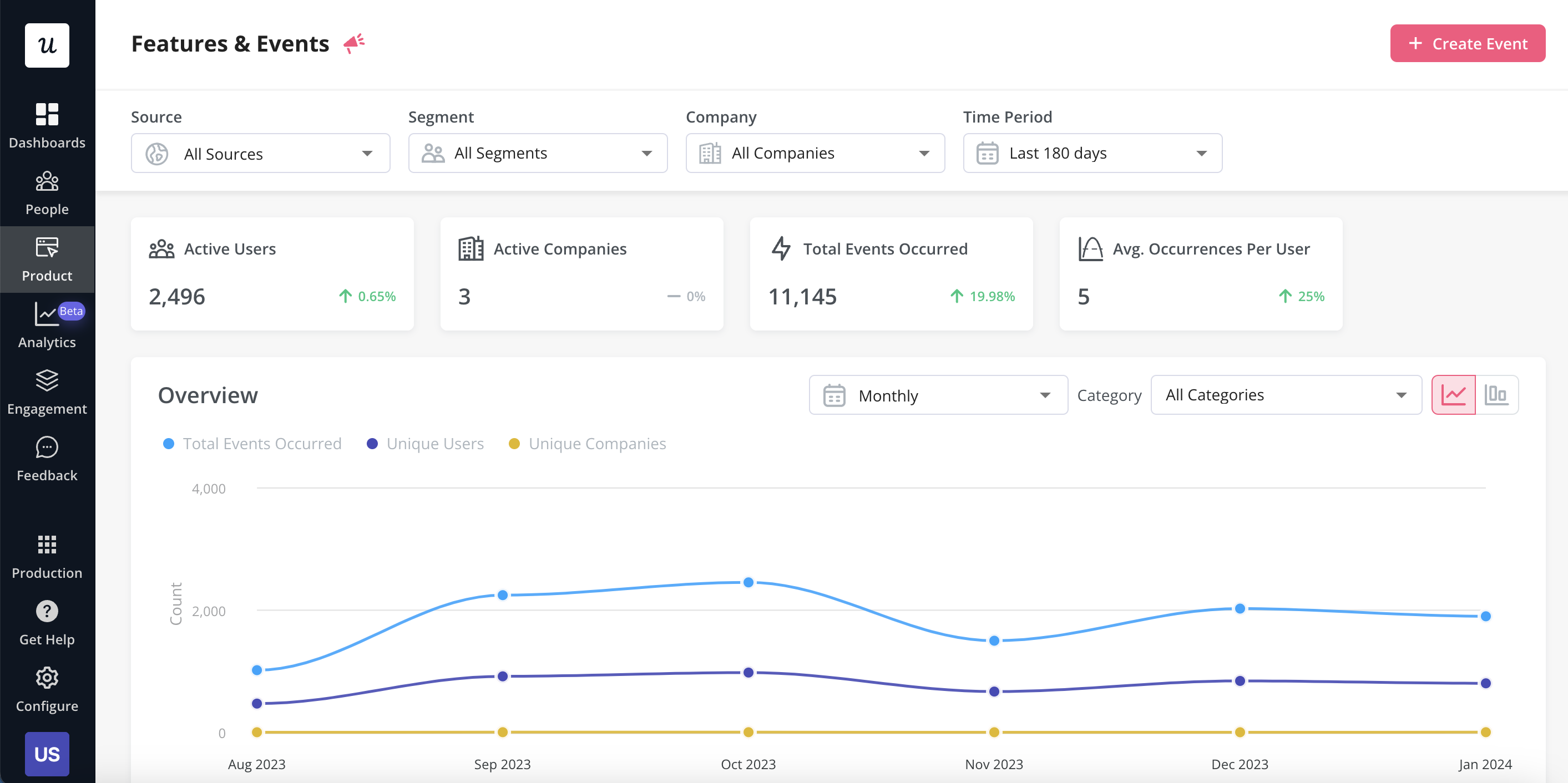
Userpilot allows you to track feature engagement with dashboards.
Collect customer feedback regarding new feature launches
While feature usage tracking will tell whether users engage with the feature or not, it won’t tell you why.
That’s why you need to collect customer feedback as well.
Collecting in-app feedback is fairly easy. There are plenty of tools out there, like Userpilot, that allow you to quickly design and trigger surveys to specific user segments.
It’s good practice to trigger your surveys contextually so that they appear as soon as the customer interacts with the feature. In this way, you increase the chances they respond and the feedback is more valid as the experience is still fresh in their minds.
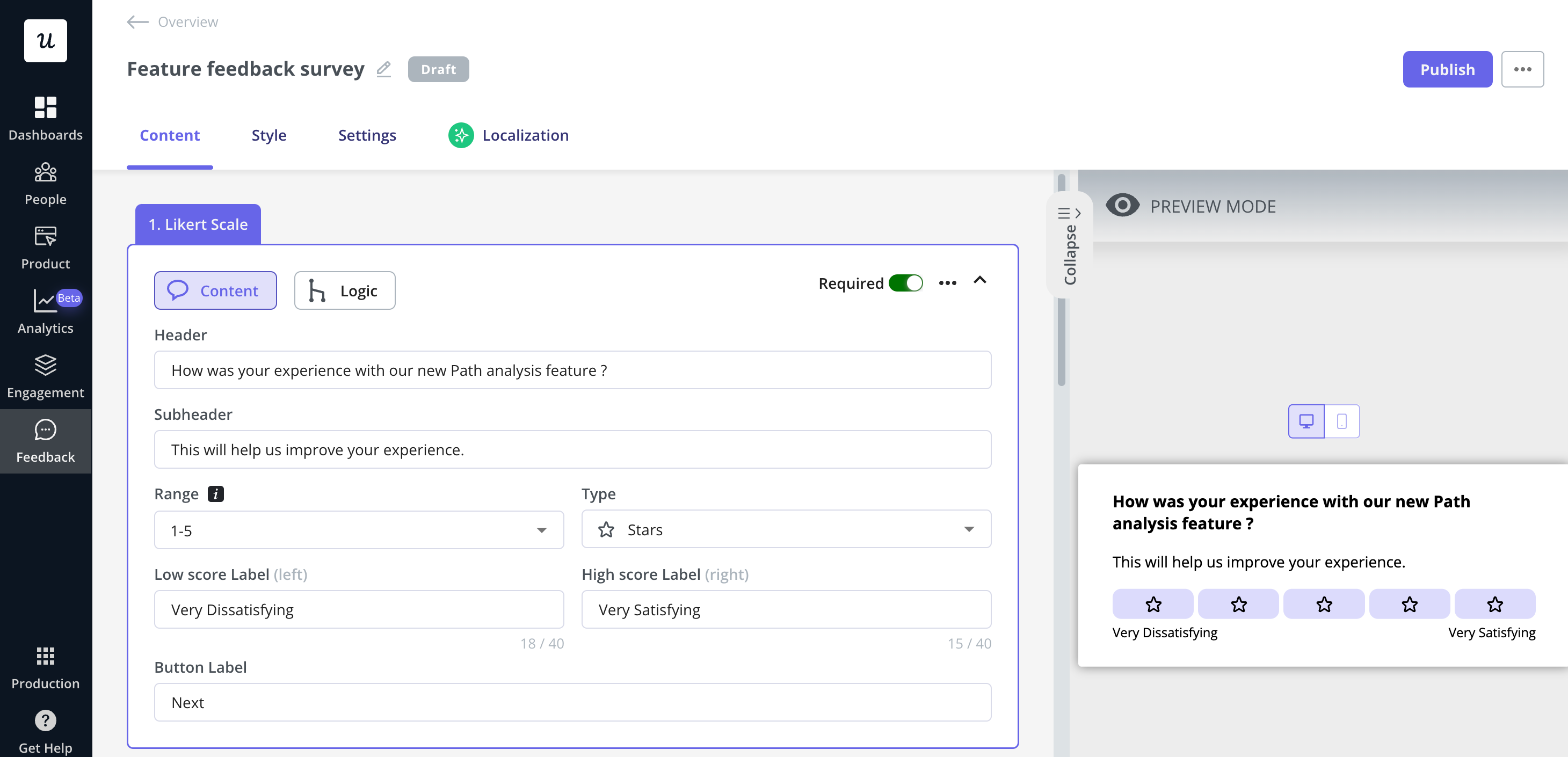
Create feature feedback surveys with Userpilot.
What about the users who haven’t used the feature yet?
Target them with surveys to find out why not. This can help you identify issues with the feature discovery or your onboarding.
How Userpilot can help with your new feature release
Userpilot is a product adoption platform. Product teams and their marketing and customer success colleagues use it to collect customer feedback, track and analyze user behavior in-app, and drive product adoption with in-app messaging.
Here are some Userpilot features that will help you pull off your new feature release successfully:
- In-app surveys to assess customer satisfaction with new features and identify areas for improvement.
- Analytics dashboards for tracking feature adoption metrics at a glance.
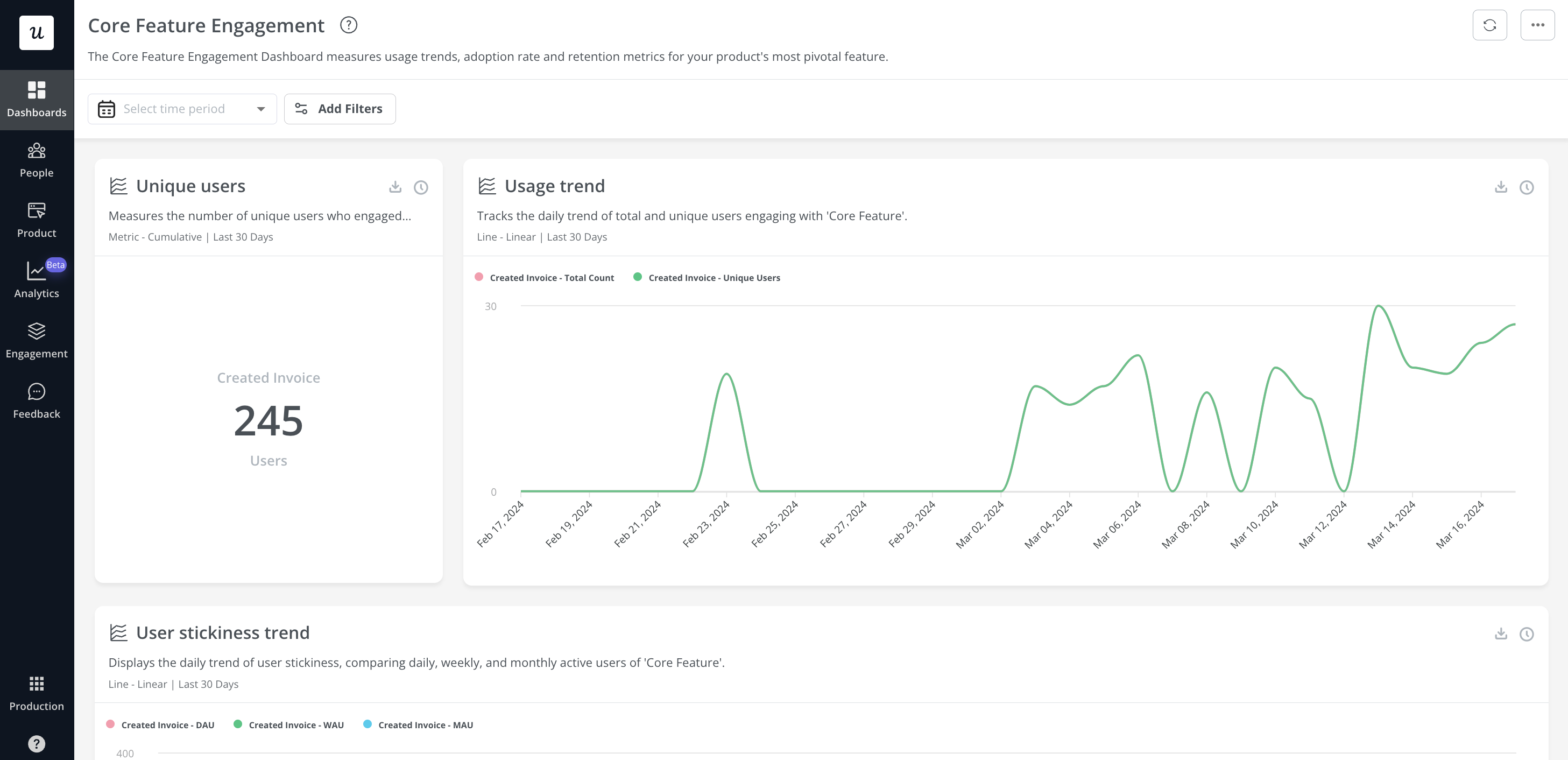
View key feature adoption at a glance with dashboards.
- UI onboarding patterns (tooltips, modals, banners, slideouts, hotspots, and driven actions) for new feature announcements and secondary onboarding. You can also use them to recruit beta testers or to conduct fake door tests.
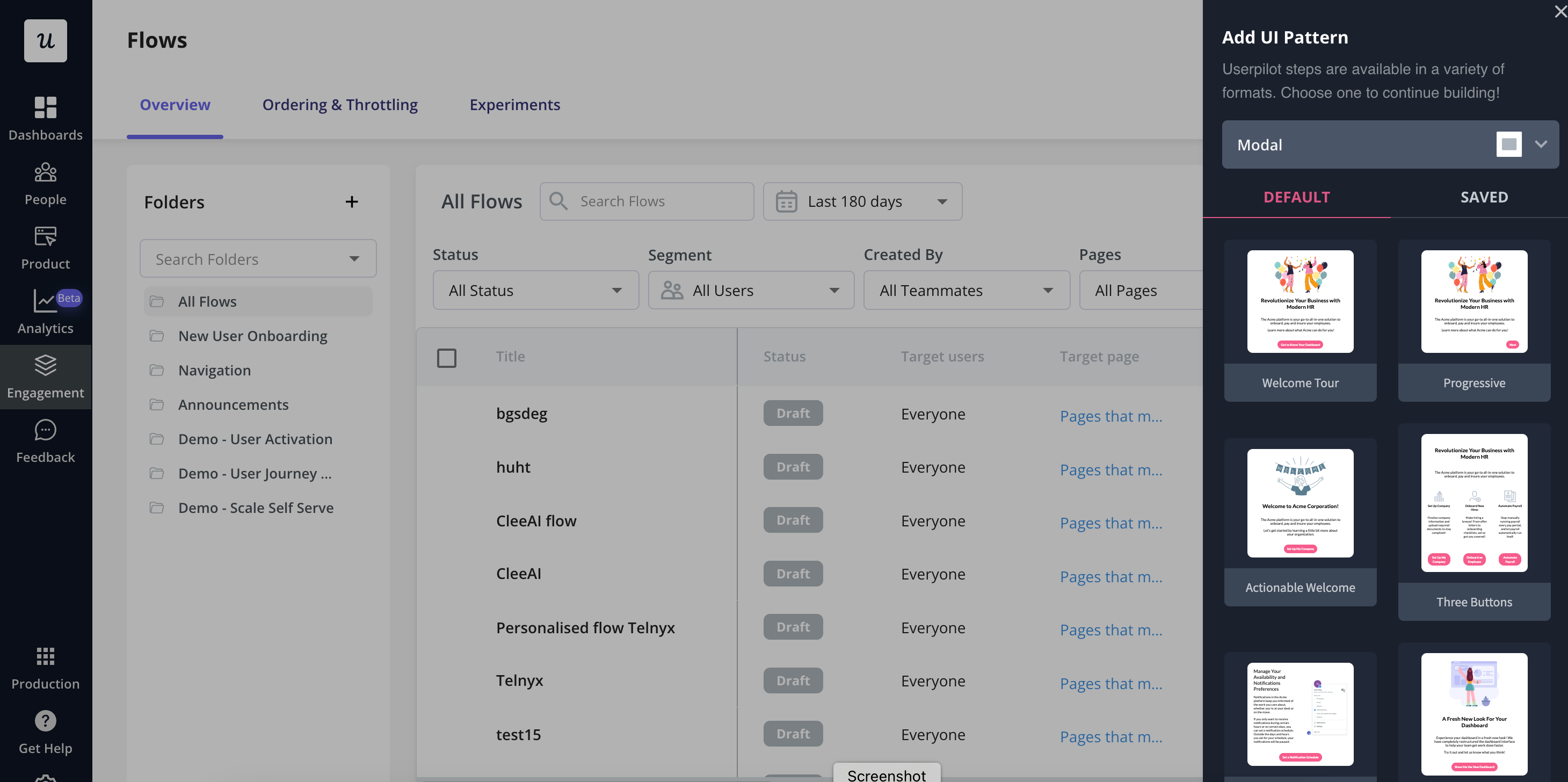
Userpilot offers different UI patterns for creating feature announcements.
- Resource center for on-demand help with the new features.
- User segmentation for targeted in-app messaging and surveys, experimentation, and granular usage analysis.
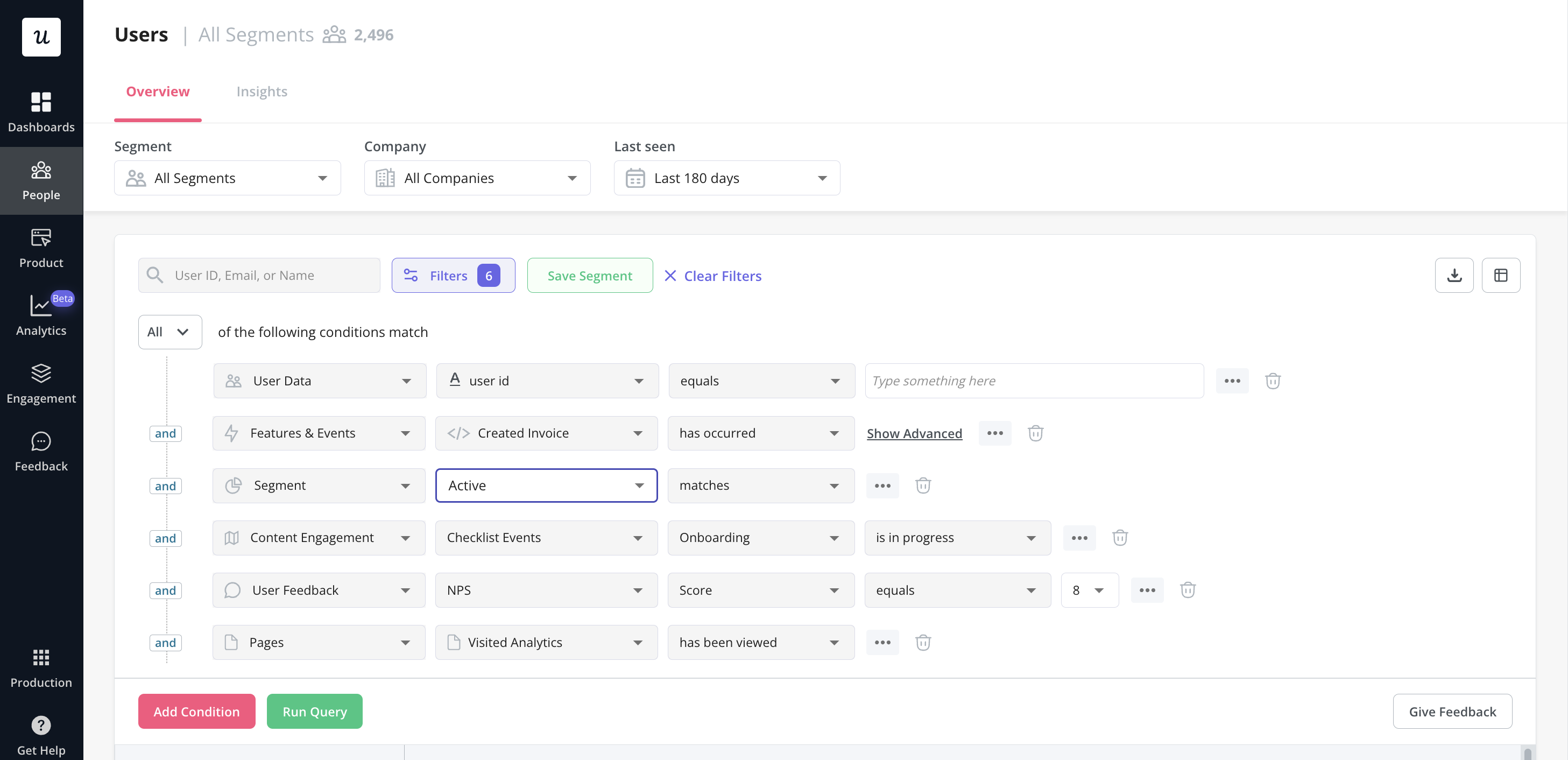
Segment users on a variety of criteria with Userpilot.
Conclusion
A new feature release is an essential aspect of the product management process. They add value to the product, boost customer satisfaction, and enable SaaS companies to stay ahead of their rivals.
If you want to see how Userpilot can help your business prepare and manage a new feature release, book the demo!