80+ Good Survey Questions for SaaS: The Ultimate Library (original) (raw)
7 Different types of survey questions
The first thing to understand before preparing a survey question is that there are different types of questions.
These survey question types have their strengths and are useful for specific scenarios. They include:
- Open-ended questions.
- Close-ended questions.
- Multiple-choice questions.
- Rating scale questions.
- Likert scale questions.
- Multiple-answer questions.
- Yes or no questions.
‹
›
Survey question types.
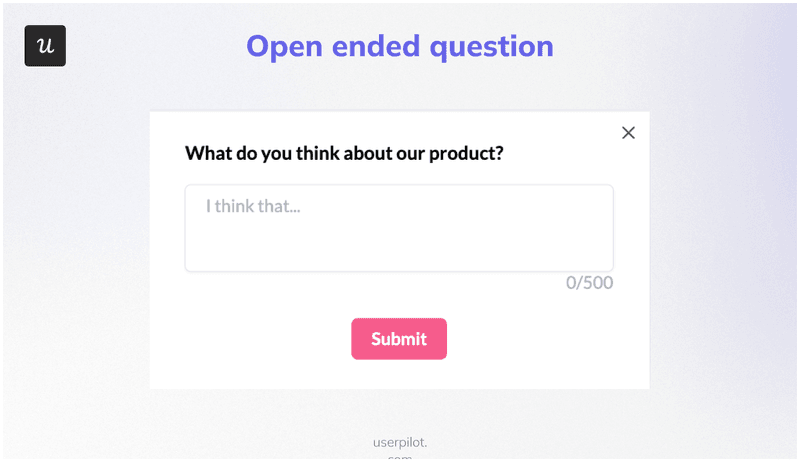
1. Open-ended questions
An open-ended question allows respondents to provide written answers in their own words in a text box.
For Example: What do you like most about our product?
Open-ended questions are best for gathering qualitative insights when you want in-depth customer feedback or new ideas from users.
The drawback is that it tends to require more energy from users to respond. So if your survey has too many open-ended questions, the quality of the answers and the response rates will progressively drop.
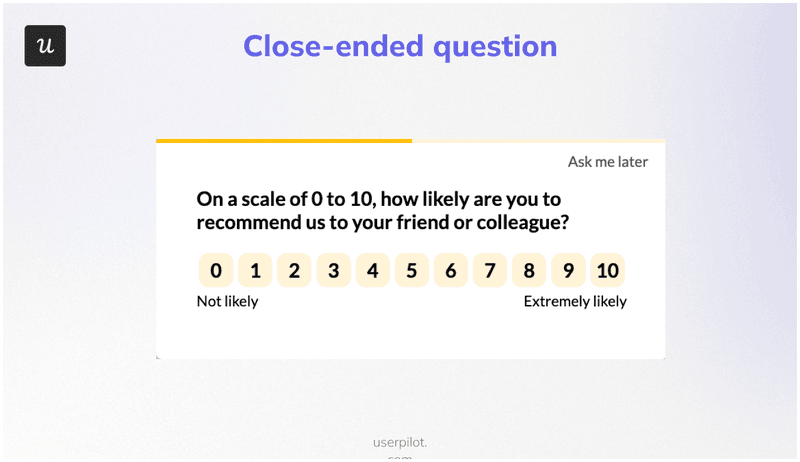
2. Close-ended questions
A close-ended question is any question that includes predefined answers where respondents only need to select their answers.
For example: Do you use our product daily? (Yes/No)
Close-ended questions are easier to respond to, so they naturally get more response rates. Plus, it brings more quantitative insights because you can look at the number of responses to each answer and look at trends, calculate scores, and so on.
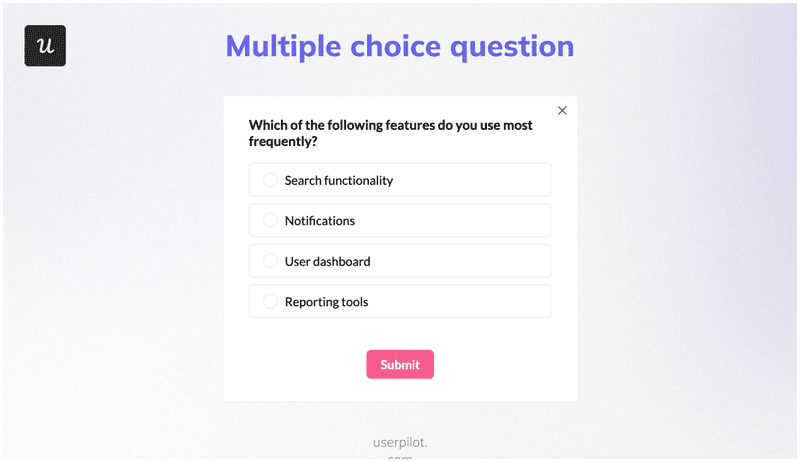
3. Multiple choice questions
Multiple-choice questions provide respondents with several possible answers, but they only allow you to choose one option.
For example: Which of the following is most important to you?
- Speed.
- Design.
- Functionality.
Multiple-choice questions are great for understanding users’ preferences and priorities. As well as getting more detailed insights without the friction of open-ended questions.
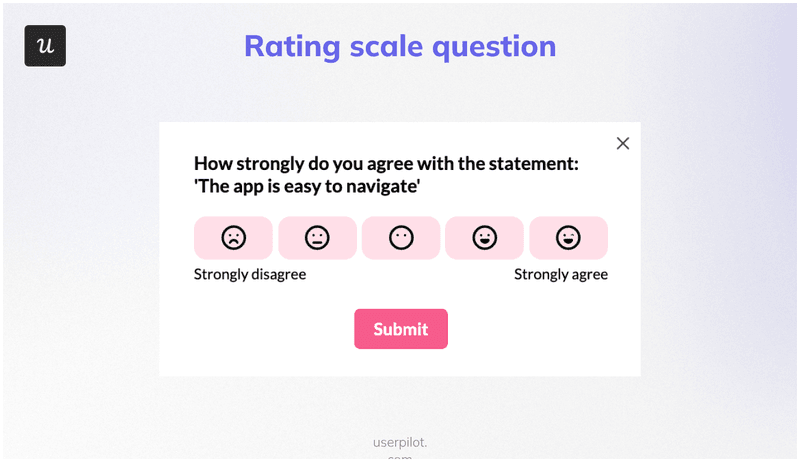
4. Rating scale questions
A rating scale question asks respondents to rate something on a scale, often from 1 to 5 or 1 to 10.
For example:
How satisfied are you with our customer service? (1 = Very Dissatisfied, 5 = Very Satisfied)
These questions are more useful when you want to measure the intensity of user sentiment or satisfaction levels. It allows you to perform certain calculations such as averages, CSAT, and Net Promoter Score (NPS).
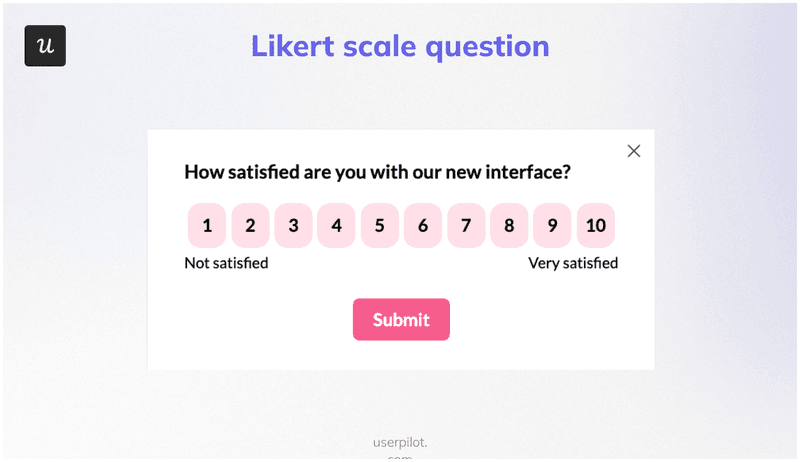
5. Likert scale questions
A Likert scale question measures agreement or disagreement on a scale, typically from “Strongly Agree” to “Strongly Disagree.”
For example: I find the product easy to use.
- Strongly Agree.
- Agree.
- Neutral.
- Disagree.
- Strongly Disagree.
Likert scale questions are great for gauging the overall attitudes, opinions, or sentiments on specific topics. They’re useful whenever you need to make decisions based on your audience’s opinions.
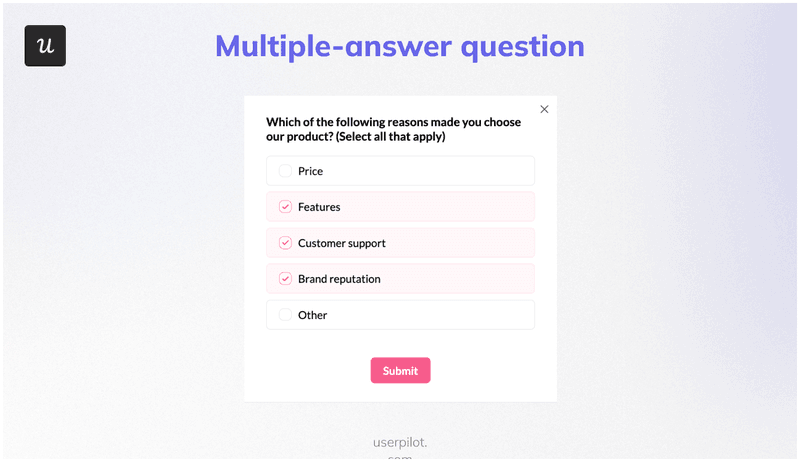
6. Multiple-answer questions
A multiple-answer question offers different answers and allows respondents to choose more than one option from a list.
For example: Which features do you use often?
- Invoicing.
- Proposals.
- Estimates.
- Budgeting.
- Reminders.
Multiple-answer questions work well when the relevance of the answers is not mutually exclusive. For instance, if you need to track the popularity of your product features, you want respondents to choose all the features they use, not just one.
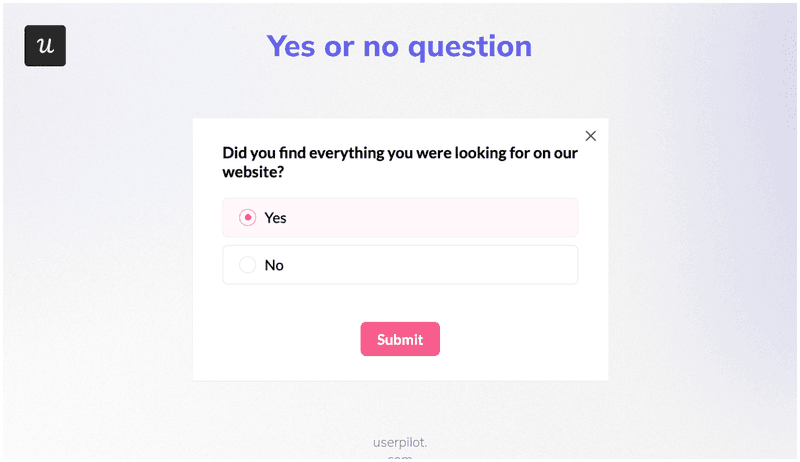
7. Yes or no questions
Yes or no questions are simple, binary questions that require respondents to answer with an affirmation or negation.
For example: Are you satisfied with our product? (Yes/No)
Yes or no questions are ideal when you need a quick and clear response, especially for simple decisions. It can be useful, for instance, when you want to segment your users based on whether or not they’ve engaged with a specific feature.
80+ Good survey questions to ask users
Now, let’s go over good question examples you can adopt for your next survey. We’ll look at demographic, market research, and customer satisfaction survey questions, among others.
Market research survey questions
Market research questions help you learn more about your customer base. The goal of this survey is to help you sell more to both existing and potential customers by better understanding their needs and decision drivers.
Here are some key questions you can ask:
Pricing value perception questions
Pricing research often involves complex sensitivity analysis to determine your market rate (which we cover in our market research survey guide). However, for your day-to-day product feedback, you should focus on how users perceive the value they receive relative to what they pay.
Understanding value perception helps you identify if a specific segment feels overcharged or if there is an opportunity for a targeted upgrade.
Key questions to ask existing users:
- How well do you understand our current pricing model? (rating scale)
- How would you rate the product’s value for money based on the features you use? (rating scale)
- Does our current [Plan Name] meet all your team’s requirements? (Yes/No)
- How satisfied are you with the value provided by your current subscription? (rating scale)
- If we introduced a higher tier with [Feature X], how likely would you be to consider an upgrade? (multiple choice)
Demographic survey questions
- What is your age group? (multiple choice)
- How is your current employment status? (multiple choice)
- Which industry do you work in? (multiple choice)
- What is your highest level of education? (multiple choice)
- Where are you located?
Product development survey questions
Product development questions help you gauge customer interest in new features and improvements.
Here are some ideas:
- How likely are you to use [Feature X] if we added it? (rating scale)
- What’s the most frustrating part of using our product? (open-ended)
- What feature do you wish we offered but currently do not?
- How satisfied are you with the current features? (rating scale)
- How would you improve [Feature Y]?
User persona and jobs-to-be-done (JTBD) questions
While buyer persona questions focus on the purchasing process (and are covered in our market research guide), user persona questions help you understand your current users’ needs and how they interact with your product.
You can ask these questions in your welcome survey to learn about your new user’s background, their specific “job-to-be-done,” and how they plan to achieve success within your app.
User persona survey questions:
- What is your current employment status or role?
- What will you be using the product mainly for?
- Which ‘job’ are you primarily ‘hiring’ our product to do for you?
- What do you want to achieve with our app in your first week?
- Will you be using this product alone or as part of a team?
- Have you used a similar product before, or is this your first time?’
- Are you moving from another tool? If so, which one?
User journey experience survey questions
User journey experience questions help you understand how users feel at various touchpoints in their relationship with your product.
Whether they are new users or long-term paying customers, these surveys provide insights that can improve onboarding, engagement, and overall user satisfaction.
These questions include:
New or trial experience survey questions
For new or trial users, these questions focus on the first impression of your product and how well the onboarding process works:
- How easy was it to get started with our product? (rating scale)
- Did you encounter any issues during onboarding? (Yes/No)
- What feature did you use first, and why? (open-ended)
- Do you feel the product can help you achieve your goals? (Yes/No)
- For which use cases are you using the product? (multiple-choice)
Paying customer experience questions
Paying customers may have different needs than trial users, and these questions can help you identify areas to improve their product experience.
- How satisfied are you with the product’s performance? (rating scale)
- How easy is it to use the product on a daily basis? (rating scale)
- How would you rate the overall value for money? (rating scale)
- What additional features would make the product even better? (open-ended)
- What feature is the most valuable to you? (multiple-choice)
Cancellation and churn survey questions
Understanding why customers leave is crucial for improving retention. These questions target users who have canceled their subscriptions or are at risk of churn.
- What is the main reason you decided to cancel? (open-ended)
- Did you encounter any issues that led to your decision? (Yes/No)
- Is there anything we could have done to retain your business? (open-ended)
- Would you consider using our product again in the future? (Yes/No)
- For what reasons did you decide to cancel? (multiple-choice)
Overall user satisfaction questions
These general questions help gauge user satisfaction across different stages of the user journey.
- How satisfied are you with your overall experience? (rating scale)
- Would you recommend our product to a colleague or friend? (Yes/No)
- How likely are you to renew your subscription? (rating scale)
- What do you like most about our product? (open-ended)
- How satisfied are you with the X feature? (rating scale)
Product experience survey questions
Product experience survey questions help you measure how well your product meets users’ needs and whether it delivers on its promises.
These questions reveal strengths, highlight areas for improvement, and identify reasons for dissatisfaction. This way, you can guide product development and user retention strategies based on data.
These questions include:
Overall product satisfaction questions
These questions measure how satisfied users are with your product as a whole, allowing you to understand the general sentiment among your customers.
- How would you rate your overall satisfaction with the product? (rating scale)
- How likely are you to recommend this product to others? (rating scale)
- What is the one feature you find most valuable? (open-ended)
- How does our product compare to other tools you’ve used? (open-ended)
- How would you feel if you had to stop using our product?
- How satisfied are you with the performance/stability of our product? (scale)
New feature release survey questions
Whenever you release a new feature, it’s essential to gather feedback to assess its reception and usability.
This can include:
- How was your experience with [new feature]? (open-ended)
- How easy was it to use the new feature? (rating scale)
- Did the new feature meet your expectations? (Yes/No)
- How important is this feature for your overall experience? (rating scale)
- What would you improve in the new feature? (open-ended)
- What issues have you encountered in the new feature? (open-ended)
Product experience survey questions
These questions focus on the specific experiences users have while interacting with your product regularly.
- How easy is it to use our product for daily tasks? (rating scale)
- Are there any features you find difficult to use? (Yes/No)
- Is there anything about the product that frustrates you? (open-ended)
- How would you describe your overall experience with our product? (open-ended)
- How does this design make you feel? (multiple choice + text field)
- How easy was it to complete task x? (scale)
Issue reporting survey questions
When issues arise, understanding the nature of the problem and how it affects the user experience is key to improving your product.
- Have you experienced any bugs or technical issues? (Yes/No)
- What issue caused the most frustration? (open-ended)
- How satisfied are you with the resolution process? (rating scale)
- Is there anything we could do to improve issue resolution? (open-ended)
- We are looking to solve [problem x]. How would solving this problem with our product be helpful to you? (open-ended)
Customer service experience questions
Recent customer service trends indicate a general movement towards personalized customer service that drives customer success.
Customer service survey questions help you determine how satisfied customers are with your support. This survey should follow right after a customer interacts with a customer representative/support channel.
Some of these questions include:
Support quality survey questions
These questions evaluate how well your support team meets customer needs and resolves their issues.
- Was the support representative able to resolve your issue? (Yes/No)
- How satisfied are you with the support you received? (rating scale)
- How quickly was your issue resolved? (rating scale)
- Did the support team provide helpful information? (Yes/No)
- How can we improve your support experience? (open-ended)
- Were your expectations met during the support interaction? (Yes/No)
Service experience survey questions
Service experience questions focus on the overall interaction customers have with your service team.
- How would you rate your recent customer service experience? (rating scale)
- Was our team friendly and professional? (Yes/No)
- Did you have to reach out multiple times to resolve your issue? (Yes/No)
- How satisfied are you with the communication during your support request? (rating scale)
- Which channel did you use to reach our support team? (multiple-choice)
- How likely are you to contact support again if needed? (rating scale)
Customer service team improvement questions
These questions help identify areas where your support team can enhance their performance and provide better service.
- Was the support representative able to resolve the issue?
- Are you satisfied with the help our support team provided?
- Please rate your recent customer support interaction. (scale)
- What could our support team have done better to assist you? (open-ended)
- How can we make the support process more efficient? (open-ended)
To see these questions styled in-app, browse our gallery of survey examples.
How to write good survey questions?
Crafting a question is an art. While our survey examples show you how to design the UI, follow these steps to ensure your copy is effective:
1. Decide on your objective
Why are you running this survey? What insight do you seek from the survey data you’ll acquire?
Understanding why you need to run a survey is the foremost step in survey design.
Decide on your goals, objectives, and expected results for the survey. You should also ensure you keep the goals small (1 or 2 is enough) and make them SMART.
2. Choose between qualitative data and quantitative data
Next, you want to determine what type of insights you’d love to unveil with your survey questionnaire – qualitative or quantitative. Not only does this decision affect the variation of responses you’ll receive, but it may also impact response rate and bias.
For qualitative data, you’ll need open-ended questions that enable users to answer in their own words. Meanwhile, you obtain quantitative data from closed-ended questions with predefined answer options.
Research suggests you get the best feedback when you combine both. For instance, some surveys begin with a closed-ended question to get a tidbit of information before drilling down for a more detailed response using an open-ended question.
3. Ask the right questions to the right audience
Identifying your ideal target audience for your survey is critical to receiving more accurate answers. To do this, you must properly segment your users.
For example, when seeking feedback on a specific product feature, you’ll want respondents to be those who have used the feature in the past. You can track in-app user data and build a segment of users who fit your survey criteria.
Likewise, when you segment users according to their use case, you can ask journey-specific questions that drive personalization.
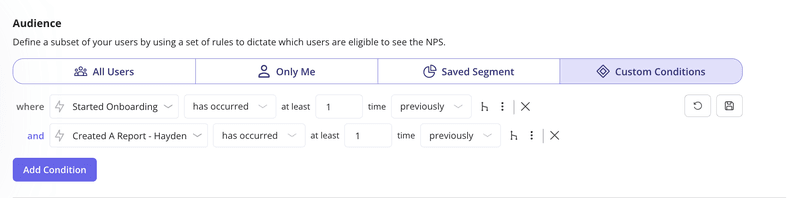
Segmenting users with Userpilot.
4. Phrase your survey responses and questions to avoid biases
How you ask a question is everything. Your choice of words and phrases in a question can affect the interpretation of the question and/or limit the scope of respondents’ answers.
Providing too much information in your question can be confusing. If a question is getting too long, break it down into smaller, separate questions. Likewise, you must avoid asking sensitive questions or leading questions.
For example, consider the question: “How was your amazing customer experience?”
The question assumes the customer experience was “amazing” and doesn’t leave room for the respondent to state otherwise. The result is a slew of biased responses rating the “amazing” experience.
5. Keep the same response options to avoid confusion
Collect customer feedback using the same survey structure to avoid confusing your users. This is especially important for Likert or rating scale questions.
For example, if a 1-5 rating scale question goes from good to bad on one question, flipping the order (bad to good) for the next question will only confuse and skew their answers
Best practices for creating surveys
Designing effective surveys goes beyond just crafting good questions: it requires careful consideration of survey design and best practices. From optimizing the timing of surveys to audience segmentation and survey analysis, these factors play a crucial role in improving survey engagement and collecting high-quality feedback. Below are some best practices for creating surveys and collecting valuable feedback:
- Optimize timing of surveys: Sending surveys at the right time ensures you capture feedback when it’s most relevant. Post-purchase surveys should go out immediately, while product experience surveys work best after users have had enough time to explore.
- Segment your audience: Personalization improves engagement. Tailor questions based on demographics, user behavior, or past interactions to make feedback collection more meaningful.
- Design surveys for maximum engagement: Use a mix of multiple-choice, ordinal questions, and ranking questions to keep respondents engaged while ensuring comprehensive data collection.
- Incorporate survey analysis techniques: Understanding survey characteristics and trends through proper survey analysis helps in making data-driven decisions. Advanced techniques, like analyzing response distributions and sentiment trends, can provide deeper insights.
- Stay ahead with survey trends: Keeping up with emerging best practices in survey design, such as mobile insights and AI-powered feedback collection, can improve response rates and data quality.
By applying these strategies, you can enhance survey effectiveness, increase response rates, and gather actionable insights that drive better decision-making.
Conclusion
Good surveys have a clear purpose, avoid confusing language, and prioritize the user experience. Now that you have a library of good survey questions, the next step is to visualize how they look in-app by exploring our survey examples.
Ready to start collecting insights?