Faculty of World Economy and International Affairs (original) (raw)
В старых версиях браузеров сайт может отображаться некорректно. Для оптимальной работы с сайтом рекомендуем воспользоваться современным браузером.
Facts and Figures
- 3000 +
undergraduate and graduate students - 6000 +
alumni - 63
countries represented among WEIA students - 25 +
student organisations and initiatives - 5
bachelor's programmes - 6
master's programmes - 11
research centres and laboratories - 200 +
faculty members in 4 departments
Education
5 bachelor's programmes
6 master's programmes
News
Презентация мониторинга макроэкономического и финансового положения и состояния долговых рынков стран БРИКС в рамках проекта МАС “Подходы к альтернативной международной финансовой системе”
February 04

On January 28, 2026, the Centre for Water Resources Research of the Institute for Economics of Natural Resources and Climate Change at HSE University held its first Water Workshop. Participants discussed institutional constraints and opportunities for regional cooperation in the field of water security, with a particular focus on Kazakhstan.
February 04

An article by Igor Makarov, Director of the HSE Institute for Economics of Natural Resources and Climate Change, co-authored with Elizaveta Smolovik, Junior Research Fellow at the Laboratory for the Climate Change Economics, has been published in Energy Research & Social Science, one of the leading international journals in the field of energy and social research. The study analyses which countries stand to gain or lose in the context of the global energy transition.
January 27
Deputy Deans
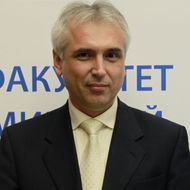
Deputy Dean for Academic Progress in Undergraduate and Master's Programmes
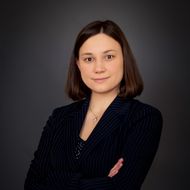

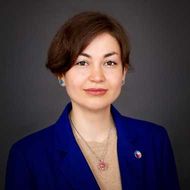
Anna V. Zhikhareva
Deputy Dean for Admissions and Alumni Relations

Publications
Publications
- While it is widely admitted that Afghanistan can contribute to connectivity in Eurasia, one may not also deny that Afghanistan’s regional role is dependent on regional conditions. This article takes Afghanistan’s security and geostrategic trends in Eurasia as the two major variables, defining conditions for Afghanistan’s regional role. They are reviewed and then synthesized as dependent and independent variable to form taxonomy of possible regional roles for Afghanistan.
India Quarterly. 2019. Vol. Vol. 75. No. Issue 1. P. 15-28. - Since around 2017-2018, the world has been living through a period of progressive erosion, or collapse, of international orders inherited from the past. With the election of Donald Trump and the rapid increase of US containment of Russia and China—which is both a consequence of this gradual erosion and also represents deep internal and international contradictions—this process entered its apogee. A period of collapse opens up possibilities for the creation of a new world order; hopefully, a fairer, stable, and peaceful order than has been previously experienced. Russia has a good chance of influencing the formation a new order.
Horizons. 2019. No. 13. P. 72-93. - The Mediterranean region has faced a significant number of challenges that have stemmed from turbulent events taking place on its Southern shores: conflicts and instability, the migration crisis, disruptions of regional value chains, souring regional relations, and foreign power interferences that have severely affected the region. The Covid-19 pandemic wreaked havoc on the Southern Mediterranean, but the health crisis had ambiguous effects on the underlying economic, social, and political trends of the region. It has exposed and exacerbated much of the previous sources of tension and, obscured many of them as public attention moved towards facing the public health emergency. Will the Covid-19 pandemic spur governments and civil societies to action? Or will it just serve as another smokescreen behind which to hide the region's longstanding problems?
Ledizioni Ledi Publishing, 2020. - This paper is aimed at the development of a tool analysing the AAI results for the Russian older citizens from different population groups, as well as at identifying factors underlying the inequalities in active ageing outcomes by calculation the AAI on the national and individual levels. The adaptation of the methodology of the AAI to the individual-level data and the limitations of the approach are explicitly explained. The older generations of Russia show relatively high levels of education, financial security and engagement in family care, especially in the care to children. The most significant potential for development have employment, volunteering, political engagement, physical activity, lifelong learning and use of the Internet. The calculation of the AAI at the individual level has revealed significant inequalities in the degree of realisation of potential in different areas of active ageing. The results of the project provide scientific evidence for the implementation of policy measures in the target groups. The high correlation of the index values with human capital indicators (health and education) underlines the importance of the early interventions aimed at promoting and supporting human capital at the earlier stages of the life course till the old age. The substantial positive connection of employment with other forms of activity stresses the necessity of developing a package of activation policy measures aimed at the retention of older adults in the labour market. At the same time, the statistical analysis showed the absence of a “dilemma of choice” between certain types of activity of the older generation, for example, between caring for grandchildren and employment, or employment and volunteering - the potential in different areas may be increased simultaneously.
Journal of Population Ageing. 2021. Vol. 14. No. 1. P. 69-90. - Book chapter
Kanaev E., Simbolon L., Shaternikov P.
As scholars review ASEAN’s performance, as well as predict likely trends of its future development, the association’s response to the challenges presented by the Fourth Industrial Revolution becomes crucial. Assessing ASEAN’s pre-digital achievements as the foundation of its response to the emerging digital challenges, the authors specify the association’s current and prospective readiness to effectively cope with them. As distinguished from numerous writings on the aftereffects of the Fourth Industrial Revolution for ASEAN, the central argument of the chapter is as follows. The key vulnerability of ASEAN’s policy is the overlap of the long-standing and present ASEAN’s shortcomings as the central reason behind its insufficient preparedness to face the digital challenges rather than the seriousness of these problems per se. The academic novelty of the research comes from distinguishing an appropriate remedy to decrease this vulnerability.
The actuality and the academic significance of the research stem from the authors’ identification and analysis of issues critical for ASEAN’s future evolution. Among these issues, the pivotal are prospects for the association to lose its digital sovereignty as a result of the intensifying Sino-American contradictions over the digital issues, the emergence of new imbalances between and within Southeast Asian states with negative implications for the ASEAN Economic Community. The aftereffects of the on-going digitalization of economic exchanges for ASEAN’s multilateral dialogue platforms and initiatives in the economic and political-security sphere. The authors’ findings on this set of issues, as well as their assessment, determine the academic originality of the paper.
In bk.: Регионы в современном мире: глобализация и Азия. Зарубежное регионоведение. St. Petersburg: Aletheya, 2020. P. 57-66.