From Dorchester to Dieskau –some aspects of relations between Britain and Central Europe during the Early Bronze Age (original) (raw)
Last updatedOctober 11, 2025
Abstract
Zusammenfassung Von Dorchester nach Dieskau -Einige Aspekte der Beziehungen zwischen Britannien und Mitteleuropa in der Frühbronzezeit Der vorliegende Aufsatz behandelt Metallarbeiten von der frühen Glockenbecherkultur bis zum Ende der Frühbronzezeit, die Beziehungen zwischen Britannien und Mitteleuropa, besonders mit Deutschland und der Schweiz, aufweisen. In Großbritannien ist für die frühe Glockenbecherkultur und die Bronzezeit A1 mehr Gold belegt als in Mitteleuropa. Von der Migdale-Phase an scheint die Bronze mit hohem Zinngehalt in Großbritannien unabhängig angenommen zu werden. Dagegen werden in Mitteleuropa Kupfer und Bronze mit geringem Zinngehalt in der Bronzezeit A1 verwendet. Die Metallfunde aus Großbritannien und Mitteleuropa zeigen in dieser Zeit wenige Gemeinsamkeiten. Während der Bronzezeit A2 gibt es in Mitteleuropa mehr Gold und auch Zinn, jedoch noch immer weniger als in Großbritannien. In der Bronzezeit A2 lässt sich ein verstärkter Kontakt nachweisen, der sich vor allem in Exporten von Großbritannien nach Mitteleuropa niederschlägt.
Key takeaways

AI
- Relations between Britain and Central Europe during the Early Bronze Age were characterized by distinct metalworking systems.
- Britain showed greater accessibility to gold and tin compared to Central Europe throughout the Early Bronze Age.
- High-tin bronze emerged in Britain before Central Europe, indicating independent adoption of bronze technology.
- Significant exports from Britain to Central Europe were noted during the later Early Bronze Age, particularly high-status items.
- The analysis reveals a gradual increase in contact, with reciprocal influences emerging mainly during Bronze A2.
Figures (7)
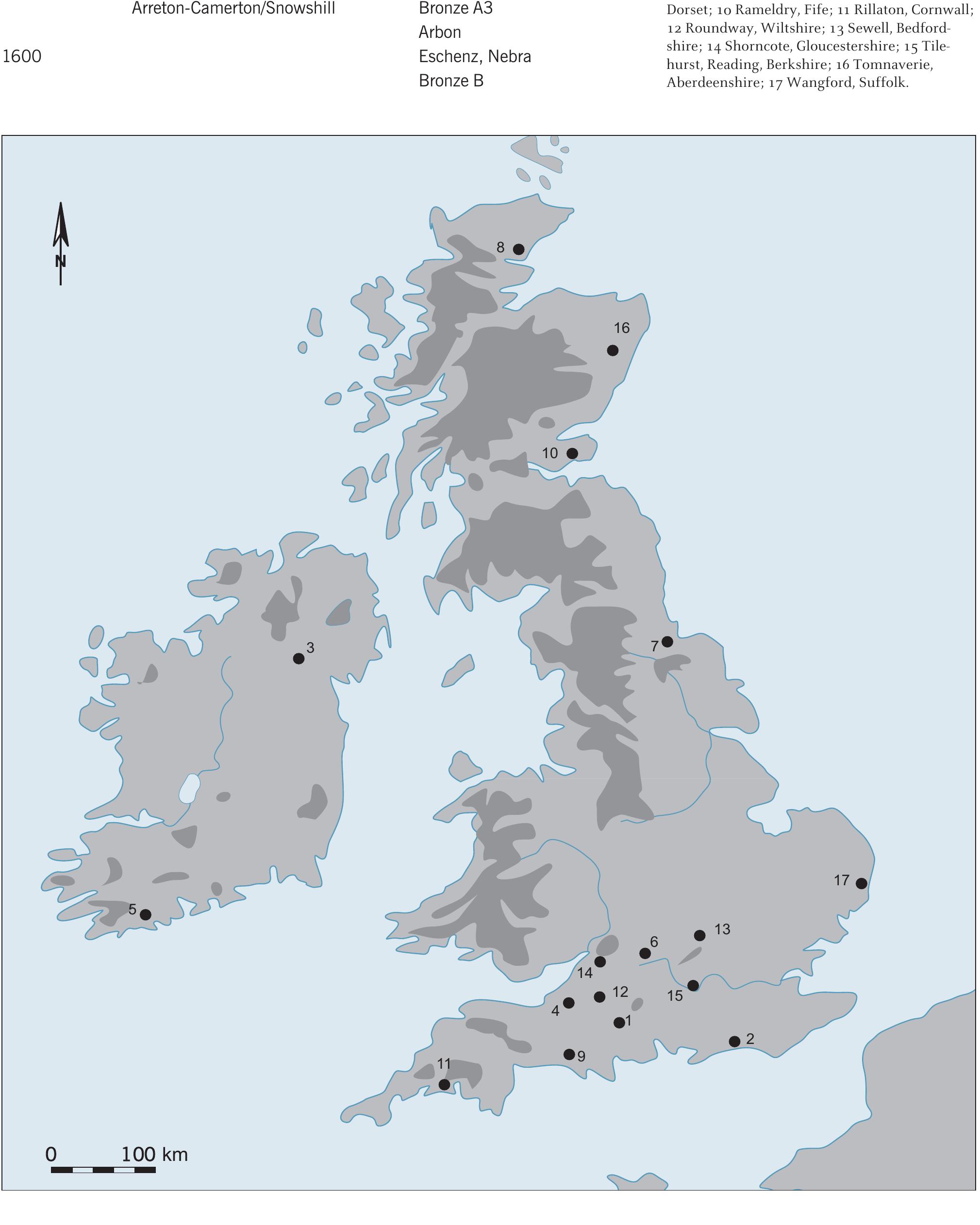
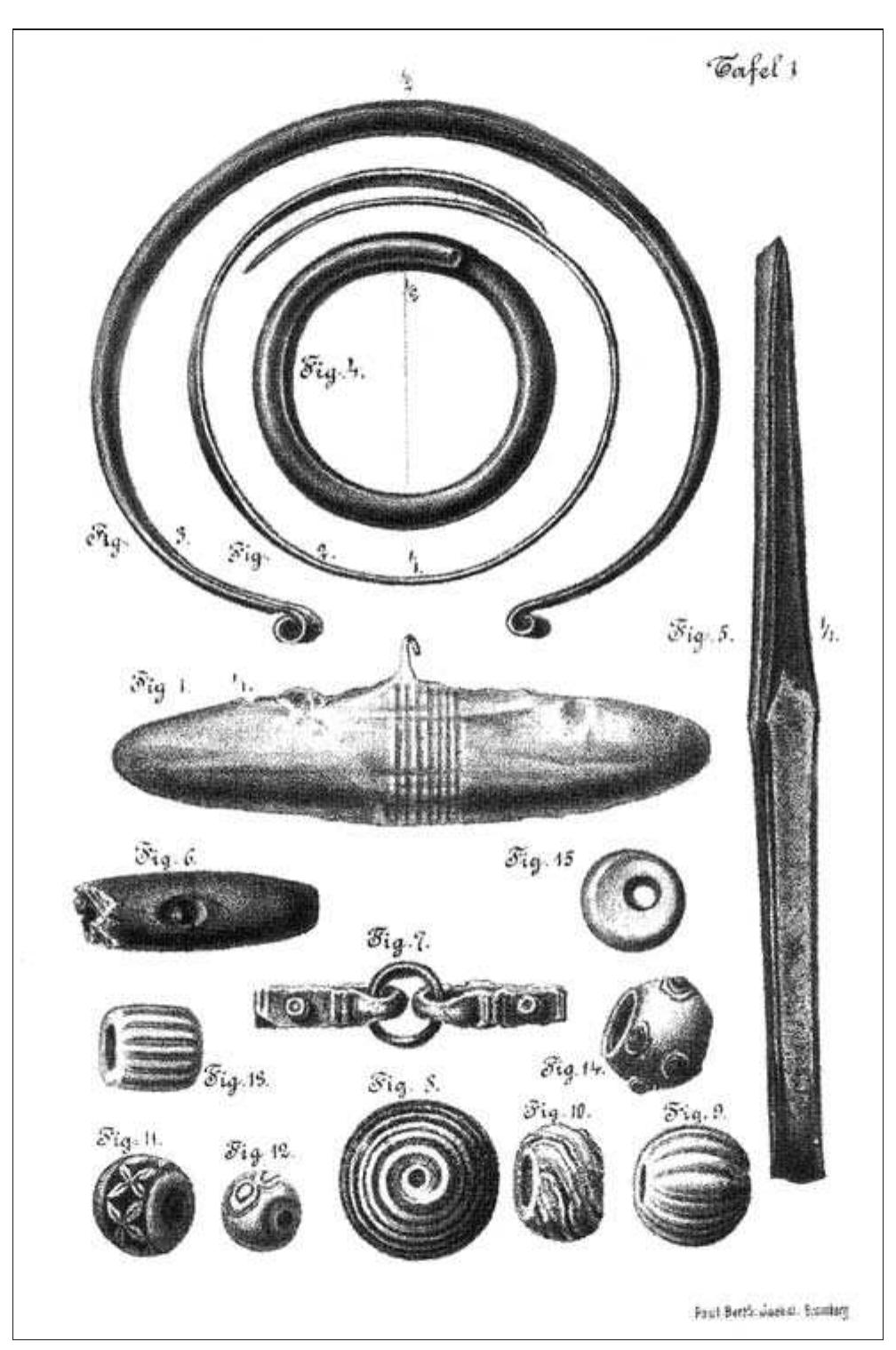
Fig. 3 Wasosz hoard, Poland.
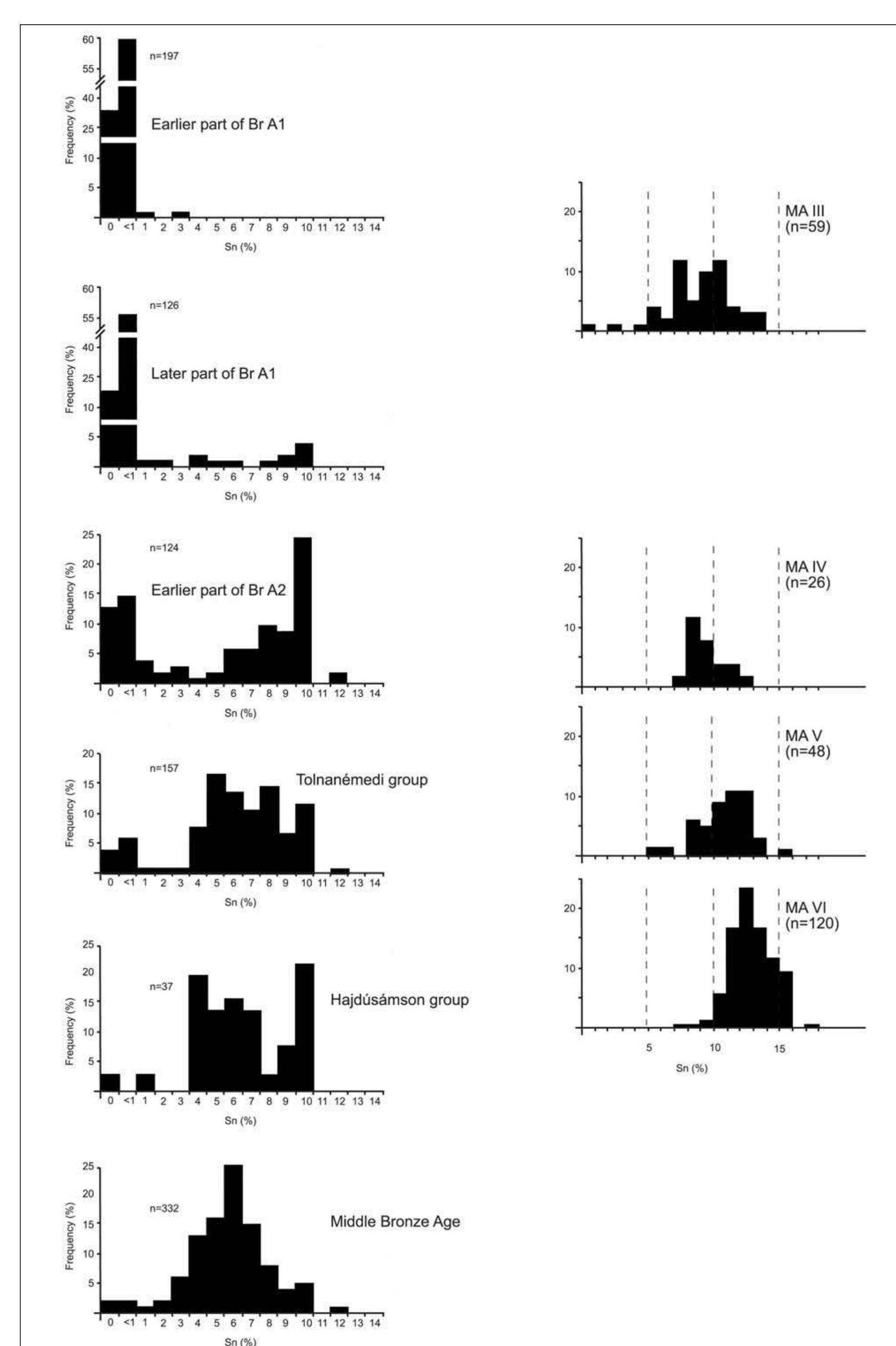
Fig. 4 (left) Bar charts of tin content.
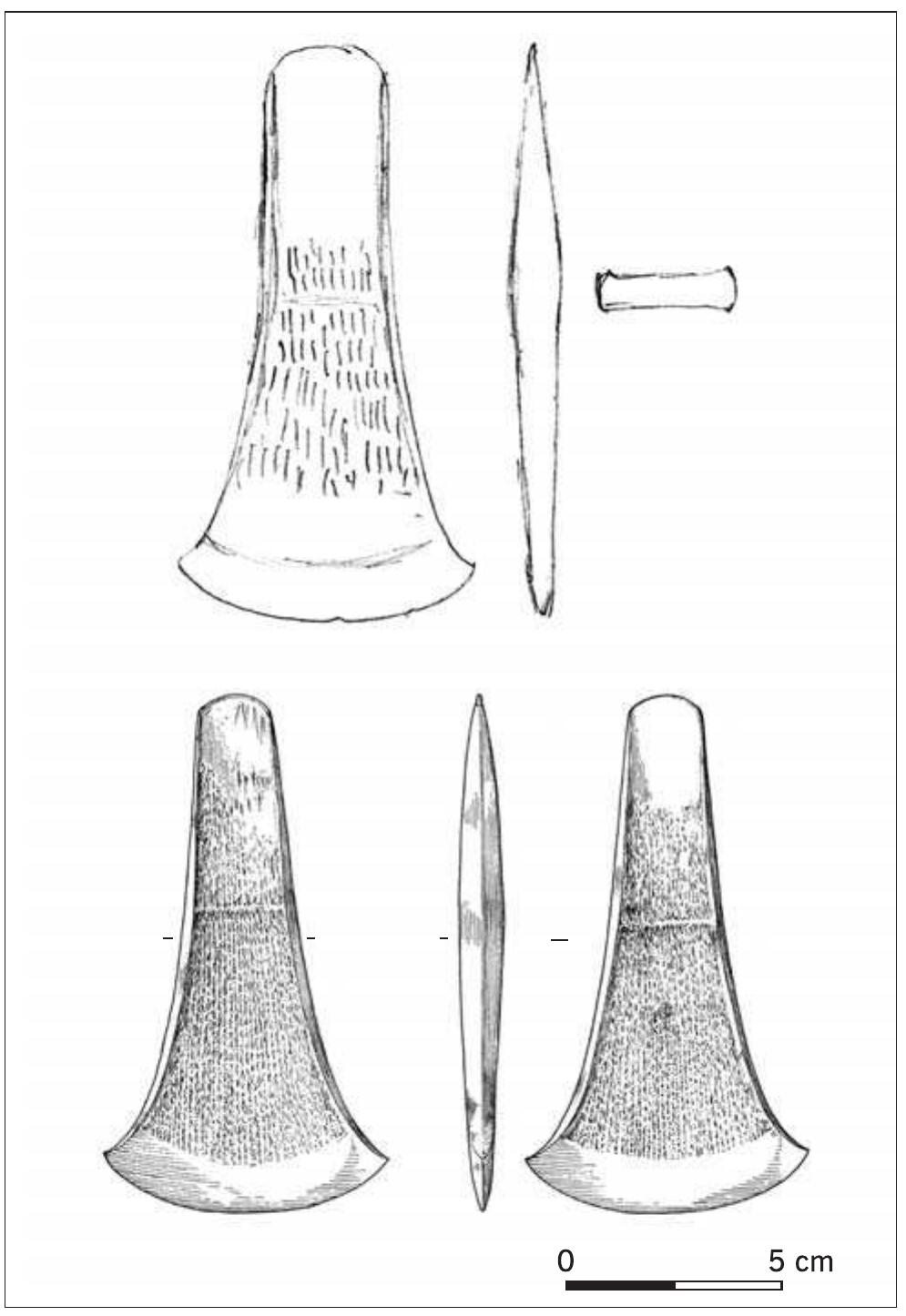
Fig.5 Axes. Dieskau 2, Saalkreis, Saxony-Anhalt (above); Mount Pleasant, Dorchester, Dorset (below).
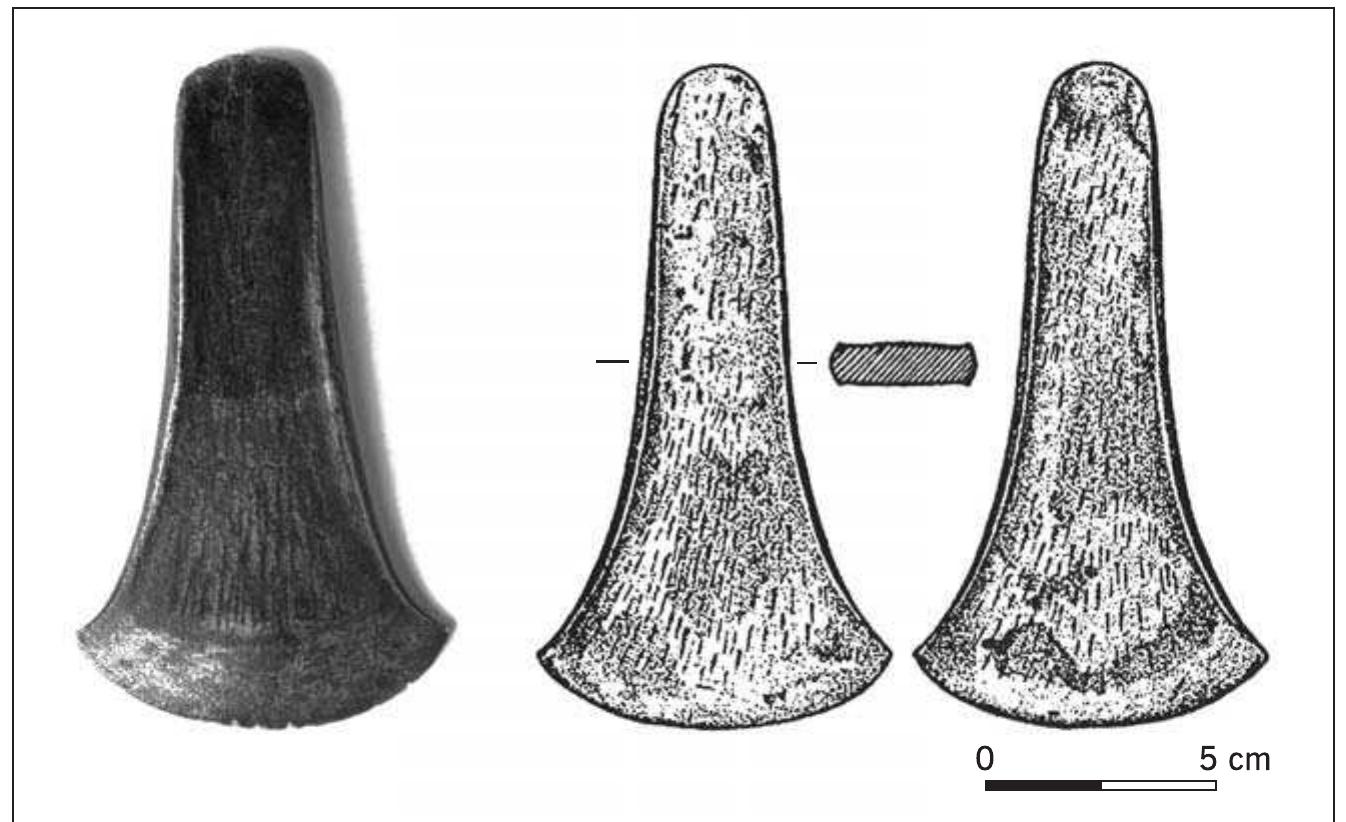
Needham has proposed Unétice influence on some Brit- ish flanged axes of Arreton type, without identifying any imports from Central Europe to match the exported axes (Needham 1978, 278; Rohl/Needham 1998, 92). The socketed skeumorph of an A2 flanged axe from Wangford, Suffolk, would be a candidate if its British provenance were cer- tain®2. There is no doubting the provenance of the ribbed bracelet of 14% tin bronze from a late Beaker burial at
introduced from the continent. During the later Early Bronze Age various high-status exports from Britain can be identified in parts of Central Europe. There are fewer conti- nental imports of metalwork in Britain though faience does appear to have been introduced from Central Europe. Again, evidence of composition suggests separate metalworking systems with more tin used in Britain. Acknowledgements I must thank first the organizers of the Nebra conference for inviting me to speak in such distinguished company and for their hospitality in Halle. Many people helped me prepare my lecture and this paper though none of them is responsi- ble for their contents: Richard Annis, Barbara Armbruster, Martin Bartelheim, Richard Bradley, Dirk Brandherm, Mary Cahill, Humphrey Case, Janusz Czebreszuk, Andrew Fitz- patrick, Sabine Gerloff, Tobias Kienlin, David Liversage, Christine Longworth, Sinéad McCartan, Jan Machnik, Stuart Needham, Peter Northover, Colin Pendleton, Laura Phillips, Francesca Radcliffe, Alison Roberts, Joan Taylor, Eugene Warmenbol and especially Trevor Cowie.

Loading Preview
Sorry, preview is currently unavailable. You can download the paper by clicking the button above.
References (81)
- Ruckdeschel 1978, 165 fig. 14,8-9; 182-186.
- Brandherm 2oo4, 3o2-3o9; 324 fig. 23; 327 fig. 24; 328.
- Needham 2oo4, 235; Baker et al. 2oo3, 9o f. fig. 4; 1o3-1o5.
- Rohl/Needham 1998, 9o-93; 119 fig. 21; 125-127 figs. 26-28; 22o f.
- Gerloff 1996, 11-15; Gerloff 1997, 267; Haf- ner/Suter 2oo3, 337; 339 fig. 12; Schwenzer 2oo4, 218; 219 tab. 42; 22o.
- O'Connor/Cowie 2oo1, 224 f.; Jockenhövel 2oo4, 158 f. 16o fig. 18.4; 161-163;164 fig. 18.7; 165.
- V. Brunn 1959, 57; 67; pl. 3o; 89; Butler 1963, 36. 5o Wainwright 1979, 128-138; fig. 5; Britton 1979, 129 fig. 56.
- R E L AT I O N S B E T W E E N B R I TA I N A N D C E N T R A L E U R O P E D U R I N G T H E E A R LY B R O N Z E A G E TA GUNGEN DES L ANDESMUSEUMS FÜR VORGESCHICHTE HALLE • BAND 05 • 2010
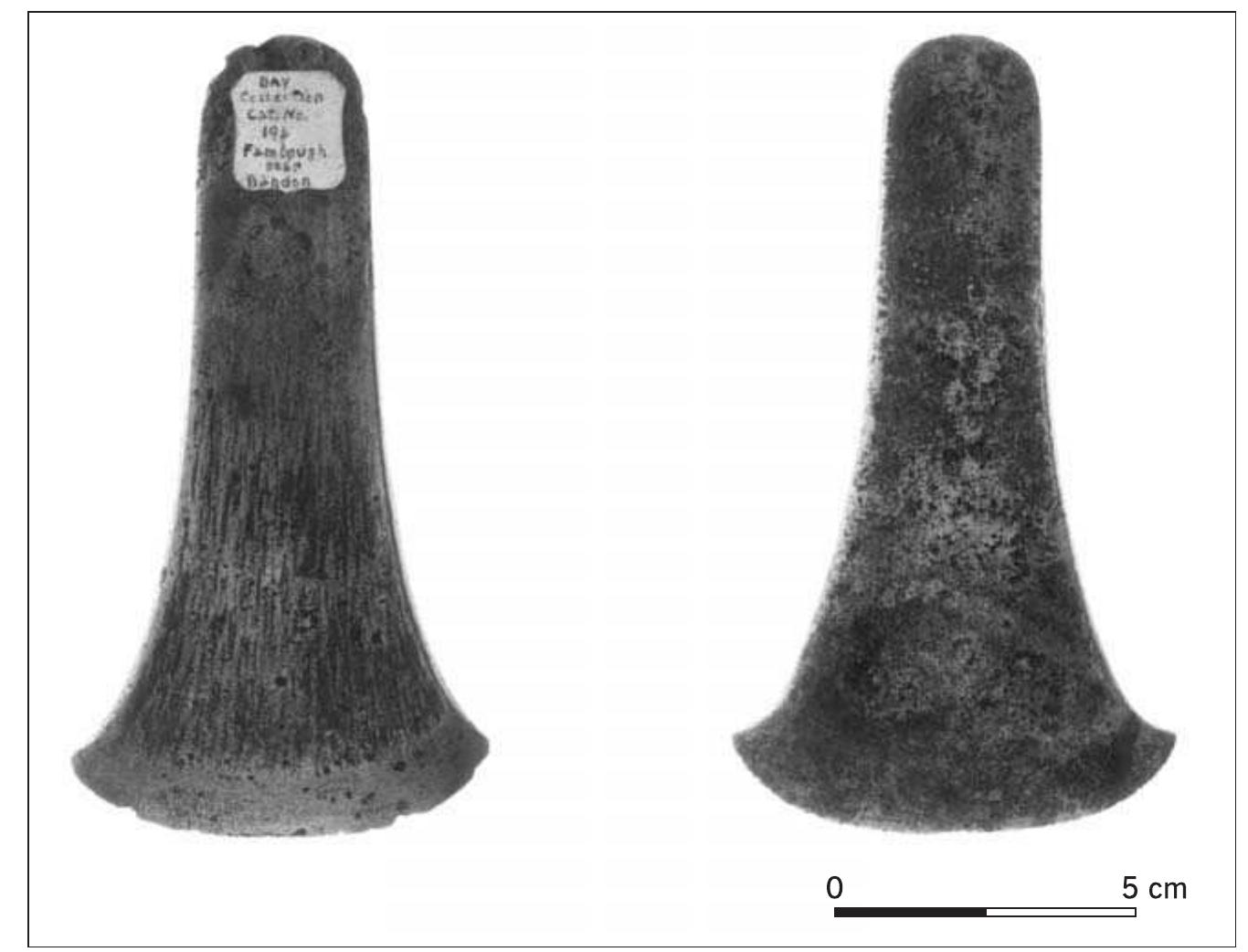
- Fig. 7 Axes. Famlough near Bandon, County Cork (left); no provenance (right).
- Gerloff 1975, 154 f. 255 no. 59; pl. 56 H; Need- ham 1978, 277 fig. 8,5; 278; Pendleton 1999, 12; 138 fig. 34,85.
- Gross et al. 1987, 148 fig. 184; 149 fig. 185; Barfield 1991; Gerloff 1993, 8o f.; Haf- ner/Suter 2oo3, 334; 335 fig. 1o; 336 f.
- Steiner 2ooo, 669 fig. 2,13; 67o; O'Connor forthcoming. Bibliography Ashbee 2oo4 P. Ashbee, Early ditches: their forms and infills. In: R. Cleal/J. Pollard (eds.), Monuments and material culture: papers in honour of Isobel Smith (Salisbury 2oo4) 1-14.
- Ashmore 2oo4 P. J. Ashmore, Absolute chronology. In: Shepherd/Barclay 2oo4, 125-136.
- Baker et al. 2oo3 L. Baker/A. Sheridan/T. Cowie, An Early Bronze Age »dagger grave« from Rameldry Farm, near Kingskettle, Fife. Proceedings of the Society of Antiquaries Scotland 133, 2oo3, 85-123.
- Barclay/Glass 1995 A. Barclay/H. Glass, Excavations of Neolithic and Bronze Age ring-ditches, Shorncote Quarry, Somerford Keynes, Gloucestershire. Transactions of the Bristol and Gloucestershire Archaeological Society 113, 1995, 21-6o.
- Barfield 1991 L. Barfield, Wessex with and without Mycenae: new evidence from Switzerland. Antiquity 65, 1991, 1o2-1o7.
- Bertemes 1992 F. Bertemes, Der frühbronzezeitliche Bestat- tungsplatz von Singen im Landkreis Konstanz. Saarbrücker Studien und Materialien zur Altertumskunde 1, 1992, 61-97. Bertemes 2oo4 F. Bertemes, Frühe Metallurgen in der Spät- kupfer-und Frühbronzezeit. In: Meller 2oo4, 144-149. Bill 1997 J. Bill, Die Bronzebeile von Salez. Werden- berger Jahrbuch 1o, 1997, 247-261. Bradley 2oo5 R. Bradley, The moon and the bonfire: an in- vestigation of three stone circles in north-east Scotland (Edinburgh 2oo5).
- Brandherm 1998 D. Brandherm, Ein Lanquaidbeil und eine Lan- zenspitze westeuropäischen Typs aus Wein- garten, Kr. Germersheim. Archäologisches Korrespondenzblatt 28, 1998, 47-58. Brandherm 2oo4 D. Brandherm, Porteurs des hallebardes? In: H.-J. Beier/R. Einicke (eds.), Gedenkschrift für Annemarie Häußer und Helmut Spatz. Bei- träge zur Ur-und Frühgeschichte Mitteleuro- pas. Varia Neolithica 3 (Langenweißbach 2oo4) 279-334.
- Britton 1963 D. Britton 1963, Traditions of metal-working in the later Neolithic and Early Bronze Age of Britain: Part 1. Proceedings of the Prehistoric Society 29, 1963, 258-325.
- Britton 1979 D. Britton, The Bronze Axe from Mount Pleas- ant. Description, Composition and Affinities. In: Wainwright 1979, 128-138.
- Brunn 1959 W. A. von Brunn, Bronzezeitliche Hortfunde. Deutsche Akademie der Wissenschaften zu Berlin, Schriften der Sektion für Vor-und Frühgeschichte 7 (Berlin 1959). Burgess 1978 C. Burgess, The background of early metal- working in Ireland and Britain. In: Ryan 1978, 2o7-214. Burgess 198o C. Burgess, The age of Stonehenge (London, Toronto, Melbourne 198o). Butler 1963 J. J. Butler, Bronze Age connections across the North Sea. Palaeohistoria 9 (Groningen 1963). Butler 199o J. J. Butler, Bronze Age metal and amber in the Netherlands 1. Palaeohistoria 32, 199o, 47-11o.
- J. J. Butler, Bronze Age metal and amber in the Netherlands 2,1. Catalogue of flat axes, flanged axes and stopridge axes. Palaeohistoria 37/38, 1995/96, 159-243.
- Butler/van der Waals 1966 J. J. Butler/J. D. van der Waals, Bell Beakers and early metal-working in the Netherlands. Palaeohistoria 12, 1966, 41-139.
- Clarke 197o D. L. Clarke, Beaker pottery of Great Britain and Ireland (Cambridge 197o). Clarke et al. 1985 D. V. Clarke/T. G. Cowie/A. Foxon, Symbols of power at the time of Stonehenge (Edinburgh 1985).
- Coles 1968/69 J. M. Coles, Scottish Early Bronze Age metal- work. Proceedings of the Society of Antiquar- ies Scotland 1o1, 1968/89, 1-11o.
- Craddock 1978 P. Craddock, Deliberate alloying in the Atlantic Bronze Age. In: Ryan 1978, 369-385.
- Craddock 198o P. Craddock, The composition of the copper alloys. In: F. Pryor, A catalogue of the British and Irish prehistoric bronzes in the Royal Ontario Museum, Toronto (Toronto 198o) 65-76. Czebreszuk 1998 J. Czebreszuk, The north-eastern borderland of the Bell Beakers. The case of the Polish low- land. In: M. Benz/S. van Willingen (eds.), Some new approaches to the Bell Beaker »phenome- non«: lost paradise…? Proceedings of the 2 nd Meeting of the »Association Archéologie et Gobelets« Feldberg (Germany), 18 th -2o th April 1997. British Archaeological Reports International Series 69o (Oxford 1998) 161-174. Czebreszuk 2oo1 J. Czebreszuk, Schyłek neolitu i początki epoki brązu w strefie południowo-zachodnioba łtyckiej (III i początki II tys. przed Chr.). Uni- wersytet im. Adama Mickiewicza w Poznańu, Seria Archaeologica 46 (Poznań 2oo1).
- De Marinis 1999 R. C. De Marinis, Towards a relative and abso- lute chronology of the Bronze Age in northern Italy. Notizie Archeologiche Bergomensi 7, 1999, 23-1oo.
- Eogan 1994 G. Eogan, The accomplished art. Oxbow Monograph 42 (Oxford 1994). Fitzpatrick 2oo3 A. Fitzpatrick, The Amesbury Archer. Current Archaeology 184, 2oo3, 146-152.
- Gebers 1978 W. Gebers, Endneolithikum und Frühbronze- zeit im Mittelrheingebiet, Katalog. Saar- brücker Beiträge zur Altertumskunde 28 (Bonn 1978).
- Gedl 2oo2 M. Gedl, Die Halsringe und Halskragen in Polen 1 (Frühe bis jüngere Bronzezeit). Prä- historische Bronzefunde XI 6 (Stuttgart 2oo2).
- Gerloff 1975 S. Gerloff, The Early Bronze Age daggers in Great Britain and a reconsideration of the Wessex culture. Prähistorische Bronzefunde VI 2 (München 1975). Gerloff 1993 S. Gerloff, Zur Fragen mittelmeerländischer Kontakte und absoluter Chronologie der Früh- bronzezeit in Mittel-und Westeuropa. Prähis- torische Zeitschrift 68, 1993, 58-1o2.
- Gerloff 1996 S. Gerloff, Wessex, Mycenae and related mat- ters: the chronology of the British Bronze Age in its European setting. In: C. Belardelli/ R. Peroni (eds.), The Bronze Age in Europe and the Mediterranean. The Colloquia of the XIII International Congress of Prehistoric and Protohistoric Sciences, Forlì (Italy) 8-14 Sep- tember 1996 (Forlì 1996) 11-19.
- Gerloff 1997 S. Gerloff, Frühbronzezeitliche Gewandschlie- ßen? In: C. Becker/M.-L. Dunkelmann/C. Metz- ner-Nebelsick/H. Peter-Röcher/M. Röder/ B. Teržan (eds.), Χρο ′ νος: Festschrift für Bernhard Hänsel. Studia honoraria 1 (Espel- kamp 1997) 255-274. Gerloff 2oo4 S. Gerloff, The dagger from grave 4o13/12. In: Lambrick/Allen 2oo4, 82-86. Gerloff 2oo7 S. Gerloff, Reinecke's ABC and the chronology of the British Bronze Age. In: Ch. Burgess/ P. Topping/F. Lynch (eds.), Beyond Stone- henge. Essays on the Bronze Age in honour of Colin Burgess (Oxford 2oo7) 117-161.
- Gross et al. 1987 E. Gross/Ch. Brombacher/M. Dick/K. Diggel- mann/B. Hardmeyer/R. Jagher/Ch. Ritzmann/ B. Ruckstuhl/U. Ruoff/J. Schibler/P. C. Vaug- han/L. Wyprächtiger, Zürich »Mozartstrasse«. Neolithische und bronzezeitliche Ufersiedlun- gen 1. Bericht der Zürcher Denkmalpflege, Monographien 4 (Zürich 1987).
- Hafner/Suter 2oo3 A. Hafner/P. J. Suter, Vom Endneolithikum zur Frühbronzezeit: Wandel und Kontinuität zwi- schen 24oo und 15oo v. Chr. Archäologisches Korrespondenzblatt 33, 2oo3, 325-342.
- Hahne 1912 H. Hahne, Das frühbronzezeitliche Goldge- schmiede von Schulenburg, Kr. Marienburg. Mannus 4, 1912, 7o-71.
- Hänsel/Hänsel 1997 A. Hänsel/B. Hänsel (eds.), Gaben an der Götter. Schätze der Bronzezeit Europas. Ausstellungs- katalog Freie Universität Berlin in Verbindung mit dem Museum für Vor-und Frühgeschichte Berlin, Staatliche Museen zu Berlin Stiftung Preußischer Kulturbesitz. Bestandskataloge 4 (Berlin 1997). Hansen 2oo2 S. Hansen, »Überausstattungen« in Gräbern und Horten der Frühbronzezeit. In: Müller 2oo2, 151-173.
- Harbison 1969 P. Harbison, The axes of the Early Bronze Age in Ireland. Prähistorische Bronzefunde IX 1 (München 1969). Hochuli 1994 St. Hochuli, Arbon-Bleiche. Die neolithischen und bronzezeitlichen Seeufersiedlungen Aus- grabungen 1885-1991. Archäologie im Thur- gau 2 (Frauenfeld 1994).
- Hundt 1958 H.-J. Hundt, Katalog Straubing I. Materialhefte zur Bayerischen Vorgeschichte 11 (Kallmünz/ Opf. 1958).
- Hundt 1983 H.-J. Hundt, Über eine Nadelform der ausge- henden frühen Bronzezeit der Schweiz. Helvetia Archaeologica 14, 1983, 173-178. Jahrbuch Bromberg 1892 Jahrbuch der Historischen Gesellschaft für den Netzedistrikt zu Bromberg 1892, pl. 1. Jockenhövel 2oo4 A. Jockenhövel, Von West nach Ost? Zur Genese der Frühbronzezeit Mitteleuropas. In: H. Roche/E. Grogan/J. Bradley/J. Coles/ B. Raftery (eds.), From megaliths to metal. Essays in honour of George Eogan (Oxford 2oo4) 155-167. Kibbert 198o K. Kibbert, Die Äxte und Beile im mittleren Westdeutschland 1. Prähistorische Bronze- funde IX 1o (München 198o). Kienlin 2oo5 T. L. Kienlin, Frühbronzezeitliche Vollgriff- dolche und Randleistenbeile: Zu Herstellungs- technik, Zusammensetzung und Material- wahrnehmung. Archäologisches Korres- pondenzblatt 35, 2oo5, 175-19o.
- Kienlin et al. 2oo6 T. L. Kienlin/E. Bischoff/H. Opielka, Copper and bronze during the Eneolithic and Early Bronze Age. A metallographic examination of axes from the Northalpine region. Archaeo- metry 48, 2oo6, 453-468.
- Kinnes 1985 I. A. Kinnes, Beaker and Early Bronze Age grave groups. British Bronze Age Metal- work A 1-16 (London 1985). Kinnes 1995 I. A. Kinnes, Beaker and Early Bronze Age grave groups. British Bronze Age Metal- work A 17-3o (London 1995).
- C. Köster, Beiträge zum Endneolithikum und zur Frühen Bronzezeit am nördlichen Ober- rhein. Prähistorische Zeitschrift 43/44, 1965/66, 2-95.
- Kowalenska-Marszałek 2ooo H. Kowalenska-Marszałek, Spiral rings from Kichary Nowe -the most ancient gold objects from Poland? In: S. Kadrow (ed.), A turning of ages: jubilee book dedicated to Professor Jan Machnik (Kraków 2ooo) 347-361.
- Krause 1988 R. Krause, Die endneolithischen und frühbron- zezeitlichen Grabfunde auf der Nordstadtter- rasse von Singen am Hohentwiel. Grabfunde von Singen am Hohentwiel 1. Forschungen und Berichte der Vor-und Frühgeschichte in Baden-Württemberg 32 (Stuttgart 1988). Krause 2oo3 R. Krause, Studien zur kupfer-und frühbron- zezeitlichen Metallurgie zwischen Karpaten- becken und Ostsee. Vorgeschichtliche For- schungen 24 (Rahden/Westf. 2oo3). Kubach 1977 W. Kubach, Die Nadeln in Hessen und Rhein- hessen. Prähistorische Bronzefunde XIII 3 (München 1977).
- Lambrick/Allen 2oo4 G. Lambrick/T. Allen, Gravelly Guy, Stanton Harcourt: the development of a prehistoric and Romano-British community. Thames Valley Landscape Monographs 21 (Oxford 2oo4).
- Lanting/van der Plicht 2oo1/o2 J. N. Lanting/J. van der Plicht, De 14C-chronolo- gie van de Nederlandse pre-en protohistorie 4: bronstijd en vroege ijzertijd. Palaeohistoria 43/44, 2oo1/o2, 117-262.
- Lehrberger et al. 1997 G. Lehrberger/J. Fridrich/R. Gebhard/ J. Hrala (eds.), Das prähistorische Gold in Bayern, Böhmen und Mähren: Herkunft - Technologie -Funde. Památky Archeologické, Supplementum 7 (Prague 1997). Leuzinger 2oo3 U. Leuzinger, Der Goldbecher von Eschenz (Kanton Thurgau, Schweiz). In: Germanisches Nationalmuseum Nürnberg (ed.), Gold und Kult der Bronzezeit, Germanisches National- museum Nürnberg, 22. Mai bis 7. September 2oo3 (Nürnberg 2oo3) 12o-125. Lißner 2oo4 B. Lißner, Frühbronzezeitliche Gruppen in Süddeutschland. Archäologie Digital 2 (2oo4). Liversage 1994 D. Liversage, Interpreting impurity patterns in ancient bronze: the Carpathian basin. Acta Archaeologica (København) 65, 1994, 57-134. Liversage 2ooo D. Liversage, Interpreting impurity patterns in ancient bronze: Denmark. Nordiske Fortids- minder Ser. C 1 (København 2ooo).
- Liversage/Northover 1998 D. Liversage/J. P. Northover, Prehistoric trade monopolies and bronze supply in northern Europe. In: C. Mordant/M. Pernot/V. Rychner (eds.), L'atelier du bronzier en Europe du XX e au VIII e siècle avant notre ère 1. Les analyses de composition du métal, leur apport à archéo- logie de l'Age du Bronze. Actes du colloque Bronze '96, Neuchâtel et Dijon (Paris 1998) 137-151. Machnik 1977 J. Machnik, Frühbronzezeit Polens. Polska Academia Nauk, Oddział w Krakowie, Prace Komisji Archeologicznej 15 (Wrocław, War- szawa, Kraków, Gdańsk 1977).
- Machnik/Tkaczuk 2oo3 J. Machnik/T. K. Tkaczuk, Interesting and important artefacts from the beginning of the Bronze Age in the vicinity of Halicz (upper basin of the Dnester River). In: E. Jerem/ P. Raczky (eds.), Morgenrot der Kulturen. Frühe Etappen der Menschheitsgeschichte in Mittel-und Südosteuropa. Festschrift für Nándor Kalicz zum 75. Geburtstag. Archaeo- lingua 15 (Budapest 2oo3) 483-496.
- Makarowicz 2oo3 P. Makarowicz, Northern and southern Bell Beakers in Poland. In: J. Czebreszuk/M. Szmyt (eds.), The northeast frontier of Bell Beakers. Proceedings of the symposium held at the Adam Mickiewicz Universty Poznań, Poland, 26-29 May 2oo2. British Archaeological Reports International Series 1155 (Oxford 2oo3) 137-154.
- Manby et al. 2oo3 T. G. Manby/A. King/B. E. Vyner, The Neolithic and Bronze Ages: a time of early agriculture. In: T. G. Manby/S. Moorhouse/P. Ottaway (eds.), The archaeology of Yorkshire. Yorkshire Archaeological Society Occasional Paper 3 (Leeds 2oo3) 35-116. Maraszek 2oo4 R. Maraszek, Die Einkehr der westlichen Welt - Prunkbeil und Goldkragen. In: Meller 2oo4, 172-175. Meller 2oo4 H. Meller (ed.), Der geschmiedete Himmel. Die weite Welt im Herzen Europas vor 36oo Jah- ren. Begleitband zur Sonderausstellung, Lan- desmuseum für Vorgeschichte Halle (Saale) 15. Oktober 2oo4-24. April 2oo5, Dänisches Nationalmuseum Kopenhagen 1. Juli 2oo5- 22. Oktober 2oo5, Reiss-Engelhorn-Museen Mannheim 4. März 2oo6-9. Juli 2oo6 (Stuttgart 2oo4). Möslein 2oo1 St. Möslein, Die Straubinger Gruppe -zur Frühbronzezeit in Südostbayern. In: B. Eber- schweiler/J. Köninger/H. Schlichtherle/ Ch. Strahm (eds.), Aktuelles zur Frühbronze- zeit und frühen Mittelbronzezeit im nörd- lichen Alpenvorland. Rundgespräche Hem- menhofen 6. Mai 2ooo. Edward Sangmeister gewidmet zum 85. Geburtstag. Hemmenhofe- ner Skripte 2 (Freiburg i. Br. 2oo1) 17-3o.
- Möslein/Rieder 1997
- St. Möslein/K. Rieder, Zinnperlen aus einem frühbronzezeitlichen Grab von Buxheim, Landkreis Eichstätt, Oberbayern. Das Archäo- logische Jahr in Bayern 1997, 68-7o.
- Moucha 1997 V. Moucha, Gold der frühen Bronzezeit. In: Lehrberger et al. 1997, 154-164.
- Muhl 2oo4 A. Muhl, Gesegnetes Land -Der Großraum Dieskau im frühbronzezeitlichen Fundmosaik. In: Meller 2oo4, 1oo-1o3. Müller 2oo2 J. Müller, Modelle zur Einführung der Zinn- bronzetechnologie und zur sozialen Differen- zierung der mitteleuropäischen Frühbronze- zeit. In: J. Müller (ed.), Vom Endneolithikum zur Frühbronzezeit: Muster sozialen Wandels? Tagung Bamberg 14.-16. Juni 2oo1. Universi- tätsforschungen zur Prähistorischen Archäo- logie 9o (Bonn 2oo2) 267-289.
- Needham 1978 St. Needham, The extent of foreign influence on Early Bronze Age axe development in southern Britain. In: Ryan 1978, 265-293.
- Needham 1988 St. Needham, Selective deposition in the British Early Bronze Age. World Archaeology 2o, 1988, 229-248. Needham 2ooo St. Needham, The development of embossed goldwork in Bronze Age Europe. The Antiquar- ies Journal 8o, 2ooo, 27-65. Needham 2oooa St. Needham, The gold and copper metalwork. In: G. Hughes (ed.), The Lockington gold hoard: an Early Bronze Age barrow cemetery at Lockington, Leicestershire (Oxford 2ooo) 23-47. Needham 2ooob St. Needham, Power pulses across a cultural divide: cosmologically driven acquisition bet- ween Armorica and Wessex. Proceedings of the Prehistoric Society 66, 2ooo, 151-2o7 Needham 2oo2 St. Needham, Analytical implications for Beaker metallurgy in north-west Europe. In: M. Bartel- heim/E. Pernicka/R. Krause (eds.), Die Anfänge der Metallurgie in der alten Welt. Forschungen zur Archäometrie und Altertumswissenschaft 1 (Rahden/Westf. 2oo2) 99-133. Needham 2oo4 St. Needham, Migdale-Marnoch: sunburst of Scottish metallurgy. In: Shepherd/Barclay 2oo4, 217-45.
- Needham et al. 1989 St. Needham/M. Leese/D. Hook/M. Hughes, Developments in the Early Bronze Age metal- lurgy of southern Britain. World Archae- ology 2o, 1989, 383-421.
- Needham et al. 1997 St. Needham/C. Bronk-Ramsey/D. Coombs/ C. Cartwright/P. Pettit, An independent chro- nology for British Bronze Age metalwork: The results of the Oxford Radiocarbon Accelator programme. Archaeological Journal 154, 1997, 55-1o7. Nicholson 198o S. Nicholson, Catalogue of the prehistoric metalwork in Merseyside County Museums (Liverpool 198o). Northover 1989 J. P. Northover, Properties and use of arsenic- copper alloys. In: A. Hauptmann/E. Pernicka/ G. A. Wagner (eds.), Archäometallurgie der Alten Welt/Old World Archaeometallurgy. Der Anschnitt, Beiheft 7 (Bochum 1989) 111-118.
- Northover 1999 J. P. Northover, The earliest metalworking in southern Britain. In: A. Hauptmann/E. Per- nicka/T. Rehren/Ü. Yalçın (eds.), The begin- nings of metallurgy. Proceedings of the Inter- national conference »The beginnings of metal- lurgy«, Bochum 1995. Der Anschnitt, Beiheft 9 (Bochum 1999) 211-225. Northover 2oo4 J. P. Northover, The Early Bronze Age metal- work. In: Lambrick/Allen 2oo4, 88-9o.
- O'Connor 2oo4 B. O'Connor, The earliest Scottish metalwork since Coles. In: Shepherd/Barclay 2oo4, 2o5-216.
- O'Connor forthcoming B. O'Connor, Report on razor from Solstice Park, Amesbury, Wiltshire (forthcoming).
- O'Connor/Cowie 2oo1 B. O'Connor/T. Cowie, Scottish connections: some recent finds of Early Bronze Age decora- ted axes. In: W. H. Metz/B. L. van Beek/ H. Steegstra (eds.), Patina. Essays presented to Jay Jordan Butler on the occasion of his 8o th birthday (Groningen, Amsterdam 2oo1) 2o6-23o. Pare 2ooo Ch. F. E. Pare, Bronze and the Bronze Age. In: Ch. F. E. Pare (ed.), Metals Make The World Go Round. The supply and circulation of metals in Bronze Age Europe. Proceedings of a confer- ence held at the University of Birmingham in June 1997 (Oxford 2ooo) 1-38.
- Pendleton 1999 C. Pendleton, Bronze Age metalwork in nor- thern East Anglia. British Archaeological Reports British Series 279 (Oxford 1999). Pernicka 2oo4 E. Pernicka, Die Anfänge der Metallurgie in Mitteleuropa. In: Meller 2oo4, 134-135.
- Piggott/Stewart 1958 St. Piggott/M. Stewart (eds.), Early and Middle Bronze Age grave-groups and hoards from Scotland. Inventaria Archaeologia. Great Britain 5 th set: GB 25-34 (London 1958). Pingel 2oo1 V. Pingel, Zwischen Rillaton und Leubingen. Nochmals zur Goldblechlunula von Butzbach. In: S. Hansen/V. Pingel (eds.), Archäologie in Hessen: Neue Funde und Befunde. Festschrift für Fritz-Rudolf Hermann. Internationale Archäologie. Studia Honoraria 13 (Rahden/Westf. 2oo1) 63-67.
- Probst 1996 E. Probst, Deutschland in der Bronzezeit (München 1996).
- Reim 1995 H. Reim, Ein Halskragen aus Kupfer von Dor- mettingen, Zollernalbkreis (Baden-Württem- berg). In: A. Jockenhövel (ed.), Festschrift für Hermann Müller-Karpe zum 7o. Geburtstag (Bonn 1995) 237-248.
- Robinson, 1979/8o P. H. Robinson, Analysis of the racquet-headed pin from Roundway G. 8. The Wiltshire Archaeological and Natural History Magazine 74/75, 1979/8o, 184.
- Rohl/Needham 1998 B. Rohl/St. Needham, The circulation of metal in the British Bronze Age: the application of lead isotope analysis. British Museum Occasional Paper 1o2 (London 1998). Ruckdeschel 1978 W. Ruckdeschel, Die frühbronzezeitlichen Gräber Bayerns. Antiquitas 2,11 (Bonn 1978).
- Ryan 1978 M. Ryan (ed.), The origins of metallurgy in Atlantic Europe. Proceedings of the 5 th Atlan- tic Colloquium, Dublin 3o th March to 4 th April 1978 (Dublin 1978).
- Sarnowska 1975 W. Sarnowska, Kultura unietycka w Polsce 2 (Wrocław, Warszawa, Kraków, Gdańsk 1975). Schwenzer 2oo4 St. Schwenzer, Frühbronzezeitliche Vollgriff- dolche. Typologische, chronologische und technische Studien auf der Grundlage einer Materialaufnahme von Hans-Jürgen Hundt. Römisch-Germanisches Zentralmuseum Mainz, Kataloge vor-und frühgeschichtlicher Altertümer 36 (Mainz 2oo4).
- Shepherd/Barclay 2oo4 I. A. G. Shepherd/G. J. Barclay (eds.), Scotland in ancient Europe (Edinburgh 2oo4).
- Sheridan/Shortland 2oo4 A. Sheridan/J. Shortland. »… beads which have given rise to so much dogmatism, controversy and rash speculation«: faience in Early Bronze Age Britain and Ireland. In: Shepherd/Barclay 2oo4, 263-279. Sheridan et al. 1995
- J. A. Sheridan/F. Hunter/A. Saville, Organic artefacts from the collections of the National Museums of Scotland. In: R. E. M. Hedges/ R. A. Housley/C. Bronk Ramsey/G. J. van Klin- ken, Radiocarbon dates from the Oxford AMS System: Archaeometry datelist 2o. Archaeo- metry 37, 1995, 423-425.
- Smith et al. 1997 R. J. C. Smith/E. Healy/M. J. Allen/E. L. Morris/ I. Barnes/P. J. Woodward, Excavations along the route of the Dorchester By-pass, Dorset, 1986-8. Wessex Archaeological Report 11 (Salisbury 1997).
- Stein 1976 F. Stein, Bronzezeitliche Hortfunde in Süd- deutschland. Beiträge zur Interpretation einer Quellengattung. Saarbrücker Beiträge zur Altertumskunde 23 (Bonn 1976). Steiner 2ooo H. Steiner, Bronze-und urnenfelderzeitlicher Import aus dem nördlichen Alpenvorland in der befestigten Siedlung am Ganglegg/Schlu- derns. Der Schlern 74,1o, 2ooo, 664-683. Taylor 198o J. J. Taylor, Bronze Age goldwork of the British Isles (Cambridge 198o).
- Wainwright 1979 G. J. Wainwright, Mount Pleasant, Dorset: excavations 197o-1971. Reports of the Re- search Committee of the Society of Antiquar- ies of London 37 (London 1979). Warmenbol 2oo4 E. Warmenbol, Le début des âges des métaux en Belgique. In: M. Vander Linden/L. Sala- nova (eds.), Le troisième millénaire dans la nord de la France et en Belgique. Anthropo- logica et Praehistorica 115. Mémoire de la Société Préhistorique Française 35 (Bruxelles, Paris 2oo4) 27-48.
- Zich 1996 B. Zich, Studien zur regionalen und chronolo- gischen Gliederung der nördlichen Aunjetitzer Kultur. Vorgeschichtliche Forschungen 2o (Berlin, New York 1996).
- Zich 2oo4 B. Zich, Die Fürstengräber von Leubingen und Helmsdorf. In: Meller 2oo4, 156-159.
FAQs
AI
What explains the absence of imported metal pins in Britain's Migdale assemblage?add
The study shows that metal pins are completely absent from the Migdale assemblage, indicating no direct importation of continental pin designs. All analyzed finds from Britain appear to represent indigenous types.
How did the transition to high-tin bronze differ between Britain and Central Europe?add
Research reveals that Britain adopted high-tin bronze as early as 2200 BC, showing a consistent average tin content of 11.5%. In contrast, most Central European metalwork during Bronze A1 still primarily used copper.
What is the significance of the Dieskau axe in relation to British metalwork?add
The Dieskau axe, distinct for its high tin content of 14%, signifies central European interest in British exports during the Early Bronze Age. Its context among luxury artifacts highlights Britain's role as a source of prestige metal.
When did Central European metalwork begin to exhibit high-tin bronze characteristics?add
Central European metalwork showed increased tin content during the later Bronze A2, primarily between 4% and 10%. Direct comparisons indicate that this increased availability did not occur until significantly after Britain's adoption.
Why were gold lunulae more common in Britain than in Central Europe?add
The research indicates that gold lunulae flourished in Britain while Central European examples were primarily imitations in copper. British lunulae, like those found in Butzbach, had substantial weights, surpassing Central European gold objects.