Consumption and Economic Growth in the Framework of Classical Economics (original) (raw)
Abstract
1. Introduction 10 2. Cantillon 2.1 Introduction 16 2.2 Equilibrium prices and income distribution 2.3 Consumption and activity levels 2.4 Conclusion 3. Quesnay 29 3.1 Introduction 29 3.2 Bon prix and income distribution: the indeterminateness of profits 31 3.3 Sectoral quantity dynamics 3.4 Consumption propensities and activity levels 3.5 Conclusion 4. Turgot 42 6. Smith 68 6.1 Introduction 68 6.2 Natural prices and income distribution 70 6.3 Growth dynamics 6.4 Consumption and economic growth 78 6.5 Conclusion 7. Ricardo 82 7.1 Introduction 82 7.2 Theory of value and distribution 84 7.3 Theory of economic growth 90 7.4 The apparent irrelevance of demand 95 7.5 Conclusion 8. Sismondi 101 8.1 Introduction 8.2 Theory of value and distribution 8.3 Theory of economic growth 8.4 Consumption and economic growth 111 8.5 Conclusion 9. Malthus 9.1 Introduction 9.2 Theory of value and distribution 8 9.3 Theory of economic growth 126 9.4 Consumption and economic growth 9.5 Conclusion 135 10. Marx 10.1 Introduction 137 10.2 Theory of value and distribution 139 10.3 Theory of economic growth 143 10.4 The problem of demand deficiency 10.5 Conclusion 154 11. Kalecki and Classical Economics 11.1 Consumption demand and classical growth theory 156 11.2 Marx-Luxemburg-Kalecki 11.3 Kalecki, Keynes and classical economics 168 11.4 Conclusion: demand-led growth 12. Consumption and Demand-led Growth 180 12.1 A simple growth model 12.2 Growth through autonomous consumption 12.3 Demand-led growth and classical economics 191 13. Conclusion 198
Key takeaways

AI
- Demand sufficiency is critical for economic growth in classical economics, particularly emphasized by Sismondi and Malthus.
- Classical economists recognize the circular flow between production and consumption, impacting activity levels and growth.
- The surplus approach, as discussed by Marx, highlights the need for demand to realize production outputs.
- Kalecki and Keynes articulate demand-led growth, emphasizing the importance of autonomous consumption and induced investment.
- Investment decisions correlate to consumption patterns, challenging marginalist views of saving and investment equating.
Figures (1)
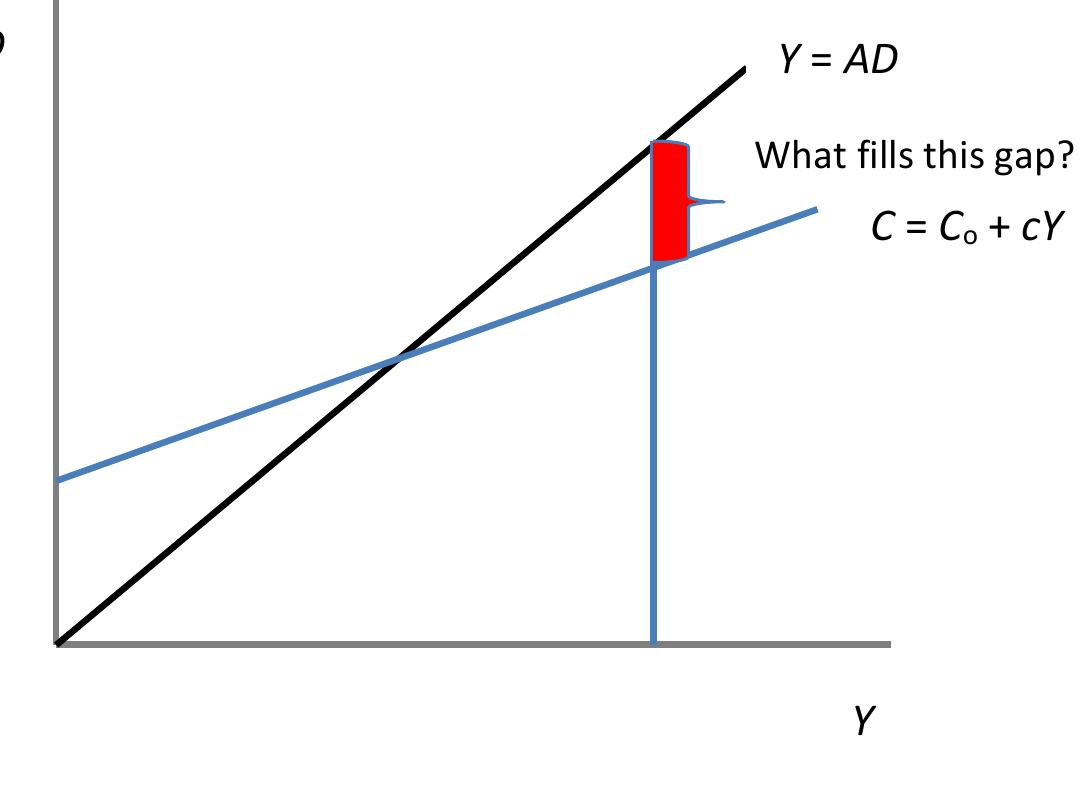
As Keynes observes in the final chapter (chapter 24 titled ‘Concluding Notes on the Socia

Loading Preview
Sorry, preview is currently unavailable. You can download the paper by clicking the button above.
References (188)
- Akhtar, M. A. (1978), 'Sir James Steuart on Economic Growth', Scottish Journal of Political Economy, vol. 25, no. 1, pp. 57-74.
- -(1979), 'An Analytical Outline of Sir James Steuart's Macroeconomic Model', Oxford Economic Papers, New Series, vol. 31, no. 2, pp. 283-302.
- Alexander, S. S. (1940), 'Mr. Keynes and Mr. Marx', The Review of Economic Studies, vol. 7, no. 2, pp. 123-35.
- Arena, R. (1998), 'Sismondi, Jean Charles Léonard Simonde de', in H. D. Kurz & N. Salvadori (eds) The Elgar Companion to Classical Economics, L-K, Cheltenham: Edward Elgar.
- Aspromourgos, T. (1995), [Review of Yang (1994)], History of Economics Review, vol. 23, Winter, pp. 145-50.
- -(1996), On the Origins of Classical Economics: Distribution and value from William Petty to Adam Smith, London: Routledge.
- -(1997), 'Cantillon on Real wages and Employment: A Rational Reconstruction of the Significance of Land Utilization', The European Journal of History of Economic Thought, vol. 4, no. 3, pp. 417-43.
- -(1998), 'Steuart, James', in H. Kurz & N. Salvadori (eds) The Elgar Companion to Classical Economics, L-Z, Cheltenham: Edward Elgar.
- -(2009), The Science of Wealth: Adam Smith and the framing of political economy, London: Routledge.
- -(2010), '"Universal Opulence": Adam Smith on Technical Progress and Real Wages', The European Journal of the History of Economic Thought, vol. 17, no. 5, pp. 1169-82.
- -(2011), [Response by T. Aspromourgos to J. Young's review of Aspromourgos (2009)], in F. Forman-Barzilai (ed) The Adam Smith Review, vol. 6, pp. 352-8.
- -(2012a), 'Entrepreneurship, Risk and Income Distribution in Cantillon's Essai', in C. Gehrke, N. Salvadori, I. Steedman & R. Sturn (eds), Classical Political Economy and Modern Theory: Essays in Honour of Heinz Kurz, London: Routledge.
- -(2012b), 'The Machine in Adam Smith's Economic and Wider Thought', Journal of the History of Economic Thought, vol. 34, no. 4, pp. 475-90.
- -(2013), 'Sraffa's System in Relation to Some Main Currents in Unorthodox Economics', in E. S. Levrero, A. Palumbo & A. Stirati (eds) Sraffa and the Reconstruction of Economics Theory: Volume Three -Sraffa's Legacy: Interpretations and Historical Perspectives, Hampshire: Palgrave Macmillan.
- -(2014), 'Ricardo on Adam Smith', in H. D. Kurz & N. Salvadori (eds) The Elgar Companion to David Ricardo, Cheltenham: Edward Elgar, forthcoming.
- Aspromourgos, T. & P. Groenewegen (1999), 'The Notion of Subsistence Wage in Pre- Smithian Classical Political Economy: Some Reflections Inspired by the Surplus Approach', in G. Mongiovi & F. Petri (eds), Value, Distribution and Capital: Essays in Honour of Pierangelo Garegnani, London: Routledge.
- Barba, A. & Pivetti, M. (2009), 'Rising Household Debt: Its Causes and Macroeconomic Implications-A Long-period Analysis', Cambridge Journal of Economics 2009, 33, 113-37.
- Barna, T. (1976), 'Quesnay's Model of Economic Development', European Economic Review, vol. 8, pp. 315-38.
- Bellofiore, R. (2009) (ed), Rosa Luxemburg and the Critique of Political Economy, London: Routledge.
- Berdell, J. (2009), 'Interdependence and Independence in Cantillon's Essai', The European Journal of the History of Economic Thought, vol. 16, no. 2, pp. 221-49.
- -(2010), 'An Early Supply-Side-Demand-Side Controversy: Petty, Law, Cantillon', Journal of Economic Perspectives, vol. 24, no. 4, pp. 207-17.
- Bleaney, M. F. (1976), Underconsumption Theories: A History and Critical Analysis, New York: International Publishers.
- Brewer, A. (1987), 'Turgot: Founder of Classical Economics', Economica, New Series, vol. 54, no. 216, pp. 417-28.
- -(1992), Richard Cantillon: Pioneer of Economic Theory, London: Routledge.
- -(1995), 'The Concept of Growth in Eighteenth-Century Economics', History of Political Economy, vol. 27, no. 4, pp. 609-38.
- -(1997), 'An Eighteenth-century View of Economic Development: Hume and Steuart', European Journal of the History of Economic Thought, vol. 4, no. 1, pp. 1-22.
- Cantillon, R. (1931) [1755], Essai sur la Nature du Commerce en Général, H. Higgs (ed) with an English translation and other material, London: Macmillan, for the Royal Economic Society.
- Casarosa, C. (1978), 'A New Formulation of the Ricardian System', Oxford Economic Papers, vol. 30, no. 1, pp. 38-63.
- Cessaratto, S., Serrano, F. & Stirati, A. (2003), 'Technical Change, Effective Demand and Employment', Review of Political Economy, vol. 15, no. 1, pp. 33-52.
- Ciccone, R. (1986), 'Accumulation and Capacity Utilisation: Some Critical Comments on Joan Robinson's Theory of Distribution', Political Economy: Studies in the Surplus Approach, vol.2, no. 1, pp. 17-36.
- Clarke, P. (1987), 'Hobson, John Atkinson (1858-1940)', in J. Eatwell, M. Milgate & P. Newman (eds) The New Palgrave: A Dictionary of Economics, First edition, London: Macmillan.
- -(1988), The Keynesian Revolution in the Making, 1924-1936, Oxford: Clarendon Press.
- Corry, B. A. (1959), 'Malthus and Keynes-A Reconsideration', The Economic Journal, vol. 69, no. 276, pp. 717-24.
- Costabile, L. (1983), 'Natural Prices, Market Prices and Effective Demand in Malthus', Australian Economic Papers, vol. 22, no. 40, pp. 144-70.
- Costabile, L. & Rowthorn, B. (1985), 'Malthus's Theory of Wages and Growth', The Economic Journal, vol. 95, no. 378, pp. 418-37.
- Desai, R. (2010), 'Consumption Demand in Marx and in the Current Crisis', in P. Zarembka (ed) The National Question and the Question of Crisis, (Research in Political Economy, vol. 26, pp. 101-43), Emerald Group Publishing Limited.
- Dillard, D. (1991), 'Keynes and Marx', in G. A. Caravale (ed) Marx and Modern Economic Analysis, vol. II, Aldershot: Edward Elgar.
- Dobb, M. (1973), Theories of Value and Distribution since Adam Smith: Ideology and Economic Theory, Cambridge: Cambridge University Press.
- Domar, E. (1946), 'Capital expansion, rate of growth, and employment', Econometrica, vol. 14, no. 2, pp. 137-47. Dome, T. (1989), 'A Theoretical Analysis of Sismondi's Tableau Economique', Metroeconomica, vol. 40, no. 2, pp. 119-34.
- Doujon, R. (1996), [Review of Yang (1994)], European Journal of the History of Economic Thought, vol. 3, no. 1, pp. 176-8.
- Drakopoulos, S. (2011), 'The Neglect of Comparison Income: An Historical Perspective', The European Journal of the History of Economic Thought, vol. 18, no. 3, pp. 441-64.
- Duesenberry, J. (1949), Income, Saving and the Theory of Consumer Behavior, Cambridge: Harvard University Press.
- Dutt, A. K. (2011), 'The Role of Aggregate Demand in Classical-Marxian Models of Economic Growth', Cambridge Journal of Economics, vol. 35, pp. 357-82.
- Eagly, R. V. (1961), 'Sir James Steuart and the "Aspiration Effect"', Economica, New Series, vol. 28, no. 109, pp. 53-61.
- Eatwell, J. (1983), 'Theories of value, output and employment', in Eatwell & Milgate (eds) Keynes's Economics and the Theory of Value and Distribution, New York: Oxford University Press.
- Eatwell, J. & Milgate, M. (1983) (eds), Keynes's Economics and the Theory of Value and Distribution, New York: Oxford University Press.
- Eltis, W. (1984), The Classical Theory of Economic Growth, London: Macmillan Press.
- -(1998), 'The Harrod-Domar Equation from Quesnay to Marx to Harrod and Domar', in G. Rampa, L. Stella & A. P. Thirlwall (eds) Economic Dynamics, Trade and Growth: Essays on Harrodian Themes, Hampshire: Macmillan.
- -(1999), 'Does Luxury Consumption Promote Growth?', in R. E. Backhouse & J. Creedy (eds) From Classical Economics to the Theory of the Firm: Essays in Honour of D. P. O'Brien, Cheltenham: Edward Elgar.
- Fan-Hung (1939), 'Keynes and Marx on the Theory of Capital Accumulation, Money and Interest', The Review of Economic Studies, vol. 7, no. 1, pp. 28-41.
- Furniss, E. S. (1920), The Position of the Laborer in a System of Nationalism: a Study in the Labor Theories of the Later English Mercantilists, Boston, MA: Houghton Mifflin.
- Garegnani, P. (1978), 'Notes on Consumption, Investment and Effective Demand: I', Cambridge Journal of Economics, vol. 2, pp. 335-53.
- -(1979), 'Notes on Consumption, Investment and Effective Demand: II', Cambridge Journal of Economics, vol. 3, pp. 63-82.
- -(1984), 'Value and Distribution in the Classical Economists and Marx', Oxford Economic Papers, vol. 36, no. 2, pp. 291-325.
- -(1992), 'Some Notes for an Analysis of Accumulation', in J. Halevi, D. Laibman & E. J. nell (eds) Beyond the Steady State: A Revival of Growth Theory, London: Macmillan.
- -(1998), 'Sraffa, Piero', in H. D. Kurz & N. Salvadori (eds) The Elgar Companion to Classical Economics, L-Z, Cheltenham: Edward Elgar.
- Garegnani, P. & Palumbo, A. (1998), 'Accumulation of Capital', in H. Kurz & N. Salvadori (eds) The Elgar Companion to Classical Economics, A-K, Cheltenham: Edward Elgar.
- Garegnani, P. & Trezzini, A. (2012), 'Cycles and Growth: A Source of Demand-Driven Endogenous Growth', Review of Political Economy, vol. 22, no. 1, pp. 119-25.
- Gehrke, C. & Kurz, H. D. (1995), 'Karl Marx on Physiocracy', The European Journal of the History of Economic Thought, vol. 2, no. 1, pp. 53-90.
- Gilibert, G. (1986), [Review of Vaggi (1987)], Contributions to Political Economy, vol. 8, pp. 91-6.
- Gram, H. (1998), 'Necessaries, Conveniencies and Luxuries', in H. Kurz & N. Salvadori (eds) The Elgar Companion to Classical Economics, L-Z, Cheltenham: Edward Elgar.
- Groenewegen, P. D. (1969), 'Turgot and Adam Smith', Scottish Journal of Political Economy, vol. 16, pp. 271-87; repr. in Groenewegen (2002) Eighteenth-century Economists: Turgot, Beccaria and Smith and their Contemporaries, London: Routledge.
- -(1970), 'A Reappraisal of Turgot's Theory of Value, Exchange and Price Determination', History of Political Economy, vol. 2, no. 1, pp. 117-96.
- -(1971), 'A Re-Interpretation of Turgot's Theory of Capital and Interest', The Economic Journal, vol. 81, no. 322, pp. 327-40.
- -(1977) (ed), The Economics of A. R. J. Turgot, The Hague: Martinus Nijhoff.
- -(1983), Quesnay. Farmers 1756 and Turgot. Sur la Grande et la Petite Culture, ed. and trans. with an introduction, Reprints of Economic Classics, series 2, no. 2, Sydney: University of Sydney.
- -(1999), 'Sir James Steuart and Richard Cantillon', in R. Tortajada (ed) The Economics of James Steuart, London: Routledge.
- -(2002), Eighteenth-Century Economics: Turgot, Beccaria and Smith and their Contemporaries, London: Routledge.
- -(2013), 'Rosa Luxemburg's The Accumulation of Capital', History of Economics Review, no. 58, summer, pp. 71-82.
- Gualerzi, D. (2012), 'Towards a Theory of the Consumption-Growth Relationship', Review of Political Economy, vol. 24, no. 1, pp. 33-50.
- Hagemann, H. (1998), 'General Glut Controversy', in H. D. Kurz & N. Salvadori (eds) The Elgar Companion to Classical Economics, A-K, Cheltenham: Edward Elgar.
- Harrod, R. (1939), 'An Essay in Dynamic Theory', Economic Journal, vol. 49, pp. 14-33.
- Hicks, J. (1965), Capital and Growth, Oxford: Oxford University Press.
- Hicks, J. R. & Hollander, S. (1977), 'Mr. Ricardo and the Moderns', Quarterly Journal of Economics, vol. 91, pp. 351-69.
- Howard, M. C. & King, J. E. (1975), The Political Economy of Marx, Essex: Longman.
- Junankar, P. N. (1987), 'acceleration principle', in J. Eatwell, M. Milgate & P. Newman (eds) The New Palgrave: A Dictionary of Economics, First edition, London: Macmillan.
- Kahn, R. (1985), The Making of Keynes' General Theory, (Raffaele Mattioli Lectures), Cambridge: Cambridge University Press.
- Kaldor, N. (1955-6), 'Alternative Theories of Distribution', The Review of Economic Studies, vol. 23, no. 2, pp. 83-100.
- Kalecki, M. (1933), 'Outline of a Theory of the Business Cycle', as repr. in Kalecki (1971): pp. 1-14.
- -(1967), 'The Problem of Effective Demand with Tugan-Baranovski and Rosa Luxemburg', as repr. in Kalecki (1971): pp. 146-55.
- -(1971), Selected Essays on the Dynamics of the Capitalist Economy 1933-1970, Cambridge: Cambridge University Press.
- Kapeller, J. & Schütz, B. (2014): Debt, Boom, Bust: A Theory of Minsky-Veblen Cycles. Journal of Post Keynesian Economics, vol. 36, no. 4, pp. 781-813.
- Karayiannis, A. D. (1994), 'Sir James Steuart on the Managed Market', in D. Reisman (ed) Economic Thought and Political Theory, Boston: Kluwer Academic Publishers.
- -(1997), [Review of Yang (1994)], History of Political Economy, vol. 29, no. 1, pp. 161-4.
- Kates, S. (1994), 'The Malthusian Origins of the General Theory or How Keynes Came to Write a Book About Say's Law and Effective Demand', History of Economics Review, winter, pp. 10-20.
- Kenway, P. (1980), 'Marx, Keynes and the Possibility of Crisis', Cambridge Journal of Economics, vol. 4, pp. 23-36; as repr. in Eatwell & Milgate (1983): 149-66.
- Keynes, J. M. (1931), Unemployment as a World Problem; as repr. in D. Moggridge (ed) The Collected Writings of John Maynard Keynes, vol. XIII (The General Theory and After), London: Macmillan.
- -(1933), 'Thomas Robert Malthus', in E. Johnson & D. Moggridge (eds) The Collected Writings of John Maynard Keynes, vol. X (Essays in Biography), London: Macmillan.
- -(1936), The General Theory of Employment, Interest and Money, in The Collected Writings of John Maynard Keynes, vol. VII, London: Macmillan.
- King, J. E. (1995), Conversations with Post Keynesians, London: Macmillan Press.
- -(2008), 'Josef Steindl and the Instability of Capitalism', Review of Political Economy, vol. 20, no. 3, pp. 333-40.
- Klingen, H. (1998), 'Recent Interpretations of David Ricardo', in H. D. Kurz & N. Salvadori (eds) The Elgar Companion to Classical Economics, L-Z, Cheltenham: Edward Elgar.
- Knight, F.H. (1933), Risk, Uncertainty and Profit. London: London School of Economics and Political Science (1st edn 1921). (Reprints of Scarce Tracts in Economic and Political Science no. 16.)
- Kowalik, T. (2009), 'Luxemburg's and Kalecki's Theories and Visions of Capitalist Dynamics, in R. Bellofiore (ed) Rosa Luxemburg and the Critique of Political Economy, London: Routledge.
- -(2014), Rosa Luxemburg: Theory of Accumulation and Imperialism, Hampshire: Palgrave Macmillan.
- Kuczynski, M. & Meek, R. L. (1972), Quesnay's Tableau Economique, London: Macmillan & Augustus M. Kelley.
- Kurz, H. D. (1985), 'Effective Demand in a "Classical" Model of Value and Distribution: The Multiplier in a Sraffian Framework', The Manchester School, vol. 53, no. 2, pp. 121-37.
- -(1992), 'Adam Smith on Foreign Trade: A Note on the "Vent-for-Surplus" Argument', Economica, New Series, vol. 59, no. 236, pp. 475-81.
- -(2010), 'Technical Progress, Capital Accumulation and Income Distribution in Classical economics: Adam Smith, David Ricardo and Karl Marx', The European Journal of the History of Economic Thought, vol. 17, no. 5, pp. 1183-1222.
- Kurz, H.D. & Salvadori, N. (1995), Theory of Production: a Long-period Analysis, Cambridge: Cambridge University Press.
- Lavoie, M. (2014), Post-Keynesian Economics: New Foundations, Cheltenham: Edward Elgar.
- Levrero, E. S. (2013), 'Marx on Absolute and Relative Wages and the Modern Theory of Distribution', Review of Political Economy, vol. 25, no. 1, pp. 91-116.
- López, J. & Assous, M. (2010), Michal Kalecki, Hampshire: Palgrave Macmillan.
- Luxemburg, R. (1951) [1913], The Accumulation of Capital, transl. by A. Schwarzschild, with an introduction by J. Robinson, London: Modern Reader Paperbacks.
- Malthus, T. R. (1989) [1820], Principles of Political Economy, Variorum edition, 2 vols., J. Pullen (ed), Cambridge: Cambridge University Press.
- Marshall, A. (1920) [1890], Principles of Economics, 8th edition, London: Macmillan.
- Marx, K. (1954) [1867], Capital: A Critical Analysis of Capitalist Production, Volume I, transl. from the third German edition by S. Moore & E. Aveling and edited by F. Engels, Moscow: Progress Publishers.
- -(1956) [1885], Capital: A Critique of Political Economy, Volume II, edited by F. Engels (transl. from the German, edited by the late I. Lasker), Moscow: Progress Publishers.
- -(1963-71) [1861-3], Theories of Surplus-Value (Volume IV of Capital), Parts I-III, Moscow: Progress Publishers.
- -(1970) [1859], A Contribution to the Critique of Political Economy, transl. by S. W. Ryazanskaya & ed. by M. H. Dobb, Moscow: Progress Publishers.
- -(1971) [1894], Capital: A Critique of Political Economy, Volume III, edited by F. Engels, Moscow: Progress Publishers.
- -(1973) [1857/8], Grundrisse: Foundations of the Critique of Political Economy (Rough Draft), transl. with a foreword by M. Nicolaus, London: Allen Lane, in association with New Left Review.
- Mazat, N. & Serrano, F. (2012), 'Quesnay and the Analysis of the Surplus in an Agrarian Capitalist Economy', mimeo, Federal University of Rio de Janeiro.
- Meek, R. L. (1958), 'The Economics of Control Prefigured by Sir James Steuart', Science and Society, vol. 22, pp. 289-305.
- -(1962), The Economics of Physiocracy: Essays and Translations, London: George Allen & Unwin.
- Milgate, M. (1982), Capital and Employment: A Study of Keynes's Economics, London: Academic Press.
- Moggridge, D. (1973) (ed), The Collected Writings of John Maynard Keynes, vol. XIII (The General Theory and After), London: Macmillan.
- -(1992), Maynard Keynes: an Economist's Biography, London: Routledge.
- Mongiovi, G. (1990), 'Notes on Say's Law, Classical Economics and the Theory of Effective Demand', Contributions to Political Economy, vol. 9, pp. 69-82.
- Murphy, A. E. (1986), Richard Cantillon: Entrepreneur and Economist, Clarendon Press: Oxford.
- -(2009), The Genesis of Macroeconomics: New Ideas from Sir William Petty to Henry Thornton, Oxford: Oxford University Press.
- Myint, H. (1958), 'The "Classical Theory" of International Trade and the Underdeveloped Countries', The Economic Journal, vol. 68, no. 270, pp. 317-37.
- -(1977), 'Adam Smith's Theory of International Trade in the Perspective of Economic Development', Economica, New Series, vol. 44, no. 175, pp. 231-48.
- Negishi, T. (1993), 'Smithian-growth model and Malthus's optimal propensity to save', European Journal of the History of Economic Thought, vol. 1, no. 1, pp. 115-27.
- O'Leary, J. J. (1942), 'Malthus and Keynes', Journal of Political Economy, vol. 50, no. 6, pp. 901-19.
- Palumbo, A. & Trezzini, A. (2003), 'Growth without Normal Capacity Utilization', The European Journal of the History of Economic Thought, vol. 10, no. 1, pp. 109-35.
- Panico, C. (1980), 'Marx's Analysis of the Relationship Between the Rate of Interest and the Rate of Profits', Cambridge Journal of Economics, vol. 4, pp. 363-78; as repr. in Eatwell & Milgate (1983): 167-86.
- Pasinetti, L. L. (1960), 'A Mathematical Formulation of the Ricardian System', The Review of Economic Studies, Vol. 27, No. 2, pp. 78-98.
- -(1974), Growth and Income Distribution: Essays in Economic Theory, Cambridge: Cambridge University Press.
- -(1977), Lectures on the Theory of Production, New York: Columbia University Press.
- -(1981), Structural Change and Economic Dynamics, Cambridge: Cambridge University Press.
- -(1997), 'The Principle of Effective Demand', in G. C. Harcourt & P. A. Riach (eds) A 'Second Edition of The General Theory, vol. 1, London: Routledge.
- Patinkin, D. (1989), 'Michał Kalecki and the General Theory', in M. Sebastiani (ed) Kalecki's Relevance Today, London: Macmillan.
- Pivetti, M. (1991), An Essay on Money and Distribution, New York: St. Martin's Press.
- Prendergast, R. (1991), 'Cantillon and the Emergence of the Theory of Profit', History of Political Economy, vol. 23, no. 3, pp. 419-29.
- Pullen, J. (1982), 'Malthus on the Doctrine of Proportions and the Concept of the Optimum', Australian Economic Papers, vol. 21, no. 39, pp. 270-85.
- -(2008), 'Malthus, Thomas Robert (1766-1834)', in S. N. Durlauf & L. E. Blume (eds) The New Palgrave: A Dictionary of Economics, Second edition, London: Macmillan.
- Raphael, D. D. & Macfie, A. L. (1976) (eds), Adam Smith. The Theory of Moral Sentiments (Glasgow Edition of the Works and Correspondence of Adam Smith, vol. 1), Oxford: Clarendon.
- Ricardo, D. (1951), On the Principles of Political Economy and Taxation, as vol. 1 in P. Sraffa (ed) with the collaboration of M. H. Dobb, The Works and Correspondence of David Ricardo, Cambridge: Cambridge University Press.
- Robinson, J. (1967) [1942], An Essay On Marxian Economics, London: Macmillan.
- Rosenberg, N. (1968), 'Adam Smith, Consumer Tastes, and Economic Growth', Journal of Political Economy, vol. 76, no. 3, pp. 361-74.
- Roth, R. (2002), 'The Author Marx and his Editor Engels: Different Views on Volume 3 of Capital', Rethinking Marxism, vol. 14, no. 4, pp. 59-72.
- -(2009), 'Karl Marx's Original Manuscripts in the Marx-Engels-Gesamtausgabe (MEGA): Another View on Capital', in R. Bellofiore & R. Fineschi (eds) Re-reading Marx: New Perspectives after the Critical Edition, Hampshire: Palgrave Macmillan.
- Rotheim, R. (1981), 'Keynes' monetary theory of value (1933)', Journal of Post Keynesian Economics, vol. 3, no. 4, pp. 568-85.
- Sardoni, C. (1991), 'Marx and Keynes: the Critique of Say's Law', in G. A. Caravale (ed) Marx and Modern Economic Analysis, vol. II, Aldershot: Edward Elgar.
- Sawyer, M. C. (1985), The Economics of Michał Kalecki, London: Macmillan.
- Schumpeter, J. (1954), History of Economic Analysis, ed. from manuscript by E. B. Schumpeter, London: George Allen & Unwin.
- Sebastiani, M. (1991), 'Observations on Marx's and Kalecki's Approaches to the Theory of Effective Demand', in G. A. Caravale (ed) Marx and Modern Economic Analysis, vol. II, Aldershot: Edward Elgar.
- Sen, S. R. (1947), 'Sir James Steuart's General Theory of Employment, Interest and Money', Economica, New Series, vol. 14, no. 53, pp. 19-36.
- -(1957), The Economics of Sir James Steuart, Cambridge: Harvard University Press.
- Serrano, F. (1995), Long Period Effective Period and the Sraffian Supermultiplier', Contributions to Political Economy, vol. 14, pp. 67-90.
- Sismondi, J.-C.-L Simonde de (1991) [1819], New Principles of Political Economy: Of Wealth in Its Relation to Population, transl. & annotated by R. Hyse, with a foreword by R. L. Heilbroner, London: Transaction Publishers.
- Skinner, A. S. (1963), 'Sir James Steuart: International Relations', The Economic History Review, New Series, vol. 15, no. 3, pp. 438-50.
- -(1981), 'Sir James Steuart: Author of a System', Scottish Journal of Political Economy, vol. 28, no. 1, pp. 20-42.
- -(2006), 'Sir James Steuart, Principles of Political Oeconomy' in A. Dow & S. Dow (eds) A History of Scottish Economic Thought, London: Routledge.
- Skourtos, M. (1991), 'Corn Models in the Classical Tradition: P. Sraffa Considered Historically', Cambridge Journal of Economics, vol. 15, pp. 215-28.
- Smith, A. (1976) [1776], An Inquiry into the Nature and Causes of the Wealth of Nations, R. H. Campbell, A. S. Skinner & W. B. Todd (eds), Glasgow Edition of the Works and Correspondence of Adam Smith, vol 2, Oxford: Clarendon.
- Smith, M. (2012), 'Demand-Led Growth Theory: A Historical Approach', Review of Political Economy, vol. 24, no. 4, pp. 543-73.
- Sowell, T. (1987), 'Sismondi, Jean Charles Leonard Simonde de', in J. Eatwell, M. Milgate & P. Newman (eds) The New Palgrave: A Dictionary of Economics, First edition, London: Macmillan.
- Sraffa, P. (1960), Production of Commodities by Means of Commodities: Prelude to a Critique of Economic Theory, Cambridge: Cambridge University Press.
- Steedman, I. (1992), 'Questions for Kaleckians', Review of Political Economy, vol. 4, no. 2, pp. 125-51.
- Stirati, A. (1994), The Theory of Wages in Classical Economics: A Study of Adam Smith, David Ricardo and Their Contemporaries, transl. by J. Hall, Aldershot: Elgar.
- Sweezy, P. (1942), The Theory of Capitalist Development: Principles of Marxian Political Economy, New York and London: Modern Reader Paperbacks.
- Thompson, N. W. (1984), The People's Science: the Popular Political Economy of Exploitation and Crisis 1816-34, Cambridge: Cambridge University Press.
- Toporowski, J. (2013), Michał Kalecki: an Intellectual Biography, Volume I, Rendezvous in Cambridge, 1899-1939, Hampshire: Palgrave Macmillan.
- Trezzini, A. (1995), 'Capacity Utilisation in the Long Run and the Autonomous Components of Aggregate Demand', Contributions to Political Economy, vol. 14, pp. 33-66.
- -(1998), 'Capacity utilisation in the Long Run: Some Further Considerations', Contributions to Political Economy, vol. 17, pp. 53-67.
- -(2011), 'The Irreversibility of Consumption as a Source of Endogenous Demand-driven Economic Growth', Review of Political Economy, vol. 24, no. 4, pp. 537-56.
- -(2012), 'Relative Income vs. Permanent Income: The Crisis of the Theory of the Social Significance of Consumption', Journal of the History of Economic Thought, vol. 34, pp. 355-77.
- Trigg, A. (2009), 'Where Does the Money and Demand Come From? Rosa Luxemburg and the Marxian Reproduction Schema', in Bellofiore (ed) Rosa Luxemburg and the Critique of Political Economy, London: Routledge.
- Turgot, A.R.J. (1766a), Reflections on the Formation and Distribution of Wealth, in Groenewegen (ed.) (1977), pp.43-95.
- -(1766b), Of the Characteristics of La Grande and La Petite Culture, in Groenewegen (1983), pp. 28-33.
- -(1767), Observations of a Paper by Saint-Péravy, in Groenewegen (ed.) The Economics of A.R.J. Turgot, pp. 109-22.
- -(1770), Reflections on the Formation and the Distribution of Riches, trans. by W. J. Ashley (1971), Reprints of Economic Classics, New York: Augustus M. Kelley.
- Vaggi, G. (1987), The Economics of François Quesnay, London: Macmillan.
- Van den Berg, R. (2012), '"Something wonderful and incomprehensible in their oeconomy": The English versions of Richard Cantillon's Essay on the Nature of Trade in General', The European Journal of the History of Economic Thought, vol. 19, no. 6, pp. 868-907.
- Vianello, F. (1985), 'The Pace of Accumulation', Political Economy: Studies in the Surplus Approach, vol.1, no. 1, pp. 69-87.
- -(1989), 'Effective Demand and the Rate of Profits: Some Thoughts on Marx, Kalecki and Sraffa', in M. Sebastiani (ed) Kalecki's Relevance Today, London: Macmillan.
- -(1999), 'Social Accounting with Adam Smith', in G. Mongiovi & F. Petri (eds) Value, Distribution and Capital: Essays in Honour of Pierangelo Garegnani, London: Routledge.
- Viner, J. (1927), 'Adam Smith and Laissez Faire', Journal of Political Economy, vol. 35, no. 2, pp. 198-232.
- Whatmore, R. (2004), 'Sismondi, Jean-Charles-Léonard Simonde De (1773-1842)', in G. Claeys (ed) Encyclopedia of Nineteenth-Century Thought, London: Routledge.
- White, G. (2006), 'Demand-Led Growth and the Classical Approach to Value and Distribution: Are They Incompatible?' in N. Salvadori (ed) Economic Growth and Distribution: on the Nature and Causes of the Wealth of Nations, Cheltenham: Elgar.
- Wilkinson, F. (1988), 'Where do we go from here? Real Wages, Effective Demand and Economic Development', Cambridge Journal of Economics, vol. 12, no. 1, pp. 179-91.
- -(2012), 'Wages, Economics Development and Customary Standard of Life', Cambridge Journal of Economics, vol. 36, pp. 1497-1534.
- Williams, J. H. (1929), 'The Theory of International Trade Reconsidered', Economic Journal, June, pp. 195-209.
- Winch, D. (1963), 'Classical Economics and the Case for Colonization', Economica, New Series, vol. 30, no. 120, pp. 387-99.
- Yang, H. -S. (1994), The Political Economy of Trade and Growth: An Analytical Interpretation of Sir James Steuart's Inquiry, Aldershot: Edward Elgar.
- Young, A. A. (1928), 'Increasing Returns and Economic Progress', Economic Journal, vol. 38, pp. 527-42.
FAQs
AI
What explains the classical economists' view on the role of consumption in growth?add
The thesis finds that classical economists, especially Malthus and Sismondi, argue that demand sufficiency, particularly through consumption, is critical for validating production levels, independent of investment.
How did Marx challenge traditional views on demand in economic growth?add
Marx asserted that demand plays a crucial role in determining output, emphasizing that surplus-value realization is contingent on sufficient aggregate demand, which includes consumption by capitalists.
What are the implications of the circular flow for classical economic theories?add
The circular flow suggests that without sufficient demand, production cannot be fully realized, ultimately leading to economic downturns—a theme explored in depth by Quesnay, Malthus, and Marx.
When did the notion of effective demand become prevalent in economic thought?add
The notion of effective demand was articulated prominently by Rosa Luxemburg and later by Michal Kalecki in the early 20th century, emphasizing aggregate demand's role in economic activity.
What critiques do Sismondi and Malthus offer regarding classical growth theory?add
Sismondi and Malthus critique classical growth theory for inadequately addressing demand insufficiency, underscoring that the economic system can stagnate if aggregate demand does not keep pace with productive capacity.