The Collective Unconscious and the Media Sphere (original) (raw)
Abstract
A synthesis of Marshall McLuhan's typology of media, Carl Jung's theory of the Collective Unconscious, Teilhard de Chardin's Evolution, and Rudolf Steiner's Anthroposophy is used to explain the current crisis of Western Civilisation, as well as suggest possible responses. McLuhan described the transition from print to electronic (and now digital) media. Jung explored the collective unconscious and the power of the archetypes. Teilhard posited three evolutionary spheres; here, a further stage is added, the Psychosphere, equated with the Jungian unconscious. And Steiner referred to a threefold polarity of spiritual hierarchies that influence human consciousness and society. Conspiracism and the disinformation crisis comes about through archetypes working through the lower psychecological zones. Orientation to positive epigenetic, imaginal, and divine realities, with their high degree of holism and mythopoetic creativity, offers an alternative to both the paranoia of co...
Key takeaways

AI
- The text synthesizes media theory, collective unconscious, and spiritual evolution to address Western civilization's crisis.
- McLuhan's media typology outlines four epochs, culminating in digital media's participatory nature.
- The Dunning-Kruger Effect illustrates the gap between expertise and public opinion in the digital age.
- Jung's archetypes manifest in modern conspiracism, influencing collective identities and societal polarization.
- The concept of a 'Psychosphere' connects collective unconscious with evolving planetary consciousness, bridging biosphere and noosphere.
Figures (4)
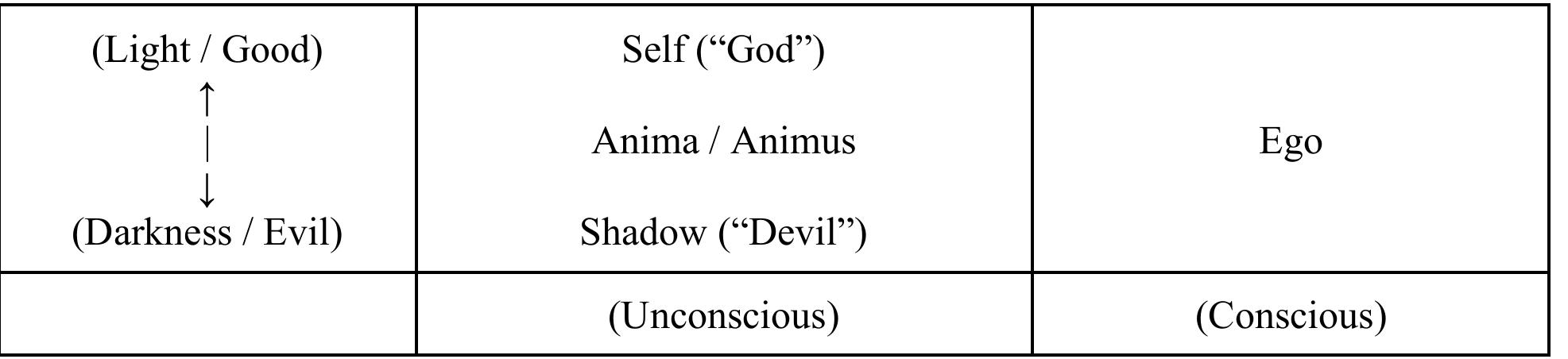
At the same time, in arguing for a form of biological reductionism, Jung does not address the fact that biological, instinctual, non-conscious patterns of behaviour, as incredible and miraculous as they are, are quite distinct from the conscious mythopoetic projections of the psyche, which have their own autonomy on a collective level, as shown by mass religious and political movements which tend to swallow up the individual. In this regard, Jung’s Kantean agnosticism and generic monism does not serve as an adequate explanation, the way that the occu distinct psychic reality with its own endemic intelligences does. t understanding of a
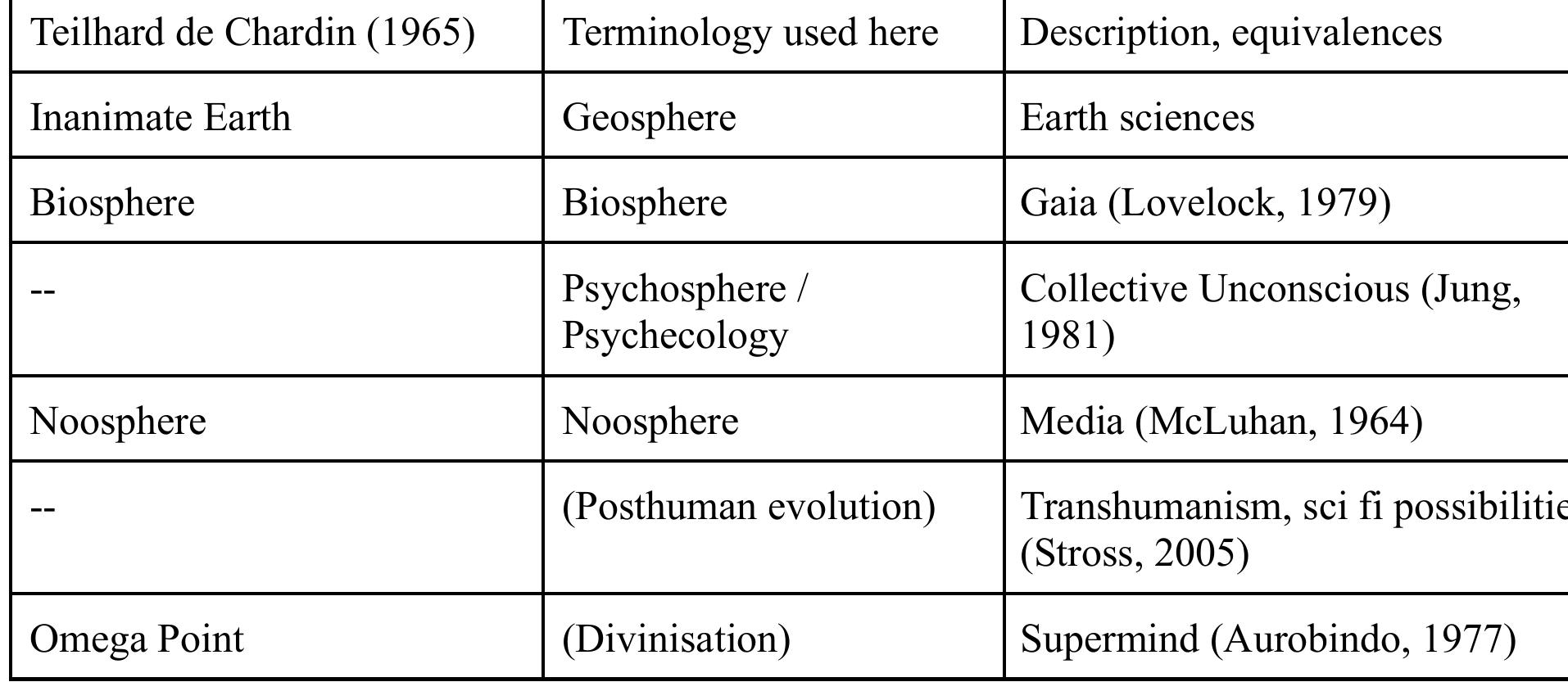
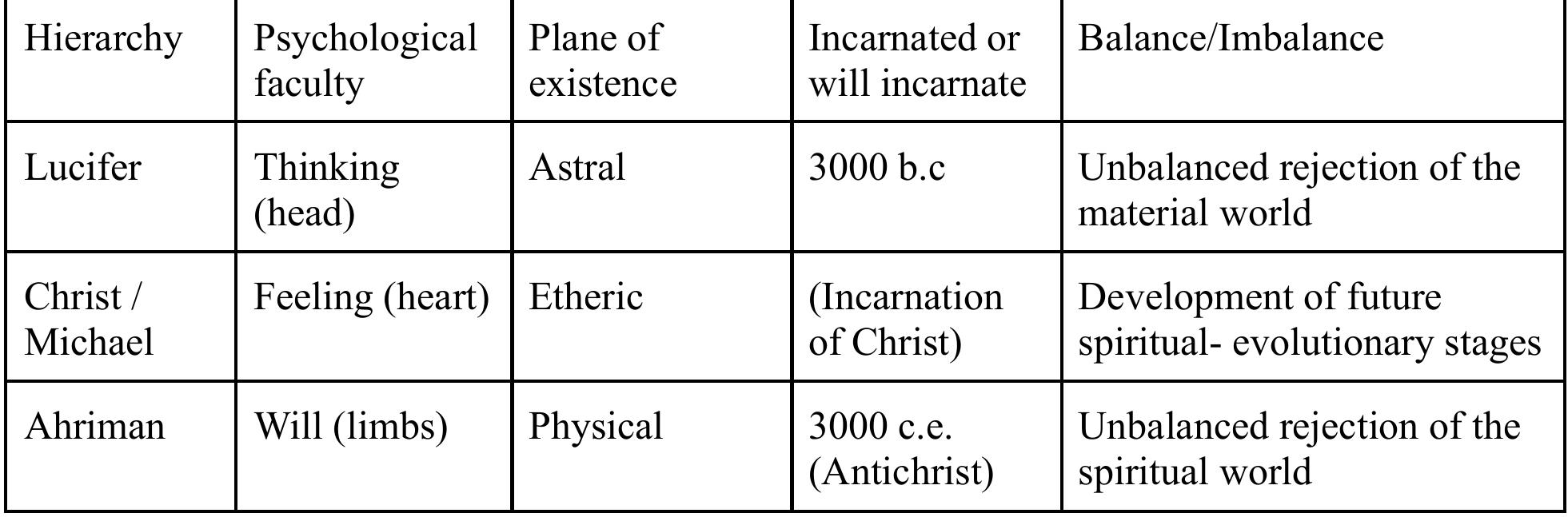
Man has to reject both the Ahrimanic impulse of excessive materialism and denial of the spiritua world, and the equally unbalanced Luciferic impulse of rejecting the real world in favour of excessive introversion and imagination in one’s head, and incorporate Christic or Michaelic thinking (the Divine polarity of the etheric formative principle of the Cosmic Christ and the Archangel Michael) in order for the planet to progress to the next evolutionary stage. The Etheric'’ Christ (Steiner, 2003)—as the planetary transforming principle—connects both with Henry Corbin’s (1989, 1995) prophetic-epiphanic Imaginal world, Teilhard’s Omega Point, and Aurobindo’s (1977) Supermind. Seen from this perspective, conspiracist information pollution did not taint a previously pure media sphere or Noosphere, but rather one that, for all its many amazing possibilities, was already dominated by a reductionist and anti-life orientation. One of the primary examples of such anti-life information in the official, what I would call the “ahrimanic” (as opposed to the conspiracist), narrative is the body as a mechanistic paradigm of modern medical science, based on—like Steiner’s Ahriman—a total rejection of any spiritual and holistic reality, and rendering individuality, personal agency, and the soul irrelevant.
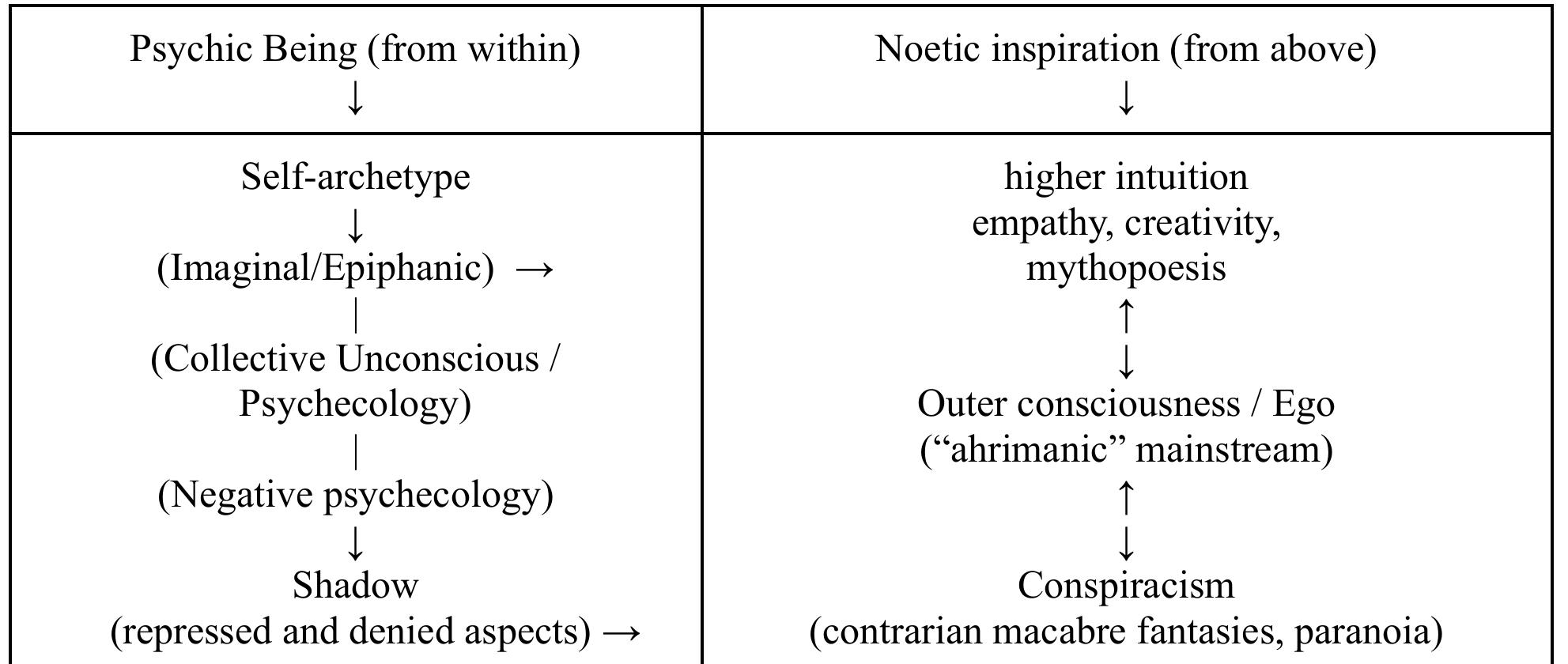
Figure 5. Two types of creativity—shadow-inspired conspiracist and imaginal/mythopoetic—and their relation to the Ego Source: Based on insights from Aurobindo (1970), Jung (1981), Kazlev (2000, 2021), and Steiner (1993)

Loading Preview
Sorry, preview is currently unavailable. You can download the paper by clicking the button above.
References (96)
- Academy of Ideas. (2018, February 28). Carl Jung, the shadow, and the dangers of psychological projection. YouTube.
- Alba, D., & Frenkel, S. (2021, January 7). From voter fraud to vaccine lies: Misinformation peddlers shift gears. https://www.nytimes.com/2020/12/16/technology/from-voter-fraud-to-vaccine-lies-misinformati on-peddlers-shift-gears.html
- Ardagh, A. (2005). The translucent revolution: How people just like you are waking up and changing the world. New World Library.
- Aurobindo, Sri. (1970). Letters on yoga, vol. I. Sri Aurobindo Ashram.
- Aurobindo, Sri. (1977). The life divine. Sri Aurobindo Ashram.
- Baase, S. (2007). A gift of fire: Social, legal, and ethical issues for computing and the internet (3rd ed.). Prentice Hall.
- Barbour, I. G. (1969, April). Teilhard's process metaphysics. The Journal of Religion, 49(2), 136-159
- Beck, D. E., & Cowan, C. (1996). Spiral dynamics: Mastering values, leadership and change. Blackwell Business.
- Birmingham, J. (2021, October 15). Kill all you see. Alien Sideboob. https://aliensideboob.substack.com/p/kill-all-you-see
- Blackburn, S. (2021, May 28). Conspiracy theories by Quassim Cassam. Society. doi: 10.1007/s12115-021-00570-2
- BOGObiology (2017, October 12). Epigenetics: Nature vs nurture. YouTube. https://youtu.be/Q8BMP6HDIco
- Brennan, B. A. (1987). Hands of light: A guide to healing through the human energy field. Bantam. Bruteau, B. (1974). Evolution towards divinity. Theosophical Publishing House.
- Bucke, R. M. (2009). Cosmic consciousness: A study in the evolution of the human mind. Dover Publications.
- Bush, Z. (2021, April 28). Chemical farming & the loss of human health. Dr Zach Bush. After Skool. https://youtu.be/Aw16LPVnNco
- Butto, N. (2019). Integration between psychology and spirituality: A new paradigm for the essence and the nature of the psyche. Int J Psychiatr Res., 2(5), 1-8.
- Campbell, J. (1972). The Hero With a Thousand Faces. Princeton University Press Cassam, Q. (2019). Conspiracy theories. Polity Press.
- Chaisson, E. J. (2001). Cosmic evolution: Rise of complexity in nature. Harvard University Press.
- Christian, D. (2008). Big history: The big bang, life on earth, and the rise of humanity. The Teaching Company. Climatic Research Unit email controversy (n.d.). Wikipedia.
- Corbin, H. (1989). Spiritual body and celestial earth: From Mazdean Iran to Shi'ite Iran. Princeton University Press.
- Corbin, H. (1995). Mundus imaginalis, or the imaginary and the imaginal. In (L. Fox, Trans.), Swedenborg and esoteric Islam. Swedenborg Foundation.
- Coulter, I., Snider, P., & Neil, A. (2019, Jun). Vitalism-A worldview revisited: A critique of vitalism and its implications for integrative medicine. Integr Med (Encinitas), 18(3), 60-73. PMCID: PMC7217401
- Cuenco, M. (2021, April 17). America's new post-literate epistemology. Palladium. https://palladiummag.com/2021/04/17/americas-new-post-literate-epistemology/
- Dawkins, R. (1976). The selfish gene. Oxford University Press.
- Dispenza, J. (2021, March 3). How to change your genetic destiny. Joe Dispenza. After Skool (You Tube). https://youtu.be/l8YpYkqosa8
- Dohe, C. B. (2011): Wotan and the 'archetypal ergriffenheit': Mystical union, national spiritual rebirth and culture-creating capacity (in C. G. Jung's 'Wotan' essay). History of European Ideas, 37(3), 344-356. http://dx.doi.org/10.1016/j.histeuroideas.2010.12.001
- Dure, B. (2016, January 20). Flat-earthers are back: 'It's almost like the beginning of a new religion'. The Guardian. https://www.theguardian.com/science/2016/jan/20/flat-earth-believers-youtube-videos-conspirac y-theorists
- Fink, J. (2021, October 11). Could Donald Trump beat Joe Biden, Kamala Harris in 2024? What the polls show. Newsweek. https://www.newsweek.com/could-donald-trump-beat-joe-biden-kamala-harris-2024-his-chances -against-democrats-1637675
- Fraser, A. (2002). The gunpowder plot: Terror & faith in 1605. Phoenix.
- Galeotti, M. (2017, September 1). Controlling chaos: How Russia manages its political war in Europe. European Council on Foreign Relations. https://ecfr.eu/publication/controlling\_chaos\_how\_russia\_manages\_its\_political\_war\_in\_europe/ Gebser, J. (1986). The ever-present origin (N. Barstad with A. Mickunas, Trans.). Ohio University Press.
- Gooch, S. (1972). Total man. Abacus.
- Goreis, A., & Voracek, M. (2019, February 11). A systematic review and meta-analysis of psychological research on conspiracy beliefs: Field characteristics, measurement instruments, and associations with personality traits. Front. Psychol. https://doi.org/10.3389/fpsyg.2019.00205
- Gozzi, R. (1992). "HOT" AND "COOL" MEDIA. ETC. A Review of General Semantics, 49 (2), 227-230.
- Guth, S. O. (2003). The double, a new paradigm for understanding the human psyche. http://malankazlev.com/kheper/topics/double/
- Hall, S. (2015, October 6). Exxon knew about climate change almost 40 years ago. Scientific American. https://www.scientificamerican.com/article/exxon-knew-about-climate-change-almost-40-years-a go/ Haskell, E. (1972). Full circle: The moral force of unified science. Gordon and Breach.
- Jablonka, E., & Lamb, M. J. (2005). Evolution in four dimensions. Bradford Books.
- Jantsch, E. (1980). The self-organizing universe: Scientific and human implications of the emerging paradigm of evolution. Pergamon Press.
- Jones, J. (2017, November 1). Carl Jung psychoanalyzes Hitler: "He's the unconscious of 78 million Germans." "Without the German people he'd be nothing" (1938). Open Culture. https://www.openculture.com/2017/11/carl-jung-psychoanalyzes-hitler.html
- Jung, C. G. (1968a). Psychology and alchemy. Princeton University Press.
- Jung, C. G. (1968b). Alchemical studies. Princeton University Press Jung, C. G. (1969a). Aion: Researches into the phenomenology of the self. Princeton University Press.
- Jung, C. G. (1969b). On the nature of the psyche (R. F. C. Hull, Trans.). Princeton University Press.
- Jung, C. G. (1970). Mysterium coniunctionis. Princeton University Press.
- Jung, C. G. (1981). Archetypes and the collective unconscious. Princeton University Press.
- Kapleau, P. (1985). The Three Pillars of Zen: Teaching, Practice and Enlightenment. Rider & Co. Kazlev, M. A. (2020). Wisdom of the gods. Manticore Press.
- Kazlev, M. A. (2021). Mythopoesis and the modern world. Manticore Press.
- Kinzer, S. (2019). Poisoner in chief: Sidney Gottlieb and the CIA search for mind control. Henry Holt and Company. Know Your Meme (n.d.) God emperor Trump. https://knowyourmeme.com/memes/god-emperor-trump
- Koebler, J. (2016, August 11). Society is too complicated to have a president, complex mathematics suggest. Vice. https://www.vice.com/en/article/wnxbm5/society-is-too-complicated-to-have-a-president-comple x-mathematics-suggest
- Kruger, J., & Dunning, D. (1999). Unskilled and unaware of it: How difficulties in recognizing one's own incompetence lead to inflated self-assessments. Journal of Personality and Social Psychology, 77(6), 1121-1134. https://doi.org/10.1037/0022-3514.77.6.1121
- Lachman, G. (2018). Dark star rising: Magick and power in the age of Trump. TarcherPerigee.
- Lamarck, J. B. (1914). Zoological Philosophy. An Exposition with Regard to the Natural History of Animals (H. S. R. Elliott, Trans). Cambridge University Press.
- Levy, P. (n.d.). Scapegoating. Awaken in the dream. https://www.awakeninthedream.com/articles/scapegoating
- Lipton, B. (2005). The biology of belief: Unleashing the power of consciousness, matter and miracles. Mountain of Love.
- Love, S. (2020, December 17). Conspirituality explains why the wellness world fell for QAnon. Vice. https://www.vice.com/en/article/93wq73/conspirituality-explains-why-the-wellness-world-fell-fo r-qanon Lovelock, J. (1979). Gaia: A new look at life on earth. Oxford University Press.
- Lovelock, J. (2007). The revenge of Gaia: Earth's climate crisis and the fate of humanity. Penguin Books.
- Luban, D. (2021). Hannah Arendt meets QAnon: Conspiracy, ideology, and the collapse of common sense. Georgetown University Law Center. https://scholarship.law.georgetown.edu/facpub/2384
- Matthews, O. (2020, July 25). Putin plans to make the West destroy itself -Chaos and division is the real goal for Russia. The Spectator. https://www.spectator.co.uk/article/putin-plans-to-make-the-west-destroy-itself
- Maughan, T. (2020, November 30). The modern world has finally become too complex for any of us to understand. OneZero -Medium. https://link.medium.com/qROFpWEMfkb
- Maynard Smith, J. (1998). Evolutionary genetics (2nd ed.). Oxford University Press, p. 10.
- McIntosh, S. (2007). Integral consciousness and the future of evolution. Paragon House McLuhan, M. (1962) The Gutenberg galaxy. University of Toronto Press.
- McLuhan, M. (1964). Understanding media: The extensions of man. McGraw-Hill McLuhan, M., & Fiore, Q. (1967). The medium is the message: An inventory of effects. Penguin Books. Meadows, D. H., Meadows, D. L. Randers, J., & Behrens III, W. W. (1972). The limits to growth. Potomac Associates -Universe Books.
- Medawar, P. (1996) The strange case of the spotted mice and other classic essays on science (with a Foreword by Stephen Jay Gould). Oxford Paperbacks.
- Moyers, B. and Campbell, J. (1988). The Power of Myth. Betty Sue Flowers (ed.). Doubleday.
- Nai, A., & Martínez i Coma, F. (2019) The personality of populists: Provocateurs, charismatic leaders, or drunken dinner guests? West European Politics, 42(7), 1337-1367. https://www.tandfonline.com/doi/full/10.1080/01402382.2019.1599570
- Nai, A. & Toros, E. (2020, Jan 06). The peculiar personality of strongmen: Comparing the big five and dark triad traits of autocrats and non-autocrats. https://doi.org/10.1080/2474736X.2019.1707697
- Ohlheiser, A. (2016, November 9). 'We actually elected a meme as president': How 4chan celebrated Trump's victory. Washington Post. https://www.washingtonpost.com/news/the-intersect/wp/2016/11/09/we-actually-elected-a-meme -as-president-how-4chan-celebrated-trumps-victory/
- Oreskes, N., & Conway, E. M. (2010). Merchants of doubt: How a handful of scientists obscured the truth on issues from tobacco smoke to global warming. Bloomsbury Press.
- Ouspensky, P. D. (1965). In search of the miraculous: Fragments of an unknown teaching. Mariner Books.
- Parmigiani, G. (2021, June). Magic and politics: Conspirituality and COVID-19. Journal of the American Academy of Religion, 89(2), 506-529. https://doi.org/10.1093/jaarel/lfab053
- Penrose, R. (1994). Shadows of the mind. Oxford University Press.
- Peterson, J. B. (2017, December 6). Medium is the message -Jordan Peterson, Dose of Truth. https://youtu.be/BRX4q4ZNd3A
- Powell, A. E. (1927). The astral body: And other astral phenomena. Quest Books.
- Powell, A. E. (2007). The etheric double. Book Tree. Rational Wiki (n.d.). Crank magnetism. https://rationalwiki.org/wiki/Crank\_magnetism
- Ray, P. H., & Anderson, S. R. (2000). The cultural creatives: How 50 million people are changing the world. Harmony Books
- Roberts, D. (2017, May 19). Donald Trump and the rise of tribal epistemology. Vox. https://www.vox.com/policy-and-politics/2017/3/22/14762030/donald-trump-tribal-epistemology Sadiq. (2010, July 20). Sufi understanding of cosmology and planes of consciousness. Technology of the Heart. https://www.techofheart.com/2010/07/sufi-understanding-of-cosmology-and.html
- Sambrook, N. (2014). IT -Pieces in the dark.
- Sambrook, N. (2016). IT -Blue angel knight.
- Sambrook, N. (2022). Influencing the collective mind: Technique for influencing the overmind entity of humanity. In S. Schafer, & A. Bennet (Eds.), Global media's preternatural influence on global technological singularity, culture, and government. IGI Global. Satprem. (1982). The mind of the cells. Institute for Evolutionary Research.
- Seemann, M. (2017, December 19). Digital tribalism -The real story about fake news. https://www.ctrl-verlust.net/digital-tribalism-the-real-story-about-fake-news/
- Serwer, A. (2016, September 14). It's not easy being meme. The Atlantic. https://www.theatlantic.com/politics/archive/2016/09/its-not-easy-being-green/499892/ Sheets-Johnstone M. (2017) The body politic: A Jungian perspective. Psychother Politics Int. https://doi.org/10.1002/ppi.1426
- Steiner, R. (1972). An outline of occult science. The Anthroposophic Press.
- Steiner, R. (1993). The influences of Lucifer and Ahriman: Human responsibility for the earth. Steiner Books.
- Steiner, R. (1996). The spiritual hierarchies and the physical world: Reality and illusion. The Anthroposophic Press.
- Steiner, R. (2003). The reappearance of Christ in the etheric. Steiner Books.
- Stross, C. (2005). Accelerando. Orbit/Ace.
- Teilhard de Chardin, P. (1965). The phenomenon of man. Fontana Collins.
- Teklinski, E. M. (2018). A matter of heart and soul: The value of positing a personal ontological center for developmental psychology. International Journal of Transpersonal Studies, 37(1), 90-119.
- Vernadsky, V. I. (1945). The biosphere and the noosphere. Scientific American 33(1), 1-12.
- Wagner, D. L., Grames, E. M., Forister, M. L., Berenbaum, M. R., & Stopak, D. (2021, January 12). Insect decline in the Anthropocene: Death by a thousand cuts. PNAS 118(2). e2023989118; https://doi.org/10.1073/pnas.2023989118
- Walach, H. (2020). The rise of complementary medicine and the materialistic stance of biomedicine. European Journal for Person Centered Healthcare 8(1). DOI: http://dx.doi.org/10.5750/ejpch.v8i1.1827
- Ward, C., & Voas, D. (2011). The emergence of conspirituality. Journal of Contemporary Religion, 26(1), 103-121 https://doi.org/10.1080/13537903.2011.539846
- Wautischer, H. (1998). Tribal epistemologies: Essays in the philosophy of anthropology. Routledge.
- Wigner, E. P. (1961). Remarks on the mind-body question. In I. J. Good (Ed.), The scientist speculates. Heinemann.
- Wilber, K. (2000). Integral psychology: Consciousness, spirit, psychology, therapy. Shambhala.
- Wilber, K. (2001). Sex, ecology, spirituality: The spirit of evolution (2nd ed.). Shambhala.
- Wolfe, T. (1999, December 17). Why is Marshall McLuhan important? Tom Wolfe on media, advertising, technology. YouTube.
- Zaehner, R. C. (1971) Evolution in religion: A study in Sri Aurobindo and Pierre Teilhard de Chardin. Clarendon Press.
- Zimmermann, F. B. (2019, August 6). Bolsonaro's war on the environment and climate change. Australian Institute of International Affairs. https://www.internationalaffairs.org.au/australianoutlook/bolsonaros-war-on-the-environment-an d-climate-change/
FAQs
AI
What major shifts characterize the transition to the digital media era?add
The study reveals a shift from low participation 'hot media' to high participation 'cool media', redefining social interaction and information sharing. This transition facilitates a return to tribal characteristics, emphasizing community over individualism.
How has the digital age influenced the spread of conspiracy theories?add
Research indicates that the deregulation of media through digital platforms has exponentially increased the reach of conspiracy theories. This phenomenon allows non-experts to dominate discussions, contributing to a Dunning-Kruger effect in public discourse.
What does Carl Jung's concept of the Collective Unconscious entail?add
Jung's Collective Unconscious suggests a universal repository of archetypes shared across cultures, influencing dreams and myths. It serves as a deeper level than the individual unconscious, affecting collective behavior and social dynamics.
How do social media platforms amplify conspiracist narratives?add
The study suggests that social media platforms create echo chambers that reinforce polarized views, obstructing rational discourse. Algorithms favor sensational content, which can lead to widespread emotional reactions and tribal identities.
What implications does epigenetics have on our understanding of consciousness?add
Emerging research in epigenetics indicates that experiences can influence gene expression and might be inherited, thus affecting evolutionary trajectories. This perspective integrates behavioral, symbolic, and genetic elements in the understanding of consciousness evolution.