"Troy before Schliemann," Studia Troica 1 (1991) 111-129 (original) (raw)
Abstract
Discusses how and when the site now known as Troy was first discovered, identified and excavated.
Key takeaways

AI
- The text reviews the historical discovery and identification of Troy.
- It covers excavation efforts and methodologies used prior to Schliemann's involvement.
- The site was pivotal in the study of ancient civilizations.
- Key dates in Troy's excavation history are highlighted for context.
- The work emphasizes the contributions of early archaeologists to the understanding of Troy.
Figures (4)
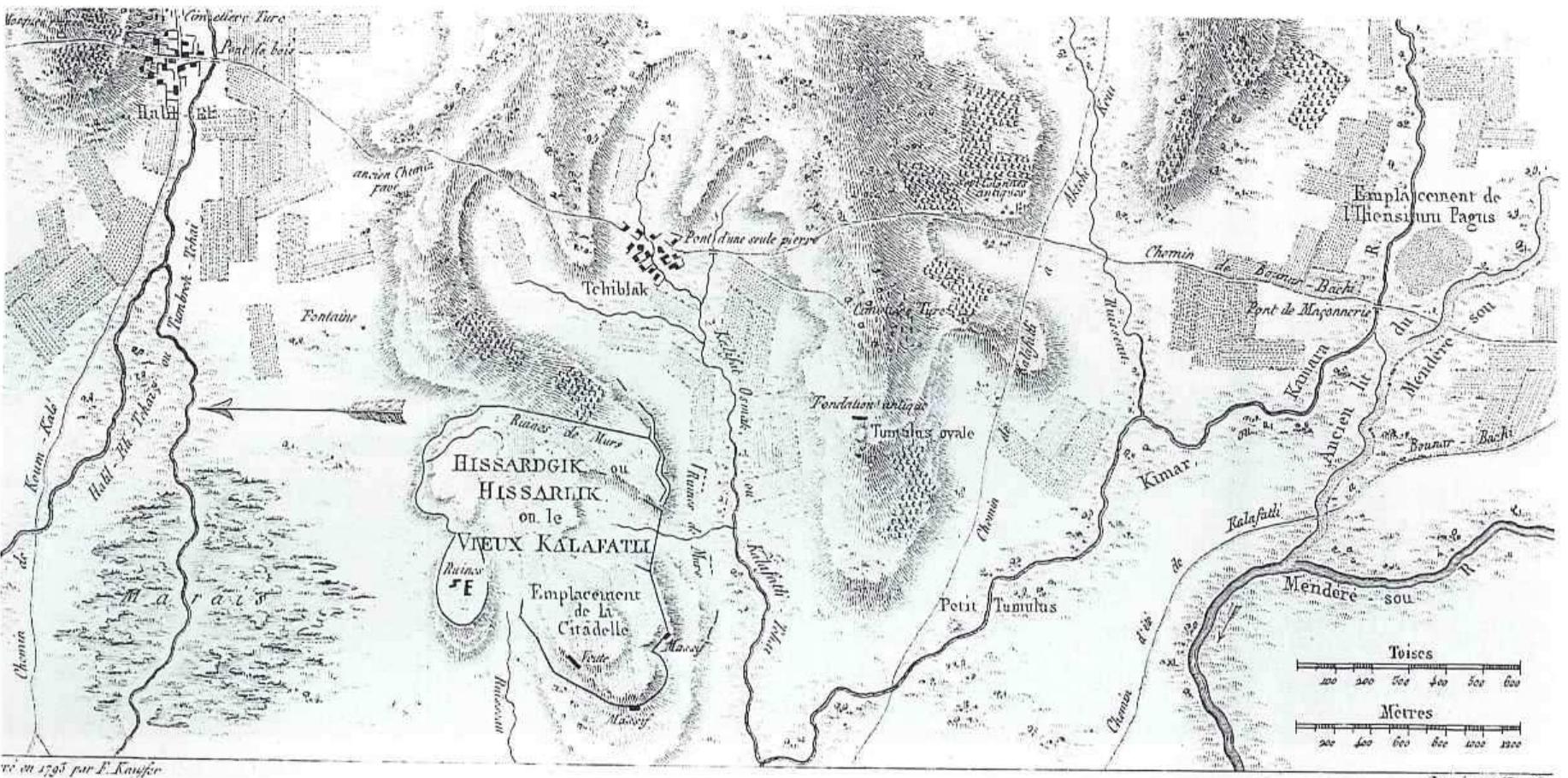
Fig. 1 Franz Kauffer’s 1793 map, with architectural remains drawn in by Barbié du Bocage probably on the basis of the 1814 survey by Dubois. From Choiseul-Gouffier, Voyage Pittoresque de la Gréce I 2 (1822) pl. 35.
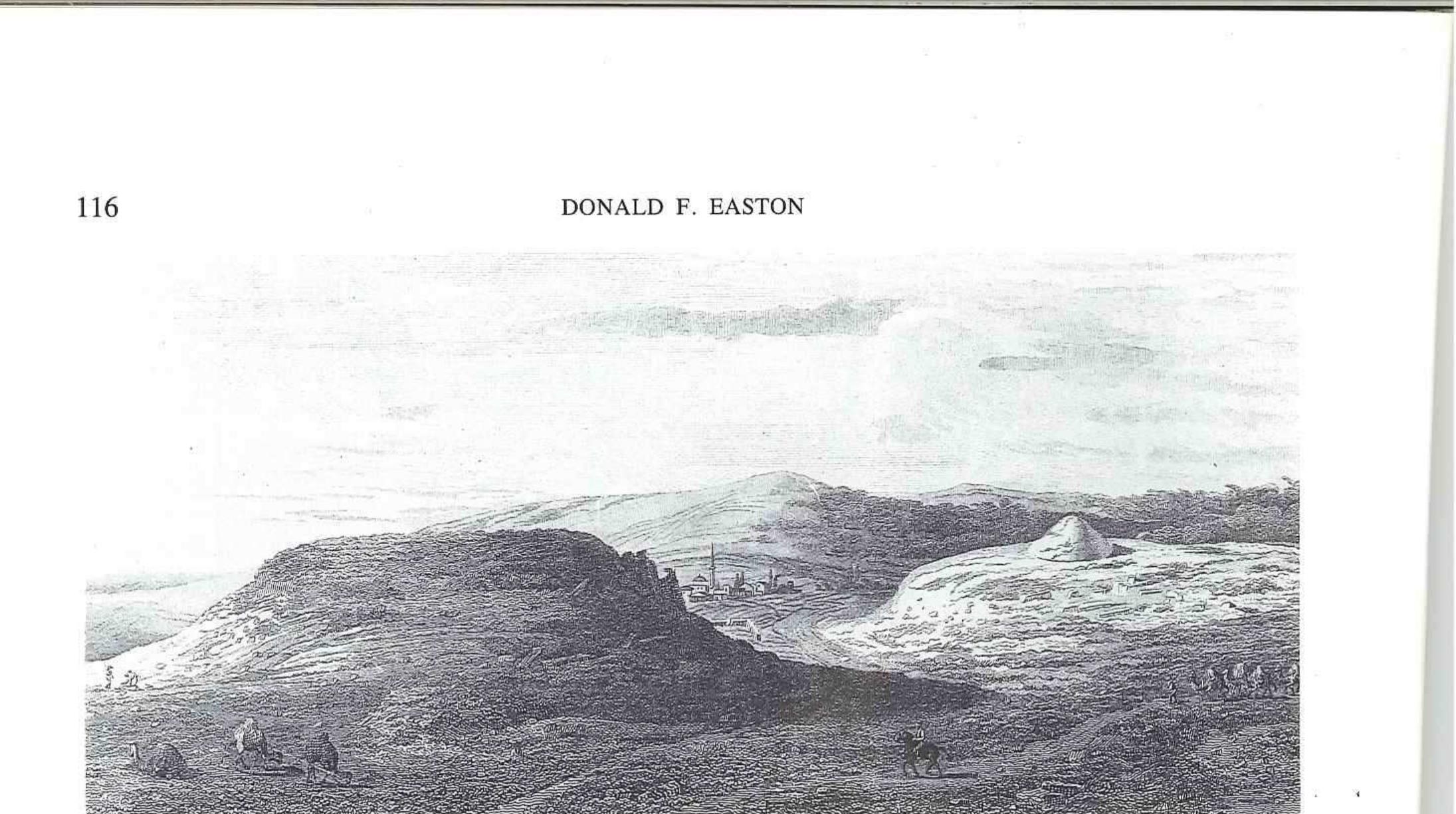
Fig. 2 J.B. Hilaire’s sketch of the southern spur of Hisarlik in 1814; Ciplak is visible in the background. From Choiseul-Gouffier, Voyage Pittoresque de la Gréce I 2 (1822) pl. 36. appears in the distance as one feature among others in a panoramic view (Ibid., pls. xiv, xviii, xix, xxxi, xxxvii). The fact is that the identification cannot be attributed to Gell. But we can see where he picked it up. His survey took place in December 1801, after which he returned to Constantinople. Shortly afterwards Clarke and Cripps came back from their tour of the Holy Land, Egypt and Greece which they had begun the previous March in the Troad. On arriving at their former lodgings in Constantinople they found them occupied by Gell and Dodwell; and thereafter all four shared the same accommodation from January till April 1802 (Clarke 1817, VII, 131f.), and there can be no reasonable doubt that it was from Clarke that he learnt of the identification. Clarke thus lost the pleasure of announcing the discovery himself; but it may have been with a view to establishing his priority that in 1812 he included in his ‘Travels’ the following note: were shown a large number of coims of lium which had come, they were told, from Hisarlik (Ibid., 130-3). These, together with the evidence of in- scriptions in the neighbourhood, persuaded Clarke to propose the site’s identification as New Ilium. He was not, as Cook has pointed out (Cook 1973, 93f.), the first to place New Ilium in the region of Ciplak; but he was the first to place it specifically at Hisarlik and to do so for a sound archaeological reason — although Morritt later claimed that he had thought of the idea first, in 1794, only to reject it (Walpole 1817, 556). But Morritt’s letters show that the site he noticed was the Ciplak burial- ground, and neither they nor his ‘Vindication of Homer’ provide any support for his claim (Marindin 1914, 141; Morritt 1798, 91). Nevertheless the first person to publish the iden- tification was not Clarke himself but Gell. His ee. ee a a es) aS fp Peery ana peabe BEER. Ls oa
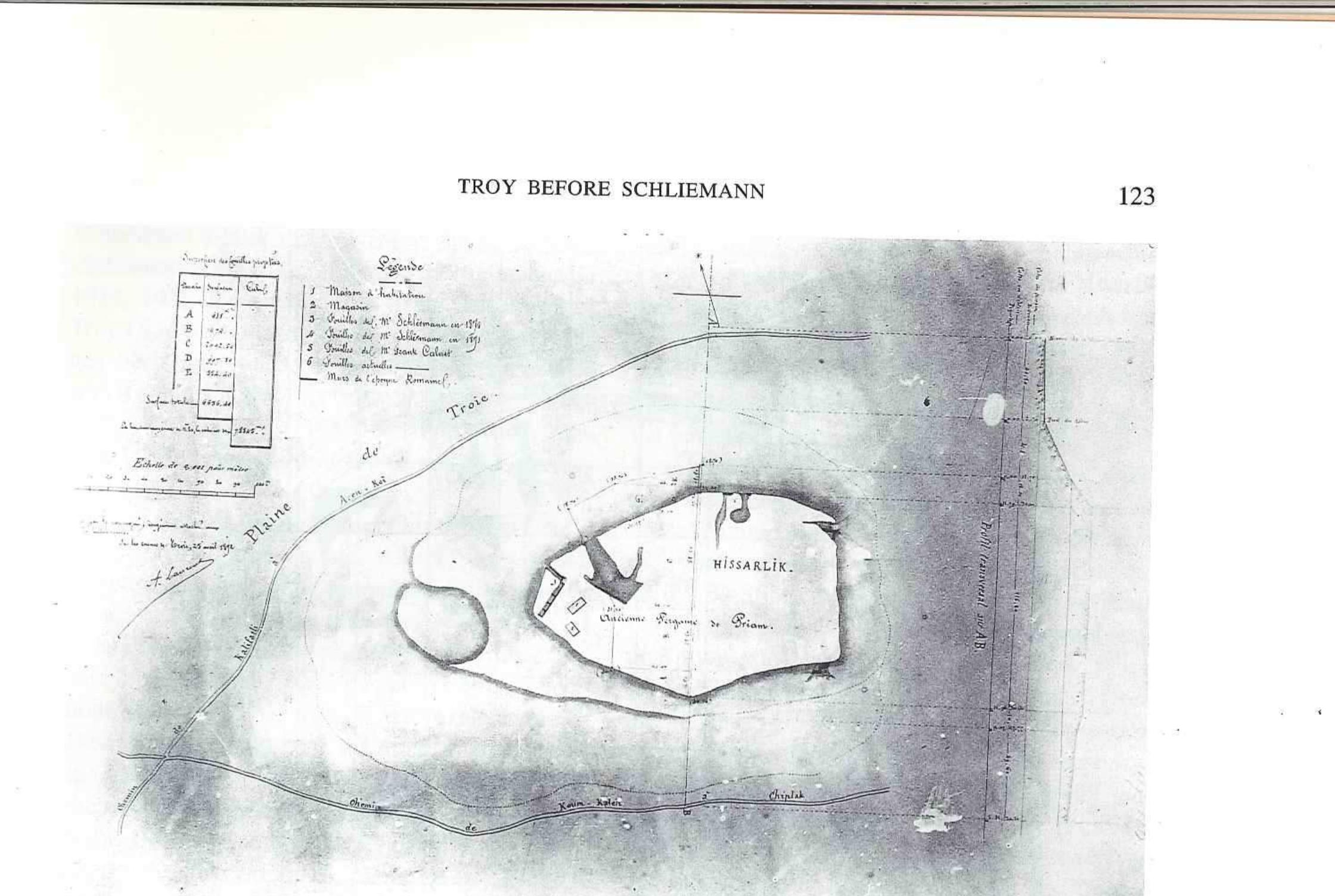
mg. % schiiemann, Atlas Taf. 116, showing the state of excavations at the beginning of the 1872 season. The four trenches on the east side of the mound derive from Frank Calvert’s work.
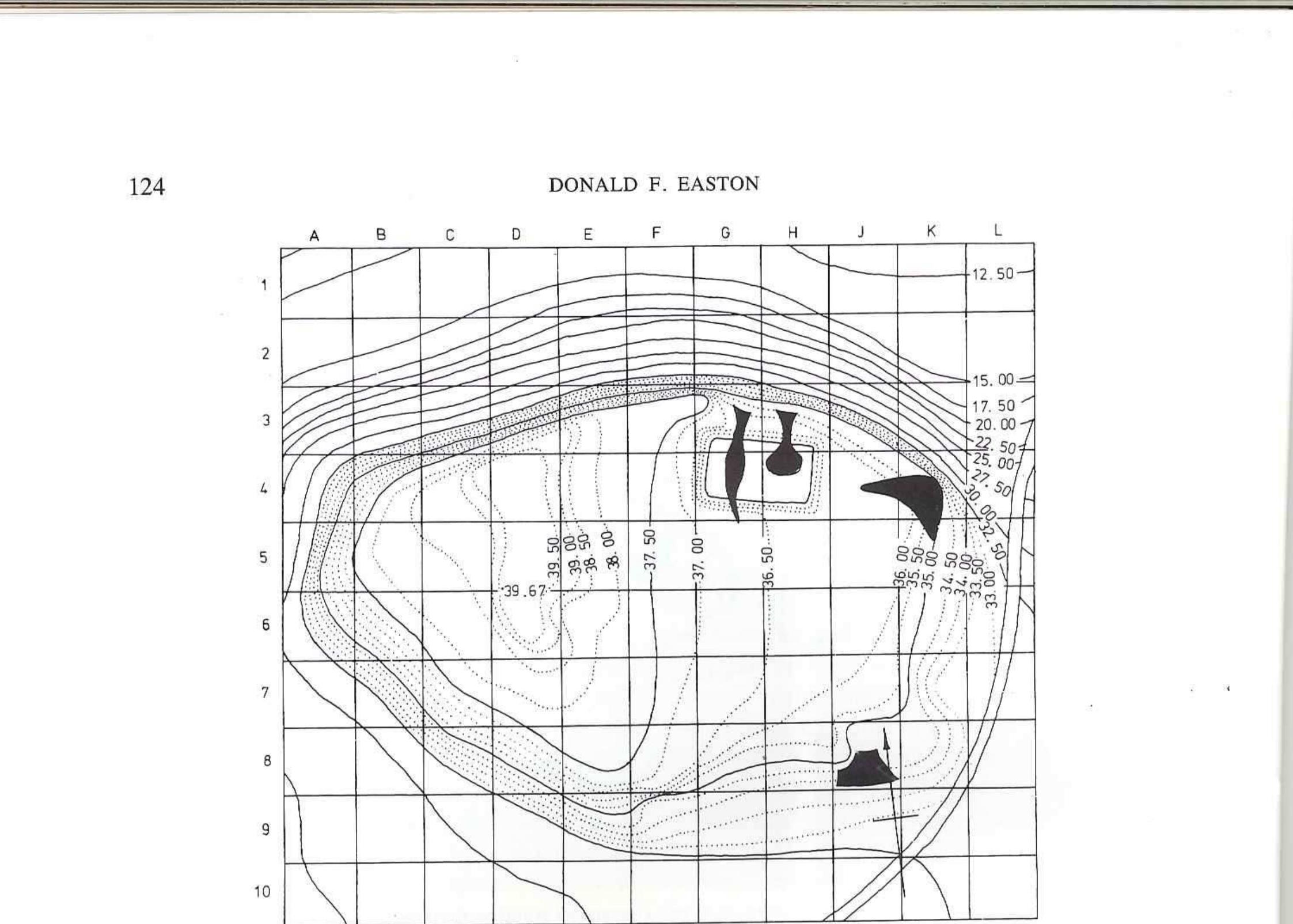
Fig. 5 Reconstructed contour-plan showing the location of Calvert’s trenches.

Loading Preview
Sorry, preview is currently unavailable. You can download the paper by clicking the button above.
FAQs
AI
What evidence supports the existence of Troy before Schliemann's excavations?add
The paper reveals that archaeological surveys conducted in the early 19th century indicated layered settlements believed to represent Troy's historical timeline, predating Schliemann's excavations in 1871.
How do pre-Schiniemann accounts of Troy impact modern interpretations?add
Findings suggest that earlier narratives, such as those by Lord Byron in the 19th century, shaped public perception and academic inquiry, thus influencing contemporary interpretations of Troy's significance.
What methodologies were employed in the research on pre-Schiemann Troy?add
The study utilizes comparative archaeology and historical analysis of literary sources to trace the development of Troy's narrative in scholarly discourse from antiquity to the 19th century.
What role did local myths play in the perceptions of Troy before Schliemann?add
Analysis indicates that local folklore and mythos significantly bolstered the identification of various mounds as Troy, influencing archaeological interest and funding prior to Schliemann's work.
When were the earliest references to Troy documented prior to the 19th century?add
The research identifies references to a site associated with Troy in classical texts by Homer dating back to the 8th century BCE, which were integral to the site's narrative.