Praseodymium Oxide Pellets | AMERICAN ELEMENTS ® (original) (raw)
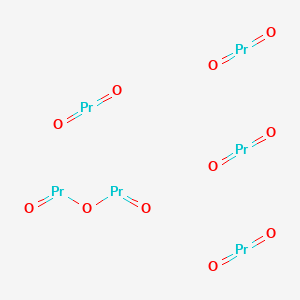
Chemical Structure

Question? Ask an American Elements Materials Science Engineer
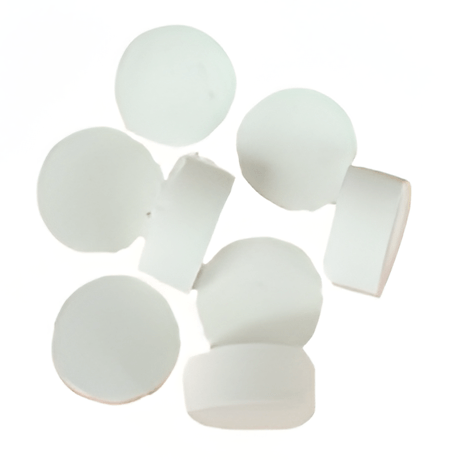 American Elements specializes in producing high purity uniform shaped Praseodymium Oxide Pellets with the highest possible density and smallest possible average grain sizes for use in semiconductor, Chemical Vapor Deposition (CVD) and Physical Vapor Deposition (PVD) processes including Thermal and Electron Beam (E-Beam) Evaporation, Low Temperature Organic Evaporation, Atomic Layer Deposition (ALD), Metallic-Organic and Chemical Vapor Deposition (MOCVD). Our standard Pellet sizes range from 1/8" x 1/8" to 1/4" x 1/4" and 3 mm diameter. We can also provide Pellets outside this range for ultra high purity thin film applications, such as fuel cells and solar energy layers. Materials are produced using crystallization, solid state and other ultra high purification processes such as sublimation. American Elements specializes in producing custom compositions for commercial and research applications and for new proprietary technologies. American Elements also casts any of the rare earth metals and most other advanced materials into rod, bar, or plate form, as well as other machined shapes and through other processes such as nanoparticles and in the form of solutions and organometallics. We also produce Praseodymium as pieces, tablets, powder, and sputtering target. Oxide compounds are not conductive to electricity. American Elements produces to many standard grades when applicable, including Mil Spec (military grade); ACS, Reagent and Technical Grade; Food, Agricultural and Pharmaceutical Grade; Optical Grade, USP and EP/BP (European Pharmacopoeia/British Pharmacopoeia) and follows applicable ASTM testing standards. Typical and custom packaging is available. Other shapes are available by request.
| Compound Formula | O11Pr6 |
|---|---|
| Molecular Weight | 1021.44 |
| Appearance | Brown Powder |
| Melting Point | 2183 °C (3961 °C) |
| Boiling Point | 3760 °C (6800 °F) |
| Density | 6.5 g/cm3 |
| Solubility in H2O | N/A |
| Exact Mass | N/A |
| Monoisotopic Mass | N/A |
| Charge | N/A |
Hexapraseodymium undecaoxide, Praseodymium (III, IV) oxide, Praseodymiun undecaoxide
| Signal Word | Warning |
|---|---|
| Hazard Statements | H315-H319-H335 |
| Hazard Codes | Xi |
| Precautionary Statements | P261-P305 + P351 + P338 |
| Flash Point | Not applicable |
| Risk Codes | 36/37/38 |
| Safety Statements | 26-37/39 |
| RTECS Number | TU1480000 |
| Transport Information | NONH |
| WGK Germany | 1 |
| GHS Pictogram | Image  |
| Linear Formula | Pr6O11 |
|---|---|
| Pubchem CID | 16211481 |
| MDL Number | MFCD00011178 |
| EC No. | 234-857-9 |
| IUPAC Name | N/A |
| Beilstein/Reaxys No. | N/A |
| SMILES | [O-2].[O-2].[O-2].[O-2].[O-2].[O-2].[O-2].[O-2].[Pr+3].[Pr+3].[Pr+3].[Pr+3].[Pr+3].[Pr+3].[O-2].[O-2].[O-2] |
| InchI Identifier | InChI=1S/11O.6Pr/q11*-2;6*+3 |
| InchI Key | HPZIIFVSYNLWNX-UHFFFAOYSA-N |
| Chemical Formula | |
| Molecular Weight | |
| Standard InchI | |
| Appearance | |
| Melting Point | |
| Boiling Point | |
| Density |
Customer Reviews
Typical bulk packaging includes palletized plastic 5 gallon/25 kg. pails, fiber and steel drums to 1 ton super sacks in full container (FCL) or truck load (T/L) quantities. Research and sample quantities and hygroscopic, oxidizing or other air sensitive materials may be packaged under argon or vacuum. Shipping documentation includes a Certificate of Analysis and Safety Data Sheet (SDS). Solutions are packaged in polypropylene, plastic or glass jars up to palletized 440 gallon liquid totes, and 36,000 lb. tanker trucks.

May 12, 2026 Los Angeles, CA
Each business day American Elements' scientists & engineers post their choice for the most exciting materials science news of the day
See more Praseodymium products. Praseodymium (atomic symbol: Pr, atomic number: 59) is a Block F, Group 3, Period 6 element with an atomic weight of 140.90765.  The number of electrons in each of praseodymium's shells is 2, 8, 18, 21, 8, 2 and its electron configuration is [Xe]4f3 6s2. The praseodymium atom has a radius of 182 pm and a Van der Waals radius of 239 pm. Praseodymium resembles the typical trivalent rare earths, however, it will exhibit a +4 state when stabilized in a zirconia host.
  Unlike other rare-earth metals, which show antiferromagnetic and / or ferromagnetic ordering at low temperatures, praseodymium is paramagnetic at any temperature above 1 K. Praseodymium is found in the minerals monazite and bastnasite. Praseodymium was discovered by Carl Auer von Welsbach in 1885. The origin of the element name comes from the Greek words prasios didymos, meaning green twin.